Staying safe in Australia's summer sea: flags, rips and jellyfish season
Swim between the red and yellow flags, know how to spot a rip, and in northern waters take care during the jellyfish season. Here are the points to remember before swimming, based on official safety information.
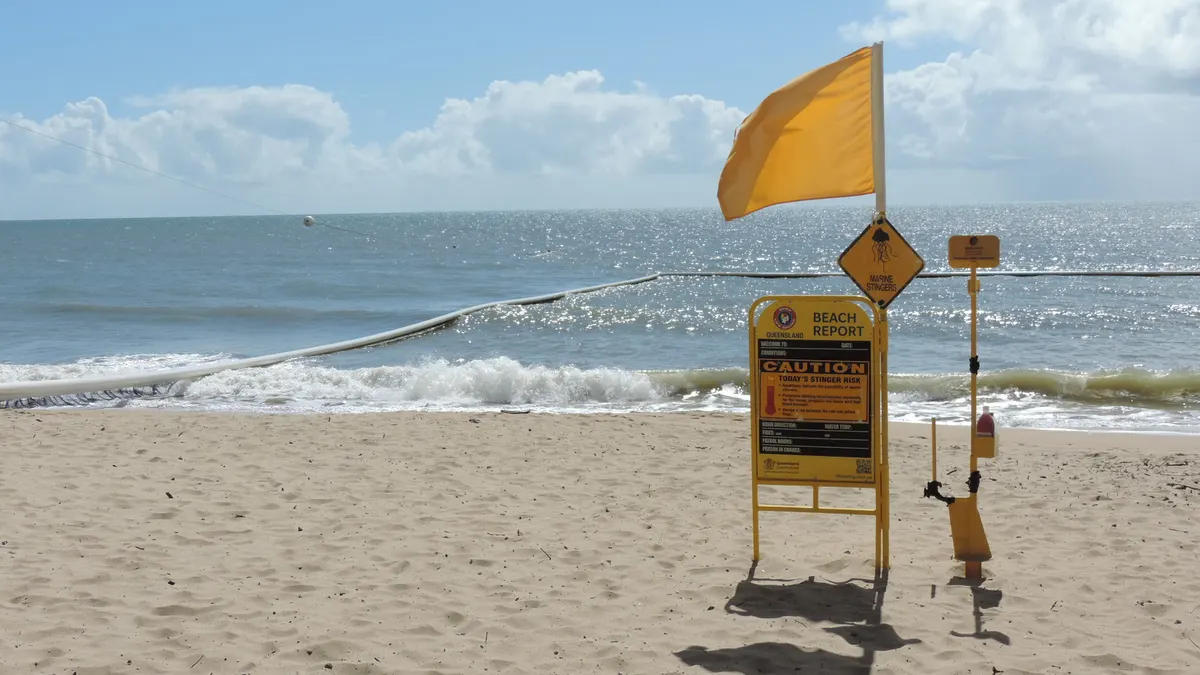
On your first visit to an Australian beach, you may not be sure where to swim or what to watch out for. The Canadian government's travel advice notes that coastal waters in Australia can be dangerous and that riptides are common. Here is what to know before you swim: the flags, rip currents and jellyfish in northern waters.
Swim between the red and yellow flags
Beach Safety Hub's first tip is to "always swim between the red and yellow flags". The area between the flags is where lifeguards are on duty. It also recommends never swimming alone, keeping a friend or adult within sight, and checking the safety and warning signs at beach access points before going into the water.
Feel free to ask lifesavers about local conditions. If you get into trouble, stay calm, raise your arm to signal for help and float rather than fighting the current; the emergency number is 000 (Triple Zero).
The Canadian government likewise urges visitors to avoid unsupervised beaches and to follow lifeguards' instructions and the flag system that warns of water conditions. It notes that several drownings occur on the coast each year.
How to spot a rip
According to Surf Life Saving, rips are one of the greatest and most common hazards on Australian beaches; they can change shape and location quickly and are sometimes hard to see. Signs to look for are deeper or darker water, fewer breaking waves, sandy coloured water extending beyond the surf zone, debris or seaweed, and significant water movement, but rips don't always show all of these at once.
If you are caught in a rip
The page suggests remembering three steps: Relax, Raise, Rescue. First, stay calm and float to save your energy. Then raise your arm to attract the attention of lifeguards or lifesavers, and wait for help to arrive.
You may also be able to escape by swimming parallel to the beach towards the breaking waves. If that isn't working, the page says to try another option.
Northern jellyfish season: November–May
According to the Queensland Government, dangerous tropical marine stingers, including the box jellyfish and the Irukandji, are present in tropical Queensland waters all year round. The risk is higher during the marine stinger season from November to May.
To prevent stings, the advice is to swim at patrolled beaches between the red and yellow flags, follow safety signs and stay out of the water when beaches are closed. Swim inside stinger nets where they are provided, and consider wearing a full-body lycra suit. Don't touch stingers washed up on the beach, as they can still sting.
If you are stung
The Queensland Government advises calling 000 and asking for an ambulance if stung, pouring vinegar on the sting while you wait, and giving oxygen or CPR if required. Symptoms of Irukandji stings may take 20–40 minutes to develop, and the page says to seek medical aid if in doubt.
Watch for crocodiles in the north
In northern Queensland, crocodiles live in both fresh and salt water. The state government advises swimming only in designated safe swimming areas and warns that crocodiles may be present even where there is no warning sign.
Rips can change shape and location quickly, and beaches may be closed. Beach Safety Hub recommends using the Beachsafe app to check current conditions. If you are heading to northern waters, also read the Queensland Government's advice, and once you reach the beach, follow the lifeguards' instructions.