Reading bushfire information in Australia: the 4 Fire Danger Rating levels and what travellers should do
The Fire Danger Rating you see on roadside signs and official state websites in Australia has 4 levels. Following each state's official wording, here is what each level means and how to think about your travel plans.
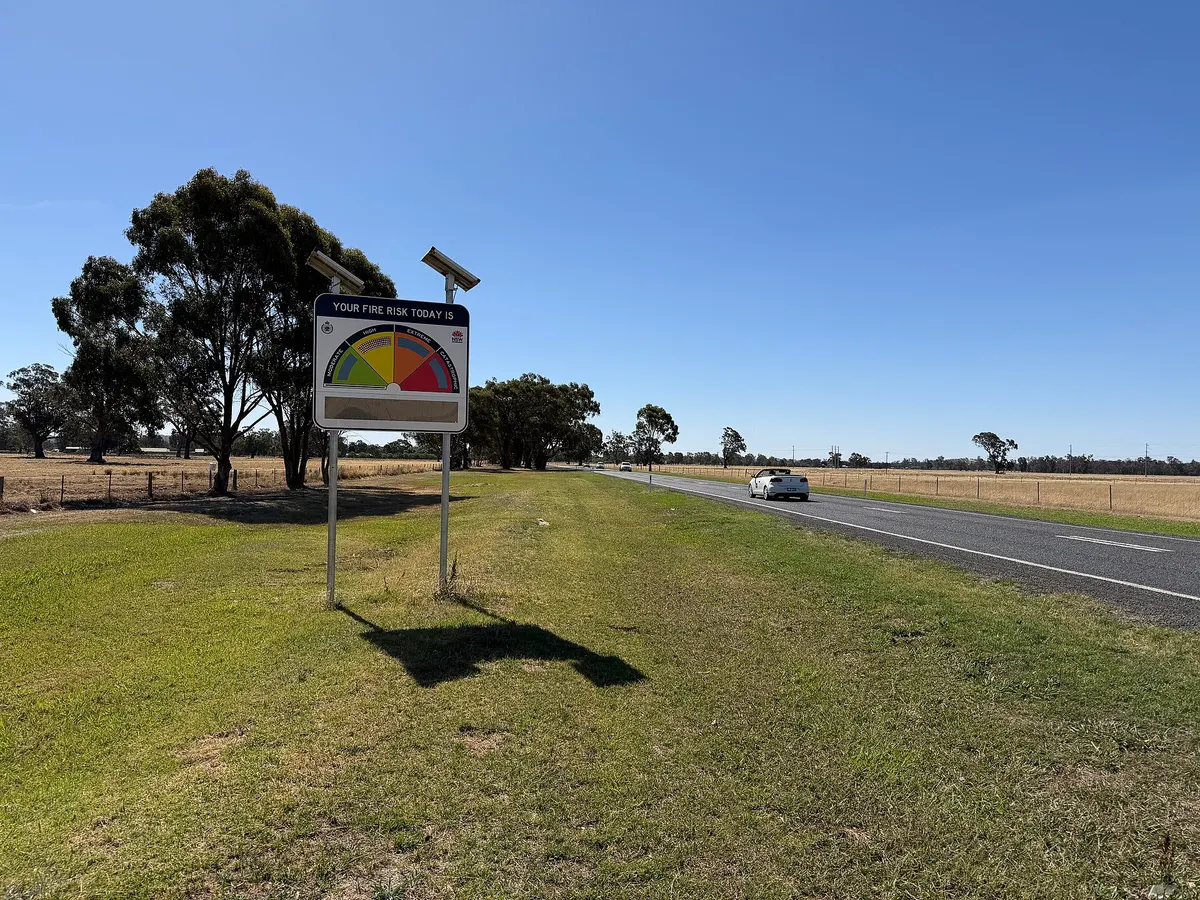
Driving in New South Wales (NSW), you will see Fire Danger Rating signs by the road. The 4 levels are shown by colour and wording, and for travellers they are a cue for deciding whether to go ahead with the day's plans.
What is the Fire Danger Rating?
According to the NSW Government, fire danger ratings describe how dangerous a fire could be if one started, and a higher rating means more dangerous conditions. Ratings are issued on days when there is a risk of fire and you need to take action. Victoria's CFA (Country Fire Authority) explains that a day without a rating does not mean fires cannot happen.
According to the CFA, the same system is used across Australia, and ratings are forecast up to 4 days ahead using Bureau of Meteorology data, based on weather and conditions such as vegetation. That means you can check the rating for your destination a few days before you go.
The 4 levels and what travellers should do
Moderate (green) is the "plan and prepare" level. Most fires can be controlled, but the NSW Government asks people to stay up to date and be ready to act if there is a fire. For travellers, this is the level at which to keep checking information for the area you are visiting.
High (yellow) is the "be ready to act" level, when fires can be dangerous. You are asked to decide what you will do if a fire starts, and the official advice is that the safest option is to avoid bushfire-risk areas.
Extreme (orange) is the "take action now to protect your life and property" level. Fires will spread quickly and be extremely dangerous, and the CFA says to expect hot, dry and windy conditions. Since the official advice is to reconsider travel through bushfire-risk areas, consider moving day trips through national parks or forests to another day.
Catastrophic (red) is the "for your survival, leave bushfire-risk areas" level: the most dangerous conditions, where lives are likely to be lost if a fire starts and takes hold. The advice is to go to a safer location early in the morning or the night before; homes cannot withstand fires in these conditions, and you may not be able to leave or get help. Rethink any plans to visit an area with this rating.
Where to check
In NSW, besides roadside signs, you can check the rating for your area from the NSW Government page. Bushfire advice and warnings are on the RFS (Rural Fire Service) website, Facebook and X, and the Hazards Near Me app, and there is also the Bush Fire Information Line (1800 679 737). See the NSW Government official website for details.
In Victoria, the CFA page shows current and forecast ratings across the state and Total Fire Ban information, and CFA Local gives forecasts for your local area. VicEmergency also explains how to prepare. See the CFA official website for details.
In Queensland, the daily rating is on the Queensland Fire Department website (fire.qld.gov.au). The state government asks people to seek information and make their own decisions when there is a bushfire nearby, and to follow local radio and official social media and websites. See the Queensland Government official website for details.
The NSW Government recommends listening to your local ABC radio station on a battery-operated radio, as power or mobile networks may be affected. For the detailed rules on Total Fire Ban days, check each state's official information.
Before you head out
Fire danger ratings are issued day by day. Check the rating on the official page for the state you are visiting the day before and on the morning of your trip, and rearrange your plans if Extreme or Catastrophic is forecast.