Iwami Ginzan and Oda guide
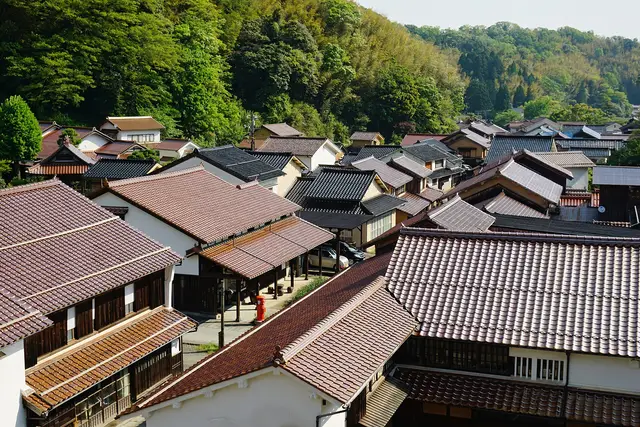
A World Heritage silver mine. Walk from the red-tiled houses of Omori to an Edo-period mine tunnel. The old silver port and hot spring of Yunotsu, singing-sand Kotogahama and Mt. Sanbe are close by.
Things to see 5 classics
"Classics", "For visitors" and "Local picks" are this site's editorial picks, not a measured popularity ranking.
- 1
Ryugenji Mabu Mine Tunnel
An Edo-period silver mine tunnel open to visitors year-round. You walk through a shaft that still shows the miners' chisel marks.
- History & buildings
about 45 minPaid entryFine on a rainy day
Bus · About 75 min from Odashi ・ Bus to Omori, then about 40 minutes on foot (about 15 by bicycle) ・ 13km
- 2
Omori townscape
Red-tiled houses line the road from the old magistrate's office toward the mines, some now shops and cafes.
- History & buildings
- Shopping & strolling
about 1.5 hrFree
Bus · About 30 min from Odashi ・ About 25 minutes by Iwami Kotsu bus from Odashi Station to Omori ・ 11km
- 3
Iwami Ginzan World Heritage Center
Models and films explain the mine's history and how silver was extracted from ore. A good place to start your visit.
- History & buildings
about 60 minPartly paidFine on a rainy day
Bus · About 30 min from Odashi ・ About 30 minutes by Iwami Kotsu bus from Odashi Station ・ 11km
- 4
Yunotsu Onsen
A hot-spring town that grew as a port for shipping silver. Two old public bathhouses are still used by locals.
- Hot springs
- History & buildings
about 1.5 hrPartly paidFine on a rainy day
Train · About 40 min from Odashi ・ JR local train to Yunotsu, then about 10 minutes on foot ・ 18km
- 5
Mt. Sanbe and the Sahimel nature museum
A nature museum at the foot of grassy Mt. Sanbe, with exhibits and a planetarium. A base for walks on the mountain.
- Nature
- With kids
about 2 hrPartly paidFine on a rainy day
Bus · About 45 min from Odashi ・ About 40 minutes by Iwami Kotsu bus from Odashi Station ・ 12km
Show on map
ClassicsFor visitorsLocal picks
Suggested routes
Times assume a 9:00 start. Travel times are estimated from distance and vary with waiting and crowds.
From the Omori townscape to the silver mine tunnel
Leave 9:00 → until about 15:33 (about 6.5 hr)
- 9:00Odashi
about 30 min by transport
9:30Iwami Ginzan World Heritage Centerstay about 60 minabout 15 min by transport
10:45Iwami Ginzan Museum (former Omori magistrate's office)stay about 45 minabout 3 min on foot
11:33Kumagai Residencestay about 45 minabout 9 min on foot
12:27Omori townscapestay about 1.5 hrabout 6 min on foot
14:03Rakanji Temple (Five Hundred Rakan)stay about 30 minabout 15 min by transport
14:48Ryugenji Mabu Mine Tunnelstay about 45 min
Get an overview at the World Heritage Center, then take the bus to Omori. The tunnel is about 40 minutes' walk each way.
Plan this routeSand museum, singing sands and the baths of Yunotsu
Leave 9:00 → until about 13:05 (about 4 hr)
- 9:00Odashi
about 25 min by transport
9:25Nima Sand Museumstay about 45 minabout 15 min by transport
10:25Kotogahama Beachstay about 45 minabout 25 min by transport
11:35Yunotsu Onsenstay about 1.5 hr
You can get around on JR local trains. On Saturdays, stay on for Iwami Kagura in Yunotsu in the evening.
Plan this route
Main ways to get around
Iwami Kotsu bus (Odashi Station – Omori and the World Heritage Center)
About 25 minutes from Odashi Station to Omori, also stopping at the World Heritage Center. Much of the old town is closed to cars, so you mostly walk.
Rental bicycles (Omori)
From the Omori townscape to Ryugenji Mabu is about 2.3 km uphill. Renting an electric bicycle makes it easy.
Super Oki / Super Matsukaze limited expresses
About 1 hour from Matsue and 25 minutes from Izumoshi to Odashi. The Super Oki also runs from Shin-Yamaguchi.
JR San'in Line local trains
From Odashi to Nima and Yunotsu. Trains run about every 1–2 hours, so check the return times first.
Getting to Odashi
“Classics”, “For visitors” and “Local picks” are our editors' picks, not a measured popularity ranking. Travel times are estimates. Please check prices, opening hours and operating days with the official sources before you go.
Local food specialties
Specialties of Iwami Ginzan and Oda, together with those of other places in Shimane. They are listed by dish, not by shop, and are not recommendations.
Hot pots & soups
Hekayaki (fish and vegetable hot pot, "fish sukiyaki")
へか焼き
Fish such as nodoguro and tilefish simmered with vegetables in a sweet-savory broth; known as fish sukiyaki. A dish of Oda City.
- Known in
- Oda City
Noodles
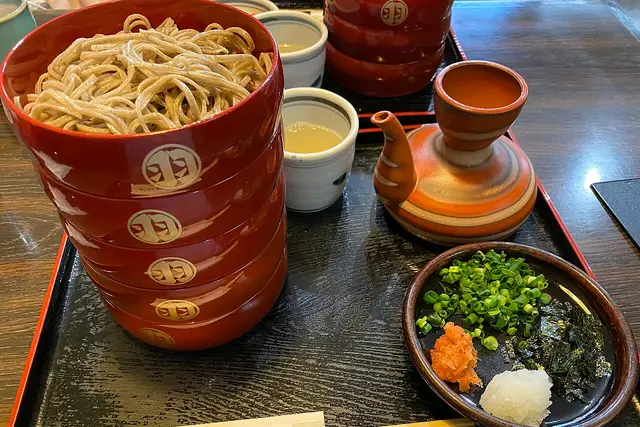
Izumo soba (dark, strongly flavored buckwheat noodles)
出雲そば
Buckwheat noodles ground with the husk, so dark and aromatic. Served cold in stacked boxes (warigo) or hot (kamaage).
- Known in
- Izumo and Matsue · Matsue and Izumo guide, Izumo guide
Sweets
Izumo zenzai (sweet red bean soup with mochi)
出雲ぜんざい
Sweet red bean soup with mochi or shiratama. Said to have originated in Izumo; served at shops on Shinmon-dori by Izumo Taisha.
- Known in
- Izumo Taisha area · Izumo guide
Hot pots & soups
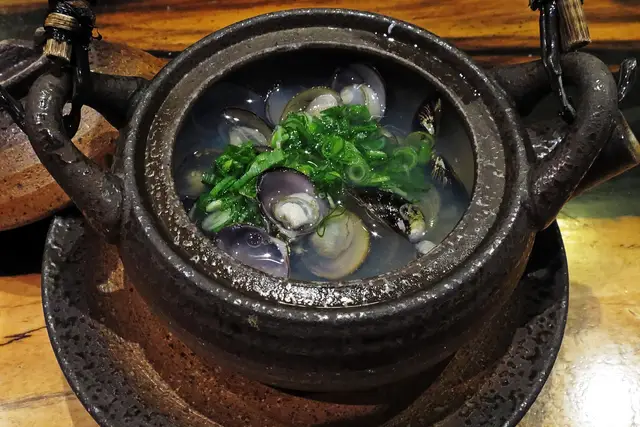
Shinji Lake shijimi clam miso soup
宍道湖のしじみ汁
Miso soup made from large Yamato clams from Lake Shinji. Served at restaurants in Matsue.
- Known in
- Matsue · Matsue and Izumo guide
Seafood
Hamada kaisendon (seafood rice bowl)
浜田の海鮮丼
Rice bowl of sashimi landed at Hamada Port, some topped with nodoguro. Available at Hamada Fish Market.
- Known in
- Hamada · Hamada and Gotsu guide
Rice dishes
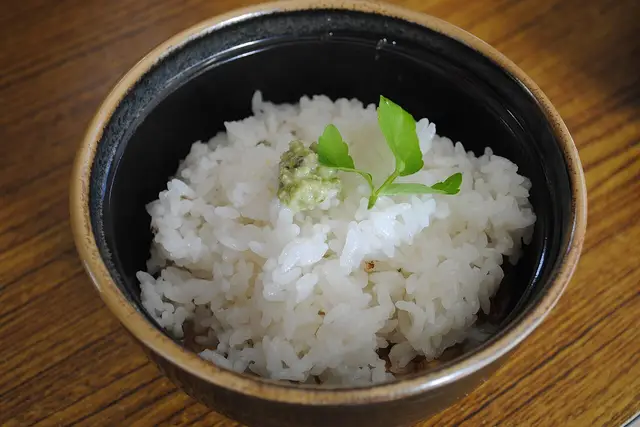
Uzume-meshi (rice with hidden toppings, ochazuke-style)
うずめ飯
Ochazuke-style rice with mountain vegetables and mushrooms hidden beneath it. A dish of Tsuwano and the Iwami region.
- Known in
- Tsuwano · Tsuwano and Masuda guide
Hot pots & soups
Tsuwano imoni (taro simmered in sea bream broth)
津和野の芋煮
Taro simmered in grilled small sea bream stock and soy sauce, topped with yuzu peel. Served at inns in Tsuwano.
- Known in
- Tsuwano · Tsuwano and Masuda guide
Noodles
Oki soba (100% buckwheat noodles)
隠岐そば
Pure buckwheat noodles without binder, served in a broth of grilled mackerel and flying fish.
- Known in
- Oki Islands · Oki Islands guide
Rice dishes
Sazae-don (turban shell rice bowl)
さざえ丼
Rice with seaweed topped with soy-simmered turban shell and liver, mixed with a soft egg. Eaten on all four Oki islands.
- Known in
- Oki Islands · Oki Islands guide
Seafood
Oki iwagaki (large rock oysters)
隠岐の岩ガキ
Large rock oysters in season from March to June. Nishinoshima is where farming began; eaten at local restaurants.
- Known in
- Nishinoshima · Oki Islands guide
“Find places serving it” opens a map app search for the dish name and the place name. The results are not chosen or recommended by this site. Please check with the shop whether it serves the dish.
Traditional home dishes of Shimane (28)Practical booking & planning links (Ad)
- Activities, tickets & local tours
- Popular observatories, museums and theme parks increasingly require timed-entry tickets booked in advance. For countryside spots with infrequent buses, a local day tour can save hours.
- KlookKKday
- Rental cars
- A rental car is practical when travelling straight from an airport or exploring rural areas with few trains. Request child seats, an ETC toll card, or winter snow tyres when booking.
- Klook
- Restaurant reservations & food tours
- Well-known dinner spots and course restaurants often fill up days ahead—reserving a table saves waiting in line. Guided local food tours are also a great way to try regional dishes.
- Klook
We list only well-established booking services. This site may receive a commission if you book through these links (each opens in a new tab).
Comment on whether your booking was helpful
Sources
Local food specialties
Each specialty was checked against an official page (prefecture, municipality, tourism association or JNTO) on 2026-11-17. The descriptions were written by this site.
- Hekayaki (fish and vegetable hot pot, "fish sukiyaki"): www.kankou-shimane.com
- Izumo soba (dark, strongly flavored buckwheat noodles): www.kankou-shimane.com
- Izumo zenzai (sweet red bean soup with mochi): www.kankou-shimane.com
- Shinji Lake shijimi clam miso soup: www.kankou-shimane.com
- Hamada kaisendon (seafood rice bowl): www.kankou-shimane.com
- Uzume-meshi (rice with hidden toppings, ochazuke-style): www.kankou-shimane.com
- Tsuwano imoni (taro simmered in sea bream broth): www.kankou-shimane.com
- Oki soba (100% buckwheat noodles): www.kankou-shimane.com
- Sazae-don (turban shell rice bowl): www.kankou-shimane.com
- Oki iwagaki (large rock oysters): www.kankou-shimane.com
Photo and data credits
Red-tiled rooftops of the old Omori town of Iwami Ginzan among green hills 663highland (CC BY-SA 4.0) / Izumo warigo soba in five stacked round dishes with condiments J.Yoshiiiiiiii (CC BY-SA 4.0) / Shijimi clam soup topped with green onion in an earthenware pot Aiko99ann (CC BY-SA 3.0) / Uzume-meshi: a bowl of rice topped with wasabi and a sprig of mitsuba MIURA, Yuji (CC BY-SA 4.0). Cropped and resized.