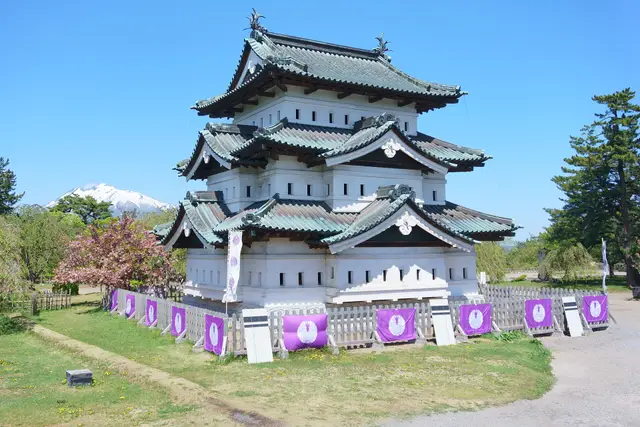
Aomori and Hirosaki guide
Aomori, home of the Nebuta Festival, has its station right by the sea. See the Jomon-era Sannai-Maruyama Site and the art museum, then ride a bus to Hakkoda, Oirase and Lake Towada, or a train to Hirosaki Castle.
Things to see 11 classics
"Classics", "For visitors" and "Local picks" are this site's editorial picks, not a measured popularity ranking.
- 1
Sannai-Maruyama Site
A large Jomon-era village site. Buildings, including one on huge wooden pillars, are reconstructed, and excavated finds are on show.
- History & buildings
- With kids
Paid entry
Bus · About 35 min from Aomori ・ City bus bound for Sannai-Maruyama Iseki from Aomori Station, to the last stop ・ 3.9km
- 2
Aomori Museum of Art
A white museum next to the Sannai-Maruyama Site, with the giant dog sculpture "Aomori-ken" and works by artists tied to Aomori.
- Museums
Paid entryFine on a rainy dayWheelchair & stroller friendly
Bus · About 25 min from Aomori ・ City bus bound for Sannai-Maruyama Iseki from Aomori Station, to Kenritsu Bijutsukan-mae ・ 3.7km
- 3
Nebuta Museum Wa Rasse
See giant lantern floats from the Aomori Nebuta Festival all year round. Right next to the station.
- Museums
- History & buildings
Paid entryFine on a rainy day
Walk · About 1 min from Aomori ・ 200m
- 4
A-FACTORY
A waterfront shopping hall by the station. Watch cider being made from Aomori apples through the glass, and shop for local food and gifts.
- Food & markets
- Shopping & strolling
Fine on a rainy day
Walk · About 2 min from Aomori ・ 200m
- 5
Hakkoda Ropeway
About 10 minutes up to the summit station. Autumn leaves in fall and snow-covered "snow monster" trees in winter. It stops in strong winds.
- Views
- Nature
Paid entry
Bus · About 60 min from Aomori ・ JR Bus from Aomori Station to Ropeway-ekimae (longer in winter) ・ 19km
- 6
Sukayu Onsen
A hot spring in the Hakkoda mountains, known for its huge mixed-gender bath hall built of hiba cypress, the "Sennin-buro".
- Hot springs
- Nature
Bus · About 70 min from Aomori ・ JR Bus from the east exit of Aomori Station to Sukayu Onsen (runs in winter too) ・ 22km
Show on map
ClassicsFor visitorsLocal picks
Suggested routes
Times assume a 9:00 start. Travel times are estimated from distance and vary with waiting and crowds.
From the Jomon site to the waterfront
Leave 9:00 → until about 13:57 (about 5 hr)
- 9:00Aomori
about 35 min by transport
9:35Sannai-Maruyama Sitestay about 45 minabout 10 min on foot
10:30Aomori Museum of Artstay about 45 minabout 20 min by transport
11:35Nebuta Museum Wa Rassestay about 45 minabout 4 min on foot
12:24Hakkoda-maru Memorial Ship (Seikan ferry)stay about 45 minabout 3 min on foot
13:12A-FACTORYstay about 45 min
The site and the museum are next door to each other. Ride the bus back to the station from Kenritsu Bijutsukan-mae.
Plan this routeHakkoda, Oirase and Lake Towada (spring to autumn)
Leave 9:00 → until about 15:15 (about 6.5 hr)
- 9:00Aomori
about 60 min by transport
10:00Hakkoda Ropewaystay about 45 minabout 20 min by transport
11:05Sukayu Onsenstay about 45 minabout 60 min by transport
12:50Oirase Gorgestay about 45 minabout 55 min by transport
14:30Lake Towada (Yasumiya)stay about 45 min
The Mizuumi-go bus runs only a few times a day, so plan around the timetable. In winter it does not go to Lake Towada.
Plan this route
Main ways to get around
Tohoku Shinkansen (Hayabusa)
About 3 hours from Tokyo to Shin-Aomori. Change there to the Ou Line for the 5-minute ride to Aomori Station.
Aomori Airport buses
About 35 minutes to Aomori Station, or about 55 minutes to Hirosaki Bus Terminal on a Konan bus. Buses are timed to the flights.
City buses and the Nebutan-go shuttle
For the Sannai-Maruyama Site and the art museum, take a city bus bound for Sannai-Maruyama Iseki from Aomori Station. The Nebutan-go shuttle sells a one-day pass.
JR Bus Mizuumi-go (Hakkoda and Lake Towada)
From Aomori Station via Hakkoda, Sukayu and the Oirase Gorge to Lake Towada in about 2 hours 45 minutes. No reservation needed. In winter it only goes as far as Sukayu.
JR Ou Line and Aoimori Railway
About 30 to 45 minutes on the Ou Line to Hirosaki. About 25 minutes on the Aoimori Railway to Asamushi Onsen.
Getting to Aomori
“Classics”, “For visitors” and “Local picks” are our editors' picks, not a measured popularity ranking. Travel times are estimates. Please check prices, opening hours and operating days with the official sources before you go.
Local food specialties
Specialties of Aomori and Hirosaki, together with those of other places in Aomori. They are listed by dish, not by shop, and are not recommendations.
Noodles
Aomori miso curry milk ramen (miso ramen with curry and milk)
青森味噌カレー牛乳ラーメン
Miso ramen combined with curry and milk, topped with butter, bean sprouts, bamboo shoots and wakame. Served at a few shops in Aomori City.
- Known in
- Aomori City
Seafood
Nokke-don (build-your-own seafood rice bowl at the market)
のっけ丼
A seafood rice bowl built at Aomori's Furukawa fish market by collecting rice, then choosing sashimi toppings from stalls.
- Known in
- Furukawa Market, Aomori City
Noodles
Tsugaru niboshi ramen (dried-sardine broth ramen)
津軽の煮干しラーメン
Soy-based ramen with a broth made from dried sardines. Most ramen shops in Aomori City serve a niboshi version.
- Known in
- Aomori City
Hot pots & soups
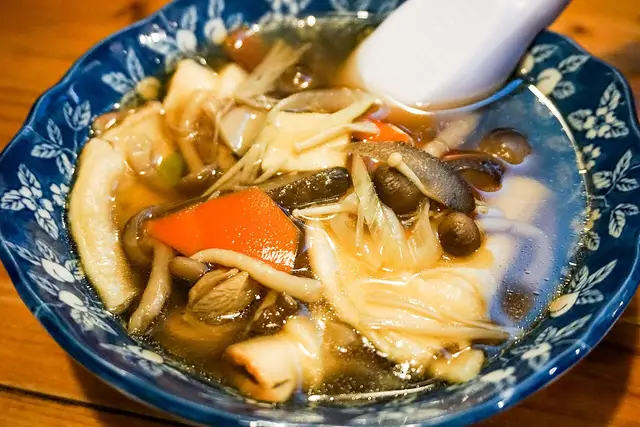
Hachinohe senbei-jiru (soup with broken Nanbu rice-cracker-style wheat crackers)
八戸せんべい汁
Broth with meat, fish and vegetables, simmered with broken Nanbu wheat crackers made for soup. A Hachinohe regional dish.
- Known in
- Hachinohe · Hachinohe guide
Seafood
Hachinohe Maeoki mackerel (served as pickled mackerel rice bowl)
八戸前沖さば(銀サバトロづけ丼)
Mackerel caught off Hachinohe and landed at its port, rich in fat. Eaten as a soy-marinated rice bowl, among other ways.
- Known in
- Hachinohe · Hachinohe guide
Noodles
Kuroishi tsuyu yakisoba (flat-noodle yakisoba served in soup)
黒石つゆやきそば
Kuroishi's flat-noodle yakisoba served with broth poured over it. Over 70 shops in Kuroishi serve it, each with its own taste.
- Known in
- Kuroishi
Meat
Towada barayaki (beef short rib and onion stir-fried on a griddle in sweet-savory sauce)
十和田バラ焼き
Beef short rib and plenty of onion grilled in a sweet soy-based sauce. Available at over 40 restaurants in Towada.
- Known in
- Towada City · Lake Towada and Oirase guide
Seafood
Oma tuna (bluefin tuna landed at Oma)
大間まぐろ
Bluefin tuna landed at Oma, caught by pole and line, fished from about August to January. Eaten as sashimi or sushi.
- Known in
- Oma · Shimokita Peninsula guide
Noodles
Lake Jusan shijimi ramen (ramen with freshwater clam broth)
十三湖しじみラーメン
Salt-flavored ramen with broth from Lake Jusan's freshwater clams, also topped with the clams.
- Known in
- Lake Jusan · Goshogawara and the Tsugaru Plain guide
Hot pots & soups
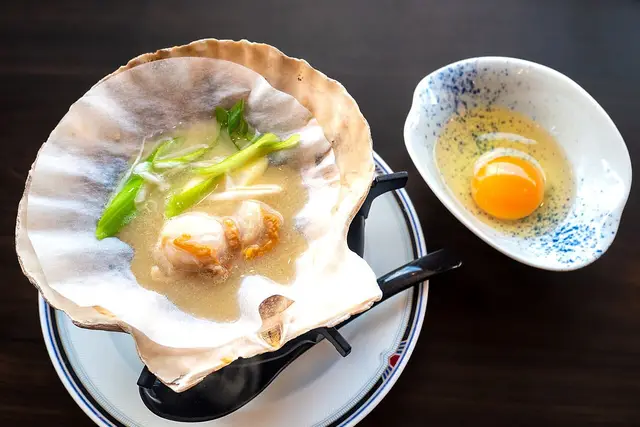
Kaiyaki miso (miso and egg cooked in a scallop shell)
貝焼き味噌
A Tsugaru dish of dashi, miso, leek and scallop with beaten egg, cooked in a large scallop shell.
- Known in
- Hirosaki · Hirosaki guide
“Find places serving it” opens a map app search for the dish name and the place name. The results are not chosen or recommended by this site. Please check with the shop whether it serves the dish.
Traditional home dishes of Aomori (29)When to go
June–September averages 18–24°C; the Nebuta Festival is in early August. Autumn colors move down from Hakkoda to Oirase. Winters are snowy, and buses to Lake Towada stop.
Point at a month to see its temperature and precipitation.
Temperature (line: average; band: low to high)
Precipitation (mm)
Typical seasons
Cherry blossoms (Hirosaki Park)
Aomori Nebuta Festival
Autumn leaves (Hakkoda, Oirase)
Snow scenes and Hakkoda snow monsters
Show as a table
| Jan | Feb | Mar | Apr | May | Jun | Jul | Aug | Sep | Oct | Nov | Dec | |
|---|---|---|---|---|---|---|---|---|---|---|---|---|
| High (℃) | 1.8 | 2.7 | 6.8 | 13.7 | 18.8 | 22.1 | 26 | 27.8 | 24.5 | 18.3 | 11.2 | 4.5 |
| Avg (℃) | -0.9 | -0.4 | 2.8 | 8.5 | 13.7 | 17.6 | 21.8 | 23.5 | 19.9 | 13.5 | 7.2 | 1.4 |
| Low (℃) | -3.5 | -3.3 | -0.8 | 4.1 | 9.4 | 14.1 | 18.6 | 20 | 15.8 | 9.1 | 3.4 | -1.4 |
| Rain (mm) | 139.9 | 99 | 75.2 | 68.7 | 76.7 | 75 | 129.5 | 142 | 133 | 119.2 | 137.4 | 155.2 |
Temperature and precipitation are Japan Meteorological Agency normals (1991–2020, Aomori). Seasons are typical timings and can shift by a week or two each year. JMA data
Practical booking & planning links (Ad)
- Activities, tickets & local tours
- Popular observatories, museums and theme parks increasingly require timed-entry tickets booked in advance. For countryside spots with infrequent buses, a local day tour can save hours.
- KlookKKday
- Rental cars
- A rental car is practical when travelling straight from an airport or exploring rural areas with few trains. Request child seats, an ETC toll card, or winter snow tyres when booking.
- Klook
- Restaurant reservations & food tours
- Well-known dinner spots and course restaurants often fill up days ahead—reserving a table saves waiting in line. Guided local food tours are also a great way to try regional dishes.
- Klook
We list only well-established booking services. This site may receive a commission if you book through these links (each opens in a new tab).
Comment on whether your booking was helpful
Sources
Local food specialties
Each specialty was checked against an official page (prefecture, municipality, tourism association or JNTO) on 2026-11-17. The descriptions were written by this site.
- Aomori miso curry milk ramen (miso ramen with curry and milk): aomori-tourism.com
- Nokke-don (build-your-own seafood rice bowl at the market): aomori-tourism.com
- Tsugaru niboshi ramen (dried-sardine broth ramen): aomori-tourism.com
- Hachinohe senbei-jiru (soup with broken Nanbu rice-cracker-style wheat crackers): aomori-tourism.com
- Hachinohe Maeoki mackerel (served as pickled mackerel rice bowl): aomori-tourism.com
- Kuroishi tsuyu yakisoba (flat-noodle yakisoba served in soup): aomori-tourism.com
- Towada barayaki (beef short rib and onion stir-fried on a griddle in sweet-savory sauce): aomori-tourism.com
- Oma tuna (bluefin tuna landed at Oma): aomori-tourism.com
- Lake Jusan shijimi ramen (ramen with freshwater clam broth): aomori-tourism.com
- Kaiyaki miso (miso and egg cooked in a scallop shell): www.hirosaki-kanko.or.jp
Photo and data credits
Hirosaki Castle keep under a blue sky, with Mt. Iwaki in the distance 掬茶 (CC BY-SA 4.0) / Senbei-jiru soup with pieces of Nanbu rice cracker, mushrooms and vegetables くろふね (CC BY-SA 4.0) / Kaiyaki miso: scallops simmered in miso in a scallop shell, with a raw egg くろふね (CC BY 4.0). Cropped and resized.