Hanamaki & Kitakami guide
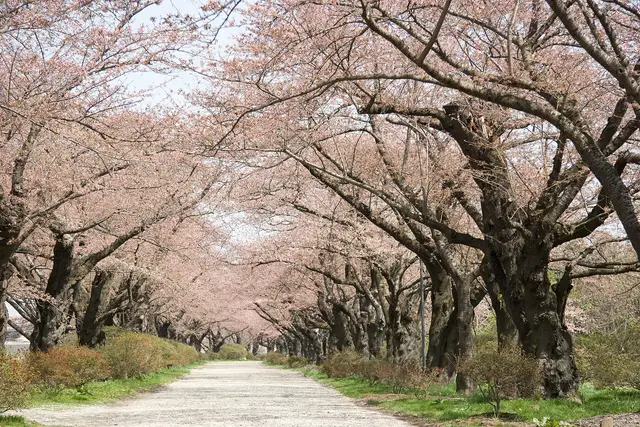
The hometown of writer Miyazawa Kenji, with his museum and a storybook village. Old-style hot-spring inns line the valleys to the west, and Kitakami to the south is known for its riverside cherry trees.
Things to see 5 classics
"Classics", "For visitors" and "Local picks" are this site's editorial picks, not a measured popularity ranking.
- 1
Miyazawa Kenji Memorial Museum
A museum for the writer Miyazawa Kenji on Mt. Koshio in Hanamaki. The Ihatov Hall next to it is free.
- Museums
- History & buildings
Paid entryFine on a rainy day
Train · About 60 min from Hanamaki ・ Tohoku Shinkansen to Shin-Hanamaki, bus to Miyazawa Kenji Kinenkan-guchi, then about 15 minutes uphill on foot ・ 4.5km
- 2
Miyazawa Kenji Dowamura (Storybook Village)
A park built around Kenji's stories. The Kenji's School exhibit hall is paid; the woodland paths and lawns are free to wander.
Closed on Mondays (or the next weekday after a Monday holiday) since April 2026. (as of Nov 17, 2026)
- Museums
- With kids
- Nature
about 60 minPartly paid
Taxi · About 15 min from Hanamaki ・ About 15 minutes by taxi from Hanamaki Station; 2 minutes by bus from Shin-Hanamaki Station ・ 5.0km
- 3
Hanamaki Onsen and its rose garden
A resort of large hotels. Kenji once helped design flower beds here, and the rose garden blooms from early summer into autumn.
- Hot springs
- Nature
about 1.5 hr
Bus · About 30 min from Hanamaki ・ About 20 minutes by bus for Hanamaki Onsen from Hanamaki Station ・ 7.4km
- 4
Osawa Onsen
A riverside spa with old wooden inns for long-stay bathers. Kenji came here from childhood. There is an open-air bath by the river.
- Hot springs
- History & buildings
about 1.5 hrPaid entry
Bus · About 40 min from Hanamaki ・ Bus toward Namari Onsen from Hanamaki Station to Osawa Onsen ・ 9.5km
Show on map
ClassicsFor visitorsLocal picks
Suggested routes
Times assume a 9:00 start. Travel times are estimated from distance and vary with waiting and crowds.
Miyazawa Kenji's Hanamaki
Leave 9:00 → until about 14:58 (about 6 hr)
- 9:00Hanamaki
about 60 min by transport
10:00Miyazawa Kenji Memorial Museumstay about 45 minabout 10 min on foot
10:55Miyazawa Kenji Dowamura (Storybook Village)stay about 60 minabout 21 min on foot
12:16Hanamaki Nitobe Memorial Museumstay about 45 minabout 15 min by transport
13:16Igirisu Kaigan ("English Coast")stay about 30 minabout 27 min on foot
14:13Marukan Building Dining Hallstay about 45 min
The museum, the storybook village and the Ihatov Hall are walkable from each other, and a free shuttle links them at certain times of year.
Plan this routeA day around the Hanamaki hot springs
Leave 9:00 → until about 14:45 (about 6 hr)
- 9:00Hanamaki
about 30 min by transport
9:30Hanamaki Onsen and its rose gardenstay about 1.5 hrabout 25 min by transport
11:25Osawa Onsenstay about 1.5 hrabout 20 min by transport
13:15Namari Onsen Fujisan Ryokanstay about 1.5 hr
All three springs are on the bus routes from Hanamaki Station. Day-bathing hours vary from inn to inn.
Plan this route
Main ways to get around
Tohoku Shinkansen (Shin-Hanamaki, Kitakami)
The Kenji museum and storybook village are near Shin-Hanamaki. Hanamaki Station is about 10 minutes away on the Kamaishi Line. Kitakami also has Shinkansen stops.
JR Tohoku Line
About 40 minutes from Morioka to Hanamaki, and 12 minutes on to Kitakami, roughly once an hour.
Buses to the Hanamaki hot springs
Local buses leave Hanamaki Station for Hanamaki Onsen and for the Osawa and Namari springs. Some inns also run their own shuttles.
Iwate Hanamaki Airport
Flights arrive from Osaka (Itami), Sapporo, Nagoya, Fukuoka and other cities. The hot springs and Hanamaki Station are about 20 minutes away by car.
Getting to Hanamaki
“Classics”, “For visitors” and “Local picks” are our editors' picks, not a measured popularity ranking. Travel times are estimates. Please check prices, opening hours and operating days with the official sources before you go.
Local food specialties
Specialties of Hanamaki & Kitakami, together with those of other places in Iwate. They are listed by dish, not by shop, and are not recommendations.
Noodles
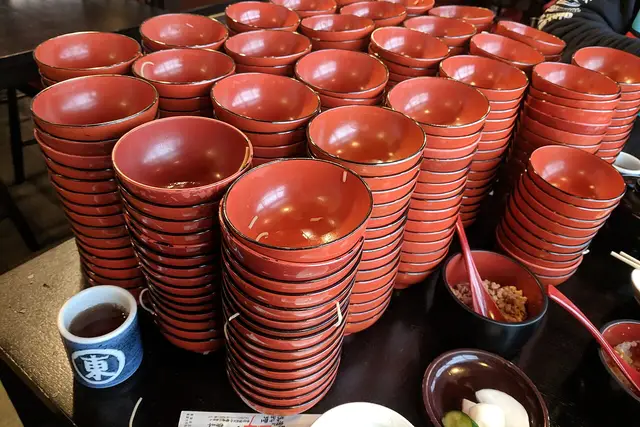
Wanko soba (bite-size soba refilled into your bowl until you stop)
わんこそば
Servers keep dropping small portions of soba into your bowl. It comes from a hospitality custom in Morioka and Hanamaki.
- Known in
- Morioka and Hanamaki
Noodles
Morioka reimen (chewy cold noodles in beef broth with kimchi)
盛岡冷麺
Chewy cold noodles in a chilled beef and chicken broth with spicy kimchi. About 30 shops in Morioka serve it.
- Known in
- Morioka · Morioka guide
Noodles
Morioka jajamen (noodles topped with meat miso, cucumber and scallion)
盛岡じゃじゃ麺
Boiled noodles topped with meat miso, cucumber and scallion, mixed at the table. Leftover sauce can be turned into egg soup (chi-tan-tan).
- Known in
- Morioka · Morioka guide
Meat
Tono jingisukan (grilled lamb, often cooked on a bucket grill)
遠野ジンギスカン
Grilled lamb widely eaten in Tono. Some cook it on a tin-bucket stove, called bucket jingisukan, at festivals and outings.
- Known in
- Tono · Tono guide
Noodles
Kamaishi ramen (clear amber soup with very thin curly noodles)
釜石ラーメン
Ramen with a clear amber soup and very thin curly noodles. Served at Chinese restaurants, diners and soba shops.
- Known in
- Kamaishi · Kamaishi & Ofunato guide
Seafood
Bin-don (seafood in a milk bottle poured over rice)
瓶ドン
A rice bowl where seasonal Miyako seafood packed in a milk bottle is poured over rice. Served at several shops in Miyako.
- Known in
- Miyako · Miyako & Jodogahama guide
Hot pots & soups
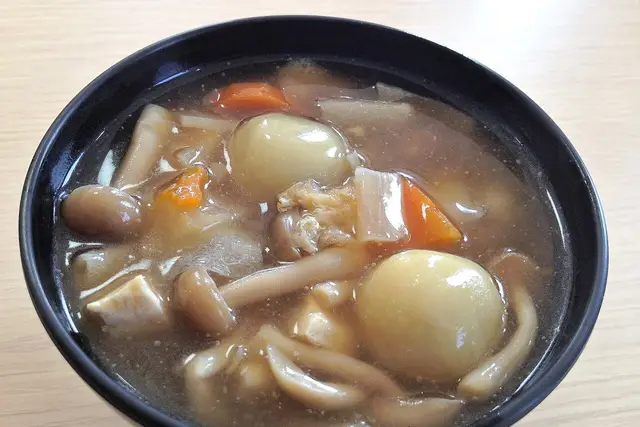
Mamebu (dumplings with walnut and brown sugar in soup)
まめぶ汁
Soup with wheat dumplings filled with walnut and brown sugar. A local dish of Yamagata, Kuji City.
- Known in
- Kuji · Kuji & North Sanriku guide
Japanese cuisine
Ichinoseki mochi dishes (set meals of freshly pounded rice cakes)
一関のもち料理
A local Ichinoseki custom of enjoying many kinds of freshly pounded rice cake, served as set meals at restaurants in the city.
- Known in
- Ichinoseki · Hiraizumi & Ichinoseki guide
“Find places serving it” opens a map app search for the dish name and the place name. The results are not chosen or recommended by this site. Please check with the shop whether it serves the dish.
Traditional home dishes of Iwate (30)Practical booking & planning links (Ad)
- Activities, tickets & local tours
- Popular observatories, museums and theme parks increasingly require timed-entry tickets booked in advance. For countryside spots with infrequent buses, a local day tour can save hours.
- KlookKKday
- Rental cars
- A rental car is practical when travelling straight from an airport or exploring rural areas with few trains. Request child seats, an ETC toll card, or winter snow tyres when booking.
- Klook
- Restaurant reservations & food tours
- Well-known dinner spots and course restaurants often fill up days ahead—reserving a table saves waiting in line. Guided local food tours are also a great way to try regional dishes.
- Klook
We list only well-established booking services. This site may receive a commission if you book through these links (each opens in a new tab).
Comment on whether your booking was helpful
Sources
Local food specialties
Each specialty was checked against an official page (prefecture, municipality, tourism association or JNTO) on 2026-11-17. The descriptions were written by this site.
- Wanko soba (bite-size soba refilled into your bowl until you stop): iwatetabi.jp
- Morioka reimen (chewy cold noodles in beef broth with kimchi): iwatetabi.jp
- Morioka jajamen (noodles topped with meat miso, cucumber and scallion): iwatetabi.jp
- Tono jingisukan (grilled lamb, often cooked on a bucket grill): tonojikan.jp
- Kamaishi ramen (clear amber soup with very thin curly noodles): iwatetabi.jp
- Bin-don (seafood in a milk bottle poured over rice): iwatetabi.jp
- Mamebu (dumplings with walnut and brown sugar in soup): iwatetabi.jp
- Ichinoseki mochi dishes (set meals of freshly pounded rice cakes): www.ichitabi.jp
Photo and data credits
The cherry-tree tunnel along the path at Tenshochi Park in Kitakami Gribeco (CC BY-SA 4.0) / Tall stacks of empty wanko soba bowls on the table Koltonsmith (CC BY-SA 4.0) / Mamebu-jiru with round dumplings, mushrooms and vegetables Datemasa (CC BY 3.0). Cropped and resized.