Kuji & North Sanriku guide
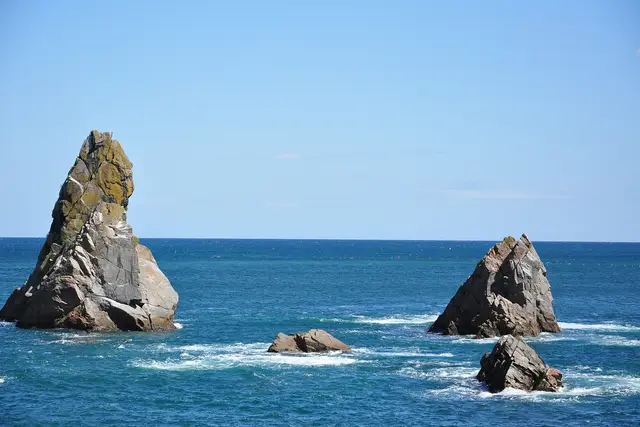
Kuji is an amber town whose Kosode coast is known for its free-diving ama. Ride the Sanriku Railway south to the towering sea cliffs of Kitayamazaki and Unosu.
Things to see 4 classics
"Classics", "For visitors" and "Local picks" are this site's editorial picks, not a measured popularity ranking.
- 1
Kosode Coast (Kosode Ama Center)
Home of the northernmost ama free divers. On summer weekends they dive in front of the center to show their skills.
- Nature
- Food & markets
- Activities
about 60 min
Bus · About 40 min from Kuji ・ Bus toward Kosode from Kuji Station ・ 7.3km
- 2
Kitayamazaki Cliffs
A coastline of sheer cliffs about 200 m high. Stepped paths lead down to the viewing platforms.
- Views
- Nature
about 60 minFree
Train · About 80 min from Kuji ・ Sanriku Railway to Tanohata, then about 15 minutes by taxi ・ 28km
- 3
Unosu Cliffs
Cliffs about 200 m high plunge to the sea in five great folds. The name comes from the cormorants that nest here.
- Views
- Nature
about 30 minFree
Train · About 70 min from Kuji ・ Sanriku Railway to Tanohata, then about 10 minutes by taxi ・ 37km
- 4
Kuji Amber Museum
A museum in Kuji, a source of amber. See amber with insects trapped inside, and try digging for some yourself.
- History & buildings
- Shopping & strolling
- With kids
about 1.5 hrPaid entryFine on a rainy day
Taxi · About 15 min from Kuji ・ About 10 minutes by taxi from Kuji Station ・ 4.6km
Show on map
ClassicsFor visitorsLocal picks
Suggested routes
Times assume a 9:00 start. Travel times are estimated from distance and vary with waiting and crowds.
Kuji town and the Kosode coast
Leave 9:00 → until about 14:30 (about 5.5 hr)
- 9:00Kuji
about 15 min by transport
9:15Kuji Amber Museumstay about 1.5 hrabout 45 min by transport
11:30Kosode Coast (Kosode Ama Center)stay about 60 minabout 15 min by transport
12:45Tsuriganedo Rockstay about 30 minabout 30 min by transport
13:45Michi-no-Eki Kuji Yamase Dofukanstay about 45 min
Reach the Kosode coast by an infrequent bus or by car. On summer weekends, time your visit for the ama diving show.
Plan this routeTo the sea cliffs by the Sanriku Railway
Leave 9:00 → until about 13:45 (about 5 hr)
- 9:00Kuji
about 25 min by transport
9:25Tofugaura Beachstay about 30 minabout 50 min by transport
10:45Kurosaki (Cape at 40°N)stay about 30 minabout 20 min by transport
11:35Kitayamazaki Cliffsstay about 60 minabout 40 min by transport
13:15Unosu Cliffsstay about 30 min
You will need a car beyond the stations. Booking a taxi in advance is wise.
Plan this route
Main ways to get around
JR Hachinohe Line
From Hachinohe on the Shinkansen, about 1 hour 50 minutes along the coast to Kuji. Trains run every 2 to 3 hours.
Sanriku Railway Rias Line
Heads south from Kuji via Rikuchu-Noda and Tanohata to Miyako. For Kitayamazaki and Unosu, continue by car from Tanohata or nearby stations.
Buses from Morioka
Buses run from Morioka Station to Kuji, including the Shirakaba service via the Hiraniwa plateau (about 2 hours 50 minutes).
Rental cars and taxis
Many coastal sights are far from the stations, so a car makes touring much easier.
Getting to Kuji
“Classics”, “For visitors” and “Local picks” are our editors' picks, not a measured popularity ranking. Travel times are estimates. Please check prices, opening hours and operating days with the official sources before you go.
Local food specialties
Specialties of Kuji & North Sanriku, together with those of other places in Iwate. They are listed by dish, not by shop, and are not recommendations.
Hot pots & soups
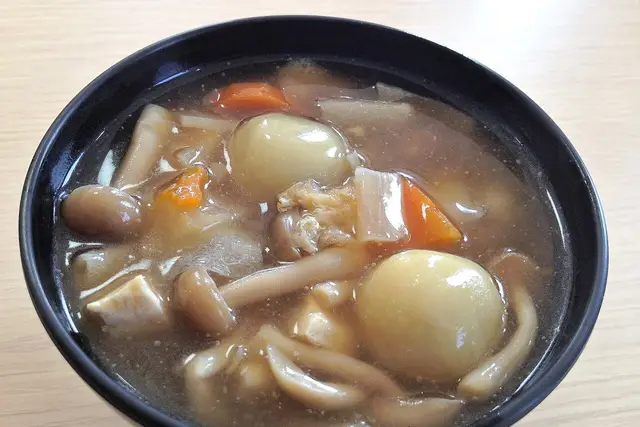
Mamebu (dumplings with walnut and brown sugar in soup)
まめぶ汁
Soup with wheat dumplings filled with walnut and brown sugar. A local dish of Yamagata, Kuji City.
- Known in
- Kuji
Noodles
Morioka reimen (chewy cold noodles in beef broth with kimchi)
盛岡冷麺
Chewy cold noodles in a chilled beef and chicken broth with spicy kimchi. About 30 shops in Morioka serve it.
- Known in
- Morioka · Morioka guide
Noodles
Morioka jajamen (noodles topped with meat miso, cucumber and scallion)
盛岡じゃじゃ麺
Boiled noodles topped with meat miso, cucumber and scallion, mixed at the table. Leftover sauce can be turned into egg soup (chi-tan-tan).
- Known in
- Morioka · Morioka guide
Noodles
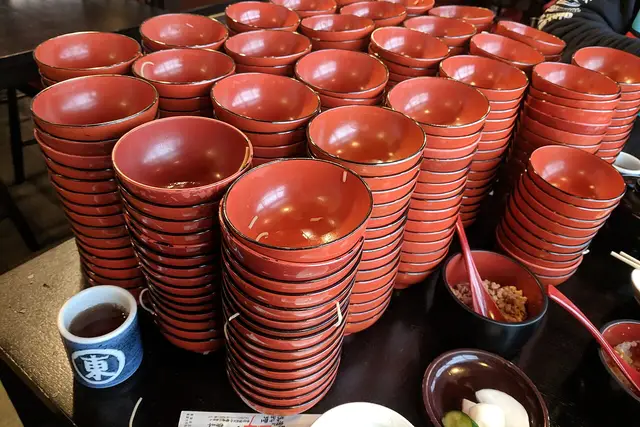
Wanko soba (bite-size soba refilled into your bowl until you stop)
わんこそば
Servers keep dropping small portions of soba into your bowl. It comes from a hospitality custom in Morioka and Hanamaki.
- Known in
- Morioka and Hanamaki · Morioka guide, Hanamaki & Kitakami guide
Meat
Tono jingisukan (grilled lamb, often cooked on a bucket grill)
遠野ジンギスカン
Grilled lamb widely eaten in Tono. Some cook it on a tin-bucket stove, called bucket jingisukan, at festivals and outings.
- Known in
- Tono · Tono guide
Noodles
Kamaishi ramen (clear amber soup with very thin curly noodles)
釜石ラーメン
Ramen with a clear amber soup and very thin curly noodles. Served at Chinese restaurants, diners and soba shops.
- Known in
- Kamaishi · Kamaishi & Ofunato guide
Seafood
Bin-don (seafood in a milk bottle poured over rice)
瓶ドン
A rice bowl where seasonal Miyako seafood packed in a milk bottle is poured over rice. Served at several shops in Miyako.
- Known in
- Miyako · Miyako & Jodogahama guide
Japanese cuisine
Ichinoseki mochi dishes (set meals of freshly pounded rice cakes)
一関のもち料理
A local Ichinoseki custom of enjoying many kinds of freshly pounded rice cake, served as set meals at restaurants in the city.
- Known in
- Ichinoseki · Hiraizumi & Ichinoseki guide
“Find places serving it” opens a map app search for the dish name and the place name. The results are not chosen or recommended by this site. Please check with the shop whether it serves the dish.
Traditional home dishes of Iwate (30)Practical booking & planning links (Ad)
- Activities, tickets & local tours
- Popular observatories, museums and theme parks increasingly require timed-entry tickets booked in advance. For countryside spots with infrequent buses, a local day tour can save hours.
- KlookKKday
- Rental cars
- A rental car is practical when travelling straight from an airport or exploring rural areas with few trains. Request child seats, an ETC toll card, or winter snow tyres when booking.
- Klook
- Restaurant reservations & food tours
- Well-known dinner spots and course restaurants often fill up days ahead—reserving a table saves waiting in line. Guided local food tours are also a great way to try regional dishes.
- Klook
We list only well-established booking services. This site may receive a commission if you book through these links (each opens in a new tab).
Comment on whether your booking was helpful
Sources
Local food specialties
Each specialty was checked against an official page (prefecture, municipality, tourism association or JNTO) on 2026-11-17. The descriptions were written by this site.
- Mamebu (dumplings with walnut and brown sugar in soup): iwatetabi.jp
- Morioka reimen (chewy cold noodles in beef broth with kimchi): iwatetabi.jp
- Morioka jajamen (noodles topped with meat miso, cucumber and scallion): iwatetabi.jp
- Wanko soba (bite-size soba refilled into your bowl until you stop): iwatetabi.jp
- Tono jingisukan (grilled lamb, often cooked on a bucket grill): tonojikan.jp
- Kamaishi ramen (clear amber soup with very thin curly noodles): iwatetabi.jp
- Bin-don (seafood in a milk bottle poured over rice): iwatetabi.jp
- Ichinoseki mochi dishes (set meals of freshly pounded rice cakes): www.ichitabi.jp
Photo and data credits
Rock stacks rising from the blue sea at Kosode Coast re-kuma (CC BY 3.0) / Mamebu-jiru with round dumplings, mushrooms and vegetables Datemasa (CC BY 3.0) / Tall stacks of empty wanko soba bowls on the table Koltonsmith (CC BY-SA 4.0). Cropped and resized.