Koyasan (Mount Koya) guide
A temple town about 800 m up, founded by the monk Kukai (Kobo Daishi). Visit Kongobuji, the Danjo Garan and the cedar-shaded Okunoin cemetery, and stay at a temple lodging for vegetarian meals and morning prayers.
Things to see 6 classics
"Classics", "For visitors" and "Local picks" are this site's editorial picks, not a measured popularity ranking.
- 1
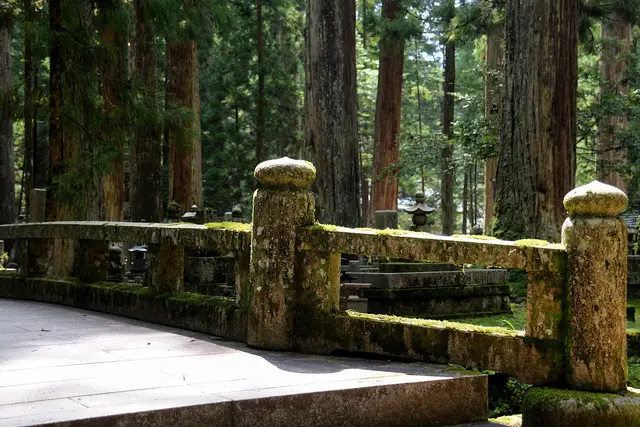
Okunoin (Lantern Hall and Kobo Daishi's Mausoleum)
The mausoleum where Kukai is believed to remain in eternal meditation. The hall before it glows with countless lanterns.
- Temples, shrines & churches
- History & buildings
- Nature
about 60 minFree
Bus · About 40 min from Koyasan ・ Rinkan Bus to Okunoin-mae, then about 20 minutes on foot ・ 2.8km
- 2
Danjo Garan (Konpon Daito Pagoda)
The sacred core of Koyasan, first laid out by Kukai. The vermilion Konpon Daito pagoda holds a 3D mandala of statues.
- Temples, shrines & churches
- History & buildings
- Museums
about 60 minPartly paid
Bus · About 20 min from Koyasan ・ Rinkan Bus to Senjuinbashi, then about 8 minutes on foot ・ 1.6km
- 3
Kongobuji Temple
Head temple of Koyasan Shingon Buddhism, with rooms of painted sliding doors and the vast Banryutei rock garden.
- Temples, shrines & churches
- Museums
- History & buildings
about 60 minPaid entryFine on a rainy day
Bus · About 15 min from Koyasan ・ Rinkan Bus to Kongobuji-mae ・ 1.6km
- 4
Daimon Gate
A vermilion gate about 25 m tall at the western entrance to Koyasan. At dusk, watch the sun set over the ridges.
- History & buildings
- Views
about 30 minFree
Bus · About 20 min from Koyasan ・ Rinkan Bus to Daimon ・ 1.7km
- 5
Reihokan Museum
A museum of Buddhist statues, paintings and sutras from Koyasan's temples, many of them National Treasures. Displays rotate.
- Museums
- History & buildings
about 60 minPaid entryFine on a rainy day
Bus · About 20 min from Koyasan ・ Rinkan Bus to Reihokan-mae ・ 1.8km
- 6
Tokugawa Mausoleum
Two Edo-period mausoleum halls for the shoguns Ieyasu and Hidetada, covered in fine carving and ornate metalwork.
- History & buildings
- Museums
about 30 minPaid entry
Bus · About 12 min from Koyasan ・ Rinkan Bus to Namikiri-fudo-mae, then about 3 minutes on foot ・ 1.2km
Show on map
ClassicsFor visitorsLocal picks
Suggested routes
Times assume a 9:00 start. Travel times are estimated from distance and vary with waiting and crowds.
Kongobuji, the Danjo Garan and Okunoin
Leave 9:00 → until about 15:23 (about 6.5 hr)
- 9:00Koyasan
about 15 min by transport
9:15Kongobuji Templestay about 60 minabout 2 min on foot
10:17Jabaramichi pathstay about 15 minabout 4 min on foot
10:36Danjo Garan (Konpon Daito Pagoda)stay about 60 minabout 4 min on foot
11:40Reihokan Museumstay about 60 minabout 25 min on foot
13:05Ichinohashi and the Okunoin approachstay about 60 minabout 18 min on foot
14:23Okunoin (Lantern Hall and Kobo Daishi's Mausoleum)stay about 60 min
Start the Okunoin walk at Ichinohashi and follow the path through the cemetery to the mausoleum. Return by bus from Okunoin-mae.
Plan this routeA temple-lodging day around town
Leave 9:00 → until about 15:17 (about 6.5 hr)
- 9:00Koyasan
about 5 min by transport
9:05Nyonindo Hallstay about 30 minabout 4 min on foot
9:39Tokugawa Mausoleumstay about 30 minabout 10 min on foot
10:19Koyasan Daishi Kyokai (sutra copying and Ajikan meditation)stay about 60 minabout 8 min on foot
11:27Odawara-dori streetstay about 45 minabout 5 min on foot
12:17Temple lodging (shojin ryori and morning prayers)stay about 3 hr
Most temple lodgings check in before evening, so drop your bags first. Go to the Daimon gate around sunset.
Plan this routeKudoyama and Amano at the foot of the mountain
Leave 9:00 → until about 12:38 (about 3.5 hr)
- 9:00Koyasan
about 60 min by transport
10:00Sanada-an (Zenmyosho-in)stay about 30 minabout 18 min on foot
10:48Jison-in and the Choishi-michi trail (Kudoyama)stay about 45 minabout 20 min by transport
11:53Niutsuhime Shrinestay about 45 min
The two Kudoyama sights are within walking distance. For Niutsuhime Shrine, take a bus from JR Kaseda Station or a taxi.
Plan this route
Main ways to get around
Nankai Koya Line
About 1.5 hours from Namba to Gokurakubashi, climbing through the mountains beyond Hashimoto. The Koya limited express is all-reserved.
Nankai Koyasan Cable Car
About 5 minutes from Gokurakubashi up a steep slope to Koyasan Station.
Nankai Rinkan Bus
From Koyasan Station via Nyonindo and Senjuinbashi to Okunoin-mae. You cannot walk from the station to town, so take the bus. A one-day pass is sold.
On foot
Kongobuji and the Danjo Garan are 5 to 10 minutes on foot from Senjuinbashi. From Ichinohashi, the path to the mausoleum at Okunoin is about 2 km.
Getting to Koyasan
“Classics”, “For visitors” and “Local picks” are our editors' picks, not a measured popularity ranking. Travel times are estimates. Please check prices, opening hours and operating days with the official sources before you go.
Local food specialties
Specialties of Koyasan (Mount Koya), together with those of other places in Wakayama. They are listed by dish, not by shop, and are not recommendations.
Japanese cuisine
Koyasan shojin ryori (Buddhist vegetarian cuisine)
高野山の精進料理
Meat- and fish-free Buddhist cuisine of Koyasan, served at temples and restaurants.
- Known in
- Koyasan
Noodles
Wakayama ramen (chuka soba, soy-pork bone broth)
和歌山ラーメン
Soy-flavored ramen in a chicken or pork bone broth; locally also called chuka soba.
- Known in
- Wakayama City · Wakayama, Kada and Kishi guide
Rice dishes
Haya-zushi (pressed mackerel sushi eaten with ramen)
早寿司
Pressed mackerel sushi served alongside Wakayama ramen; many shops use the honor system for payment.
- Known in
- Wakayama City · Wakayama, Kada and Kishi guide
Rice dishes
Mehari-zushi (rice ball wrapped in pickled mustard greens)
めはり寿司
A large rice ball wrapped in pickled takana greens, once packed as lunch for mountain work in Kumano.
- Known in
- Kumano · Nachikatsuura and Kumano guide
Seafood
Nachikatsuura fresh (unfrozen) tuna
那智勝浦の生まぐろ
Nachikatsuura lands Japan's largest catch of fresh longline tuna; winter is the peak season.
- Known in
- Nachikatsuura · Nachikatsuura and Kumano guide
Meat
Taiji whale dishes (sashimi, tatsuta-age, hari-hari nabe)
太地の鯨料理
Whale meat as sashimi, fried tatsuta-age or hari-hari hot pot; Taiji is said to be the birthplace of traditional whaling.
- Known in
- Taiji
Hot pots & soups
Kue nabe (giant grouper hot pot)
クエ鍋
A hot pot of kue (giant grouper), a prized winter fish with a small catch.
- Known in
- Southern Wakayama
Seafood
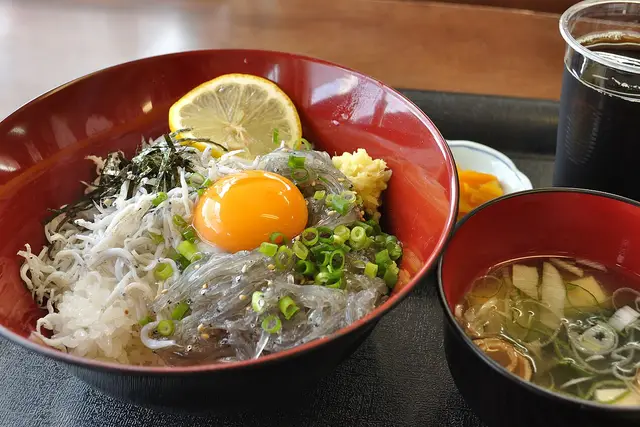
Shirasu-don (whitebait rice bowl)
しらす丼
Rice bowl topped with boiled or raw whitebait, served near the landing ports.
- Known in
- Wakayama coast
Meat
Kumano beef (local branded wagyu)
熊野牛
Branded wagyu of Wakayama, bred from cattle long raised in the Kumano region.
- Known in
- Kumano · Nachikatsuura and Kumano guide
Seafood
Arida hairtail (tachiuo, called tacchyo locally)
有田の太刀魚
Hairtail caught in the Kii Channel; called 'tacchyo' in Arida.
- Known in
- Arida · Yuasa and Arida guide
“Find places serving it” opens a map app search for the dish name and the place name. The results are not chosen or recommended by this site. Please check with the shop whether it serves the dish.
Traditional home dishes of Wakayama (27)Practical booking & planning links (Ad)
- Activities, tickets & local tours
- Popular observatories, museums and theme parks increasingly require timed-entry tickets booked in advance. For countryside spots with infrequent buses, a local day tour can save hours.
- KlookKKday
- Rental cars
- A rental car is practical when travelling straight from an airport or exploring rural areas with few trains. Request child seats, an ETC toll card, or winter snow tyres when booking.
- Klook
- Restaurant reservations & food tours
- Well-known dinner spots and course restaurants often fill up days ahead—reserving a table saves waiting in line. Guided local food tours are also a great way to try regional dishes.
- Klook
We list only well-established booking services. This site may receive a commission if you book through these links (each opens in a new tab).
Comment on whether your booking was helpful
Sources
Local food specialties
Each specialty was checked against an official page (prefecture, municipality, tourism association or JNTO) on 2026-11-17. The descriptions were written by this site.
- Koyasan shojin ryori (Buddhist vegetarian cuisine): www.wakayama-kanko.or.jp
- Wakayama ramen (chuka soba, soy-pork bone broth): www.wakayama-kanko.or.jp
- Haya-zushi (pressed mackerel sushi eaten with ramen): www.wakayama-kanko.or.jp
- Mehari-zushi (rice ball wrapped in pickled mustard greens): www.wakayama-kanko.or.jp
- Nachikatsuura fresh (unfrozen) tuna: www.wakayama-kanko.or.jp
- Taiji whale dishes (sashimi, tatsuta-age, hari-hari nabe): www.wakayama-kanko.or.jp
- Kue nabe (giant grouper hot pot): www.wakayama-kanko.or.jp
- Shirasu-don (whitebait rice bowl): www.wakayama-kanko.or.jp
- Kumano beef (local branded wagyu): www.wakayama-kanko.or.jp
- Arida hairtail (tachiuo, called tacchyo locally): www.wakayama-kanko.or.jp
Photo and data credits
The stone bridge among cedars at Okunoin, Koyasan Josep M. Gracia (CC BY-SA 4.0) / Shirasu-don: raw and boiled whitebait on rice with an egg yolk and lemon Ocdp (CC0). Cropped and resized.