Naruko Onsen guide
A cluster of five hot-spring villages in the hills of northern Miyagi, each with its own kind of water. It is a home of kokeshi dolls, Naruko Gorge blazes with autumn color, and nearby Iwadeyama keeps a Date-clan school.
Things to see 4 classics
"Classics", "For visitors" and "Local picks" are this site's editorial picks, not a measured popularity ranking.
- 1
Naruko Onsen
A hot-spring town known for its kokeshi dolls. The nearby Naruko Gorge is a famous spot for autumn leaves.
- Hot springs
- Nature
about 3 hrPartly paidFine on a rainy day
Train · About 100 min from Naruko-Onsen ・ Tohoku Shinkansen to Furukawa, then the JR Rikuu East Line to Naruko-Onsen ・ 100m
- 2
Naruko Gorge
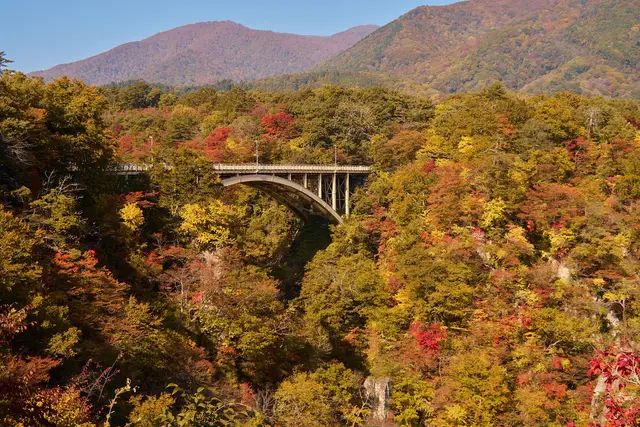
A gorge about 100 m deep carved by the Otani River. In autumn the lookout frames Ofukazawa Bridge against a blaze of leaves.
- Nature
- Views
about 45 minFree
Taxi · About 10 min from Naruko-Onsen ・ 2.8km
- 3
Taki-no-Yu Public Bath
A long-standing public bath tied to the Onsen Shrine. In its wooden bathhouse, the water pours in through wooden troughs.
- Hot springs
- History & buildings
about 45 minPaid entryFine on a rainy day
Walk · About 5 min from Naruko-Onsen ・ 300m
Show on map
ClassicsFor visitorsLocal picks
Suggested routes
Times assume a 9:00 start. Travel times are estimated from distance and vary with waiting and crowds.
Naruko's baths and kokeshi dolls
Leave 9:00 → until about 13:21 (about 4.5 hr)
- 9:00Naruko-Onsen
about 5 min on foot
9:05Onsen Shrinestay about 30 minabout 3 min on foot
9:38Taki-no-Yu Public Bathstay about 45 minabout 15 min by transport
10:38Japan Kokeshi Museum (Naruko)stay about 60 minabout 5 min on foot
11:43Shitomae Checkpoint Sitestay about 30 minabout 23 min on foot
12:36Naruko Gorgestay about 45 min
Naruko Gorge is busiest in the autumn-color season, late October to early November.
Plan this routeOnikobe's geyser and steaming valley
Leave 9:00 → until about 13:09 (about 4 hr)
- 9:00Naruko-Onsen
about 10 min by transport
9:10Lake Katanumastay about 60 minabout 15 min by transport
10:25Naruko Damstay about 30 minabout 25 min by transport
11:20Onikobe Geyserstay about 60 minabout 4 min on foot
12:24Onikobe Jigokudani Trailstay about 45 min
A driving loop. Onikobe is deep in the mountains, so take care with snow in winter.
Plan this routeIwadeyama, Masamune's first castle town
Leave 9:00 → until about 13:03 (about 4 hr)
- 9:00Naruko-Onsen
about 35 min by transport
9:35Former Yubikan School and Gardenstay about 45 minabout 3 min on foot
10:23Iwadeyama Castle Site (Shiroyama Park)stay about 45 minabout 55 min by transport
12:03Higashi-Naruko Onsenstay about 60 min
Walkable from Yubikan Station. On the way back, stop for a soak at Higashi-Naruko.
Plan this route
Main ways to get around
Tohoku Shinkansen (Furukawa)
About 15 minutes from Sendai to Furukawa, where you change to the Rikuu East Line.
JR Rikuu East Line (Furukawa – Yubikan – Naruko-Onsen)
About 50 minutes from Furukawa to Naruko-Onsen, with a train every 1 to 2 hours, so check the timetable first.
Rikuu East Line replacement bus (Naruko-Onsen – Shinjo)
Since heavy rain in July 2024, trains have not run between Naruko-Onsen and Shinjo; replacement buses cover it, including Nakayamadaira Onsen.
Taxi
Buses to Naruko Gorge, Lake Katanuma and Onikobe are infrequent, so a taxi from Naruko-Onsen Station is handy.
Getting to Naruko-Onsen
“Classics”, “For visitors” and “Local picks” are our editors' picks, not a measured popularity ranking. Travel times are estimates. Please check prices, opening hours and operating days with the official sources before you go.
Local food specialties
Specialties of Naruko Onsen, together with those of other places in Miyagi. They are listed by dish, not by shop, and are not recommendations.
Meat
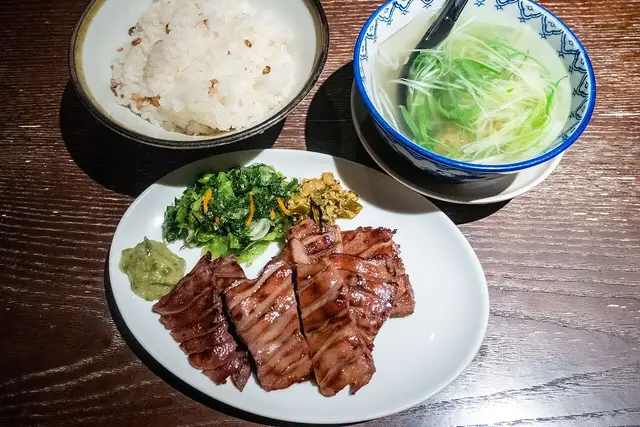
Gyutan-yaki (grilled beef tongue, Sendai specialty)
牛たん焼き
Sliced beef tongue grilled over a fire. The first specialty shop opened in Sendai in 1948, and about 100 now operate in the city.
- Known in
- Sendai · Sendai guide
Sweets
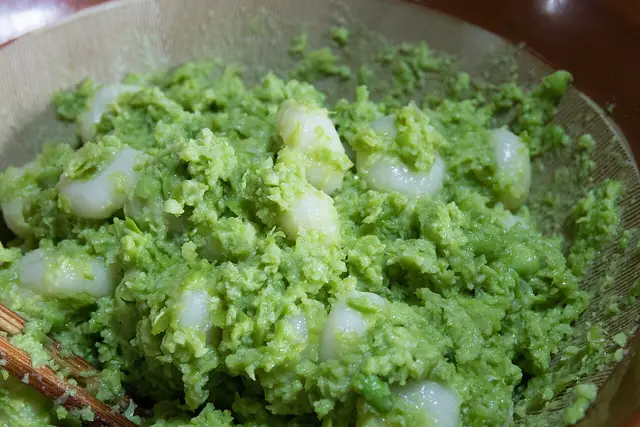
Zunda mochi (rice cake coated in sweet mashed edamame)
ずんだ餅
Rice cake coated in sweet mashed edamame. Once a Bon-season dish in Sendai, now eaten year-round.
- Known in
- Sendai · Sendai guide
Noodles
Sendai hiyashi chuka (cold ramen salad, said to have originated here)
仙台冷やし中華
Cold noodles with toppings and sauce, eaten in summer. Said to have been created at a Sendai Chinese restaurant in 1937.
- Known in
- Sendai · Sendai guide
Hot pots & soups
Sendai seri nabe (hot pot with Japanese parsley, roots included)
仙台せり鍋
A hot pot featuring seri (Japanese parsley), roots included. Miyagi is Japan's top producer; the season runs from winter to early spring.
- Known in
- Sendai · Sendai guide
Seafood
Sendai zuke-don (marinated white fish rice bowl)
仙台づけ丼
A rice bowl topped with white fish from Sendai Bay marinated in sauce.
- Known in
- Sendai · Sendai guide
Noodles
Ishinomaki yakisoba (brown twice-steamed noodles fried in seafood stock)
石巻焼きそば
Brown, twice-steamed noodles pan-steamed in seafood stock. Locals taste it plain first, then add sauce.
- Known in
- Ishinomaki · Ishinomaki and Onagawa guide
Seafood
Kesennuma shark fin dishes (rice bowl, sushi, ramen, soft serve)
気仙沼のふかひれ
Shark fin dishes in Kesennuma, including rice bowls, sushi, ramen and soft-serve ice cream.
- Known in
- Kesennuma · Kesennuma and Minamisanriku guide
Noodles
Shiroishi umen (short, oil-free wheat noodles)
白石温麺
Umen noodles, a specialty of Shiroishi. The Shiroishi tourist association publishes a map of serving shops.
- Known in
- Shiroishi · Miyagi Zao and Shiroishi guide
Seafood
Matsushima oysters (eaten raw, grilled, as kaki-don and more)
松島のかき
Small, firm oysters from Matsushima, in season from October to March. Eaten raw or as oyster rice, hot pot or rice bowls.
- Known in
- Matsushima · Matsushima and Shiogama guide
“Find places serving it” opens a map app search for the dish name and the place name. The results are not chosen or recommended by this site. Please check with the shop whether it serves the dish.
Traditional home dishes of Miyagi (29)Practical booking & planning links (Ad)
- Activities, tickets & local tours
- Popular observatories, museums and theme parks increasingly require timed-entry tickets booked in advance. For countryside spots with infrequent buses, a local day tour can save hours.
- KlookKKday
- Rental cars
- A rental car is practical when travelling straight from an airport or exploring rural areas with few trains. Request child seats, an ETC toll card, or winter snow tyres when booking.
- Klook
- Restaurant reservations & food tours
- Well-known dinner spots and course restaurants often fill up days ahead—reserving a table saves waiting in line. Guided local food tours are also a great way to try regional dishes.
- Klook
We list only well-established booking services. This site may receive a commission if you book through these links (each opens in a new tab).
Comment on whether your booking was helpful
Sources
Local food specialties
Each specialty was checked against an official page (prefecture, municipality, tourism association or JNTO) on 2026-11-17. The descriptions were written by this site.
- Gyutan-yaki (grilled beef tongue, Sendai specialty): www.sentabi.jp
- Zunda mochi (rice cake coated in sweet mashed edamame): www.sentabi.jp
- Sendai hiyashi chuka (cold ramen salad, said to have originated here): www.sentabi.jp
- Sendai seri nabe (hot pot with Japanese parsley, roots included): www.sentabi.jp
- Sendai zuke-don (marinated white fish rice bowl): www.sentabi.jp
- Ishinomaki yakisoba (brown twice-steamed noodles fried in seafood stock): www.city.ishinomaki.lg.jp
- Kesennuma shark fin dishes (rice bowl, sushi, ramen, soft serve): kesennuma-kanko.jp
- Shiroishi umen (short, oil-free wheat noodles): www.city.shiroishi.miyagi.jp
- Matsushima oysters (eaten raw, grilled, as kaki-don and more): www.matsushima-kanko.com
Photo and data credits
The Ofukasawa Bridge spanning Naruko Gorge in full autumn color lumoplank (CC0) / Grilled beef tongue set with barley rice and oxtail soup くろふね (CC BY 4.0) / Zunda mochi: rice cakes coated in sweet mashed green edamame Σ64 (CC BY 4.0). Cropped and resized.