Wajima and Oku-Noto guide
Wajima, town of lacquerware and the morning market, and Suzu and Noto at the peninsula's tip. Still rebuilding after the 2024 quake and floods; the market trades in a new spot, and the rice terraces and capes await.
Things to see 4 classics
"Classics", "For visitors" and "Local picks" are this site's editorial picks, not a measured popularity ranking.
- 1
Wajima Morning Market (at Y Plaza Wajima)
The thousand-year-old Wajima market, where vendors sell dried fish, seafood, vegetables and lacquerware.
The old market street burned after the 2024 quake; the market now runs inside the Y Plaza Wajima store. (as of Nov 17, 2026)
- Food & markets
- Shopping & strolling
about 45 minFreeFine on a rainy day
Walk · About 5 min from Wajima Ekimae (Michi-no-Eki Wajima) ・ 400m
- 2
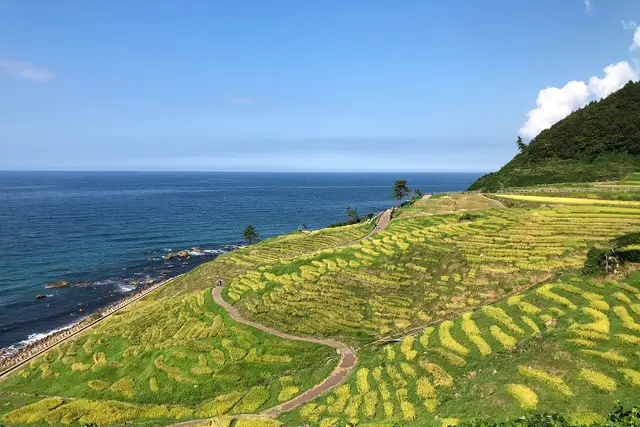
Shiroyone Senmaida Rice Terraces
More than a thousand tiny paddies stepping down to the Sea of Japan, still tended by locals after the 2024 quake and floods.
The adjoining Senmaida Pocket Park roadside station opens mainly Fridays, weekends and holidays. (as of Nov 17, 2026)
- Views
- Nature
about 45 minFree
Taxi · About 20 min from Wajima Ekimae (Michi-no-Eki Wajima) ・ 9.2km
- 3
Sojiji Soin Temple
A great Zen temple in Monzen that was once head of the Soto school. Its halls are linked by corridors, and zazen can be tried.
Quake repairs continue, but regular visits resumed in April 2025. (as of Nov 17, 2026)
- Temples, shrines & churches
- History & buildings
about 60 minPaid entry
Bus · About 40 min from Wajima Ekimae (Michi-no-Eki Wajima) ・ Bus to Monzen ・ 17km
- 4
Mitsukejima Island
A great rock island off Suzu. Half of it collapsed in the 2024 quake, changing its shape, but it remains a symbol of Noto.
- Views
- Nature
about 30 minFree
Taxi · About 60 min from Wajima Ekimae (Michi-no-Eki Wajima) ・ 30km
Show on map
ClassicsFor visitorsLocal picks
Suggested routes
Times assume a 9:00 start. Travel times are estimated from distance and vary with waiting and crowds.
Morning market, lacquerware and Shiroyone Senmaida
Leave 9:00 → until about 14:10 (about 5 hr)
- 9:00Wajima Ekimae (Michi-no-Eki Wajima)
about 5 min on foot
9:05Wajima Morning Market (at Y Plaza Wajima)stay about 45 minabout 15 min on foot
10:05Juzo Shrinestay about 30 minabout 10 min on foot
10:45Wajima Lacquerware Hallstay about 45 minabout 15 min on foot
11:45Wajima Museum of Urushi Artstay about 60 minabout 40 min by transport
13:25Shiroyone Senmaida Rice Terracesstay about 45 min
The town is walkable, but quake damage remains and some sidewalks are uneven. A taxi is easiest out to the rice terraces.
Plan this routeSojiji Soin in Monzen and Kuroshima
Leave 9:00 → until about 14:10 (about 5 hr)
- 9:00Wajima Ekimae (Michi-no-Eki Wajima)
about 40 min by transport
9:40Sojiji Soin Templestay about 60 minabout 20 min by transport
11:00Kuroshima village and Kitamaebune museumstay about 60 minabout 70 min by transport
13:10Wajima Museum of Urushi Artstay about 60 min
West of Wajima to Monzen, for the former head temple of Soto Zen and a village of Kitamaebune shipowners.
Plan this routeSuzu: salt fields, the cape and Mitsukejima
Leave 9:00 → until about 15:55 (about 7 hr)
- 9:00Wajima Ekimae (Michi-no-Eki Wajima)
about 45 min by transport
9:45Suzu Salt Farm Village (Michi-no-Eki)stay about 60 minabout 70 min by transport
11:55Rokkosaki Lighthouse (Noroshi)stay about 45 minabout 40 min by transport
13:20Suzu Pottery Centerstay about 1.5 hrabout 35 min by transport
15:25Mitsukejima Islandstay about 30 min
A drive around the tip of the peninsula. Without a car, base yourself at Michi-no-Eki Suzunari in Suzu and use taxis.
Plan this route
Main ways to get around
Wajima Express Bus (Hokutetsu Okunoto Bus)
From the west exit of Kanazawa Station via Anamizu and Noto Satoyama Airport to Wajima, along the Noto Satoyama Kaido expressway.
JR Nanao Line and Noto Railway (to Anamizu)
From Kanazawa via Nanao and Wakura Onsen to Anamizu, then change to the Wajima express bus for about 50 minutes to Wajima.
Local buses in Oku-Noto
Link Wajima, Noto town and Suzu, but runs are few and some routes do not operate on Sundays and holidays.
Taxis and rental cars
The rice terraces and Suzu's capes are hard to reach by bus, so taxis or a rental car help. Watch for road repair sections.
Getting to Wajima Ekimae (Michi-no-Eki Wajima)
“Classics”, “For visitors” and “Local picks” are our editors' picks, not a measured popularity ranking. Travel times are estimates. Please check prices, opening hours and operating days with the official sources before you go.
Local food specialties
Specialties of Wajima and Oku-Noto, together with those of other places in Ishikawa. They are listed by dish, not by shop, and are not recommendations.
Rice dishes
Noto-don (rice bowls of Oku-Noto ingredients)
能登丼
Rice bowls made with Oku-Noto rice and water and local seafood, meat or vegetables; each shop differs.
- Known in
- Oku-Noto
Seafood
Kano-gani and Kobako-gani (Ishikawa snow crab)
加能ガニ・香箱ガニ
Winter snow crab of Ishikawa: the male is kano-gani and the female is kobako-gani.
- Known in
- All over Ishikawa
Rice dishes
Kanazawa curry (thick curry with cutlet and shredded cabbage)
金沢カレー
Thick curry served on a steel plate with shredded cabbage, topped with cutlet and sauce.
- Known in
- Kanazawa · Kanazawa guide
Noodles
Komatsu udon (thin udon in light seafood broth)
小松うどん
Thin, firm noodles in a mild seafood broth; said to have started in 1897 at a shop near Komatsu Station.
- Known in
- Komatsu · Komatsu guide
Hot pots & soups
Kanazawa oden (stewed fish cakes and other items)
金沢おでん
Oden with local items like wheat-gluten wheels and whelk; in winter, crab shell stuffed with snow crab meat.
- Known in
- Kanazawa · Kanazawa guide
Rice dishes
Hanton rice (omelet rice topped with fried fish and tartar sauce)
ハントンライス
Rice under a soft egg, topped with fried white fish or shrimp, with ketchup and tartar sauce.
- Known in
- Kanazawa · Kanazawa guide
Hot pots & soups
Jibuni (stewed duck with wheat gluten)
治部煮
Kanazawa dish of duck simmered with sudare wheat gluten and vegetables.
- Known in
- Kanazawa · Kanazawa guide
Seafood
Nanao sushi (the sushi kingdom of Noto)
七尾のお寿司
Nanao is called the sushi kingdom, with many shops serving Noto seafood.
- Known in
- Nanao · Nanao and Wakura Onsen guide
“Find places serving it” opens a map app search for the dish name and the place name. The results are not chosen or recommended by this site. Please check with the shop whether it serves the dish.
Traditional home dishes of Ishikawa (30)Practical booking & planning links (Ad)
- Activities, tickets & local tours
- Popular observatories, museums and theme parks increasingly require timed-entry tickets booked in advance. For countryside spots with infrequent buses, a local day tour can save hours.
- KlookKKday
- Rental cars
- A rental car is practical when travelling straight from an airport or exploring rural areas with few trains. Request child seats, an ETC toll card, or winter snow tyres when booking.
- Klook
- Restaurant reservations & food tours
- Well-known dinner spots and course restaurants often fill up days ahead—reserving a table saves waiting in line. Guided local food tours are also a great way to try regional dishes.
- Klook
We list only well-established booking services. This site may receive a commission if you book through these links (each opens in a new tab).
Comment on whether your booking was helpful
Sources
Local food specialties
Each specialty was checked against an official page (prefecture, municipality, tourism association or JNTO) on 2026-11-17. The descriptions were written by this site.
- Noto-don (rice bowls of Oku-Noto ingredients): www.hot-ishikawa.jp
- Kano-gani and Kobako-gani (Ishikawa snow crab): www.hot-ishikawa.jp
- Kanazawa curry (thick curry with cutlet and shredded cabbage): www.hot-ishikawa.jp
- Komatsu udon (thin udon in light seafood broth): www.hot-ishikawa.jp
- Kanazawa oden (stewed fish cakes and other items): www.hot-ishikawa.jp
- Hanton rice (omelet rice topped with fried fish and tartar sauce): www.hot-ishikawa.jp
- Jibuni (stewed duck with wheat gluten): www.hot-ishikawa.jp
- Nanao sushi (the sushi kingdom of Noto): www.hot-ishikawa.jp
Photo and data credits
Shiroyone Senmaida rice terraces beside the Sea of Japan Totti (CC BY-SA 4.0). Cropped and resized.