Kanazawa guide
A castle town of the Maeda lords. Kenrokuen Garden, the castle, teahouse districts and samurai lanes are all a short bus ride or walk apart, with a seafood market and modern art too.
Things to see 9 classics
"Classics" and "Hidden gems" are this site's editorial picks, not a measured popularity ranking.
- 1
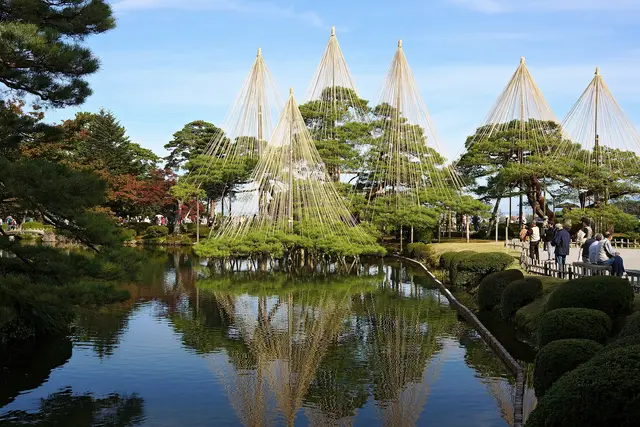
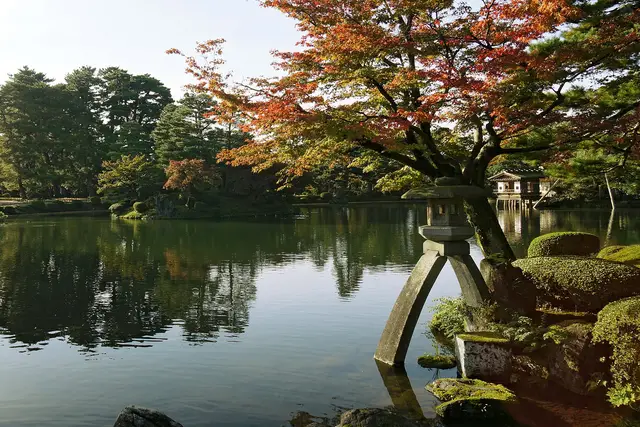
Kenrokuen Garden
One of Japan's three great gardens, known for the stone lantern by its pond and the rope supports that protect the pines in winter.
Introduced by JNTO
Named as a stop in Kanazawa on a route away from the usual Tokyo-Kyoto path. Source: JNTO, Off the Beaten Track in Japan
Many overseas visitors
532,879 foreign visitors in 2024, a record high Source: Kanazawa City, Kanazawa Tourism Survey Report 2024
- Nature
- History & buildings
about 1.5 hrPaid entryPartly step-free
Bus · About 20 min from Kanazawa ・ Bus to Kenrokuen-shita, then about 5 minutes on foot ・ 2.2km
- 2
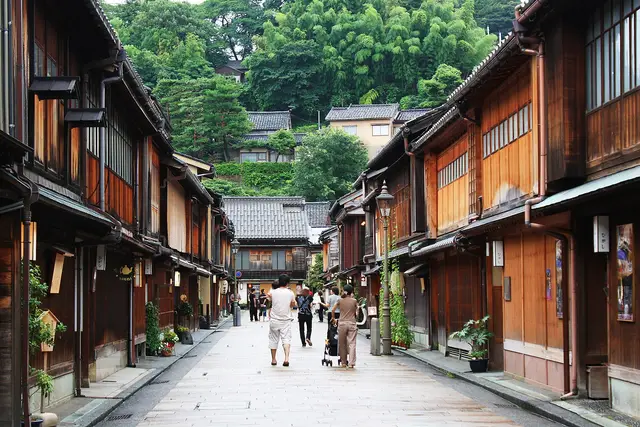
Higashi Chaya District
A stone-paved street of old teahouses with wooden lattices, now with gold-leaf shops and cafes. Quiet early and late in the day.
- History & buildings
- Shopping & strolling
- Food & markets
about 60 minFree
Bus · About 20 min from Kanazawa ・ Bus to Hashibacho, then about 5 minutes on foot ・ 1.7km
- 3
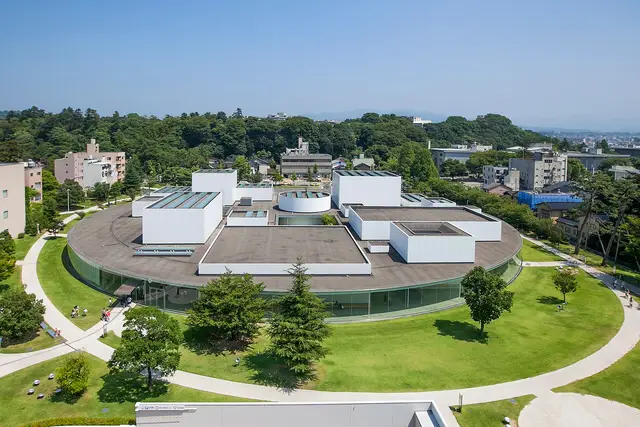
21st Century Museum of Contemporary Art
A round, glass-walled museum of contemporary art. The piece that lets you stand under a swimming pool is the favorite. Busy on holidays.
- Museums
- With kids
about 1.5 hrPartly paidFine on a rainy dayWheelchair & stroller friendly
Bus · About 20 min from Kanazawa ・ Bus to Hirosaka / 21st Century Museum ・ 2.1km
- 5
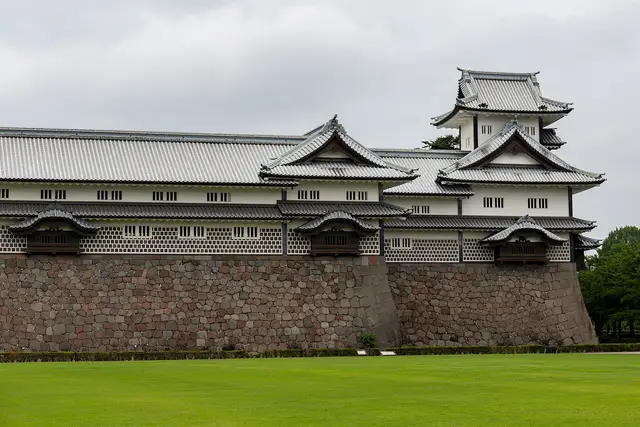
Kanazawa Castle Park
Site of the Maeda lords' castle. See Ishikawa Gate and the long turrets rebuilt in wood. A bridge links it to Kenrokuen.
- History & buildings
- Nature
about 60 minFreePartly step-free
Bus · About 20 min from Kanazawa ・ Bus to Kenrokuen-shita, then about 5 minutes on foot ・ 1.8km
- 6
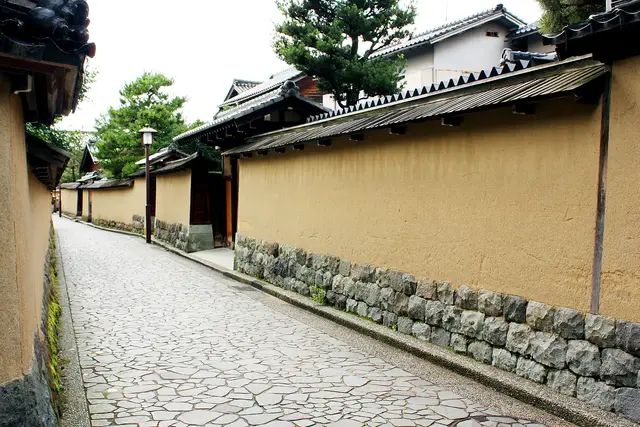
Nagamachi Samurai District
Narrow lanes lined with earthen walls where samurai families lived. In winter the walls are covered with straw mats.
- History & buildings
about 60 minFree
Bus · About 20 min from Kanazawa ・ Bus to Korinbo, then about 5 minutes on foot ・ 1.6km
Show on map
ClassicsHidden gems
Suggested routes
Times assume a 9:00 start. Travel times are estimated from distance and vary with waiting and crowds.
Market, teahouse district, then Kenrokuen and the castle
Leave 9:00 → until about 16:39 (about 7.5 hr)
- 9:00Kanazawa
about 15 min on foot
9:15Omicho Marketstay about 60 minabout 15 min on foot
10:30Higashi Chaya Districtstay about 60 minabout 5 min on foot
11:35Kazuemachi Chaya Districtstay about 30 minabout 20 min on foot
12:25Kenrokuen Gardenstay about 1.5 hrabout 7 min on foot
14:02Kanazawa Castle Parkstay about 60 minabout 7 min on foot
15:0921st Century Museum of Contemporary Artstay about 1.5 hr
Omicho Market is walkable from the station. After that, combine the loop bus with walking.
Plan this routeSamurai lanes, Nishi Chaya and the Ninja Temple
Leave 9:00 → until about 12:27 (about 3.5 hr)
- 9:00Kanazawa
about 15 min by transport
9:15Oyama Shrinestay about 30 minabout 9 min on foot
9:54Nagamachi Samurai Districtstay about 60 minabout 16 min on foot
11:10Nishi Chaya Districtstay about 30 minabout 2 min on foot
11:42Myoryuji (Ninja Temple)stay about 45 min
Myoryuji (the Ninja Temple) must be booked ahead, so fix that time first and plan the rest around it.
Plan this route
When to go
April–May and October are relatively dry and good for walking. November to January is very wet (over 250 mm a month); winter brings snowy Kenrokuen.
Point at a month to see its temperature and precipitation.
Temperature (line: average; band: low to high)
Precipitation (mm)
Typical seasons
Cherry blossoms (Kenrokuen)
Kanazawa Hyakumangoku Festival
Autumn leaves (Kenrokuen)
Snow and yukitsuri at Kenrokuen
Show as a table
| Jan | Feb | Mar | Apr | May | Jun | Jul | Aug | Sep | Oct | Nov | Dec | |
|---|---|---|---|---|---|---|---|---|---|---|---|---|
| High (℃) | 7.1 | 7.8 | 11.6 | 17.3 | 22.3 | 25.6 | 29.5 | 31.3 | 27.2 | 21.8 | 15.9 | 10.2 |
| Avg (℃) | 4 | 4.2 | 7.3 | 12.6 | 17.7 | 21.6 | 25.8 | 27.3 | 23.2 | 17.6 | 11.9 | 6.8 |
| Low (℃) | 1.2 | 1 | 3.4 | 8.2 | 13.6 | 18.4 | 22.9 | 24.1 | 19.9 | 13.9 | 8.1 | 3.5 |
| Rain (mm) | 256 | 162.6 | 157.2 | 143.9 | 138 | 170.3 | 233.4 | 179.3 | 231.9 | 177.1 | 250.8 | 301.1 |
Temperature and precipitation are Japan Meteorological Agency normals (1991–2020, Kanazawa). Seasons are typical timings and can shift by a week or two each year. JMA data
Main ways to get around
Kanazawa Loop Bus and city buses
From the Kenrokuen (east) exit of Kanazawa Station, a loop past Omicho Market, Higashi Chaya, Kenrokuen, the 21st Century Museum and Korinbo. A one-day pass is sold.
Machi-nori bike share
Docking ports are spread across the city centre and you can return a bike at any of them. The sights are close together, so cycling works well.
Hokuriku Shinkansen
About 2.5–3 hours direct from Tokyo. From Osaka or Kyoto, take a limited express to Tsuruga and change to the Shinkansen there.
Komatsu Airport limousine bus
About 40 minutes from Komatsu Airport to the west exit of Kanazawa Station, timed to meet arriving flights.
Highway bus (Shirakawa-go, Takayama)
About 1 hour 15 minutes from Kanazawa Station to Shirakawa-go and 2 hours 15 minutes to Takayama. Some services need a reservation.
Getting to Kanazawa
“Classics” and “Hidden gems” are our editors' picks, not a measured popularity ranking. Travel times are estimates. Please check prices, opening hours and operating days with the official sources before you go.
Photo and data credits
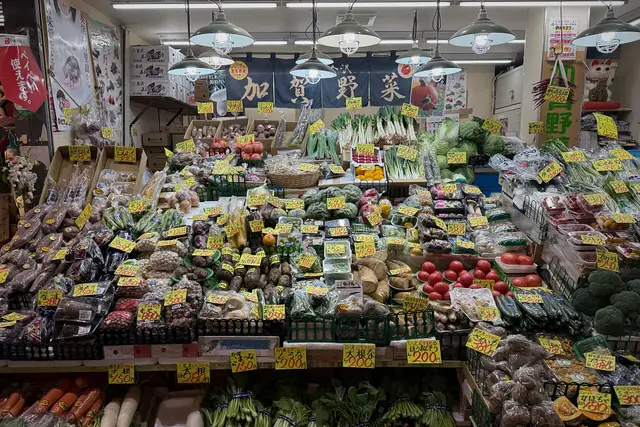
Kenrokuen garden with rope-supported pines reflected in the pond 663highland (CC BY 2.5) / Kotoji stone lantern and autumn leaves by the pond in Kenrokuen 663highland (CC BY 2.5) / Wooden teahouses lining the street of the Higashi Chaya District Andrea Schaffer from Sydney, Australia (CC BY 2.0) / The circular 21st Century Museum of Contemporary Art seen from above 金沢市 (CC BY 2.1 jp) / A greengrocer's stall piled with Kaga vegetables at Omicho Market NevinThompson (CC BY-SA 4.0) / The long Gojikken Nagaya storehouse and turrets of Kanazawa Castle Balon Greyjoy (CC0) / A stone-paved lane between earthen walls in the Nagamachi samurai district Andrea Schaffer from Sydney, Australia (CC BY 2.0). Cropped and resized.
Local food
Regional dishes handed down in Ishikawa. Many are home and community cooking, so not every dish is served at restaurants.
Hasu-mushi (Steamed lotus root)
はす蒸し
"Hasu-mushi" is a local dish popular among the locals for its texture of Kaga lotus root. "Hasu-mushi" is a steamed dish made by grating Kaga lotus root and mixing it with other ingredients.
- Where it is made
- Around City of Kanazawa
Oshi-zushi (Sushi pressed overnight)
押しずし
In Ishikawa Prefecture, “Oshi-zushi” is eaten on festivals and celebratory occasions.
- Where it is made
- Kanazawa and Kaga area
Sawara no kobujime
さわらの昆布じめ
Sliced Spanish mackerel is seasoned with kombu (kelp). Spanish mackerel is known as "Spanish mackerel" used for Saikyo-yaki (grilled fish).
- Where it is made
- Kanazawa City and surrounding areas
Tara no Kotsuke (Cod Sashimi Marinated with Cod Roe)
たらの子つけ
Moreover, "tarako" (cod roe) coated sashimi, known as "tara no ko-tsuke," is widely known both within and outside the region and has become a classic local dish in Kanazawa City.
- Where it is made
- Noto Area, Kanazawa City Area
Eggplant Somen
なすそうめん
The vestiges of the production center of somen can be seen in the local dish, "Eggplant Somen", eaten in Kanazawa City. “Eggplant Somen" is a dish of simmered eggplant and somen.
- Where it is made
- Around Kanazawa
Nasu no Oranda Ni
なすのオランダ煮
“Nasu no orandani” is eaten during the harvest season of eggplants. Depending on the family that makes it, the eggplants are either boiled, deep-fried, or stir fried.
- Where it is made
- Around Kanazawa City
“Find places serving it” opens a map app search for the dish name and the place name. The results are not chosen or recommended by this site. Please check with the shop whether it serves the dish.
Source: “Our Regional Cuisines” (Ministry of Agriculture, Forestry and Fisheries), edited by this site (imported 2026-11-15) https://www.maff.go.jp/e/policies/market/k_ryouri/index.html. Names, areas and ingredients are as written on the source pages; descriptions are excerpts of the original text. No photos are used. This page is not made or endorsed by the ministry.