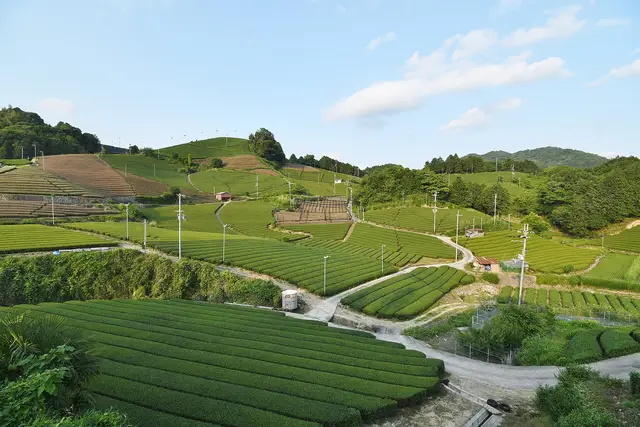
Wazuka, Kamo and Kasagi guide
Tea fields for Uji tea cover the slopes of Wazuka, and an ancient capital once stood by the Kizu River. In the Tono hills, a path lined with stone Buddhas links the temples of Joruri-ji and Gansen-ji.
Things to see 5 classics
"Classics", "For visitors" and "Local picks" are this site's editorial picks, not a measured popularity ranking.
- 1
Joruri-ji Temple
A Heian-period Pure Land temple: across its pond, a hall with nine Amida Buddhas faces a three-story pagoda.
- Temples, shrines & churches
- History & buildings
- Museums
about 60 minPartly paid
Bus · About 25 min from Kamo ・ Kizugawa city bus from Kamo Station to Joruriji ・ 4.1km
- 2
Gansen-ji Temple
A small temple in the hills with a vermilion three-story pagoda, ringed by hydrangeas in June and maples in autumn.
- Temples, shrines & churches
- Nature
about 45 minPaid entry
Bus · About 25 min from Kamo ・ Kizugawa city bus from Kamo Station to Gansenji ・ 3.9km
- 3
Ishitera tea fields
Rows of tea bushes blanket the hillside in this classic Wazuka view, the first site listed as a Kyoto Prefecture landscape asset.
- Views
- Nature
about 45 minFree
Bus · About 40 min from Kamo ・ Nara Kotsu bus from Kamo Station to Wazuka, then about 20 minutes on foot ・ 3.7km
- 4
Kasagi-dera Temple (Mt. Kasagi)
A hilltop temple among huge boulders, with Buddhas carved into the rock and a trail that squeezes between the stones.
- Temples, shrines & churches
- History & buildings
- Nature
about 1.5 hrPaid entry
Train · About 55 min from Kamo ・ JR to Kasagi, then about 40 minutes uphill on foot ・ 6.6km
- 5
Ikkyu-ji Temple (Shuon-an)
The temple where the monk Ikkyu spent his last years, known for its abbot's-hall gardens and its own fermented Ikkyu-ji natto.
- Temples, shrines & churches
- History & buildings
- Food & markets
about 60 minPaid entry
Train · About 50 min from Kamo ・ JR to Kizu, the Gakkentoshi Line to Kyotanabe, then about 20 minutes on foot ・ 13km
Show on map
ClassicsFor visitorsLocal picks
Suggested routes
Times assume a 9:00 start. Travel times are estimated from distance and vary with waiting and crowds.
The stone Buddha trail of Tono
Leave 9:00 → until about 11:47 (about 3 hr)
- 9:00Kamo
about 25 min by transport
9:25Joruri-ji Templestay about 60 minabout 17 min on foot
10:42Warai-botoke (Tono stone Buddhas)stay about 15 minabout 5 min on foot
11:02Gansen-ji Templestay about 45 min
The hill path from Joruri-ji to Gansen-ji takes about an hour on foot past old stone Buddhas. Return to Kamo Station by bus from Gansen-ji.
Plan this routeAn ancient capital and the Wazuka tea fields
Leave 9:00 → until about 13:02 (about 4 hr)
- 9:00Kamo
about 25 min on foot
9:25Kuni Palace site (Yamashiro Kokubunji ruins)stay about 30 minabout 22 min on foot
10:17Kaijusen-ji Templestay about 45 minabout 15 min by transport
11:17Ishitera tea fieldsstay about 45 minabout 15 min by transport
12:17Wazuka Cha Cafestay about 45 min
See the Kuni palace site and Kaijusen-ji in the morning, then bus to Wazuka. The tea fields are farmland, so admire them from the road.
Plan this route
Main ways to get around
JR Nara, Yamatoji and Kansai lines
From Kyoto, take the Nara Line to Kizu and change for Kamo: about 1 hour. Kamo is about 15 minutes from Nara, with direct Yamatoji Rapid trains from Osaka.
JR Kansai Line (Kamo – Kasagi)
One- or two-car diesel trains take about 10 minutes from Kamo to Kasagi, roughly once an hour.
Nara Kotsu buses and Kizugawa community buses
Nara Kotsu buses run from Kamo Station toward the Wazuka tea fields, and city buses go to Joruri-ji and Gansen-ji. Both are infrequent.
Taxi
Taxis from Kamo Station are handy for Kaijusen-ji and for the tea fields when buses are sparse.
Getting to Kamo
“Classics”, “For visitors” and “Local picks” are our editors' picks, not a measured popularity ranking. Travel times are estimates. Please check prices, opening hours and operating days with the official sources before you go.
Local food specialties
Specialties of Wazuka, Kamo and Kasagi, together with those of other places in Kyoto. They are listed by dish, not by shop, and are not recommendations.
Noodles
Nishin soba (buckwheat noodles with simmered herring)
にしんそば
Soba in hot broth topped with sweet-savory simmered dried herring, devised in Kyoto in the Meiji era.
- Known in
- Kyoto City · Kyoto guide
Japanese cuisine
Obanzai (Kyoto home-style side dishes)
おばんざい
Everyday Kyoto side dishes simmered from seasonal vegetables, dried foods and fish such as herring.
- Known in
- Kyoto City · Kyoto guide
Japanese cuisine
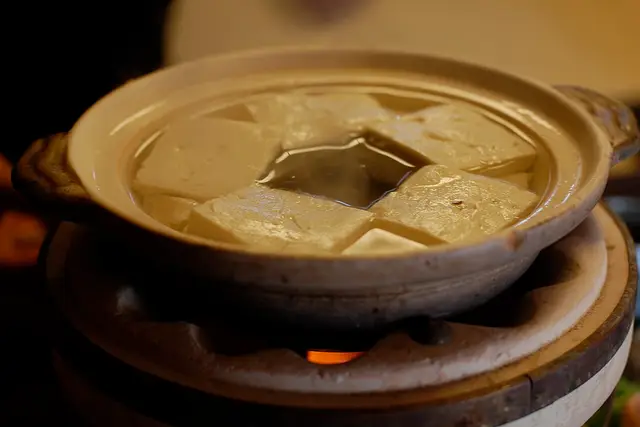
Yudofu (simmered tofu hot pot)
湯豆腐
Tofu warmed in hot broth and eaten with condiments; a classic Kyoto dish.
- Known in
- Kyoto City · Kyoto guide
Rice dishes
Kyoto saba-zushi (mackerel pressed sushi)
京の鯖寿司
Salted mackerel pressed onto sushi rice; a dish for festivals and special days in Kyoto.
- Known in
- Kyoto City · Kyoto guide
Japanese cuisine
Yuba dishes (tofu skin)
湯葉料理
Yuba, the skin skimmed from heated soy milk, served as sashimi-style or simmered dishes; a Kyoto specialty.
- Known in
- Kyoto City · Kyoto guide
Noodles
Cha-soba (green tea buckwheat noodles)
茶そば
Green soba made with matcha, served at restaurants in Uji and the Yamashiro area.
- Known in
- Uji · Uji guide
Noodles
Oni soba (thick hand-cut soba of Mt. Oe)
鬼そば
Thick hand-cut soba eaten for over 150 years near Mt. Oe in Fukuchiyama.
- Known in
- Kumohara, Fukuchiyama · Fukuchiyama and Mt. Oe guide
Noodles
Miyazu curry yakisoba (curry-flavored fried noodles)
宮津のカレー焼きそば
Fried noodles with a curry flavor; ingredients and broth vary by restaurant in Miyazu.
- Known in
- Miyazu · Amanohashidate, Miyazu and Ine guide
Seafood
Ine yellowtail (winter buri, shabu-shabu and more)
伊根ブリ
Winter yellowtail from Ine, eaten as sashimi or shabu-shabu from about November to March.
- Known in
- Ine · Amanohashidate, Miyazu and Ine guide
Seafood
Taiza crab (Taiza-gani, snow crab from Kyotango)
間人ガニ
Snow crab landed at Taiza port in Kyotango; the season opens in early November.
- Known in
- Taiza, Kyotango
Hot pots & soups
Maizuru oden (fish-paste stew with jako broth)
舞鶴おでん
Oden simmered in small-fish broth with fish-paste items, served at restaurants and izakaya in Maizuru.
- Known in
- Maizuru · Maizuru guide
Seafood
Maizuru oysters (grilled at oyster huts)
舞鶴のかき(かき小屋)
Oysters raised in Maizuru Bay, grilled and eaten at seasonal oyster huts.
- Known in
- Maizuru · Maizuru guide
“Find places serving it” opens a map app search for the dish name and the place name. The results are not chosen or recommended by this site. Please check with the shop whether it serves the dish.
Traditional home dishes of Kyoto (30)Practical booking & planning links (Ad)
- Activities, tickets & local tours
- Popular observatories, museums and theme parks increasingly require timed-entry tickets booked in advance. For countryside spots with infrequent buses, a local day tour can save hours.
- KlookKKday
- Rental cars
- A rental car is practical when travelling straight from an airport or exploring rural areas with few trains. Request child seats, an ETC toll card, or winter snow tyres when booking.
- Klook
- Restaurant reservations & food tours
- Well-known dinner spots and course restaurants often fill up days ahead—reserving a table saves waiting in line. Guided local food tours are also a great way to try regional dishes.
- Klook
We list only well-established booking services. This site may receive a commission if you book through these links (each opens in a new tab).
Comment on whether your booking was helpful
Sources
Local food specialties
Each specialty was checked against an official page (prefecture, municipality, tourism association or JNTO) on 2026-11-17. The descriptions were written by this site.
- Nishin soba (buckwheat noodles with simmered herring): plus.kyoto.travel
- Obanzai (Kyoto home-style side dishes): plus.kyoto.travel
- Yudofu (simmered tofu hot pot): plus.kyoto.travel
- Kyoto saba-zushi (mackerel pressed sushi): plus.kyoto.travel
- Yuba dishes (tofu skin): plus.kyoto.travel
- Cha-soba (green tea buckwheat noodles): www.pref.kyoto.jp
- Oni soba (thick hand-cut soba of Mt. Oe): www.pref.kyoto.jp
- Miyazu curry yakisoba (curry-flavored fried noodles): www.city.miyazu.kyoto.jp
- Ine yellowtail (winter buri, shabu-shabu and more): www.ine-kankou.jp
- Taiza crab (Taiza-gani, snow crab from Kyotango): www.pref.kyoto.jp
- Maizuru oden (fish-paste stew with jako broth): www.pref.kyoto.jp
- Maizuru oysters (grilled at oyster huts): www.pref.kyoto.jp
Photo and data credits
Terraced tea fields spreading over the hills of Wazuka Saigen Jiro (CC0) / Yudofu: tofu simmering in a clay pot over a flame Flickr user cobacco(hiro kobashi) (CC BY 2.0). Cropped and resized.