Kyoto guide
Japan's capital for over a thousand years, full of temples, shrines, gardens and old streets. The sights are spread widely, so combine trains and the subway with buses to get around.
Things to see 10 classics
"Classics" and "Hidden gems" are this site's editorial picks, not a measured popularity ranking.
- 1
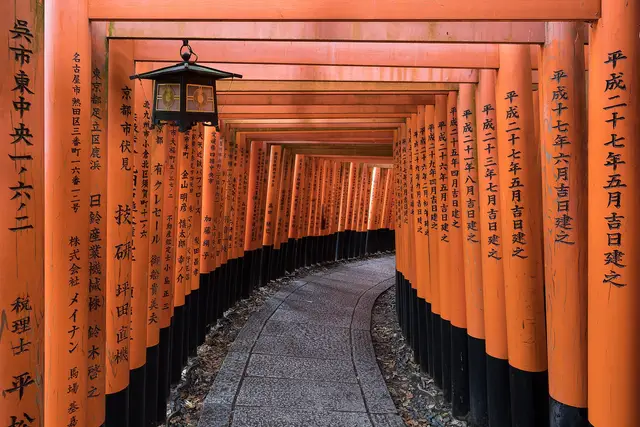
Fushimi Inari Taisha
A shrine where red torii gates climb all the way up the hill. The full loop takes about 2 hours, and crowds thin out as you climb.
Many overseas visitors
3rd among places visited by foreign tourists in the 2024 survey (50.4%) Source: Kyoto City, Kyoto Tourism Comprehensive Survey 2024
- Temples, shrines & churches
- Views
- Activities
about 2 hrFree
Train · About 15 min from Kyoto ・ JR Nara Line to Inari; the shrine is right outside the station ・ 2.5km
- 2
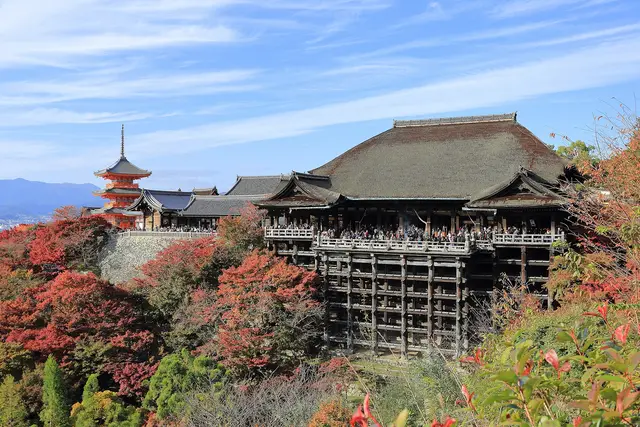
Kiyomizu-dera
A wooden stage built out over a hillside, with a view across Kyoto. The sloping lanes up to it are lined with souvenir shops.
Many overseas visitors
1st among places visited by foreign tourists in the 2024 survey (67.8%) Source: Kyoto City, Kyoto Tourism Comprehensive Survey 2024
- Temples, shrines & churches
- History & buildings
- Views
about 60 minPaid entryWheelchair & stroller friendly
Bus · About 35 min from Kyoto ・ City bus to Gojozaka, then about 10 minutes uphill on foot ・ 2.7km
- 3
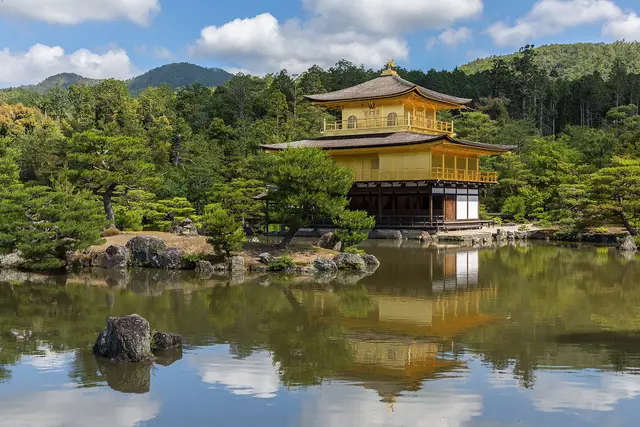
Kinkaku-ji (Golden Pavilion)
A pavilion covered in gold leaf, mirrored in its pond. Especially beautiful on a sunny morning.
Many overseas visitors
5th among places visited by foreign tourists in the 2024 survey (46.1%) Source: Kyoto City, Kyoto Tourism Comprehensive Survey 2024
- Temples, shrines & churches
- History & buildings
- Nature
about 45 minPaid entryWheelchair & stroller friendly
Bus · About 50 min from Kyoto ・ City bus to Kinkakuji-michi; or subway to Kitaoji and change to a bus ・ 6.5km
- 4
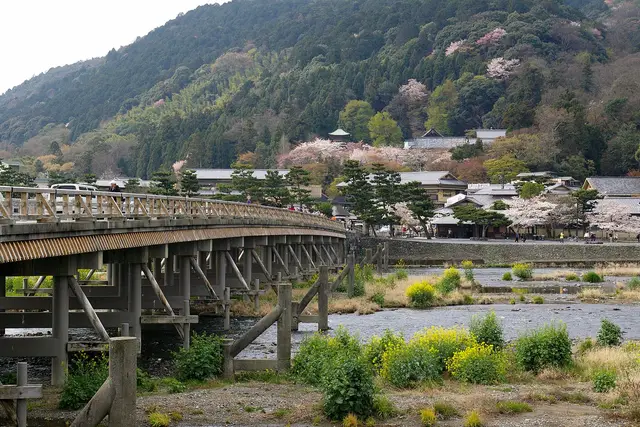
Arashiyama (Togetsukyo Bridge and Bamboo Grove)
A long bridge over the river, a path through bamboo and the garden of Tenryu-ji. Very crowded in cherry and maple seasons; go early.
- Nature
- Views
- Temples, shrines & churches
about 2 hrFreeWheelchair & stroller friendly
Train · About 30 min from Kyoto ・ JR Sagano Line to Saga-Arashiyama, then about 10 minutes on foot ・ 8.1km
- 5
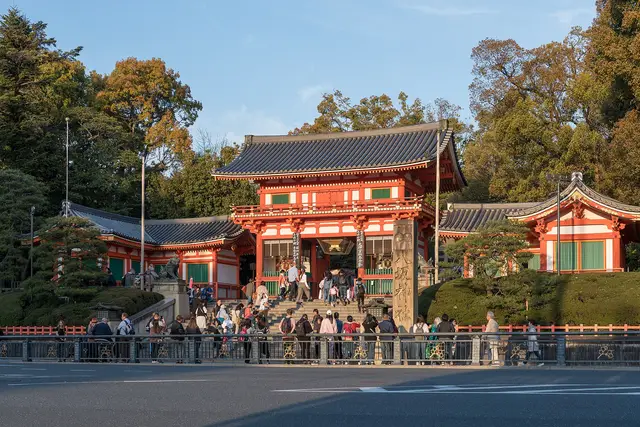
Gion and Yasaka Shrine
Hanamikoji street with its teahouses, and a shrine lit by lanterns at night. Photography is banned on some private lanes.
Many overseas visitors
The Gion area was 4th among places visited by foreign tourists in the 2024 survey (50.0%) Source: Kyoto City, Kyoto Tourism Comprehensive Survey 2024
- History & buildings
- Temples, shrines & churches
- Night views
about 1.5 hrFree
Bus · About 25 min from Kyoto ・ City bus to Gion; also walkable from Gion-Shijo on the Keihan Line ・ 2.8km
- 6
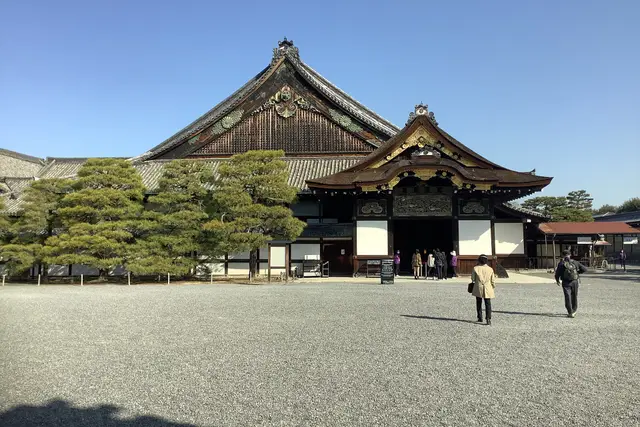
Nijo Castle
The Tokugawa shoguns' castle in Kyoto. Walk through the palace to see gold-ground screen paintings and floors that chirp underfoot.
Many overseas visitors
2nd among places visited by foreign tourists in the 2024 survey (62.1%) Source: Kyoto City, Kyoto Tourism Comprehensive Survey 2024
- History & buildings
- Museums
about 1.5 hrPaid entryFine on a rainy dayWheelchair & stroller friendly
Subway · About 20 min from Kyoto ・ Karasuma Line to Karasuma-Oike, then Tozai Line to Nijojo-mae ・ 3.3km
Show on map
ClassicsHidden gems
Suggested routes
Times assume a 9:00 start. Travel times are estimated from distance and vary with waiting and crowds.
Higashiyama: Kiyomizu-dera, Gion, Nanzen-ji and Ginkaku-ji
Leave 9:00 → until about 15:25 (about 6.5 hr)
- 9:00Kyoto
about 35 min by transport
9:35Kiyomizu-derastay about 60 minabout 20 min on foot
10:55Gion and Yasaka Shrinestay about 1.5 hrabout 15 min by transport
12:40Nanzen-jistay about 60 minabout 15 min by transport
13:55Ginkaku-ji (Silver Pavilion) and the Philosopher's Pathstay about 1.5 hr
Kiyomizu-dera is quietest early in the morning. Walk the sloping lanes down to Gion, and take the Philosopher's Path from Nanzen-ji to Ginkaku-ji.
Plan this routeThe south by train: Fushimi Inari, sake breweries and Uji
Leave 9:00 → until about 14:35 (about 5.5 hr)
- 9:00Kyoto
about 15 min by transport
9:15Fushimi Inari Taishastay about 2 hrabout 20 min by transport
11:35Fushimi Sake Districtstay about 1.5 hrabout 30 min by transport
13:35Byodo-in (Uji)stay about 60 min
All linked by the Keihan Line and JR Nara Line, with no buses needed. Fushimi Inari is least crowded early or late in the day.
Plan this route
When to go
Cherry blossom and autumn leaf seasons are the most popular and crowded. July–August is hot and humid (27–28°C on average). Winter is chilly (about 5°C) but quieter.
Point at a month to see its temperature and precipitation.
Temperature (line: average; band: low to high)
Precipitation (mm)
Typical seasons
Cherry blossoms (Philosopher's Path)
Aoi Festival
Gion Festival
Autumn leaves (Tofukuji, Eikando)
Show as a table
| Jan | Feb | Mar | Apr | May | Jun | Jul | Aug | Sep | Oct | Nov | Dec | |
|---|---|---|---|---|---|---|---|---|---|---|---|---|
| High (℃) | 9.1 | 10 | 14.1 | 20.1 | 25.1 | 28.1 | 32 | 33.7 | 29.2 | 23.4 | 17.3 | 11.6 |
| Avg (℃) | 4.8 | 5.4 | 8.8 | 14.4 | 19.5 | 23.3 | 27.3 | 28.5 | 24.4 | 18.4 | 12.5 | 7.2 |
| Low (℃) | 1.5 | 1.6 | 4.3 | 9.2 | 14.5 | 19.2 | 23.6 | 24.7 | 20.7 | 14.4 | 8.4 | 3.5 |
| Rain (mm) | 53.3 | 65.1 | 106.2 | 117 | 151.4 | 199.7 | 223.6 | 153.8 | 178.5 | 143.2 | 73.9 | 57.3 |
Temperature and precipitation are Japan Meteorological Agency normals (1991–2020, Kyoto). Seasons are typical timings and can shift by a week or two each year. JMA data
Main ways to get around
Kyoto City Bus
Reaches temples far from any station, such as Kiyomizu-dera, Kinkaku-ji and Ginkaku-ji. Buses and roads are very crowded by day, so use trains where you can.
Kyoto Municipal Subway
The Karasuma Line runs from Kyoto Station to Shijo, Karasuma-Oike and Kitaoji; the Tozai Line to Nijo Castle, Higashiyama, Keage and Daigo. A subway-and-bus day pass is sold.
JR Nara Line and JR Sagano Line
The Nara Line goes to Inari (Fushimi Inari Taisha) and Uji; the Sagano Line to Saga-Arashiyama. Both run direct from Kyoto Station and keep to time.
Keihan, Hankyu, Randen and Eizan railways
Keihan serves Fushimi, Gion-Shijo and Demachiyanagi; Hankyu serves Kawaramachi and Arashiyama. The Randen tram goes to Arashiyama and Ryoan-ji; Eizan trains to Kurama and Kibune.
Limited Express Haruka (Kansai Airport)
About 80 minutes direct from Kansai Airport to Kyoto Station. From Itami Airport, the limousine bus takes about 50 minutes to Kyoto Station.
Getting to Kyoto
“Classics” and “Hidden gems” are our editors' picks, not a measured popularity ranking. Travel times are estimates. Please check prices, opening hours and operating days with the official sources before you go.
Photo and data credits
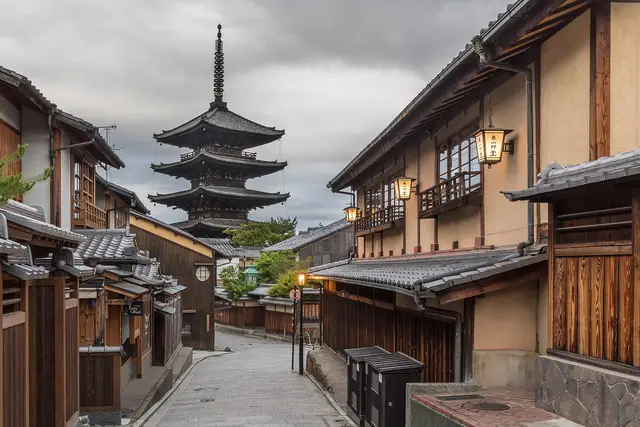
Yasaka-dori street in the early morning with the Yasaka Pagoda Basile Morin (CC BY-SA 4.0) / A path through rows of vermilion torii gates at Fushimi Inari Taisha Basile Morin (CC BY-SA 4.0) / Kiyomizu-dera's main hall and wooden stage amid autumn leaves Martin Falbisoner (CC BY-SA 4.0) / The Golden Pavilion reflected in its pond Basile Morin (CC BY-SA 4.0) / Togetsukyo Bridge with the spring hills of Arashiyama behind Tomomarusan (CC BY 2.5) / The vermilion west gate of Yasaka Shrine facing Shijo Street DXR (CC BY-SA 4.0) / The entrance of Ninomaru Palace at Nijo Castle 稲垣啓二 (CC BY-SA 4.0). Cropped and resized.
Local food
Regional dishes handed down in Kyoto. Many are home and community cooking, so not every dish is served at restaurants.
Natto-Mochi (Fermented soybeans rice cake)
納豆餅
At a time when food was scarce, "Natto", a valuable source of protein, was wrapped in a rice cake that was good for the stomach and eaten as a “Natto-Mochi”, which was also favored by peasant…
- Where it is made
- Kyoto City, Nantan Region
Kamo-nasu no Dengaku
賀茂なすの田楽
“Kamo-Nasu” is one of the most popular traditional vegetables in Kyoto.
- Where it is made
- Kyoto City
Taitan of Manganji Togarashi and Jako
万願寺とうがらしとじゃこの炊いたん
“Taitan of Manganji Togarashi and Jako” is a popular home-style simmered dish using Manganji Togarashi (Manganji red pepper), one of the brand products of Kyoto, and Jako (dried young sardines).
- Where it is made
- Chutan area, Kyoto city
Sansho no Ha no Tukuda-ni
山椒の葉の佃煮
Kyoto Prefecture has the “Tango” Mountains in the north, the” Tamba” Mountains in the center, and a low mountain range of less than 1,000 m.
- Where it is made
- Kyoto City
Ebiimo to Boudara no Taitan
えびいもと棒だらの炊いたん
"Ebi-imo and Boudara no Taitan (Simmered Dish)" is a local dish from Kyoto, featuring traditional Kyoto vegetables called ebi-imo, known for their shrimp-like shape and striped pattern, and Boudara…
- Where it is made
- Kyoto City, Chutan Area, Tango Area
Sugukizuke (suguki pickles (turnip greens))
すぐき漬け
"Suguki" is a type of turnip greens, a traditional vegetable in Kyoto, known for its distinctive acidity.
- Where it is made
- Kyoto City
“Find places serving it” opens a map app search for the dish name and the place name. The results are not chosen or recommended by this site. Please check with the shop whether it serves the dish.
Source: “Our Regional Cuisines” (Ministry of Agriculture, Forestry and Fisheries), edited by this site (imported 2026-11-15) https://www.maff.go.jp/e/policies/market/k_ryouri/index.html. Names, areas and ingredients are as written on the source pages; descriptions are excerpts of the original text. No photos are used. This page is not made or endorsed by the ministry.