Local specialties & regional dishes of Shikoku
Seafood from the Seto Inland Sea and the Pacific, udon, and specialties that differ from prefecture to prefecture.
31 local specialties and 115 regional dishes from Shikoku.
Specialties to taste in Shikoku
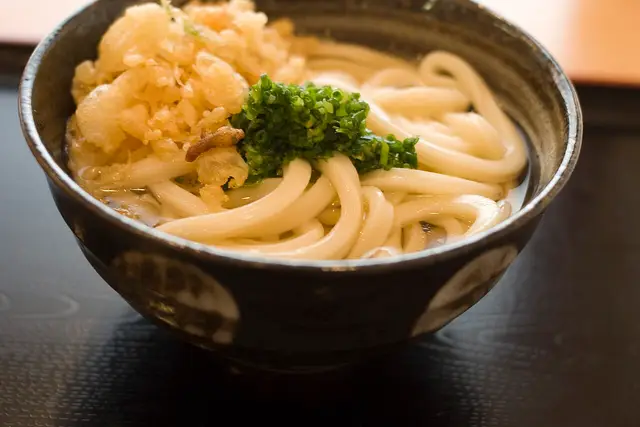 Sanuki udon (thick, chewy wheat noodles)Udon of Kagawa, served in many varieties such as kamatama and niku udon at shops across the prefecture.
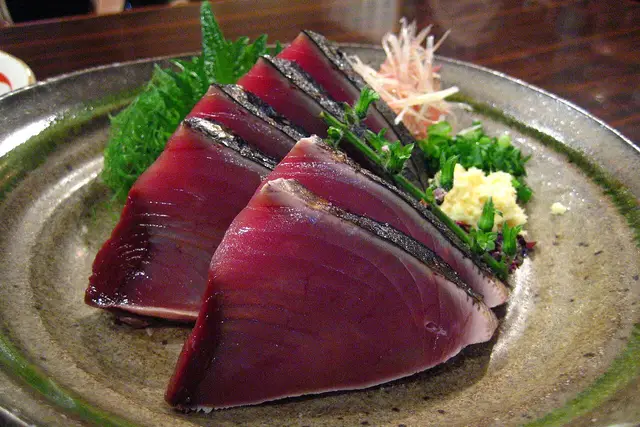 Katsuo no tataki (straw-seared bonito)Kochi City
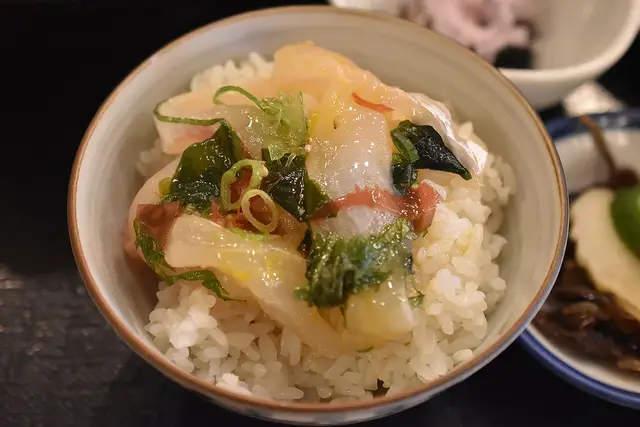 Uwajima taimeshi (sea bream sashimi on rice with egg sauce)Uwajima City
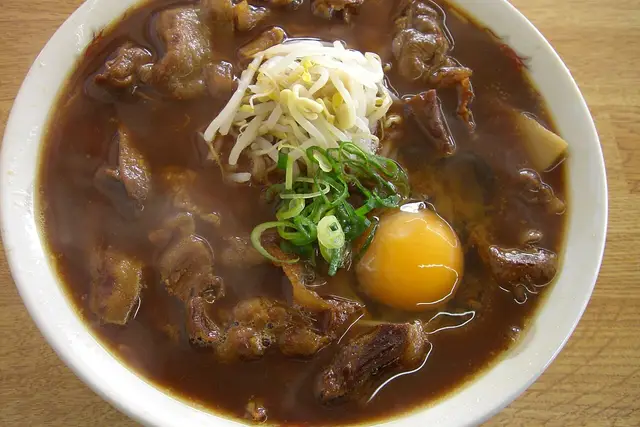 Tokushima ramen (brown pork-bone soy ramen)Tokushima City
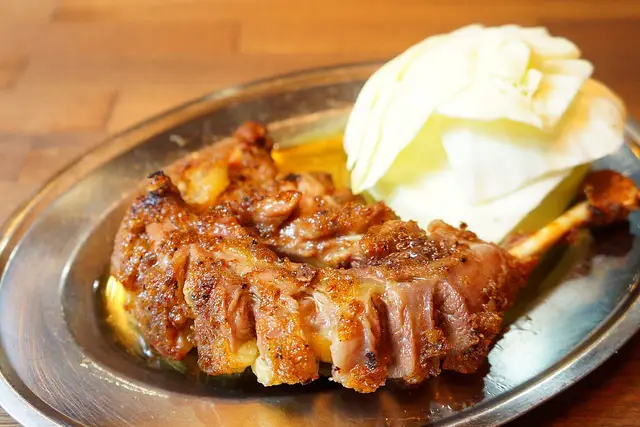 Honetsukidori (oven-roasted bone-in chicken)Marugame City
Kochi
10 specialties · 30 regional dishes
Local specialties
Local specialties worth tasting when you visit, served at restaurants and food stalls.
Kochi CitySeafood
Katsuo no tataki (straw-seared bonito)
カツオのたたき
Line-caught bonito seared over burning straw and eaten with garlic or scallions. Salt-seasoned tataki is also a local favorite.
Muroto CitySeafood
Muroto kinme-don (golden eye snapper bowl)
室戸キンメ丼
Teriyaki golden eye snapper and local sashimi over rice. Served at restaurants in Muroto.
Aki CityRice dishes
Aki kamaage chirimen-don (boiled whitebait bowl)
安芸釜あげちりめん丼
Rice topped with boiled whitebait and condiments with a yuzu sauce. A specialty of Aki City.
Susaki CityNoodles
Susaki nabeyaki ramen (ramen simmered in a clay pot)
須崎鍋焼きラーメン
Soy-flavored chicken-bone ramen simmered in a clay pot. Served at many shops in Susaki.
Susaki CitySeafood
Utsubo (moray eel) dishes
うつぼ料理
Moray eel eaten in Susaki since long ago, usually as tataki or deep-fried.
Nakamura, ShimantoSeafood
Nakamura shio-tataki (salted bonito tataki)
中村の塩たたき
Bonito tataki marinated with a sauce of salt, vinegar and citrus juice. Each shop has its own flavor.
Tosashimizu CitySavory pancakes
Pera-yaki (thin pancake with jakoten and egg)
ペラ焼き
Thin okonomiyaki-style pancake with jakoten, scallion and egg, flavored with bonito powder and nori, eaten with spicy sauce.
Konan CityNoodles
Konan nira shio yakisoba (garlic chive salt yakisoba)
香南にら塩焼そば
Yakisoba with plenty of garlic chives in a salt sauce. Konan is a top chive-producing city; served in local restaurants.
Akaoka, KonanNoodles
Chunichi soba (Chinese noodles in udon broth)
中日そば
Chinese noodles in udon broth. Eaten in Akaoka, Konan, for about 60 years; often a closing bowl after drinking.
Hidaka VillageRice dishes
Hidaka omurice (omelet rice with sugar tomato)
日高村オムライス
Omelet rice following a local rule of using the village sugar tomato. Many shops along National Route 33.
Regional dishes
Dishes handed down at home and in the community. Some are not served at restaurants (from “Our Regional Cuisines” by Japan's Ministry of Agriculture, Forestry and Fisheries).
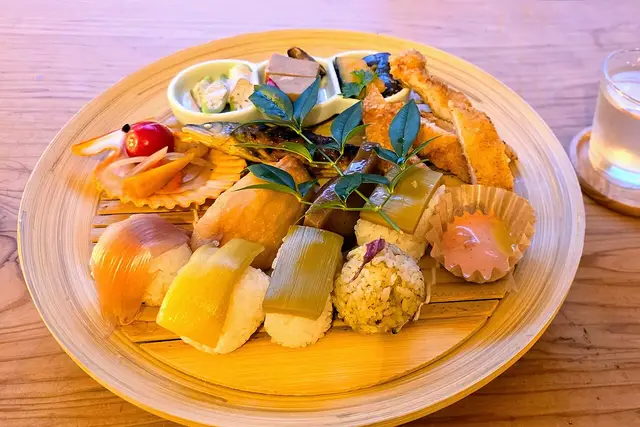 All of Kochi PrefectureInakazushi田舎ずし
“Inaka-zushi” is a type of Sushi using vegetables that are rare in Japan.
Main ingredients: “Myoga”, “Ryukyu” (a stalk of Lotus roots), Konjac(=yam cake), Bamboo shoots, Shiitake mushrooms, Turnips,” Shiho-tiku “(Special Bamboo shoots), Rice, etc.
- The whole prefectureBonito tatakiかつおのたたき
“Bonito tataki " was a fisherman's meal on board a boat, and was later introduced to the public.
Main ingredients: Bonito,garlic,condiments such as onions and green onions
- The whole prefectureStir-fried itadoriいたどりの油いため
One of the dishes, "Stir-fried itadori" is a dish that is still very popular at home.
Main ingredients: Itadori(Japanese knotweed)
- All of Kochi prefectureSaba no Sugata Zushi (Mackerel Sushi)さばの姿ずし
"Saba no sugata zushi" is one of the main dishes in "sawachi" cooking. Fresh mackerel is cut open and soaked in vinegar. Sushi rice is then stuffed into the mackerel.
Main ingredients: Mackerel, Various fish, Rice, Ginger, Sesame seeds
- The whole prefectureVinegared Ryukyuりゅうきゅうの酢の物
“Vinegared Ryukyu” is one of the most popular summer dishes in Kochi Prefecture, and is still popular with the locals.
Main ingredients: Ryukyu (Hasuimo (a member of the taro family) stalk),marlin tuna or hairtail, yuzu vinegar, sesame seeds, etc.
- All of Kochi prefectureHaninniku-no-nuta (Vinaigrette Miso Leaf Garlic)葉にんにくのぬた
Nuta is a traditional seasoning from Kochi Prefecture, made by mixing miso and vinegar with garlic. It is commonly used to accompany raw fish or konjac(=yam cake).
Main ingredients: Leaf garlic, miso, sesame, vinegar, sugar
- Nankoku City, etc.Negi to satsumaimo no nuta (Green onions and Sweet potatoes are mixed with vinegar miso dressing)ねぎとさつまいものぬた
Negi to Satsumaimo no Nuta is a dish where green onions and sweet potatoes are mixed with vinegar miso dressing.
Main ingredients: Green onions, sweet potatoes, miso, vinegar, sugar, etc.
- Plains, CoastMushi-Dai(Steamed sea bream)蒸し鯛
"Mushi-Dai " is one of the festive dishes served at an "okyaku" occasion in Kochi prefecture, such as weddings and New Year's celebrations. "Okyaku" means a banquet in the Tosa dialect.
Main ingredients: Sea bream, Okara(=the by-product left after making tofu), Carrot, Shiitake mushrooms, Gobou(=Burdock root), Eggs, Soy sauce, Mirin(=sweet rice wine), etc.
- Southern part of Aki CityKashikiriかしきり
“Kashikiri" is a type of Tofu made from ”kashi-no-mi” (Oak nuts, also called Acorns).
Main ingredients: Oak nuts (Arakashi no Mi), “Nuta” (seasoning made from a mixture of Leaf garlic, Sesame, Miso, Rice vinegar, etc.)
- The whole prefectureGuruniぐる煮
“Guruni” is a simmered dish made mainly of winter root vegetables such as daikons, carrots and taros. These are all vegetables that are easy to obtain in the prefecture.
Main ingredients: Radish, carrot, taro, fried tofu, konjac, etc.
- Otoyo TownHan-Ge Dango半夏だんご
The "Han-Ge Dango" (mid summer dumplings) is a local sweet that has been handed down from generation to generation in this town. The name "Han-Ge" refers to July 2nd.
Main ingredients: Flour (all-purpose flour), sugar, bean jam,“ Myoga” (Japanese ginger) leaves, etc.
- Otoyo TownGimburo Zushi銀ぶろうずし
“Gimburo Zushi” is a type of sushi with gimburo beans mixed in the rice. Sometimes, the recipe is made without vinegar or made into rice balls.
Main ingredients: Gimburo beans(=black turtle beans), kintokimame(=red kidney beans), rice, ginger, sesame seeds
- All of Kochi PrefectureKibinago no Hokaburiきびなごのほおかぶり
“Kibinago no Hokaburi” is a type of tamazushi using the fish “kibinago” (=silver-stripe round herring), which is a small fish measuring to around 10cm in length.
Main ingredients: Kibinago(=silver-stripe round herring) and okara(=soy pulp)
- All of Kochi PrefectureKyuuri to Kawa-Ebi no Nimonoきゅうりと川エビの煮物
Another typical recipe is "Kyuuri to Kawa-Ebi no Nimono". It is said that "Kyuuri to Kawa-Ebi no Nimono" originated with fishermen who fished for river shrimp.
Main ingredients: Jibai-Cucumber, River-Shrimp, Green shiso
- Muroto CityKokera-Zushiこけらずし
One type of "Oshi-Zushi" is "Kokera-Zushi", a local dish of Toyo-cho.
Main ingredients: Eggs, Rice, Carrots, Shiitake mushrooms, Fish (mackerel, etc.) etc.
- Central Part of the Prefecture (Ita-Kobu-Zushi), Western Part of the Prefecture (Kuro-Kobu-Zushi)Kobu-Zushiこぶずし
The recipe for "Kobu-Zushi" is different in the central and western parts of the prefecture. The central part of the prefecture eats "Ita-Kobu-Zushi".
Main ingredients: "Shiroita-Kombu (=White kelp)”, Dashi kelp, Rice, Ginger, Sesame, etc.
- Mountainous regionsSimmered Stir-fried Royal Fernsぜんまいの炒め煮
In mountain villages, "fried royal fern with oil," tofu paste, and simmered vegetables have been eaten since ancient times.
Main ingredients: Royal ferns, deep-fried tofu pouches, etc.
- The entire prefectureChate aemonoチャーテの和え物
Chate is often used as an ingredient in everyday home cooking, and chate aemono is especially easy to prepare, so it is easy to add to your daily cooking repertoire.
Main ingredients: Chate (hayatouri)
- Shimanto River, Niyodo River, and Monobe River basinsTsugani-jiruつがに汁
"Tsugani-jiru" is one of the representative regional cuisines of Kochi prefecture. Tsugani refers to the mitten crabs that live in rivers such as the Shimanto River and Niyodo River.
Main ingredients: Tsugani (mitten crab), ryukyu (Indian taro stalk) , eggplant, etc.
- All over the prefectureHimeichi to mikan no karashiniひめいちとみかんの辛子煮
Himeichi is a small fish caught in small bottom trawls in Tosa Bay. Its official name is Hourai goatfish. Because of its low price, it is often used as a substitute for Thai fish.
Main ingredients: Himeichi, mandarin oranges (or yuzu or butsubikan) peels, chili peppers, etc.
- The whole prefectureStir-fried stalks of sweet potatoesいもの茎の炒め煮
In Kochi Prefecture, there is a food culture of eating sweet potatoes and pumpkin stems. The stem is the "petiole" that connects the leaves to the stem.
Main ingredients: Sweet potato stalk, tempura (Satsuma-age)
- Otoyo TownKonchinこんちん
"Konchin" is a local Otoyo confection in which ample amounts of flour batter are added to burdock root shavings.
Main ingredients: Burdock root, flour (all-purpose), egoma
- Ino-machiImobera Azukiいもべらあずき
“Imobera azuki” is a confection local to Ino-machi, in which yudebera and azuki beans are boiled with sugar. It is distinct for its sticky texture and fluffy, unsophisticated sweetness.
Main ingredients: Imobera, azuki beans
- Throughout Kochi prefectureSawachi ryori皿鉢料理
The representative cuisine of Kochi prefecture is sawachi ryori.
Main ingredients: Sushi, skipjack tuna tataki, sashimi, stewed and fried foods etc
- All regions in Kōchi prefectureHachiku to Endo no Nimono(Henon Bamboo and Green Pea Stew)淡竹とエンドウの煮物
Bamboo shoots are often eaten in Kōchi prefecture. mōsō bamboo is in season at the beginning of spring, followed by Henon bamboo, and madaké bamboo.
Main ingredients: Henon bamboo, green peas
- All areas within the prefectureTaimo no Korobashi田芋のころばし
In Kochi Prefecture, taro is called taimo and has been eaten since long ago as a valuable source of nutrients that ranks second to rice. It does not lack sweetness and has a soft and flaky texture.
Main ingredients: Taimo (taro), white sesame seeds
- All over the prefectureKure no nimono暮れの煮物
The local dish eaten at New Year's Eve in Kochi Prefecture is "Kureno-ni-nimono" (simmered dishes at the end of the year), which contains whale meat.
Main ingredients: Whale, kirikonbu, radish, carrot, konbu, konnyaku, etc.
- Tsunoyama areaTohu no umezu zuke豆腐の梅酢づけ
Tofu was first eaten in Japan in the late Heian period (794-1185). It is said to have been introduced from China.
Main ingredients: Tofu, ume vinegar
- Ogawa District, Sagawa TownKirazumochiきらずもち
Kirazu mochi is a local sweet made from this bean curd.
Main ingredients: Okara (bean curd), glutinous rice, azuki beans
- Otsuki TownKoushimeshiこうし飯
Otsuki Town is a seaside town located in the southwestern part of the prefecture.
Main ingredients: iwanori (seaweed), rice, takuan (pickled radish), chirimenjako (dried young sardines)
“Find places serving it” opens a map app search for the dish name and the place name. The results are not chosen or recommended by this site. Please check with the shop whether it serves the dish.
Sources
Local specialties & regional dishes
Source: “Our Regional Cuisines” (Ministry of Agriculture, Forestry and Fisheries), edited by this site (imported 2026-11-15) https://www.maff.go.jp/e/policies/market/k_ryouri/index.html. Names, areas and ingredients are as written on the source pages; descriptions are excerpts of the original text. No photos from the ministry are used (dish photos are from Wikimedia Commons). This page is not made or endorsed by the ministry.
Local food specialties
Each specialty was checked against an official page (prefecture, municipality, tourism association or JNTO) on 2026-11-17. The descriptions were written by this site.
- Katsuo no tataki (straw-seared bonito): kochi-tabi.jp
- Muroto kinme-don (golden eye snapper bowl): kochi-tabi.jp
- Aki kamaage chirimen-don (boiled whitebait bowl): kochi-tabi.jp
- Susaki nabeyaki ramen (ramen simmered in a clay pot): kochi-tabi.jp
- Utsubo (moray eel) dishes: kochi-tabi.jp
- Nakamura shio-tataki (salted bonito tataki): kochi-tabi.jp
- Pera-yaki (thin pancake with jakoten and egg): kochi-tabi.jp
- Konan nira shio yakisoba (garlic chive salt yakisoba): kochi-tabi.jp
- Chunichi soba (Chinese noodles in udon broth): kochi-tabi.jp
- Hidaka omurice (omelet rice with sugar tomato): kochi-tabi.jp
Photo and data credits
A bowl of thick Sanuki udon topped with tempura bits and green onions open-arms (CC BY 2.0) / Slices of seared bonito tataki with garnishes on a plate ayustety from Tokyo, JAPAN (CC BY-SA 2.0) / Uwajima taimeshi: sea bream sashimi with herbs over a bowl of rice Fred Cherrygarden (CC BY-SA 4.0) / Tokushima ramen in brown broth with stewed pork, bean sprouts and a raw egg Banku (CC BY-SA 3.0) / Roasted bone-in chicken leg served with cabbage on a metal plate Yurie Matsunaga (CC BY-SA 4.0) / Inaka-zushi: an assortment of sushi topped with mountain vegetables Yaseminkurr (CC BY 4.0). Cropped and resized.