Udagawachō宇田川町
Shibuya guide
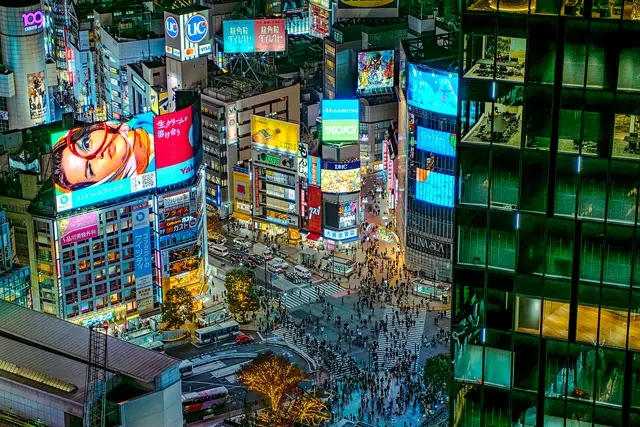
New towers and youth fashion crowd around the famous scramble crossing. A short walk away are the quiet streets of Okushibuya, the museums of Shoto and old drinking lanes.
Things to see 3 classics
"Classics", "For visitors" and "Local picks" are this site's editorial picks, not a measured popularity ranking.
By interest
By how you get there
By distance
- 1
Shibuya Scramble Crossing
A crossing where crowds pour across from every side each time the lights change. The statue of the dog Hachiko stands by the station.
- Views
- Night views
- Shopping & strolling
about 30 minFree
Train · About 30 min from Shibuya ・ JR Yamanote Line to Shibuya ・ 500m from here
- 2
Shibuya Hikarie (d47 MUSEUM)
A tower linked to the station. On the 8th floor, a small gallery features crafts and food from all 47 prefectures.
- Shopping & strolling
- Museums
- Food & markets
about 60 minFreeFine on a rainy day
Walk · About 3 min from Shibuya ・ Connected to the station by a passage ・ 800m from here
- 3
Shibuya Stream and the Shibuya River
A restored walkway along the Shibuya River beside a tower full of restaurants. You can follow the river on foot toward Ebisu.
- Food & markets
- Views
about 45 minFree
Walk · About 5 min from Shibuya ・ About 5 minutes on foot from the south side of the station ・ 900m from here

“Classics”, “For visitors” and “Local picks” are our editors' picks, not a measured popularity ranking. Travel times are estimates. Please check prices, opening hours and operating days with the official sources before you go.
Photo and data credits
Aerial view of the Shibuya Scramble Crossing and the surrounding neon-lit buildings David Kernan (CC BY 4.0) / Crowds crossing the Shibuya Scramble Crossing at dusk Benh LIEU SONG (Flickr) (CC BY-SA 2.0). Cropped and resized.
Facilities & features
- Elevators available (the route may be longer)
Lines from here
Within walking distance of here
See nearby on a mapWalking times are estimates from the straight-line distance.
- Go hereShibuya Scramble CrossingAbout 8 min on foot
A crossing where crowds pour across from every side each time the lights change. The statue of the dog Hachiko stands by the station.
- Go hereShibuya Parco (Nintendo and Pokémon stores)About 3 min on foot
A mall whose game and anime floor draws fans, with official Nintendo and Pokémon stores.
- Go hereShibuya Center-GaiAbout 5 min on foot
The shopping street running off the Scramble Crossing, a symbol of Shibuya's youth culture and busy late into the night.
- Go hereOkushibuya (Kamiyamacho and Tomigaya)About 5 min on foot
Calm streets past the station crowds, dotted with small cafés, bookshops and bakeries.
Tips for this place
Write a tipNo tips match these filters yet.
Questions about this place
Ask a questionNo questions yet. Ask about getting here, tickets or luggage.
Nearby places
Practical booking & planning links (Ad)
We list only well-established booking services. This site may receive a commission if you book through these links (each opens in a new tab).