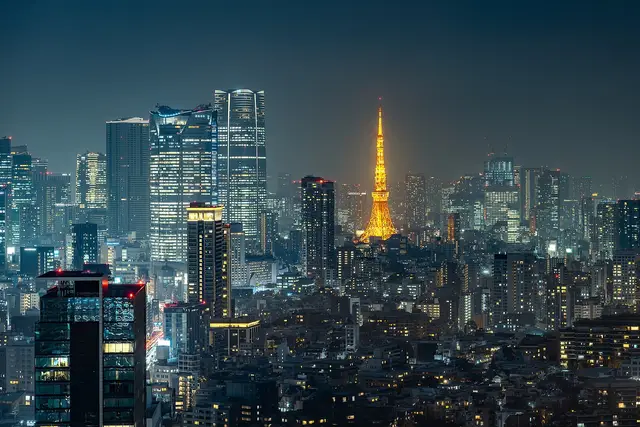
Tokyo guide
From old downtown streets of temples and shopping lanes to districts of skyscrapers and neon, each area feels different. Trains and subways go everywhere; most main sights are about 30 minutes from Tokyo Station.
Things to see 10 classics
"Classics" and "Hidden gems" are this site's editorial picks, not a measured popularity ranking.
- 1
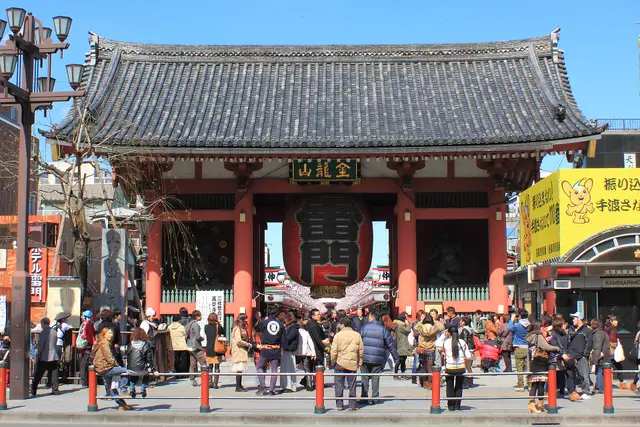
Senso-ji Temple and Kaminarimon Gate
Said to be Tokyo's oldest temple. From Kaminarimon Gate with its giant lantern, the Nakamise shopping lane leads to the main hall.
Many overseas visitors
In the 2023 survey, 47.4% of foreign visitors to Tokyo went to Asakusa (4th) Source: Tokyo Metropolitan Government, 2023 Survey of Foreign Visitors' Behavior
- Temples, shrines & churches
- History & buildings
- Shopping & strolling
about 60 minFreeWheelchair & stroller friendly
Subway · About 25 min from Tokyo ・ JR Yamanote Line to Kanda, change to the Ginza subway line for Asakusa, then about 5 minutes on foot ・ 4.6km
- 3
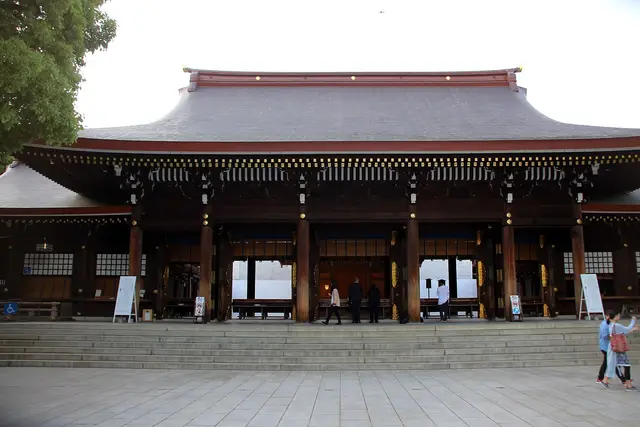
Meiji Jingu Shrine and Harajuku
A shrine deep in a forest. The entrance is right beside Harajuku Station, close to Takeshita Street and its youth fashion shops.
- Temples, shrines & churches
- Nature
- Shopping & strolling
about 1.5 hrFreeWheelchair & stroller friendly
Train · About 40 min from Tokyo ・ JR Yamanote Line to Harajuku, then about 10 minutes on foot to the main hall ・ 6.1km
- 4
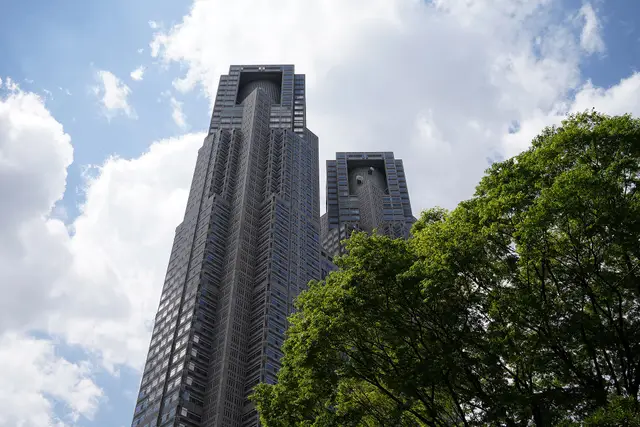
Shinjuku (Tokyo Metropolitan Government observatories)
The city hall's observatories, about 200 meters up among the skyscrapers, look out over Tokyo. At night, head for the neon of the east side.
- Views
- Night views
about 60 minFreeFine on a rainy day
Train · About 30 min from Tokyo ・ JR Chuo Line rapid to Shinjuku, then about 10 minutes on foot from the west exit ・ 6.9km
- 6
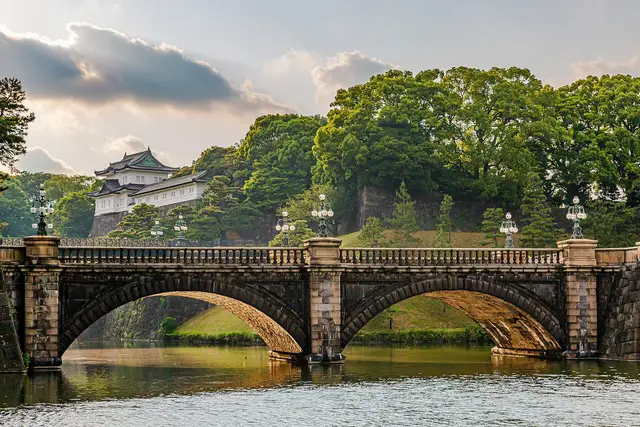
Imperial Palace (East Gardens, Nijubashi Bridge)
The site of Edo Castle. Stone walls and moats remain, and the East Gardens are open for walking. See Nijubashi Bridge from the plaza.
- History & buildings
- Nature
about 1.5 hrFree
Walk · About 15 min from Tokyo ・ From the Marunouchi North Exit to Otemon Gate ・ 900m
Show on map
ClassicsHidden gems
Suggested routes
Times assume a 9:00 start. Travel times are estimated from distance and vary with waiting and crowds.
Old downtown: Asakusa, Ueno and Yanaka
Leave 9:00 → until about 16:43 (about 7.5 hr)
- 9:00Tokyo
about 25 min by transport
9:25Tokyo Skytreestay about 1.5 hrabout 24 min on foot
11:19Senso-ji Temple and Kaminarimon Gatestay about 60 minabout 15 min by transport
12:34Ueno Parkstay about 2 hrabout 23 min on foot
14:57Nezu Shrinestay about 30 minabout 16 min on foot
15:43Yanaka Ginzastay about 60 min
Take the Ginza subway line from Asakusa to Ueno. From Ueno, Nezu and Yanaka can be covered on foot.
Plan this routeMeiji Jingu, Shibuya, then Shinjuku at night
Leave 9:00 → until about 13:15 (about 4.5 hr)
- 9:00Tokyo
about 40 min by transport
9:40Meiji Jingu Shrine and Harajukustay about 1.5 hrabout 15 min by transport
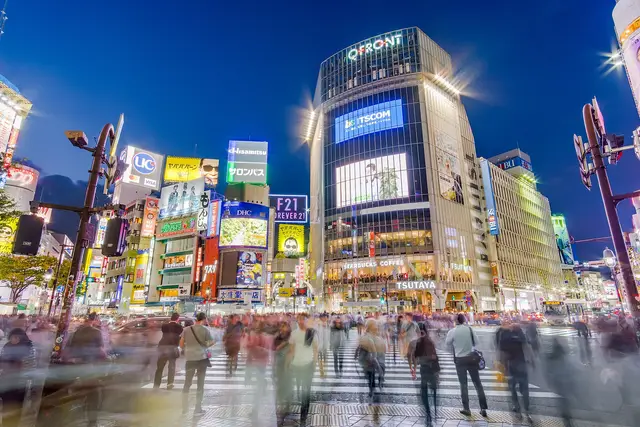
11:25Shibuya Scramble Crossingstay about 30 minabout 20 min by transport
12:15Shinjuku (Tokyo Metropolitan Government observatories)stay about 60 min
Harajuku, Shibuya and Shinjuku are neighboring stops on the JR Yamanote Line. Harajuku to Shibuya is also about 20 minutes on foot.
Plan this route
When to go
March–May and October–November are best for walking. July–August is hot and humid (26–27°C on average); September–October is the wettest. Winter is dry and sunny.
Point at a month to see its temperature and precipitation.
Temperature (line: average; band: low to high)
Precipitation (mm)
Typical seasons
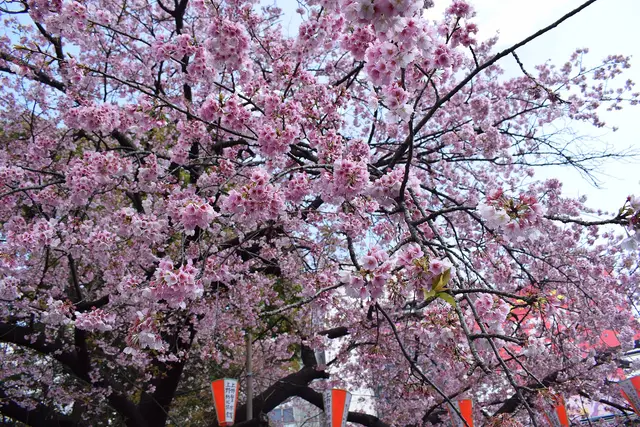
Cherry blossoms (Ueno, Chidorigafuchi)
Sanja Festival (Asakusa)
Sumida River Fireworks
Autumn leaves (ginkgo avenues)
Show as a table
| Jan | Feb | Mar | Apr | May | Jun | Jul | Aug | Sep | Oct | Nov | Dec | |
|---|---|---|---|---|---|---|---|---|---|---|---|---|
| High (℃) | 9.8 | 10.9 | 14.2 | 19.4 | 23.6 | 26.1 | 29.9 | 31.3 | 27.5 | 22 | 16.7 | 12 |
| Avg (℃) | 5.4 | 6.1 | 9.4 | 14.3 | 18.8 | 21.9 | 25.7 | 26.9 | 23.3 | 18 | 12.5 | 7.7 |
| Low (℃) | 1.2 | 2.1 | 5 | 9.8 | 14.6 | 18.5 | 22.4 | 23.5 | 20.3 | 14.8 | 8.8 | 3.8 |
| Rain (mm) | 59.7 | 56.5 | 116 | 133.7 | 139.7 | 167.8 | 156.2 | 154.7 | 224.9 | 234.8 | 96.3 | 57.9 |
Temperature and precipitation are Japan Meteorological Agency normals (1991–2020, Tokyo). Seasons are typical timings and can shift by a week or two each year. JMA data
Main ways to get around
JR Yamanote Line
A loop line linking Tokyo, Ueno, Ikebukuro, Shinjuku, Harajuku, Shibuya and Shinagawa. A full circuit takes about 1 hour; board in the direction that reaches your stop sooner.
Subway (Tokyo Metro and Toei Subway)
Thirteen lines in all cover the whole city center. The two operators charge separate fares, but with an IC card you can simply tap through from one to the other.
Narita Express and Keisei Skyliner
From Narita Airport, the Narita Express takes about 1 hour to Tokyo Station; the Skyliner takes about 40–45 minutes to Nippori and Ueno. Both are all-reserved.
Tokyo Monorail and Keikyu Line (Haneda Airport)
From Haneda Airport, take the monorail to Hamamatsucho or the Keikyu Line to Shinagawa. Either takes about 15–20 minutes; change there to the JR Yamanote Line.
Water bus (Asakusa – Odaiba)
Down the Sumida River from Asakusa to Hamarikyu, Hinode Pier and Odaiba. You pass under many bridges and see the city from the water.
Getting to Tokyo
“Classics” and “Hidden gems” are our editors' picks, not a measured popularity ranking. Travel times are estimates. Please check prices, opening hours and operating days with the official sources before you go.
Photo and data credits
Night skyline of Tokyo with the illuminated Tokyo Tower David Kernan (CC BY 4.0) / Kaminarimon Gate of Senso-ji with its huge red lantern Kakidai (CC BY-SA 3.0) / Crowds crossing the Shibuya Scramble Crossing at dusk Benh LIEU SONG (Flickr) (CC BY-SA 2.0) / The main hall of Meiji Jingu beyond a wide gravel courtyard Hyppolyte de Saint-Rambert (CC BY-SA 4.0) / The twin towers of the Tokyo Metropolitan Government Building Eavesdropper6735 (CC BY 4.0) / Cherry trees in full bloom and lanterns in Ueno Park Syced (CC0) / The stone bridge to the Imperial Palace and Fushimi Turret Otto Domes (CC BY-SA 4.0). Cropped and resized.
Local food
Regional dishes handed down in Tokyo. Many are home and community cooking, so not every dish is served at restaurants.
Nigiri zushi
にぎりずし
Nigiri-zushi is a typical Japanese dish consisting of vinegared rice topped with ingredients.
- Where it is made
- Around Tokyo Bay and throughout Tokyo
Kanpyo-maki
かんぴょう巻き
Kanpyo-maki is a type of sushi roll that is made by boiling kanpyo in water to give it a sweet-salty flavor and then wrapping it with vinegared rice and seaweed.
- Where it is made
- Around Tokyo Bay, all of Tokyo
Anago Sushi
穴子寿司
"Anago sushi" is a type of sushi where eel, simmered and cut into a fillet, is placed on top of vinegared rice and brushed with a sauce called "tsume."
- Where it is made
- Around Tokyo Bay Area
Monja yaki
もんじゃ焼き
Around the 1950s, when food was scarce, simple monjayaki, made by dissolving udon flour and adding soy sauce and syrup, was widely popular among children.
- Where it is made
- Tsukishima area, all over Tokyo
Oden
おでん
Oden is a dish in which various ingredients called "tane" such as Satsuma-age, daikon radish, konnyaku, and chikuwabu are cooked in a broth made from dried bonito flakes and kelp, and seasonings…
- Where it is made
- All over Tokyo
Tempura
てんぷら
Tempura is a fried dish where flour is sprinkled onto ingredients such as seafood and vegetables, dipped in a liquid coating of egg mixed with flour, and fried in vegetable oil.
- Where it is made
- All areas throughout Tokyo
“Find places serving it” opens a map app search for the dish name and the place name. The results are not chosen or recommended by this site. Please check with the shop whether it serves the dish.
Source: “Our Regional Cuisines” (Ministry of Agriculture, Forestry and Fisheries), edited by this site (imported 2026-11-15) https://www.maff.go.jp/e/policies/market/k_ryouri/index.html. Names, areas and ingredients are as written on the source pages; descriptions are excerpts of the original text. No photos are used. This page is not made or endorsed by the ministry.