東北的名產・鄉土料理
稻米產區。為了度過寒冬的火鍋、湯品和保存食品,以及蕎麥麵等麵食很多。
東北的名產美食 53 種,鄉土料理 176 種。
來東北要嚐的名產
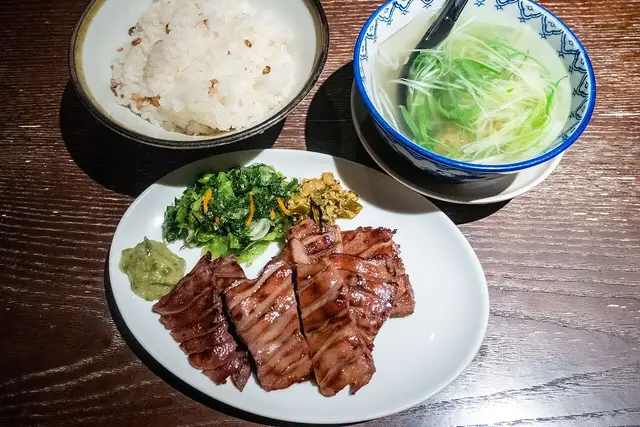 Gyutan-yaki (grilled beef tongue, Sendai specialty)SendaiSliced beef tongue grilled over a fire. The first specialty shop opened in Sendai in 1948, and about 100 now operate in the city.
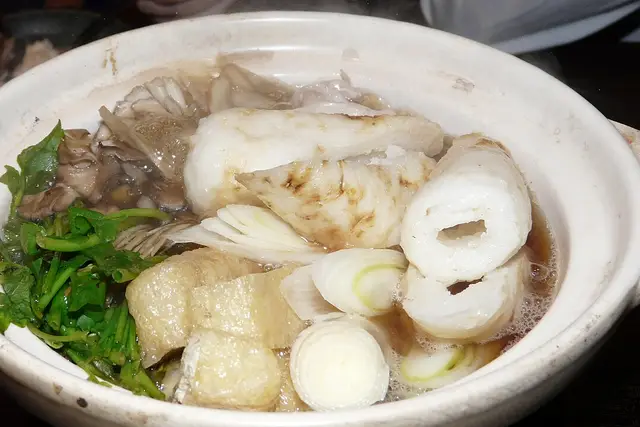 Kiritanpo nabe (hot pot with grilled rice sticks and Hinai chicken broth)Odate
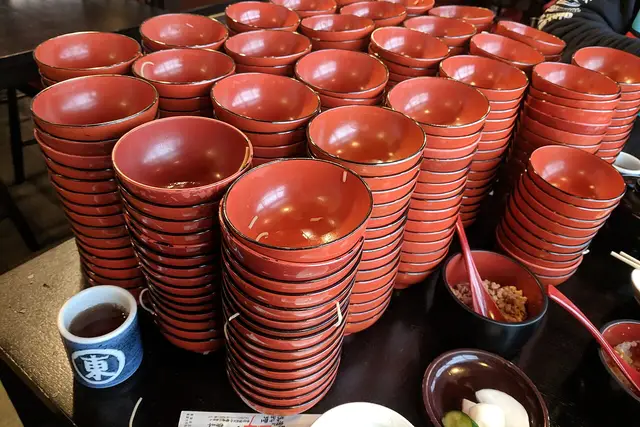 Wanko soba (bite-size soba refilled into your bowl until you stop)Morioka and Hanamaki
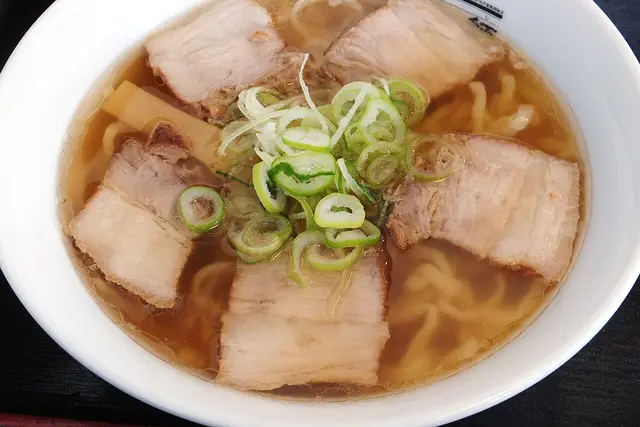 Kitakata ramen (soy ramen with thick curly noodles)Kitakata
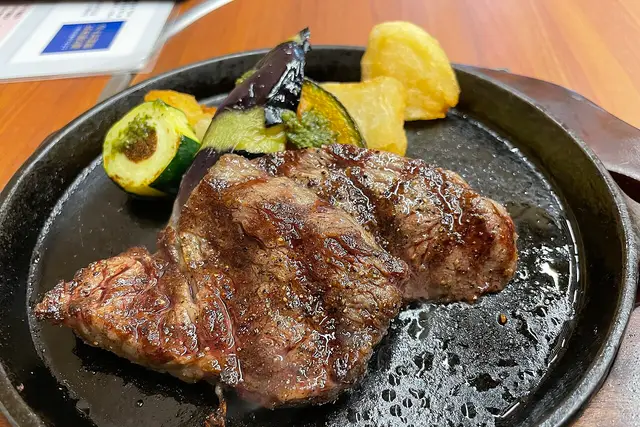 Yonezawa beef (premium marbled wagyu from the Okitama area)Yonezawa
Fukushima
名產 10・鄉土料理 30
名產美食
造訪當地時值得一嚐、在店家或攤位吃得到的名產。
Kitakata麵類
Kitakata ramen (soy ramen with thick curly noodles)
喜多方ラーメン
Ramen with a rich soy-and-sake soup and thick curly noodles. About 100 shops in the city; locals have a custom of eating it for breakfast.
Fukushima City肉類
Fukushima enban gyoza (disc-shaped ring of fried gyoza)
福島の円盤餃子
Fukushima City gyoza fanned out on a round plate, vegetable-heavy. Almost all member restaurants open in the evening.
Namie麵類
Namie yakisoba (extra-thick noodles with pork and bean sprouts)
なみえ焼そば
Extra-thick noodles in a special sauce with only pork and bean sprouts. Eaten in Namie for about half a century.
Koriyama街頭小吃
Koriyama Cream Box (thick-cut bread with milky cream)
こおりやまクリームボックス
Thick-sliced bread spread with milk-flavored cream. Originated in Koriyama and sold at about 20 shops in the city.
鄉土料理
家庭和地方傳承下來的料理。有些店家沒有供應(取自日本農林水產省「うちの郷土料理」)。
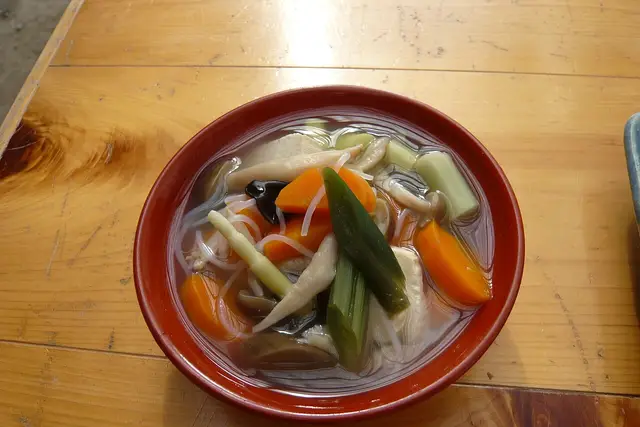 Aizu region, excluding MinamiaizuKozuyuこづゆ
Kozuyu is a local dish made with a variety of ingredients such as kikurage (kikurage), warabi (bracken), and taro (taro) cooked in a soup stock made from scallops in a shallow "teshio dish".
主要食材: Scallops, kikurage, taro, itokon, dried shiitake mushrooms, mamefu (white bean curd), carrots, strawberries, etc.
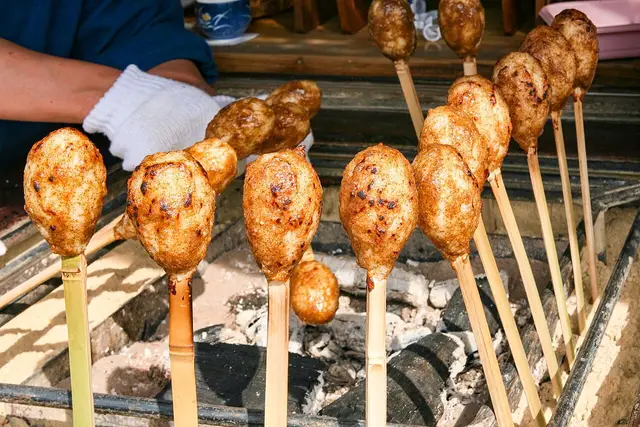 Shimogo Town, Minamiaizu TownShingoro (Rice Cake with Junen-miso)しんごろう
“Egoma”(Perilla) is widely grown in Fukushima Prefecture. It is called “Junen” in the prefecture and is also used in various local dishes.
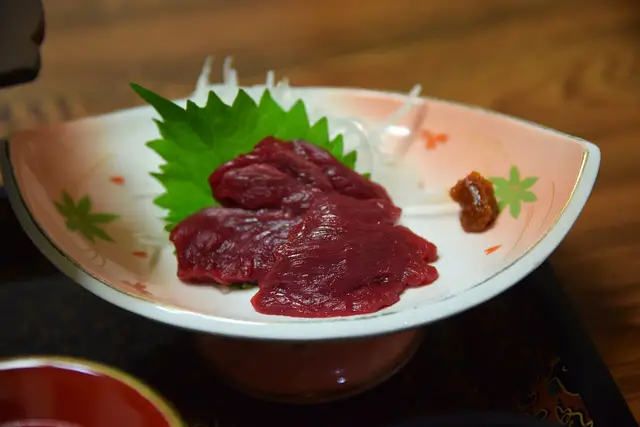
- Aizuwakamatsu City, Aizusakashita-ChoBasashi (Raw Horse Meat)馬刺し
The consumption of horse meat became widespread in Fukushima around the time of the Boshin War.
- Fukushima CityIka ninjinいかにんじん
Ika-ninjin is a side dish made by finely slicing surumeika and carrots and marinating them in a sweet and spicy sauce made of soy sauce, coarse soybean paste, and mirin (sweet sake).
- All over the Aizu regionNishin no sanshozukeにしんの山椒漬け
Nishin no sansho zuke" (Nishin marinated in Japanese pepper) is another dish using migaki nishin, which is made by covering it with sansho leaves and seasoning it with soy sauce, vinegar, and sake.
- Iwaki CitySanma no popoyakiサンマのポーポー焼き
Iwaki City has seven beaches, called "Iwaki Nanahama," and there are many fishing ports around them.
- Soma CityHokki meshiほっきめし
A local dish made by combining these two specialties is "hokkimeshi. The rice absorbs the broth from the hokki-gai and becomes rich in umami.
- Aizu AreaKoi no Kanroni(Sweetened Boiled Carp)鯉の甘露煮
While carp is used in many dishes such as karaage and ankake, "koi no kanroni" (sweetened boiled carp) is made by stewing a great deal of sugar, syrup, soy sauce and sake together for a salty-sweet…
- Koriyama CityCabbage Rice Cakesキャベツ餅
Cabbage rice cakes are a regional food which have been eaten in the Ose region of Koriyama City for over 80 years.
- Nihonmatsu CityZakuzakuざくざく
Zakuzaku is also called “zakuzakuni” or “zakuzakujiru” and is one of the local dishes that has been popular since the Edo period.
主要食材: Taro, carrots, burdock root, konjac, Japanese radish, dried shiitake mushrooms, chicken, etc.
- Furudono-machiMiso Kanpura (Miso Potatoes)みそかんぷら
In some areas of Fukushima, such as Fudono-machi, potatoes are called 'kanpura,' and there is a deeply rooted culture of eating them as a staple food.
- Koriyama CityDaikon Mochi大根もち
A wide variety of vegetables have been cultivated in Fukushima Prefecture for many years.
- Minamiaizu TownTsuyu-ni-shimeつゆ煮しめ
"Tsuyu-ni-shime" is a dish made by simmering vegetables, herring, tofu, and other ingredients in broth, seasoned with soy sauce and sugar.
主要食材: dried herring, tsuto tofu (tofu wrapped in straw wrappings and boiled in salt water), taro, carrots, kombu (kelp)
- Soma City, Minamisoma City, Namie TownHarako Meshi (Harako Rice)はらこ飯
One such dish is "Harako-meshi" or "Harako rice", which is made using a salmon roe called "harako", served on a bed of rice.
- Koriyama City, Iwaki City, Fukushima CityMame Kazunoko豆数の子
"Mame Kazunoko" is one such regional dish that uses soybeans. This dish is prepared with a type of soybean called "Hiyashi Mame" alongside herring roe marinated in soy sauce.
- Nihonmatsu CitySagohachi Zuke三五八漬け
"Sagohachi Zuke" is a pickle in which vegetables are pickled in "San Go Hachi" (=three, five, eight), a mixture of rice, Rice koji(=malted rice), and salt.
- Soma CityAnko no Tomo Aeあんこうのとも和え
A local dish using anglerfish, often eaten in Soma City, is "Anko no Tomo Ae". It Prepared by tossing boiled anglerfish with sauted anglerfish liver, miso, and sugar.
- Date City, Fukushima CityAnpogaki no Namasu (Dried persimmons with daikon radish and carrot salad)あんぽ柿のなます
It is said that persimmons began to be eaten in Fukushima Prefecture around the Edo period.
- Tadamimachi TownOhiraおひら
Seaweed, Maitake mushrooms, and river fish Haya, the bounties of the sea, mountains, and rivers are all incorporated in this well-balanced stew. used in stewed dishes.
主要食材: Tofu, Haya (=Japanese Dace), Maitake Mushroom, Kombu(=Kelp), Gobou(=Burdock)
- Koriyama CityKoi-no-Arai鯉のあらい
“Koi-no-Arai”, in which fresh carp is eaten like Sashimi, is one of Fukushima Prefecture's representative carp dishes. Because it is fresh Koriyama carp, it tastes good without heating.
- Fukushima CityShimi-dofu no Tamago-toji (simmered Freeze-dried Tofu with Eggs)凍豆腐の卵とじ
“Shimi-Dofu”, which is made by freezing the Tofu and then putting it back to dry, is a local dish unique to cold regions. The Tofu is exposed to the cold wind for about two weeks to remove the water.
主要食材: “Shimi-Dofu”(=Freeze-dried Tofu), Eggs, “Shinobuna”(Komatsuna)(=Japanese Mustard Spinach)
- Fukushima City, Iwaki CityJunen-botamochiじゅうねんぼたもち
One of the most famous dishes is “Junen-botamochi.” The glutinous rice is rolled into a bite-size ball and covered with roasted and Sugar-sweetened Junen.
- Koriyama CityKoikoku (Miso soup with Carp)鯉こく
“Koikoku” is one of the typical local dishes that uses carp. “Koikoku” is a kind of “Miso” soup in which sliced Carp, Tofu, Green Onions, and other ingredients are stewed and seasoned with “Miso”.
- Aizuwakamatsu CityUchimame to Kiri-kombu no Nimono (=The simmered kidney beans and kombu)打ち豆と切り昆布の煮物
"Uchimame to Kiri-kombu no Nimono (=The simmered kidney beans and kombu)" is a local dish that skillfully utilizes long-lasting ingredients such as mashed beans and sliced kombu.
主要食材: Daikon radish, Fried thin tofu, battered beans, carrots, Kombu(=kelp)
- Aizuwakamatsu CityBoutara-ni (dried codfish stew)ぼうたら煮
"Boutara-ni" is a regional dish where dried cod, known as "boutara," is slowly simmered for several days until it becomes sweet and savory, with the bones tenderized, resulting in a distinctive…
- Hinoemata Villege, Minami-aizu RegionHattoはっとう
"Hatto" is a dish made by kneading and rolling a mixture of buckwheat flour, rice flour, or glutinous rice flour, cutting it into diamond shapes, and boiling it.
- Nishi-Aizu Town, Kitakata CityEgoえご
"Ego" is a dish made from "Egokusa" seaweed boiled to dissolve, then set in rectangular shape. It’s like Kanten (=agar-agar) or jelly, and eaten with mustard soy sauce.
- Samegawa VillageJuunen Hiyadareじゅうねん冷やだれ
There are various dishes using "Juunen", but the one often eaten in summer is "Juunen Hiyadare".
- Hanawa Town, Tanagura TownKonjac no Shira-aeこんにゃくの白和え
Regarding dishes using konjac, "Sashimi konjac" (thinly sliced konjac like sashimi) is famous, and "konjac no shira-ae" is often cooked at home.
- Soma CityDonko-jiru (Dark sleeper Soup)どんこ汁
Various dishes using "donko" are taking root in many areas, and "donko-jiru" is eaten mainly in Soma City. It’s a soup simmered "donko" and vegetables.
主要食材: "Donko" (=Dark sleeper), Daikon radish, Napa cabbage, Carrot, Japanese leek
「尋找吃得到的店」會用料理名稱和地名開啟地圖應用程式的搜尋。搜尋出的店不是本站挑選或推薦的。是否供應這道料理,請向店家確認。
來源
名產・鄉土料理
出處:根據農林水產省「うちの郷土料理 (Our Regional Cuisines)」加工製作(2026-11-15 取得) https://www.maff.go.jp/e/policies/market/k_ryouri/index.html. 名稱、流傳地區和食材依原頁面所寫,介紹是原文的一部分。不使用農林水產省的照片(料理照片來自 Wikimedia Commons)。本頁面不是農林水產省製作的。料理名稱和介紹以英語顯示。
當地特色美食
各項美食皆已透過都道府縣、市町村、觀光協會或 JNTO 的官方頁面確認為當地特色(2026-11-17 確認)。說明由本站撰寫。
- Kitakata ramen (soy ramen with thick curly noodles): www.tif.ne.jp
- Shirakawa ramen (whole-chicken broth with flat curly noodles): www.tif.ne.jp
- Fukushima enban gyoza (disc-shaped ring of fried gyoza): www.tif.ne.jp
- Aizu sauce katsudon (pork cutlet in sauce over shredded cabbage and rice): www.aizukanko.com
- Aizu wappa-meshi (steamed rice with seasonal toppings in a bent cypress box): www.aizukanko.com
- Aizu basashi (horse meat sashimi with karashi miso): www.aizukanko.com
- Namie yakisoba (extra-thick noodles with pork and bean sprouts): www.tif.ne.jp
- Mehikari karaage (deep-fried greeneye fish, Iwaki's city fish): www.city.iwaki.lg.jp
- Ankou no dobujiru (monkfish stew): www.city.iwaki.lg.jp
- Koriyama Cream Box (thick-cut bread with milky cream): www.tif.ne.jp
照片與資料出處
Grilled beef tongue set with barley rice and oxtail soup くろふね (CC BY 4.0) / Kiritanpo hot pot with grilled rice sticks, maitake and seri greens Chensiyuan (CC BY-SA 4.0) / Tall stacks of empty wanko soba bowls on the table Koltonsmith (CC BY-SA 4.0) / Kitakata ramen in clear soy broth topped with chashu and green onion Lombroso (CC BY-SA 4.0) / Yonezawa beef steak on a sizzling iron plate with grilled vegetables Totti (CC BY-SA 4.0) / Basashi, raw horse meat sashimi, served with a shiso leaf Raita Futo from Tokyo, Japan (CC BY 2.0) / Kozuyu, Aizu's clear vegetable soup, served in a red lacquer bowl Opqr (CC BY-SA 3.0) / Shingoro rice cakes with miso, grilled on skewers over charcoal くろふね (CC BY 4.0)。已裁切並縮小。