東北的名產・鄉土料理
稻米產區。為了度過寒冬的火鍋、湯品和保存食品,以及蕎麥麵等麵食很多。
東北的名產美食 53 種,鄉土料理 176 種。
來東北要嚐的名產
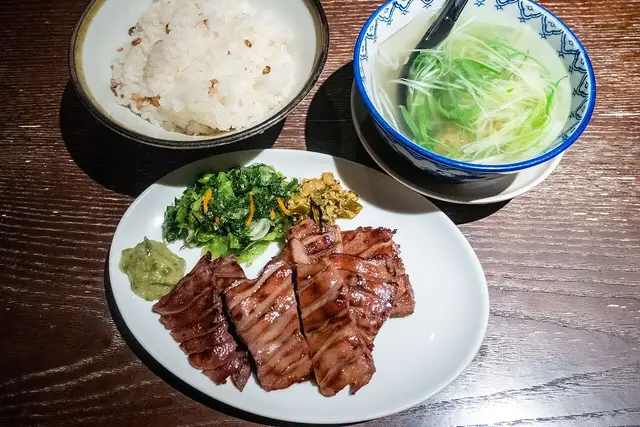 Gyutan-yaki (grilled beef tongue, Sendai specialty)SendaiSliced beef tongue grilled over a fire. The first specialty shop opened in Sendai in 1948, and about 100 now operate in the city.
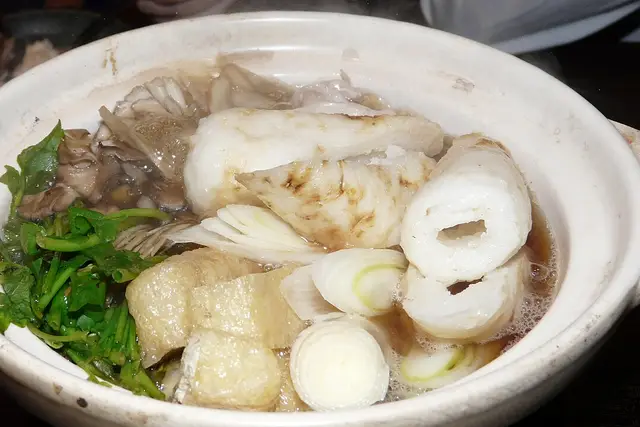 Kiritanpo nabe (hot pot with grilled rice sticks and Hinai chicken broth)Odate
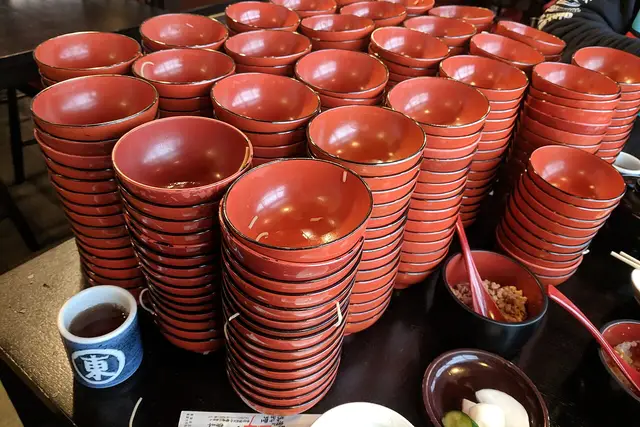 Wanko soba (bite-size soba refilled into your bowl until you stop)Morioka and Hanamaki
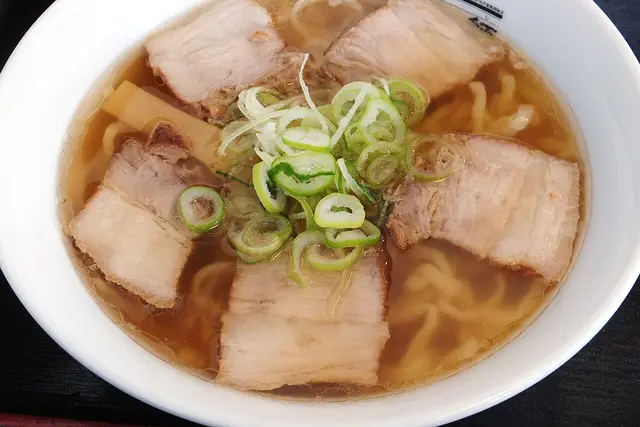 Kitakata ramen (soy ramen with thick curly noodles)Kitakata
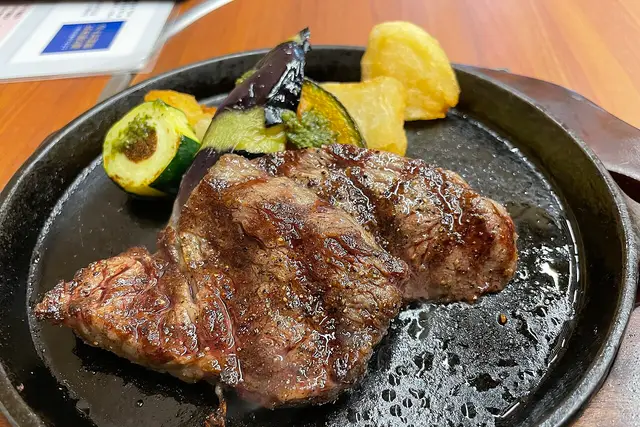 Yonezawa beef (premium marbled wagyu from the Okitama area)Yonezawa
Yamagata
名產 10・鄉土料理 29
名產美食
造訪當地時值得一嚐、在店家或攤位吃得到的名產。
Kahoku麵類
Tsumetai niku soba (cold soba with chicken broth sauce and sliced chicken)
冷たい肉そば
Firm country-style soba with a sweet-salty chicken-stock sauce, topped with chicken and chopped leek. A specialty of Kahoku.
Yamagata各地麵類
Ita soba (soba served in a shallow cedar box)
板そば
Soba served in a shallow cedar-wood box, a handy way to serve many people, which spread across Yamagata.
鄉土料理
家庭和地方傳承下來的料理。有些店家沒有供應(取自日本農林水產省「うちの郷土料理」)。
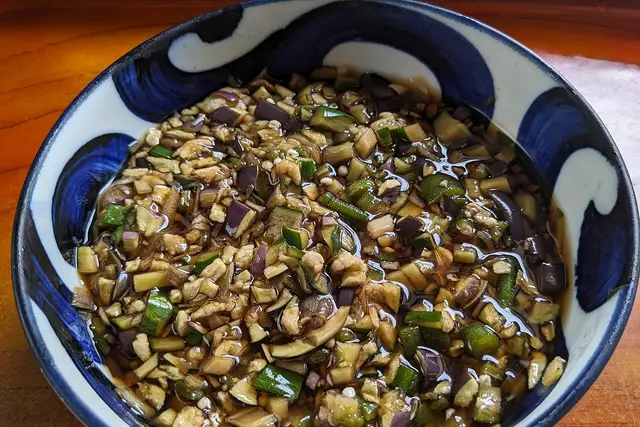 Murayama area, Okitama areaDashiだし
“Dashi" is made by chopping up and seasoning summer vegetables such as cucumbers and eggplants, which contain a lot of water, and savory vegetables such as green perilla and myoga (Japanese ginger)…
- All over the prefectureTama Konnyaku(Ball-shaped konjac)玉こんにゃく
"Ball-shaped konjac", nicknamed Tamakon, is the soul food of the people of Yamagata Prefecture.
- The whole prefectureImoni(taro soup)芋煮
“Imoni” (taro soup) is said to have originated in the mid-1600s.
主要食材: Taro, beef, konjac, green onions, (may include mushrooms, burdock root, etc.)
- Shonai areaDongara Jiru (cod soup)どんがら汁/寒鱈汁
“Dongara Jiru” (cod soup) is a local winter dish using Kandara. It was originally eaten by fishermen on the beach. It is characterized by the use of Kandara from head to tail without leaving anything.
- The whole prefectureNatto Jiru(natto soup)納豆汁
In the Murayama area of Oe Town, fermented soybeans without strings are made into "Natto Jiru” (natto soup).
主要食材: Natto, tofu, fried tofu, edible wild plants, Imogara(made from dried stems of Karatori potatoes), konjac, mushrooms, onions, Japanese parsley, miso
- Shounai AreaMousou-jiru (Bambooshoot Soup)孟宗汁
"Mousou-jiru" is a local dish using "Mousou", a type of bamboo shoot.
主要食材: Mousou Bamboo Shoot, Thick fried tofu, Shiitake mushroom, Sake lees, Miso
- Okitama Region, Yonezawa CityHiyashiru冷や汁
Although the name “Hiyashiru” suggests soup, this is a boiled dish made by combining seasonal vegetables and cold dashi broth (soaking soup).
主要食材: Seasonal vegetables, Shimi konjac (freeze dried konjac), Uchi-mame(Soybeans simmered, flattened and dried), Hoshi-kaibashira (Dried scallop adductor muscle), Hoshi shiitake (Dried Shiitake mushroom)
- All of Yamagata PrefectureShio-Kujira-Jiru塩くじら汁
"Shio-Kujira-Jiru" (salted whale soup) is a traditional nourishing meal to survive the hot inland summers.
主要食材: New potatoes,“ Shio-Kujira”(=Salted Whale), Seasonal vegetables
- Yonezawa CityToyama Kabu no Kasu-jiru (Toyama Turnip Soup with Sake Lees)遠山かぶの粕汁
"Toyama Kabu no Kasu-jiru" is a soup with “Toyama Kabu” and “Uchimame,” an ingredient unique to snowy Yonezawa City.
主要食材: “Toyama-Kabu”(=turnip), “Uchimame”(=pounded soybeans), Various vegetables
- All of Yamagata PrefectureSasamaki笹巻き
“Sasamaki “is made by soaking and draining Glutinous rice, wrapping it in Bamboo leaves, tying a string around it, and boiling it in hot water. In other prefectures, it is also called "Chimaki.
主要食材: Glutinous rice, Bamboo grass leaves, Kinako(Roasted soybean flour), Sugar
- Mogami Area, Murayama AreaKujira-mochiくじら餅
Although it is called " Kujira-Mochi (whale cake)," it is not made with Whale meat. There are various theories as to the origin of the name.
- Murayama Region, Okitama RegionHyo-Boshi-no-Nimono/Hyo-Boshi-Niひょう干しの煮物/ひょう干し煮
The entire area of Yamagata Prefecture was designated as a heavy snowfall area, and in those days when distribution was poor, securing food for the winter was essential for survival.
主要食材: Hyo-Boshi(Dried Purslane), Konjac noodles, Carrot, Fried thin tofu
- Okitama Region, Yonezawa CityKoi-no-Umani鯉のうま煮
Koi-no-Umani is a local dish made by koi (=Carp) cut into round slices and simmering them in sugar, soy sauce, and sake. koi (=Carp) was once a valuable source of protein in inland rural areas.
- Okitama Region, Yonezawa CityUkogi no Kiri-Ae(Sliced and dressed araliad)うこぎの切り和え
"Ukogi(=Araliad)" has a unique flavor and bitterness, and is used to make "ukogi gohan (rice with ukogi)," "ukogi tempura," and "ukogi ohitashi (boiled ukogi)," in addition to "Ukogi no Kiri-Ae," a…
- All of Yamagata PrefectureGrilled akebi stuffed with miso / Grilled akebi with oilあけびの味噌詰め焼き/あけびの油焼き
"Akebi(=Chocolate vine)" has a bittersweet flavor and is served in a variety of dishes such as grilled akebi stuffed with miso, simmered dishes, salad, tempura, and nuta-age.
主要食材: Akebi(=Chocolate vine), Maitake mushrooms, Shimeji mushrooms, Miso, Sugar
- Okitama RegionYukina no fusubezuke (Pickled yukina cabbage)雪菜のふすべ漬け
"Yukina no Fusubedzuke" is a pickled dish using yukina, a snow cabbage. Yukina is one of the Yamagata-Okitama traditional vegetables, a special vegetable of the Okitama region.
- Murayama area, Mogami area, Okitama areaOmizukeおみ漬
"Omizuke" is a pickle made from a type of mustard green called "Yamagata seisai." Along with "seisaizuke," it is one of the representative pickles of Yamagata Prefecture.
主要食材: Yamagata seisai (greens), daikon radish, carrot, Jerusalem artichoke, perilla seeds (salted), soy sauce, granulated brown sugar
- All areas in Yamagata PrefectureSeisai-zuke (Pickled seisai mustard)青菜漬
Yamagata Prefecture is known for its diverse pickling culture, with "Seisai mustard pickles" being one of its most popular varieties.
- Shonai regionHatahata no Yuage (Poached Japanese sandfish)ハタハタの湯上げ
Japanese sandfish are a scaleless, mild-flavored fish that are favored in the Shonai region as the taste of autumn. The sandfish come to the shores of Shonai around December to lay their eggs.
- Entire prefectureKarakaini (simmered dried stingray fin)からかい煮
"Karakai" is a dry food made by drying the cartilage of kasube (stingray) fins that are caught in Hokkaido.
- Murayama area, Okitama areaJapanese saltwort in mustard dressingおかひじきのからし和え
The Japanese saltwort used in this dish was originally a wild plant that grew along the coast and came to be called okahijiki because it looks like hijiki, a seaweed.
- The whole prefectureOhitashi of edible chrysanthemums (boiled and eaten with soy sauce)食用ぎくのおひたし
In Yamagata Prefecture, the culture of eating this flower is still strong, and “Ohitashi of edible chrysanthemums” (boiled and eaten with soy sauce) is a typical example.
- Shonai AreaTrout Ankake鱒のあんかけ
Trout Ankake is a springtime dish representative of the Shonai area. It is made from the most delicious of all trout, “Sakuramasu” or cherry trout.
- Shonai areaEgg agar/soy sauce agar卵寒天/醤油寒天
In the Shonai area, agar as a sweet dessert is mainstream, and the most popular one is "egg agar".
- Yonezawa City (Okitama area and Murayama area)Kukitachihoshi no nimonoくきたち干しの煮物
Kukitachi-nimono" is a local dish using "kukitachi", a cruciferous vegetable.
主要食材: dried kukitatsuboshi, carrots, beans, konnyaku thread, deep-fried tofu, soy sauce, sugar
- Yonezawa CityShiobiki zushi塩引きずし
Salted sushi, a local delicacy for special occasions, originated in Yonezawa City.
- Northern part of the prefectureWarabi tatakiわらびたたき
Tataki" in "Warabi Tataki" refers to a method of cooking in which the strawbi is placed on a cutting board and beaten with a knife as if cutting it, thereby breaking the fibers of the strawbi into…
- Mogami areaUdo to komidaikon no donkoroniうどと凍み大根のどんころ煮
Frozen daikon" and "frozen rice cakes" are common preserved foods in the Tohoku region, and are made by taking advantage of the cold weather unique to the snow country.
主要食材: Udo (udo), frozen daikon radish, kipper, satsuma-age (fried fish cake), soy sauce, sake, sugar
- Shonai areaShoyu no miしょうゆの実
Shoyu-no-Mi" is a versatile seasoning made by fermenting soybeans, wheat (pressed barley is sometimes used), rice, and seed koji by adding salt water and letting it sit while stirring.
「尋找吃得到的店」會用料理名稱和地名開啟地圖應用程式的搜尋。搜尋出的店不是本站挑選或推薦的。是否供應這道料理,請向店家確認。
來源
名產・鄉土料理
出處:根據農林水產省「うちの郷土料理 (Our Regional Cuisines)」加工製作(2026-11-15 取得) https://www.maff.go.jp/e/policies/market/k_ryouri/index.html. 名稱、流傳地區和食材依原頁面所寫,介紹是原文的一部分。不使用農林水產省的照片(料理照片來自 Wikimedia Commons)。本頁面不是農林水產省製作的。料理名稱和介紹以英語顯示。
當地特色美食
各項美食皆已透過都道府縣、市町村、觀光協會或 JNTO 的官方頁面確認為當地特色(2026-11-17 確認)。說明由本站撰寫。
- Yamagata imoni (autumn taro and beef stew): yamagatakanko.com
- Tsumetai niku soba (cold soba with chicken broth sauce and sliced chicken): yamagatakanko.com
- Ita soba (soba served in a shallow cedar box): yamagatakanko.com
- Tama konnyaku (skewered konjac balls simmered in soy dashi): yamagatakanko.com
- Tsumetai ramen (chilled ramen in cold soy broth): yamagatakanko.com
- Yonezawa ramen (light chicken and niboshi broth with hand-kneaded curly noodles): yamagatakanko.com
- Yonezawa beef (premium marbled wagyu from the Okitama area): yamagatakanko.com
- Sakata ramen (seafood-broth ramen with homemade noodles): yamagatakanko.com
- Dadacha-mame (Tsuruoka's summer edamame): www.tsuruokakanko.com
- Shinjo torimotsu ramen (soy ramen topped with stewed chicken offal): yamagatakanko.com
照片與資料出處
Grilled beef tongue set with barley rice and oxtail soup くろふね (CC BY 4.0) / Kiritanpo hot pot with grilled rice sticks, maitake and seri greens Chensiyuan (CC BY-SA 4.0) / Tall stacks of empty wanko soba bowls on the table Koltonsmith (CC BY-SA 4.0) / Kitakata ramen in clear soy broth topped with chashu and green onion Lombroso (CC BY-SA 4.0) / Yonezawa beef steak on a sizzling iron plate with grilled vegetables Totti (CC BY-SA 4.0) / Tama konnyaku, soy-simmered konjac balls on a skewer No machine-readable author provided. J8takagi assumed (based on copyright claims (Public domain) / Yamagata dashi: finely chopped eggplant, cucumber and herbs タクナワン (CC BY-SA 4.0)。已裁切並縮小。