Kashima and Itako guide
The shrine town of Kashima Jingu, one of the three great shrines of eastern Japan. Find the Kaname-ishi deep in its forest and a torii in the lake, see irises and boats in watery Itako, or catch a Kashima Antlers match.
Things to see 4 classics
"Classics", "For visitors" and "Local picks" are this site's editorial picks, not a measured popularity ranking.
- 1
Katori Jingu Shrine
Head shrine of some 400 Katori shrines across Japan. Its vermilion two-story gate is an Important Cultural Property.
- Temples, shrines & churches
- History & buildings
- Nature
Bus · About 75 min from Kashima-Jingu ・ JR Narita Line to Sawara, then about 13 minutes on the Katori loop bus ・ 13km
- 2
Kashima Jingu Shrine
Head shrine of Kashima shrines across Japan. A path through a forest of giant trees leads to the inner shrine and a sacred deer park.
The treasure hall has been closed since 2018. (as of Nov 17, 2026)
- Temples, shrines & churches
- History & buildings
- Nature
about 1.5 hrFree
Walk · About 10 min from Kashima-Jingu ・ About 10 minutes on foot from Kashima-Jingu Station ・ 500m
- 3
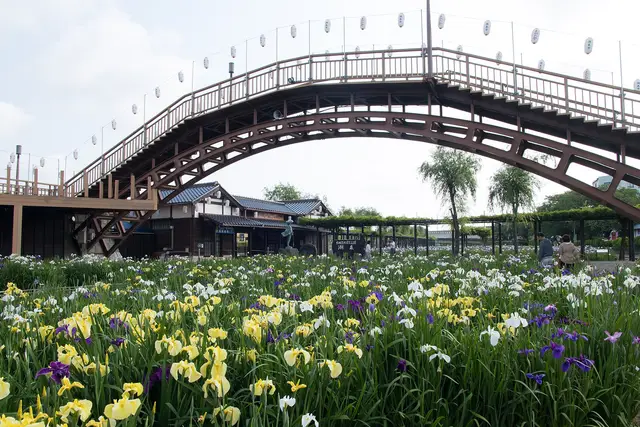
Suigo Itako Iris Garden
A riverside garden of about 500 iris varieties. At its early-summer festival, brides ride a boat to their wedding ('yomeiri-bune').
- Nature
- Activities
about 60 minFree
Train · About 20 min from Kashima-Jingu ・ JR Kashima Line to Itako (about 10 minutes), then about 5 minutes on foot ・ 8.0km
- 4
Ikisu Shrine
One of eastern Japan's three great shrines, with Kashima and Katori. By its riverside torii, the old Oshioi wells spring underwater.
- Temples, shrines & churches
- History & buildings
about 30 minFree
Taxi · About 25 min from Kashima-Jingu ・ About 20 minutes by car from Kashima-Jingu Station ・ 9.4km
Show on map
ClassicsFor visitorsLocal picks
Suggested routes
Times assume a 9:00 start. Travel times are estimated from distance and vary with waiting and crowds.
Kashima Jingu and its town
Leave 9:00 → until about 12:32 (about 3.5 hr)
- 9:00Kashima-Jingu
about 10 min on foot
9:10Kashima Joyama Parkstay about 30 minabout 15 min on foot
9:55Kashima Jingu Shrinestay about 1.5 hrabout 7 min on foot
11:32Kaname-ishi (the keystone)stay about 15 minabout 15 min by transport
12:02Kashima Jingu's West Torii in Lake Kitaurastay about 30 min
From Joyama Park near the station, walk to the shrine and on through the forest to the Kaname-ishi, then end at the lake torii around sunset.
Plan this routeThe three great shrines of eastern Japan
Leave 9:00 → until about 13:10 (about 4 hr)
- 9:00Kashima-Jingu
about 10 min on foot
9:10Kashima Jingu Shrinestay about 1.5 hrabout 40 min by transport
11:20Ikisu Shrinestay about 30 minabout 35 min by transport
12:25Katori Jingu Shrinestay about 45 min
From Kashima Jingu to Ikisu Shrine, then across the Tone River to Katori Jingu. Buses are scarce, so go by taxi.
Plan this routeItako's waterways
Leave 9:00 → until about 11:59 (about 3 hr)
- 9:00Kashima-Jingu
about 20 min by transport
9:20Suigo Itako Iris Gardenstay about 60 minabout 9 min on foot
10:29Choshoji Templestay about 30 minabout 30 min by transport
11:29Kashima Jingu's West Torii in Lake Kitaurastay about 30 min
Best in early summer when the irises bloom. Walk from Itako Station to the iris garden and Choshoji, then return toward Kashima for the lake torii.
Plan this route
Main ways to get around
Kashima-go highway bus
About 2 hours from Tokyo Station Yaesu South Exit to Kashima-Jingu Station, also stopping at Itako (Suigo Itako Bus Terminal).
JR Kashima Line
From Sawara on the Narita Line, about 15 minutes to Itako and 25 to Kashima-Jingu. Some trains run through from the Chiba and Narita side.
Kashima Rinkai Railway Oarai-Kashima Line
About 75 minutes from Mito via Oarai to Kashima-Jingu. On match days trains stop at a temporary station right by the stadium.
Taxis from Kashima-Jingu Station
About 20 minutes to Ikisu Shrine and 25 to Katori Jingu. To see all three great shrines in a day, a taxi is the easy way.
Getting to Kashima-Jingu
“Classics”, “For visitors” and “Local picks” are our editors' picks, not a measured popularity ranking. Travel times are estimates. Please check prices, opening hours and operating days with the official sources before you go.
Local food specialties
Foods introduced as local specialties of Kashima and Itako. They are listed by dish, not by shop, and are not recommendations.
Hot pots & soups
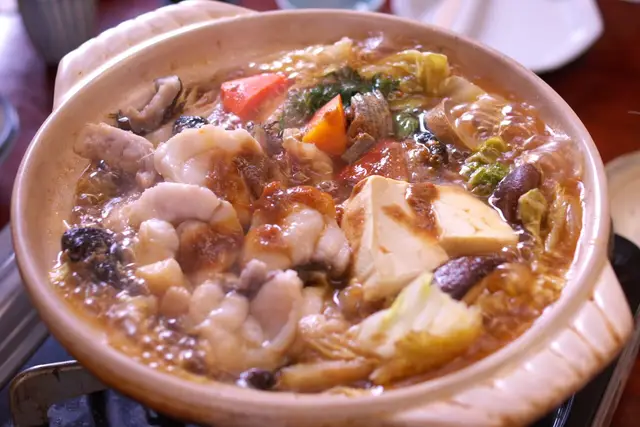
Ankou-nabe (monkfish hot pot)
あんこう鍋
Hot pot made with monkfish, a winter specialty of Ibaraki. Monkfish dishes are served around November to March.
- Known in
- All over Ibaraki
Seafood
Shirasu-don (whitebait rice bowl)
しらす丼
Rice bowl topped with raw or boiled whitebait. Ibaraki is among the top whitebait-catching prefectures in Japan.
- Known in
- All over Ibaraki
Seafood
Ibaraki seafood rice bowl (kaisen-don)
茨城の海鮮丼
Rice bowl topped with seasonal fish. Coastal towns each have a fish market where it can be eaten.
- Known in
- All over Ibaraki
Noodles
Hitachi-aki soba (buckwheat noodles)
常陸秋そば
Soba made from Ibaraki's Hitachi-aki buckwheat. It is also eaten dipped in tsuke-kenchin, a local vegetable soup.
- Known in
- All over Ibaraki
Seafood
Mehikari (greeneye fish, usually fried)
めひかり
Small deep-sea fish caught off Ibaraki most of the year, usually fried or tempura. Fattiest from about October to February.
- Known in
- All over Ibaraki
Meat
Hitachi-gyu (Ibaraki wagyu beef)
常陸牛
Ibaraki-raised black wagyu that meets a set grade. Known for lean, good-quality meat.
- Known in
- All over Ibaraki
“Find places serving it” opens a map app search for the dish name and the place name. The results are not chosen or recommended by this site. Please check with the shop whether it serves the dish.
Traditional home dishes of Ibaraki (30)Practical booking & planning links (Ad)
- Activities, tickets & local tours
- Popular observatories, museums and theme parks increasingly require timed-entry tickets booked in advance. For countryside spots with infrequent buses, a local day tour can save hours.
- KlookKKday
- Rental cars
- A rental car is practical when travelling straight from an airport or exploring rural areas with few trains. Request child seats, an ETC toll card, or winter snow tyres when booking.
- Klook
- Restaurant reservations & food tours
- Well-known dinner spots and course restaurants often fill up days ahead—reserving a table saves waiting in line. Guided local food tours are also a great way to try regional dishes.
- Klook
We list only well-established booking services. This site may receive a commission if you book through these links (each opens in a new tab).
Comment on whether your booking was helpful
Sources
Local food specialties
Each specialty was checked against an official page (prefecture, municipality, tourism association or JNTO) on 2026-11-17. The descriptions were written by this site.
- Ankou-nabe (monkfish hot pot): www.ibarakiguide.jp
- Shirasu-don (whitebait rice bowl): www.ibarakiguide.jp
- Ibaraki seafood rice bowl (kaisen-don): www.ibarakiguide.jp
- Hitachi-aki soba (buckwheat noodles): www.ibarakiguide.jp
- Mehikari (greeneye fish, usually fried): www.ibarakiguide.jp
- Hitachi-gyu (Ibaraki wagyu beef): www.ibarakiguide.jp
Photo and data credits
Irises in bloom beside an arched wooden bridge at Itako Ayame Garden Σ64 (CC BY 4.0) / A clay pot of monkfish simmered with tofu and vegetables Yamaguchi Yoshiaki Camera location36° 19′ 21″ N, 140° 34′ 07.5″ E View this and (CC BY-SA 2.0). Cropped and resized.