Mito, Oarai and Hitachinaka guide
The old castle town of the Mito domain, home to Kairakuen, famed for plum blossoms, and the Kodokan school. Trains and buses reach the flower hills of Hitachi Seaside Park and the seaside shrines of Oarai.
Things to see 9 classics
"Classics", "For visitors" and "Local picks" are this site's editorial picks, not a measured popularity ranking.
- 1
Kairakuen Garden
One of Japan's three great gardens, with about 3,000 plum trees of 100 varieties and the Kobuntei villa. Known for its plum festival.
- Nature
- History & buildings
Paid entry
Bus · About 25 min from Mito ・ About 20 minutes by bus from Mito Station North Exit ・ 2.4km
- 2
Kodokan (former Mito domain school)
The Mito domain school, where the last shogun Yoshinobu studied. A Special Historic Site with original halls and 800 plum trees.
- History & buildings
Paid entryFine on a rainy day
Walk · About 8 min from Mito ・ About 8 minutes on foot from Mito Station North Exit ・ 500m
- 3
Lake Senba
A lake 3 km around, just south of Kairakuen. Walk the shore or rent a boat; the lakeside cherry trees are lovely in spring.
- Nature
- Activities
Free
Walk · About 15 min from Mito ・ About 15 minutes on foot from Mito Station South Exit (to the east shore) ・ 2.0km
- 4
Art Tower Mito
An arts complex by Arata Isozaki, marked by its striking tower, with a contemporary art gallery, a concert hall and a theater.
- Museums
Partly paidFine on a rainy dayWheelchair & stroller friendly
Bus · About 15 min from Mito ・ Bus from Mito Station North Exit to Izumicho 1-chome, then about 2 minutes on foot ・ 1.4km
- 5
Hitachi Seaside Park
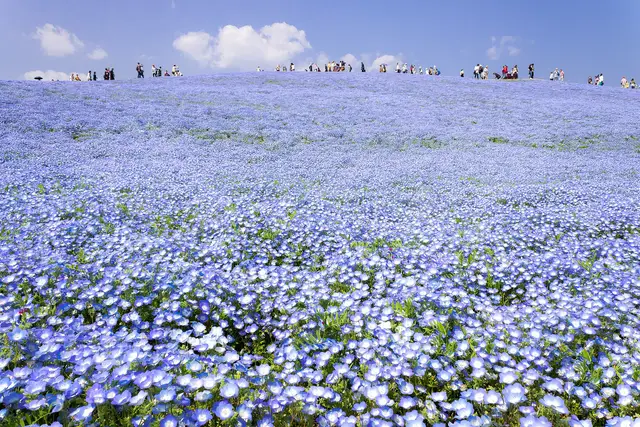
A huge park whose Miharashi Hill turns blue with nemophila in spring and red with kochia in autumn. It also has an amusement park.
- Nature
- With kids
Paid entry
Train · About 40 min from Mito ・ JR Joban Line to Katsuta (about 6 minutes), then about 15 minutes by bus to the West Gate ・ 11km
- 6
Oarai Isosaki Shrine and the Kamiiso torii
A torii gate stands on the sea rock where the shrine's gods are said to have landed. Photographers gather here at sunrise.
- Temples, shrines & churches
- Views
Bus · About 40 min from Mito ・ About 30 minutes on Ibaraki Kotsu bus route 50 from Mito Station to Oarai Isosaki Jinja-shita ・ 12km
Show on map
ClassicsFor visitorsLocal picks
Suggested routes
Times assume a 9:00 start. Travel times are estimated from distance and vary with waiting and crowds.
Mito's castle town and Kairakuen
Leave 9:00 → until about 13:56 (about 5 hr)
- 9:00Mito
about 8 min on foot
9:08Kodokan (former Mito domain school)stay about 45 minabout 3 min on foot
9:56Mito Castle ruins (Otemon Gate and Ninomaru)stay about 45 minabout 24 min on foot
11:05Art Tower Mitostay about 45 minabout 24 min on foot
12:14Kairakuen Gardenstay about 45 minabout 12 min on foot
13:11Lake Senbastay about 45 min
The Kodokan and castle ruins north of the station are walkable. Take a bus from the art center to Kairakuen, then walk back to the station along Lake Senba.
Plan this routeThe Hitachinaka and Oarai coast
Leave 9:00 → until about 14:37 (about 5.5 hr)
- 9:00Mito
about 40 min by transport
9:40Hitachi Seaside Parkstay about 45 minabout 20 min by transport
10:45Sakatsura Isosaki Shrinestay about 45 minabout 25 min by transport
11:55Nakaminato Fish Marketstay about 45 minabout 12 min on foot
12:52Aquaworld Ibaraki Prefectural Oarai Aquariumstay about 45 minabout 15 min by transport
13:52Oarai Isosaki Shrine and the Kamiiso toriistay about 45 min
Start at the flower park and head south along the coast by the Minato Line and buses, then ride the bus back to Mito from Oarai Isosaki Shrine.
Plan this route
Main ways to get around
JR Joban Line Limited Express Hitachi / Tokiwa
About 65–85 minutes from Shinagawa, Tokyo or Ueno to Mito. Local trains also run but take around 2 hours.
Local buses from Mito Station North Exit
To Kairakuen, about 20 minutes from stops 4 or 6. To Art Tower Mito, any bus from stops 4–7 to Izumicho 1-chome, about 10 minutes.
Hitachinaka Seaside Railway Minato Line
Change at Katsuta, about 6 minutes from Mito on the Joban Line. It runs to Nakaminato (fish market), Isozaki (Sakatsura Isosaki Shrine) and Ajigaura.
Kashima Rinkai Railway Oarai-Kashima Line
From Mito to Oarai Station. From there the Umimachi Line loop bus runs to the aquarium and Oarai Isosaki Shrine.
Mito-go highway bus and Ibaraki Airport bus
The Mito-go runs from Tokyo Station Yaesu South Exit to Mito Station in about 2 hours. Buses from Ibaraki Airport take about 40 minutes via the expressway.
Getting to Mito
“Classics”, “For visitors” and “Local picks” are our editors' picks, not a measured popularity ranking. Travel times are estimates. Please check prices, opening hours and operating days with the official sources before you go.
Local food specialties
Foods introduced as local specialties of Mito, Oarai and Hitachinaka. They are listed by dish, not by shop, and are not recommendations.
Noodles
Stamina ramen (noodles with spicy liver and vegetable sauce)
スタミナラーメン
Ramen with a sweet-spicy sauce of liver, pumpkin and chives. Served hot or as chilled noodles with hot sauce.
- Known in
- Hitachinaka
Hot pots & soups
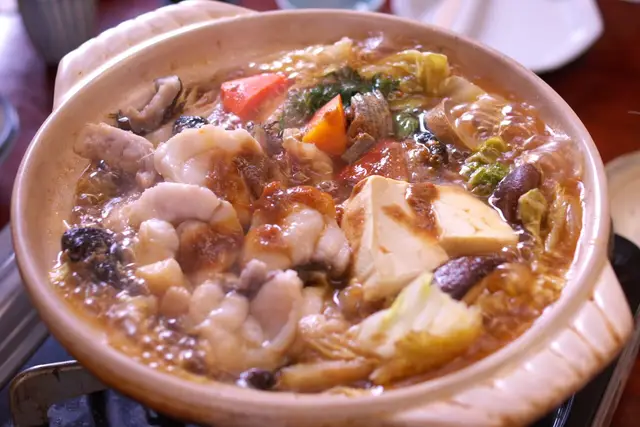
Ankou-nabe (monkfish hot pot)
あんこう鍋
Hot pot made with monkfish, a winter specialty of Ibaraki. Monkfish dishes are served around November to March.
- Known in
- All over Ibaraki
Seafood
Shirasu-don (whitebait rice bowl)
しらす丼
Rice bowl topped with raw or boiled whitebait. Ibaraki is among the top whitebait-catching prefectures in Japan.
- Known in
- All over Ibaraki
Seafood
Ibaraki seafood rice bowl (kaisen-don)
茨城の海鮮丼
Rice bowl topped with seasonal fish. Coastal towns each have a fish market where it can be eaten.
- Known in
- All over Ibaraki
Noodles
Hitachi-aki soba (buckwheat noodles)
常陸秋そば
Soba made from Ibaraki's Hitachi-aki buckwheat. It is also eaten dipped in tsuke-kenchin, a local vegetable soup.
- Known in
- All over Ibaraki
Seafood
Mehikari (greeneye fish, usually fried)
めひかり
Small deep-sea fish caught off Ibaraki most of the year, usually fried or tempura. Fattiest from about October to February.
- Known in
- All over Ibaraki
Meat
Hitachi-gyu (Ibaraki wagyu beef)
常陸牛
Ibaraki-raised black wagyu that meets a set grade. Known for lean, good-quality meat.
- Known in
- All over Ibaraki
“Find places serving it” opens a map app search for the dish name and the place name. The results are not chosen or recommended by this site. Please check with the shop whether it serves the dish.
Traditional home dishes of Ibaraki (30)When to go
Plum blossoms peak in February–March and nemophila from mid-April to early May. Winter is dry (about 50 mm a month); September–October is the wettest time.
Point at a month to see its temperature and precipitation.
Temperature (line: average; band: low to high)
Precipitation (mm)
Typical seasons
Plum blossoms (Kairakuen)
Nemophila (Hitachi Seaside Park)
Mito Komon Festival
Red kochia (Hitachi Seaside Park)
Show as a table
| Jan | Feb | Mar | Apr | May | Jun | Jul | Aug | Sep | Oct | Nov | Dec | |
|---|---|---|---|---|---|---|---|---|---|---|---|---|
| High (℃) | 9.2 | 9.8 | 13 | 17.8 | 22 | 24.5 | 28.5 | 30 | 26.4 | 21.2 | 16.3 | 11.4 |
| Avg (℃) | 3.3 | 4.1 | 7.4 | 12.3 | 17 | 20.3 | 24.2 | 25.6 | 22.1 | 16.6 | 10.8 | 5.6 |
| Low (℃) | -1.8 | -1.2 | 2.1 | 7 | 12.5 | 17 | 21 | 22.2 | 18.6 | 12.5 | 5.9 | 0.5 |
| Rain (mm) | 54.5 | 53.8 | 102.8 | 116.7 | 144.5 | 135.7 | 141.8 | 116.9 | 186.3 | 185.4 | 79.7 | 49.6 |
Temperature and precipitation are Japan Meteorological Agency normals (1991–2020, Mito). Seasons are typical timings and can shift by a week or two each year. JMA data
Practical booking & planning links (Ad)
- Activities, tickets & local tours
- Popular observatories, museums and theme parks increasingly require timed-entry tickets booked in advance. For countryside spots with infrequent buses, a local day tour can save hours.
- KlookKKday
- Rental cars
- A rental car is practical when travelling straight from an airport or exploring rural areas with few trains. Request child seats, an ETC toll card, or winter snow tyres when booking.
- Klook
- Restaurant reservations & food tours
- Well-known dinner spots and course restaurants often fill up days ahead—reserving a table saves waiting in line. Guided local food tours are also a great way to try regional dishes.
- Klook
We list only well-established booking services. This site may receive a commission if you book through these links (each opens in a new tab).
Comment on whether your booking was helpful
Sources
Local food specialties
Each specialty was checked against an official page (prefecture, municipality, tourism association or JNTO) on 2026-11-17. The descriptions were written by this site.
- Stamina ramen (noodles with spicy liver and vegetable sauce): www.ibarakiguide.jp
- Ankou-nabe (monkfish hot pot): www.ibarakiguide.jp
- Shirasu-don (whitebait rice bowl): www.ibarakiguide.jp
- Ibaraki seafood rice bowl (kaisen-don): www.ibarakiguide.jp
- Hitachi-aki soba (buckwheat noodles): www.ibarakiguide.jp
- Mehikari (greeneye fish, usually fried): www.ibarakiguide.jp
- Hitachi-gyu (Ibaraki wagyu beef): www.ibarakiguide.jp
Photo and data credits
Blue nemophila flowers covering the hill at Hitachi Seaside Park Kakidai (CC BY-SA 4.0) / A clay pot of monkfish simmered with tofu and vegetables Yamaguchi Yoshiaki Camera location36° 19′ 21″ N, 140° 34′ 07.5″ E View this and (CC BY-SA 2.0). Cropped and resized.