Local specialties & regional dishes of Chubu & Hokuriku
Rich, bold flavors in Nagoya, seafood on the Sea of Japan coast (Hokuriku), and soba and flour dishes in the mountains.
87 local specialties and 266 regional dishes from Chubu & Hokuriku.
Specialties to taste in Chubu & Hokuriku
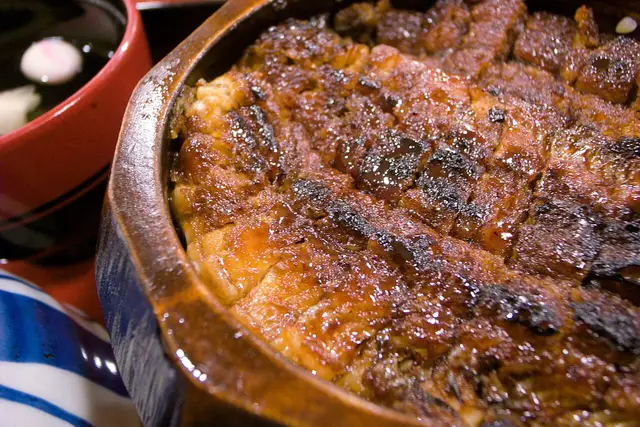 Hitsumabushi (chopped grilled eel over rice, eaten three ways)NagoyaChopped grilled eel on rice, eaten plain, with condiments, then as tea or broth ochazuke.
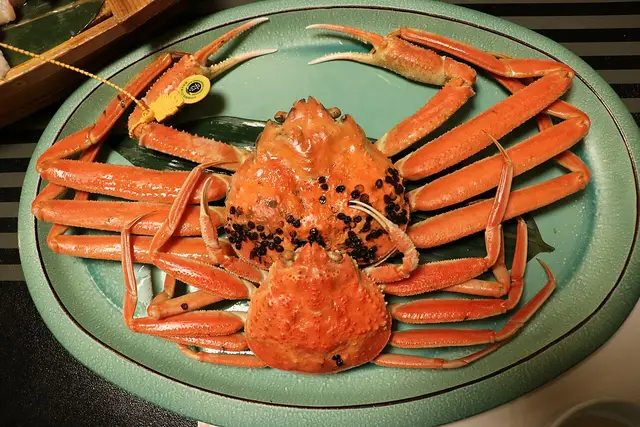 Echizen-gani (Fukui snow crab)
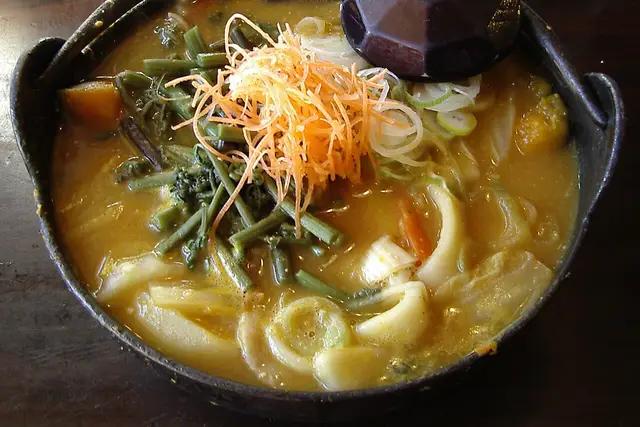 Hoto (wide flat noodles simmered in miso with pumpkin and vegetables)
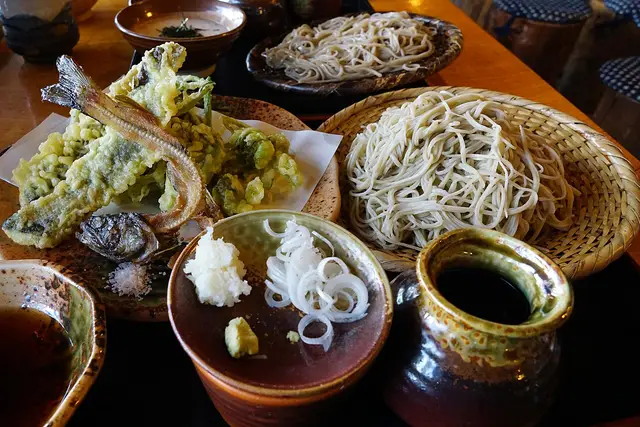 Shinshu soba (buckwheat noodles)
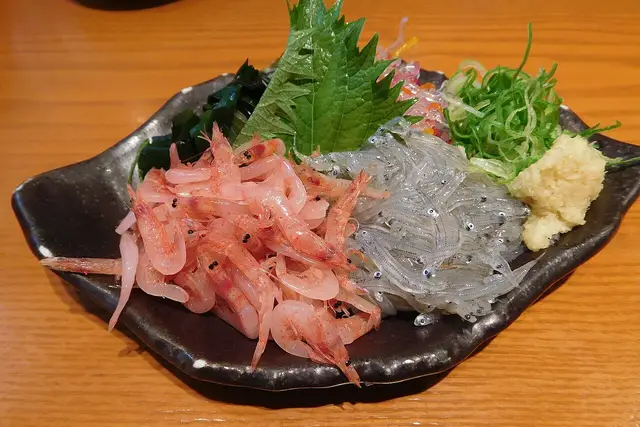 Sakura ebi (Suruga Bay sakura shrimp)Shizuoka City
Fukui
8 specialties · 29 regional dishes
Local specialties
Local specialties worth tasting when you visit, served at restaurants and food stalls.
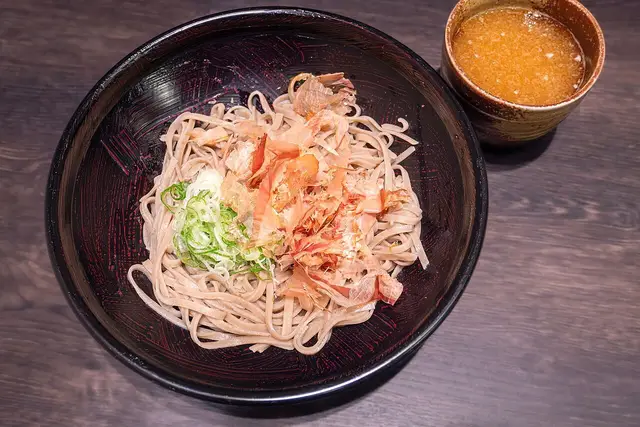
Northern Fukui (Reihoku)Noodles
Echizen oroshi soba (cold soba with grated radish)
越前おろしそば
Cold soba topped with grated radish, bonito flakes and scallion, with broth poured over. Often dark, whole-grain.
All over FukuiSeafood
Echizen-gani (Fukui snow crab)
越前がに
Male snow crab landed in Fukui ports; eaten boiled, grilled, shabu-shabu, in hot pot or as sashimi in winter.
Fukui CityRice dishes
Sauce katsudon (cutlet rice bowl with Worcestershire-type sauce)
ソースかつ丼
Thin pork cutlet dipped in sauce and set on rice; in Fukui, katsudon usually means this.
OnoRice dishes
Ono shoyu katsudon (cutlet rice bowl in soy sauce)
大野の醤油カツ丼
Katsudon with a soy-based sauce; a specialty of Ono City.
Echizen CityRice dishes
Volga rice (omelet rice topped with a cutlet)
ボルガライス
Omelet rice topped with a pork cutlet; a local dish of Echizen City.
Echizen CoastSeafood
Hama no Katsudon (seafood bowl of the Echizen coast)
浜の活丼
Seafood bowl topped with the day catch, served along the Echizen coast.
ObamaSeafood
Hamayaki-saba (whole grilled mackerel)
浜焼き鯖
A whole mackerel skewered and grilled, eaten with ginger soy sauce; a specialty of Obama.
Regional dishes
Dishes handed down at home and in the community. Some are not served at restaurants (from “Our Regional Cuisines” by Japan's Ministry of Agriculture, Forestry and Fisheries).
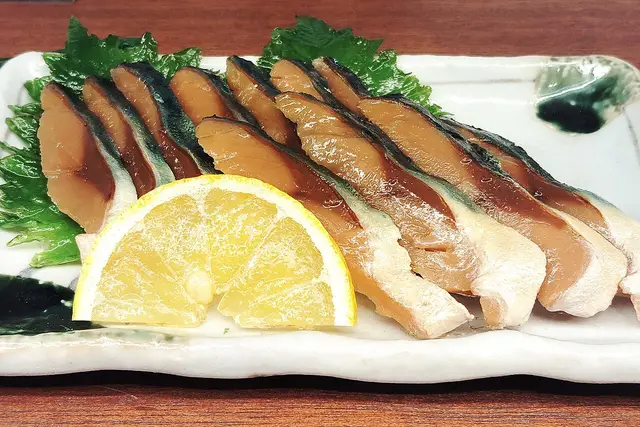 Wakasa area (including Kono district in Reihoku)Heshikoへしこ
There are several theories as to how it came to be called heshiko.
Main ingredients: Mackerel, salt, konuka, chili pepper
- All of Fukui Prefecture (Mainly in the Reihoku Region)Oroshi-soba (Soba Noodles with grated daikon)おろしそば
In Fukui Prefecture, where life expectancy is one of the highest in Japan, the most commonly eaten soba is “Oroshi Soba”, “Soba” Noodles with grated Daikon radish.
Main ingredients: Raw Buckwheat noodles, Daikon radish, Bonito flakes, Green onion
- Shinbo District, Obama CityNamagusa jiruなまぐさ汁
Taking advantage of this, "Namagusa-jiru" is a traditional dish that has been made only in this area.
Main ingredients: grilled mackerel, fu, tofu, chikuwa (bean curd), fresh shiitake mushrooms, shimeji mushrooms, kamaboko (fish paste), green onions
- Obama areaSabanutaさばぬた
The local people call it "Saba Nuta. Locals call it "nota" or "dorozu," and it has been handed down from generation to generation.
Main ingredients: Mackerel, green onion, miso, mustard paste, sugar, vinegar, salt
- Wakasa areaMaruyaki saba丸焼き鯖
In the Wakasa region, where mackerel of such high quality are caught, "Maruyaki Saba" is a local dish made by grilling the whole fish on bamboo skewers.
Main ingredients: Chub mackerel
- All over the prefectureHonkosan/Houonko ryoriほんこさん/報恩講料理
In Fukui Prefecture, it is called "Honkosan" or "Oko-sama. It is meant to honor Shinran's teachings and to express gratitude for his virtues.
Main ingredients: Vegetables, grains, etc.
- Reihoku areaGojiru miso soup呉汁
Mashed soybeans dissolved in miso soup is called "gojiru miso soup." There are all sorts of ingredients and ways of making the soup depending on the region and the individual households.
Main ingredients: Soybeans, miso soybean paste, green onions
- Reihoku areaAtsuage no Nitano厚揚げの煮たの
The largest event of the year in Jodo Shinshu Buddhism, called Hoonko, takes place from fall to New Year’s around the anniversary of sect founder Shinran’s death (November 28 in the lunar calendar…
Main ingredients: Atsuage (thick fried tofu)
- Reihoku regionFu no karashi ae麩の辛し和え
“Fu no karashi ae” is one of the vegetarian dishes served to the people who gather to observe the Hoonko, and because it uses wheat gluten and miso, it’s a valuable source of protein among…
Main ingredients: Wheat gluten, cucumber, Japanese mustard, miso, sugar, vinegar, salt
- Okuetsu AreaSukoすこ
"Suko" is one of the vegetarian dishes that is given out to the people who gather for Hoonko.
Main ingredients: Aka-zuiki (yatsugashira taro stems)
- All areas within Fukui PrefectureFuru-takuan no Nimono古たくあんの煮物
It is a local food representative of Fukui Prefecture, which has been loved since long ago. It is called "yomokonji" in the Kono area of Minamiechizen Town (formerly Kono Village).
Main ingredients: Furu-takuan (old pickled daikon)
- All over Fukui PrefectureKobumaki/Boumaki (Kelp Roll/Stick Roll)昆布巻き/棒巻き
During the mid-18th century, from the middle of the Edo period to the Meiji 30s, merchant ships called "Kitamae-bune" sailed westbound from Hokkaido to Osaka, trading goods as they traveled from one…
Main ingredients: Konbu (Kelp), Dried and sliced red herring
- Okuetsu RegionSatoimo no Koroni (Simmered Taro)里芋のころ煮
"Hoonko” is an annual major event of the Jodo Shinshu sects of Buddhism, in honor of the anniversary of the passing of its founder, Shinran Shonin.
Main ingredients: Japanese Taro
- Reihoku regionChoju Namasu長寿なます
Choju Namasu is a dish that is popular during the New Year's holiday. Its name implies that it brings about longevity. The dish contains daikon radish, which is rich in an enzyme called diastase.
Main ingredients: Daikon radish, Carrot, Pea pod, Deep-fried tofu, White sesame seeds, Vinegar, Sugar, Miso, Melted mustard
- East Side Area of Fukui CityGonza/Gonji Namasuごんざ/ごんじなます
Gonza is a simmered dish made with smashed soybeans and daikon radish. It received its name from someone named "Gonzaburou" who created it.
Main ingredients: Daikon Radish, Carrot, Uchimame (boiled and smashed soybeans), Soy Sauce
- Reinan AreaNishin Sushi/ Herring Sushiにしんすし
One of the preserved foods made from herring is "Nishin Sushi" or "Nishin-zushi." This sushi, pickled with herring, is prepared during the summer and consumed in autumn, maturing over 2 to 4 weeks.
Main ingredients: Daikon radish, Carrot, Filleted herring (Nishin), Koji (fermented rice malt)
- Denga Area Fukui City, Tannan AreaHa Zushi/Leaf Rapped Sushi葉ずし
"Hazushi" is a type of sushi wrapped in leaves of Aburagiri (Tung tree), a deciduous tall tree belonging to the Theaceae family.
Main ingredients: Short-grain rice, Glutinous rice, Adzuki beans (sweet red beans), Hijiki seaweed, Dried shiitake mushrooms, Aburaage (fried thin tofu), Carrots, Aburagiri leaves (Tung tree leaves)
- Kuzuryu river Area (mainly Eiheiji District)Happa Sushi (Leaf Rapped Sushi)葉っぱずし
"Happazushi" is a type of sushi that involves wrapping vinegared rice, Masu(=trout), and ginger in the leaves of the Vernicia (Aburagiri), a deciduous tall tree belonging to the Toadflax family.
Main ingredients: Rice, Salted trout, Ginger, Vinegar, Sugar, Salt and Vernicia leaves
- All of Fukui PrefectureHoba Meshi (Kinako Mochi Rice)ほうばめし
Despite its simplicity, "hobameshi" was recognized for its cultural significance, and in 1986, during the "Furusato Onigiri Matsuri" (Hometown Rice Ball Festival) held by the Food Agency (now the…
Main ingredients: Hoba Leaves(Magnolia Leaves), Rice, Kinako (Roasted soybean flour), Sugar
- All of Fukui PrefectureZoni雑煮
Leftover Mochi is then used to prepare "Zoni," a traditional soup. During this time, gratitude is expressed for the previous year's harvest and the safe passage into the new year.
Main ingredients: Round rice cake, Turnip, Miso, Bonito flakes
- Reihoku RegionHamana-miso (Amazake based Miso with salt-pickled eggplant)はまなみそ
"Hamana Miso" is a seasonal local dish, available only in winter.
Main ingredients: Rice koji(=malted rice), Beans koji(=malted beans), Salt-pickled eggplant, Soy sauce
- Reihoku Region, Sakai City, Katsuyama City, and othersBokkakeぼっかけ
"Bokkake" is a local dish that has been enjoyed in Fukui Prefecture for over 100 years (since the early Taisho period).
Main ingredients: Atsuage(=thick deep-fried tofu), Gobou(=burdock root), Carrot, Konjac(=yam cake) noodles,Bonito flakes
- Imajo districtCha-meshi (rice boiled in tea flavored with sake and shoyu)茶飯
Cha-meshi is said to have originated from "Nara Cha-meshi," which was first served at Todaiji Temple and Kofukuji Temple in Nara, and was handed down by travellers to Imajo, which was an post town.
Main ingredients: Glutinous rice, Short-grain rice, Soybeans, Hojicha (coarse tea) with beans
- Miyama districtAkakabura-no-suzuke (Pickled red turnips)赤かぶらの酢漬け
The famous red turnip in Fukui Prefecture is a traditional vegetable known as "Kochi Akakabura," cultivated vigorously in the Kohi community of the Miyama area in Fukui City for over 800 years.
Main ingredients: Red Turnip, Salt, Vinegar, Sugar (coarse-grained sugar)
- Kouno districtSeige (Female snow crab hotpot)せいげ
"Seige (se-e-ge)" is a local dish in Fukui Prefecture, featuring the winter delicacy known as Echizen crab. Specifically, it uses female snow crabs called "seiko gani" .
Main ingredients: Seiko gani (=female snow crabs), Daikon radish, Miso, Rock laver
- Awara City, Part of Sakai CityTobitsuki Dangoとびつき団子
"Tobitsuki Dango" is a traditional sweets used to be cooked at home commonly as an offering for ancestors during "obon".
Main ingredients: Glutinous rice flour, Rice flour, "Sasage" (=Cowpea), Sugar, Salt
- All of Fukui PrefectureDecchi Yokanでっち羊かん
"Decchi Yokan" is a soft sweet red bean jelly familiar as an ordinal taste of local people in Fukui, and served during cold time as a winter food.
Main ingredients: "Koshi-an" (=Mashed red bean paste), Bar-style Kanten (=agar-agar), White sugar, Salt
- Obama City, Wakasa TownKashiwa-mochi (Mochi Wrapped with Oak Leaf)柏餅
When they have festivals during mid-May to early July, every home prepared "Kashiwa-mochi" to offer the god of fields.
Main ingredients: Glutinous rice flour, Short-grain rice, Red beans, Sugar, Salt, Oak leaf
- Reihoku RegionOtsubo (Simmered Red Beans and Japanese Taro)おつぼ
"Otsubo" is one of "shojin ryori" (vegan cuisine for Buddhist monks) to be served to people joining the event, and served with "ozen" (four-legged small tray to serve meals) at "Hoonko".
Main ingredients: Red beans, Satoimo (Japanese taro), Sugar, Salt
“Find places serving it” opens a map app search for the dish name and the place name. The results are not chosen or recommended by this site. Please check with the shop whether it serves the dish.
Sources
Local specialties & regional dishes
Source: “Our Regional Cuisines” (Ministry of Agriculture, Forestry and Fisheries), edited by this site (imported 2026-11-15) https://www.maff.go.jp/e/policies/market/k_ryouri/index.html. Names, areas and ingredients are as written on the source pages; descriptions are excerpts of the original text. No photos from the ministry are used (dish photos are from Wikimedia Commons). This page is not made or endorsed by the ministry.
Local food specialties
Each specialty was checked against an official page (prefecture, municipality, tourism association or JNTO) on 2026-11-17. The descriptions were written by this site.
- Echizen oroshi soba (cold soba with grated radish): www.fuku-e.com
- Echizen-gani (Fukui snow crab): www.fuku-e.com
- Sauce katsudon (cutlet rice bowl with Worcestershire-type sauce): www.fuku-e.com
- Ono shoyu katsudon (cutlet rice bowl in soy sauce): www.fuku-e.com
- Volga rice (omelet rice topped with a cutlet): www.fuku-e.com
- Tsuruga ramen: www.fuku-e.com
- Hama no Katsudon (seafood bowl of the Echizen coast): www.fuku-e.com
- Hamayaki-saba (whole grilled mackerel): wakasa-obama.jp
Photo and data credits
Hitsumabushi: grilled eel sliced over rice in a wooden ohitsu akira yamada from Chigasaki, Japan (CC BY-SA 2.0) / Boiled Echizen snow crabs, male and female, on a plate さかおり (CC BY-SA 4.0) / Hoto: flat noodles simmered in miso with vegetables in an iron pot No machine-readable author provided. Jungle assumed (based on copyright claims). (CC BY-SA 3.0) / Shinshu soba on bamboo trays with tempura and condiments 663highland (CC BY 2.5) / Raw sakura shrimp and whitebait from Suruga Bay on a plate Miyuki Meinaka (CC BY-SA 4.0) / Echizen oroshi soba topped with bonito flakes, with grated daikon broth くろふね (CC BY 4.0) / Thin slices of heshiko, mackerel cured in rice bran, with lemon Asturio Cantabrio (CC BY-SA 4.0). Cropped and resized.