Local specialties & regional dishes of Chubu & Hokuriku
Rich, bold flavors in Nagoya, seafood on the Sea of Japan coast (Hokuriku), and soba and flour dishes in the mountains.
87 local specialties and 266 regional dishes from Chubu & Hokuriku.
Specialties to taste in Chubu & Hokuriku
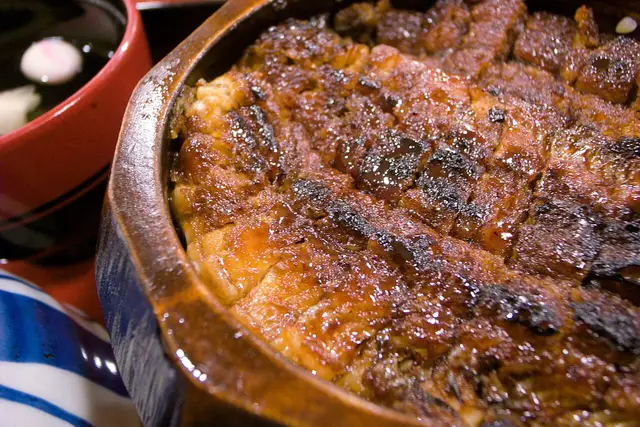 Hitsumabushi (chopped grilled eel over rice, eaten three ways)NagoyaChopped grilled eel on rice, eaten plain, with condiments, then as tea or broth ochazuke.
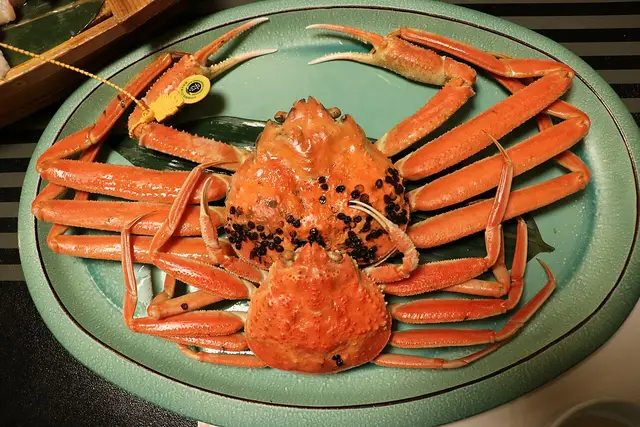 Echizen-gani (Fukui snow crab)
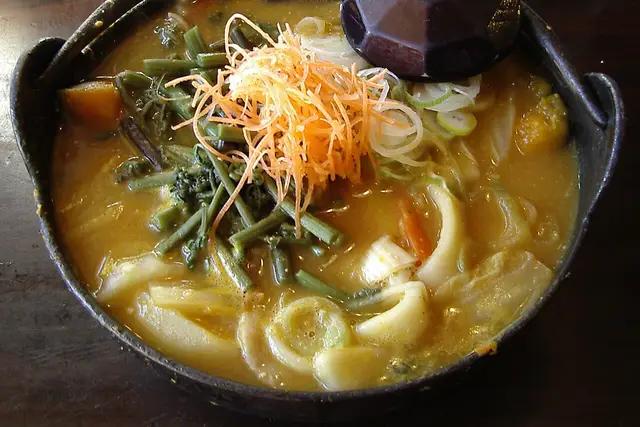 Hoto (wide flat noodles simmered in miso with pumpkin and vegetables)
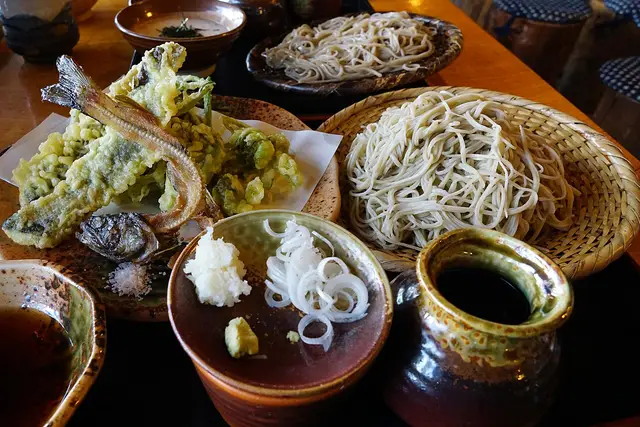 Shinshu soba (buckwheat noodles)
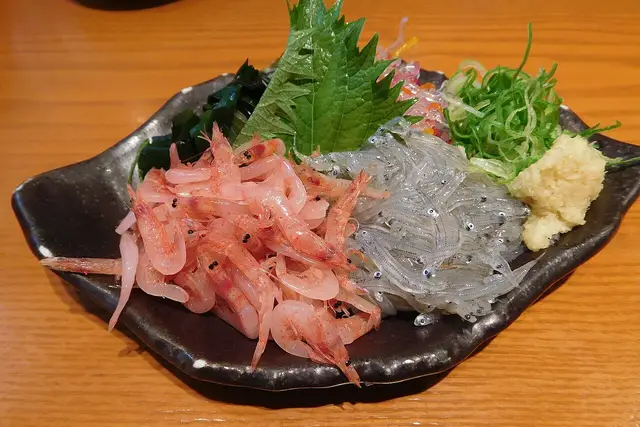 Sakura ebi (Suruga Bay sakura shrimp)Shizuoka City
Nagano
11 specialties · 29 regional dishes
Local specialties
Local specialties worth tasting when you visit, served at restaurants and food stalls.
All over NaganoNoodles
Shinshu soba (buckwheat noodles)
信州そば
Buckwheat noodles from across Nagano; Togakushi soba is counted among Japan three great soba.
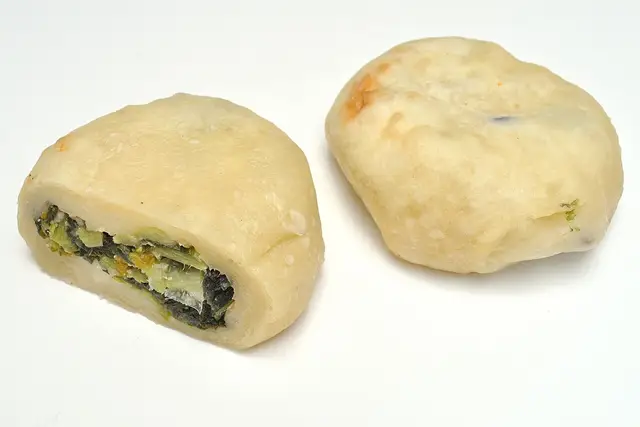
All over NaganoStreet food
Oyaki (stuffed dumplings of grain flour)
おやき
Dough of wheat, grains or buckwheat wrapped around vegetables and grilled, steamed or pan-fried.
Shinshu-Shinmachi, NaganoMeat
Shinshu-Shinmachi Jingisukan (grilled marinated lamb)
信州新町のジンギスカン
Lamb marinated in a local style and grilled; shops line National Route 19, called the Jingisukan Road.
Sakaki and ChikumaNoodles
Oshibori udon (udon dipped in spicy radish juice)
おしぼりうどん
Udon dipped in grated spicy mouse-radish juice with miso dissolved in it.
Matsumoto and ShiojiriMeat
Sanzoku-yaki (large deep-fried marinated chicken thigh)
山賊焼き
Chicken thigh marinated with garlic and deep-fried in starch coating; said to have originated in Shiojiri.
KomaganeRice dishes
Komagane sauce katsudon (cutlet over cabbage on rice)
駒ヶ根ソースかつ丼
Cutlet dipped in sweet-savory sauce over shredded cabbage on rice; in Komagane, katsudon means this.
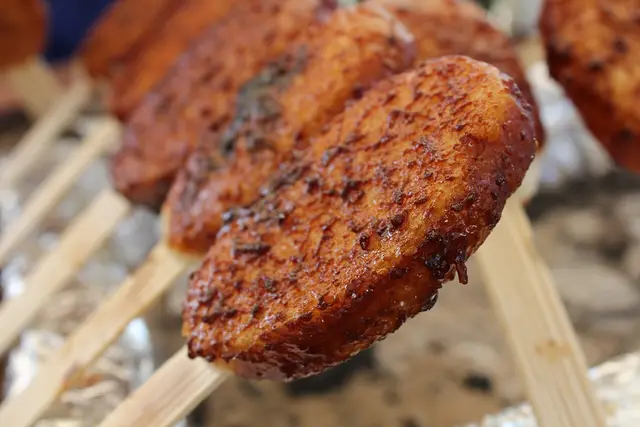
KisoStreet food
Gohei-mochi (grilled rice skewer with miso sauce)
五平餅
Mashed rice on a skewer, brushed with miso-based sauce and grilled; a specialty of the Kiso region.
InaNoodles
Romen (Ina mutton and steamed noodles)
ローメン
Mutton and firm steamed noodles simmered with cabbage in a distinct soup; a specialty of Ina.
MatsumotoMeat
Matsumoto basashi (raw horse meat sashimi)
松本の馬刺し
Raw horse meat; Nagano has a horse-meat tradition and Matsumoto has restaurants serving it.
Around Lake SuwaRice dishes
Suwa unagi (grilled eel, also eaten in winter)
諏訪のうなぎ
Many eel restaurants stand around Lake Suwa; locals also eat eel in winter when it is fattier.
UedaMeat
Ueda bimidare yakitori (yakitori with garlic soy sauce)
美味だれ焼き鳥
Yakitori topped with garlic-soy sauce; a local specialty of Ueda.
Regional dishes
Dishes handed down at home and in the community. Some are not served at restaurants (from “Our Regional Cuisines” by Japan's Ministry of Agriculture, Forestry and Fisheries).
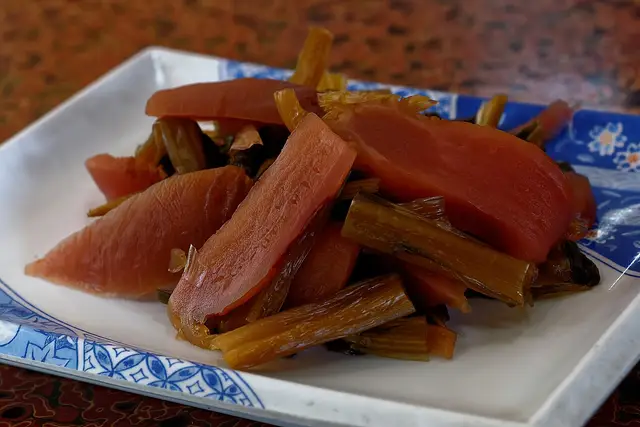 Kiso AreaSunki-zukeすんき漬け
The mountainous Kiso region has a unique culinary tradition that includes a dish called "Sunki-zuke," using the leaves of red turnips.
Main ingredients: Red Turnip
- Kiso Area, Ina Area, Kamiina Area, Shimoina AreaGohei Mochi五平餅
"Gohei-mochi" is made by skewering half-pounded Uruchi rice(short-grain rice), dipping it in miso or soy sauce-based sauce, and baking it.
Main ingredients: Short-grain rice, Miso, Walnuts
- Hokushin Area, Chushin Area (All of Nagano Prefecture)Oyaki (Japanese stuffed dumplings)おやき
"Oyaki" is a local dish representing Shinshu, made by mixing flour such as wheat and buckwheat flour with water or hot water, kneading it, wrapping seasonal ingredients such as sweet red bean paste…
Main ingredients: All-purpose flour, Round eggplant, Miso
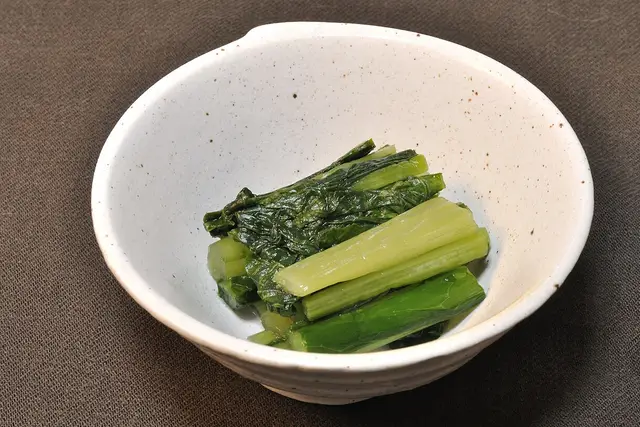 All of Nagano Prefecture (Nozawa onsen village)Nozawana-zuke (Nozawana pickles)野沢菜漬
Among them, 'Nozawana-zuke' is one of the two representative pickles in the prefecture and an essential ingredient during the winter in Shinshu.
Main ingredients: Nozawana, Salt, Shochu
- Kiso AreaHooba Makiほう葉巻
Hooba maki is a traditional festive rice cake in the Kiso region.
Main ingredients: Rice flour, Wheat flour, Magnolia leaves, Igusa (=Japanese mugwort), Red beans
- Saku AreaKobuna-no-kanroni (Sweet and Savory Simmered Small Crucian Carp)小鮒の甘露煮
Saku City, located in the eastern part of the prefecture, is situated near the border with Gunma Prefecture and is blessed with clean water sources suitable for cultivating freshwater fish such as…
Main ingredients: Crucian carp, Soy sauce, Sugar
- Iiyama City (Hokushin Area)Sasazushi (Bamboo Sushi)笹ずし
"Sasazushi" is a regional dish passed down in the city of Iiyama and the Joetsu region of Niigata Prefecture.
Main ingredients: Rice, Glutinous rice, Bamboo leaves
- Hokushin Area, Chushin AreaYashouma (Colorful Mochi)やしょうま
In the northern regions, February 15th is a day known as Nehan-e, commemorating the death of Buddha, and there is a custom to make "yashouma" and offer it on the Buddhist altar.
Main ingredients: Rice flour, Katakuriko(=potato starch), Aonori (seaweed), Sesame seeds, Black soybeans
- All of Nagano PrefectureInago-no-tsukudani (Locust cooked in soy sauce)いなごの佃煮
The Ina Valley in the southern part of Nagano Prefecture has a long-standing culture of eating insects, including locusts, bee larvae, cicadas, and grasshoppers.
- Hokushin area (Iiyama City)Imonamasuいもなます
Imo-Namasu" is a local dish using potatoes in the Iiyama City area. In Japan, "Namasu" is a dish made by dressing ingredients with vinegar, and is used as a New Year's osechi dish.
- Saku CityKoikoku鯉こく
Koikoku," a traditional soup in Saku City, is made by boldly cutting the fish into cylindrical slices and simmering them in miso paste, and is an indispensable New Year's dish in the Saku area.
Main ingredients: Carp, miso, rice
- Hoku-shin and Nan-shin areas (throughout the prefecture)Shioika no sunomono塩いかの酢の物
Because Nagano Prefecture is far from the sea, marine products were processed in the area where they were landed and transported via the "salt road.
Main ingredients: Squid, cucumber, wakame seaweed, vinegar
- All over the prefectureTeuchi soba手打ちそば
Soba is a typical local cuisine, so much so that Nagano Prefecture is known for its "Shinshu soba" (buckwheat noodles).
Main ingredients: buckwheat flour
- Hoku-shin area, To-shin areaKonetsukeこねつけ
"Konetsuke" is said to have been eaten by Yukimura Sanada, a feudal warlord, to fill his stomach before going into battle.
Main ingredients: Rice, wheat flour, green perilla
- Hokushin RegionTakenoko jiru(Bamboo Shoot Soup)たけのこ汁
Takenoko jiru(Bamboo shoot soup) is a miso soup that uses Nemagari bamboo. It is a regional dish eaten in the Hokushin Region and Niigata Prefecture's Joetsu region.
Main ingredients: Bamboo shoots, mackerel, onion, tofu, eggs, and miso
- Suwa RegionTenyose Jelly Cake天寄せ
The Suwa region’s kanten (agar agar) producing industry developed due to the area’s low temperatures and stable weather, which allowed for longer production seasons than other areas, and the opening…
Main ingredients: Kanten (agar agar), somen noodles, food coloring
- Hokushin regionGarlic Chive Senbeiにらせんべい
The recipes for garlic chive senbei or usuyaki also differ slightly between households, with many variations; like mixing in miso with the flour and vegetables when frying, or eating with a miso or…
Main ingredients: Garlic chives, wheat flour, miso
- Suwa area, Kamiina areaNotamochiのたもち
“Notamochi” is a local dish eaten in the Suwa and Kamiina regions. The “nota” in “notamochi” is made by boiling edamame beans, grinding them with a mortar and pestle, and adding sugar and salt.
Main ingredients: Mochi rice, Non-glutinous rice, Edamame (soybeans)
- Hokushin RegionYataraやたら
“Yatara” is a mixture of finely chopped vegetables and pickles, similar to a “furikake” (sprinkles) of summer vegetables.
Main ingredients: Cucumber, eggplant, myoga ginger, green pepper, and miso-pickled radish
- Hokushin and Chushin areasEgo no Sumiso-aeえごの酢味噌あえ
The name "Ego" comes from boiled and kneaded seaweed called "egogusa," and it is a regional cuisine passed down throughout Niigata Prefecture.
Main ingredients: Egogusa (Seaweed)
- Hokushin areaOshibori Udonおしぼりうどん
“Oshibori Udon” is a local dish that originated from the Sakaki area in Hanishina County. It is made by grating spicy daikon radish and squeezing out its juice.
Main ingredients: Udon noodles, Radish, Miso, Green onion, Dried bonito flakes
- The entire prefecture (especially around Nagano City and Matsumoto City)Gudakusan Misosiru (Gudakusan Miso Soup)具だくさん味噌汁
“Gudakusan miso soup” is a soup with lots of ingredients such as seasonal vegetables, meat, and fish.
Main ingredients: Seasonal ingredients (Examples of winter ingredients: Wheat flour, Potatoes, Radish, Carrots, Burdock, Chikuwa, and Green onions)
- Toshin Area, Kamiina AreaSake no Kasuni (Simmered Salmon in Sake Lees)鮭の粕煮
In Japan, as part of the preparations to welcome Toshigami (the deity of the New Year), there is a tradition of preparing a special feast called "Toshikoshi" on New Year's Eve.
Main ingredients: Salmon, Sake lees
- All of Nagano PrefectureShimi Daikon no Otaue no Nimono凍み大根のお田植えの煮物
"Frozen Daikon Radish" is one of the preserved foods made by utilizing the cold of winter. It involves exposing daikon radishes to the cold outdoor air to dry them.
Main ingredients: Daikon Radish, Gutted Herring, Kombu(=kelp), Warabi (=bracken fern), Carrot, Konjac (=yam cake), Chikuwa (fish cake), Satsuma Age (fried fish cake)
- Hokushin Area, Chushin AreaShoyu Mame / Shoyu no Mi (Soy Sauce Beans / Soy sauce seeds)しょうゆ豆/しょうゆの実
"Shoyu Mame" or "Soy Sauce Beans" is a fermented food traditional to the northern and central Shinshu region.
Main ingredients: Soy sauce, soybean koji( Malt), rice koji (Malt).
- Toshin AreaHangoroshi半ごろし
"Hangoroshi" refers to "botamochi" or "ohagi" in Nagano Prefecture, and it indicates the state of mochi rice that is pounded until it becomes semi-crushed with a surikogi (pestle).
Main ingredients: Glutinous rice, Short-grain rice, Azuki beans (Red beans), Kinako (Roasted soybean flour)
- Hokushin Area, Toushin AreaHitashi Mame (Soaked Beans)ひたし豆
"Hitashi Mame" is a regional dish eaten not only in the northern and eastern Shinano regions of Nagano Prefecture but also in Niigata Prefecture and the Tohoku region.
Main ingredients: Green soybeans
- Hokushin AreaHoshi-kabocha no Egoma-ae (Dried pumpkin dressed with perilla seeds)干しかぼちゃのえごま和え
The region known as Kinasa, also called the "Valley Capital," has a long-standing food culture of drying and preserving vegetables.
- Matsumoto AreaTanabata Hotoたなばたほうとう
Matsumoto City, situated in the almost exact center of Nagano Prefecture, offers views of the Northern Alps to the west and the Utsukushi-gahara Plateau to the east.
Main ingredients: All-purpose flour, Azuki (=Red beans), Goma (=Sesame seeds), Kinako (=Roasted soybean flour)
“Find places serving it” opens a map app search for the dish name and the place name. The results are not chosen or recommended by this site. Please check with the shop whether it serves the dish.
Sources
Local specialties & regional dishes
Source: “Our Regional Cuisines” (Ministry of Agriculture, Forestry and Fisheries), edited by this site (imported 2026-11-15) https://www.maff.go.jp/e/policies/market/k_ryouri/index.html. Names, areas and ingredients are as written on the source pages; descriptions are excerpts of the original text. No photos from the ministry are used (dish photos are from Wikimedia Commons). This page is not made or endorsed by the ministry.
Local food specialties
Each specialty was checked against an official page (prefecture, municipality, tourism association or JNTO) on 2026-11-17. The descriptions were written by this site.
- Shinshu soba (buckwheat noodles): www.go-nagano.net
- Oyaki (stuffed dumplings of grain flour): www.go-nagano.net
- Shinshu-Shinmachi Jingisukan (grilled marinated lamb): www.go-nagano.net
- Oshibori udon (udon dipped in spicy radish juice): www.go-nagano.net
- Sanzoku-yaki (large deep-fried marinated chicken thigh): www.city.shiojiri.lg.jp
- Komagane sauce katsudon (cutlet over cabbage on rice): www.go-nagano.net
- Gohei-mochi (grilled rice skewer with miso sauce): www.go-nagano.net
- Romen (Ina mutton and steamed noodles): db.go-nagano.net
- Matsumoto basashi (raw horse meat sashimi): www.go-nagano.net
- Suwa unagi (grilled eel, also eaten in winter): www.go-nagano.net
- Ueda bimidare yakitori (yakitori with garlic soy sauce): www.go-nagano.net
Photo and data credits
Hitsumabushi: grilled eel sliced over rice in a wooden ohitsu akira yamada from Chigasaki, Japan (CC BY-SA 2.0) / Boiled Echizen snow crabs, male and female, on a plate さかおり (CC BY-SA 4.0) / Hoto: flat noodles simmered in miso with vegetables in an iron pot No machine-readable author provided. Jungle assumed (based on copyright claims). (CC BY-SA 3.0) / Shinshu soba on bamboo trays with tempura and condiments 663highland (CC BY 2.5) / Raw sakura shrimp and whitebait from Suruga Bay on a plate Miyuki Meinaka (CC BY-SA 4.0) / Oyaki dumplings, one cut open to show the vegetable filling Ocdp (CC0) / Gohei mochi: flat rice cakes on skewers, grilled with a sweet glaze Kunmap (CC BY-SA 4.0) / Sunki-zuke, salt-free fermented turnip greens, on a plate Kurokawa t (CC BY-SA 4.0) / Nozawana-zuke pickled greens in a white bowl Ocdp (CC0). Cropped and resized.