Local specialties & regional dishes of Chubu & Hokuriku
Rich, bold flavors in Nagoya, seafood on the Sea of Japan coast (Hokuriku), and soba and flour dishes in the mountains.
87 local specialties and 266 regional dishes from Chubu & Hokuriku.
Specialties to taste in Chubu & Hokuriku
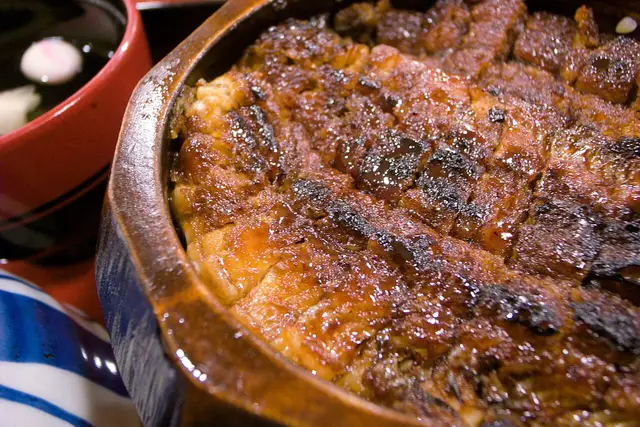 Hitsumabushi (chopped grilled eel over rice, eaten three ways)NagoyaChopped grilled eel on rice, eaten plain, with condiments, then as tea or broth ochazuke.
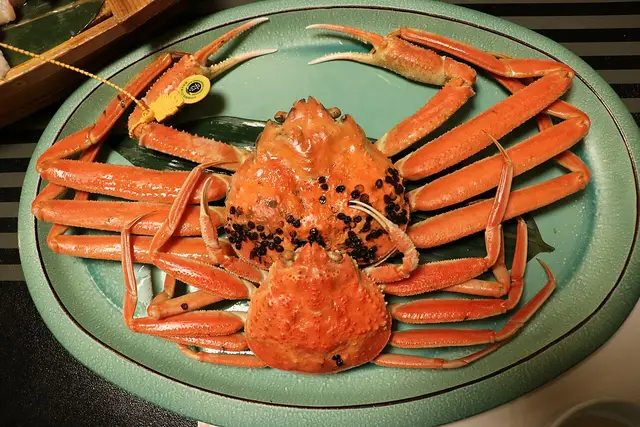 Echizen-gani (Fukui snow crab)
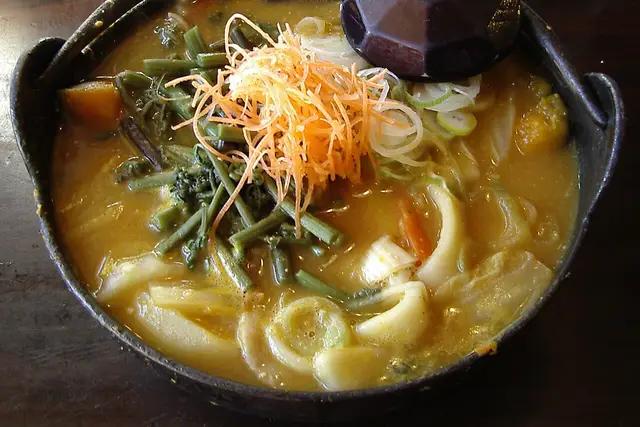 Hoto (wide flat noodles simmered in miso with pumpkin and vegetables)
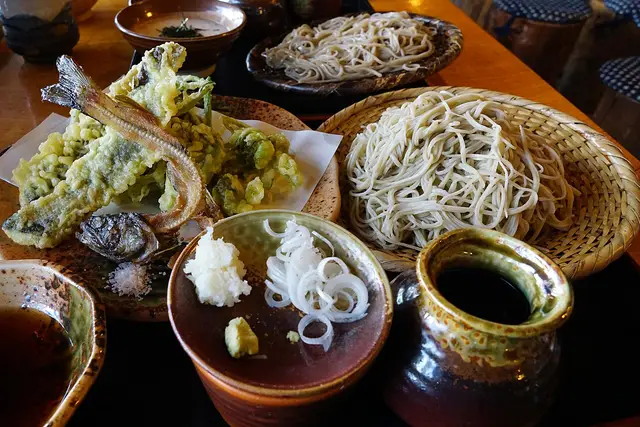 Shinshu soba (buckwheat noodles)
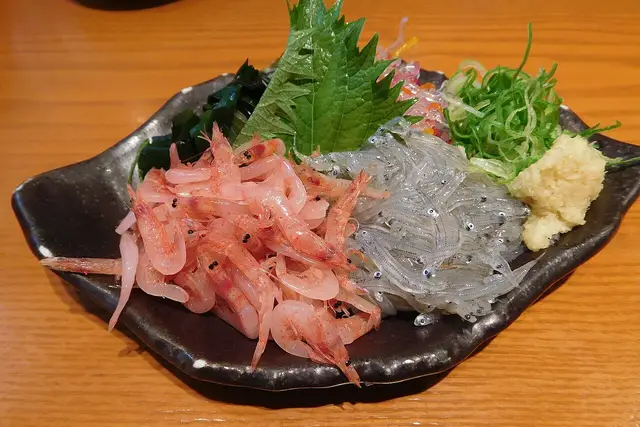 Sakura ebi (Suruga Bay sakura shrimp)Shizuoka City
Gifu
12 specialties · 30 regional dishes
Local specialties
Local specialties worth tasting when you visit, served at restaurants and food stalls.
Hida-TakayamaNoodles
Takayama ramen (chuka soba)
高山ラーメン
Light chicken-based soy broth with very thin curly noodles; locals call it chuka soba.
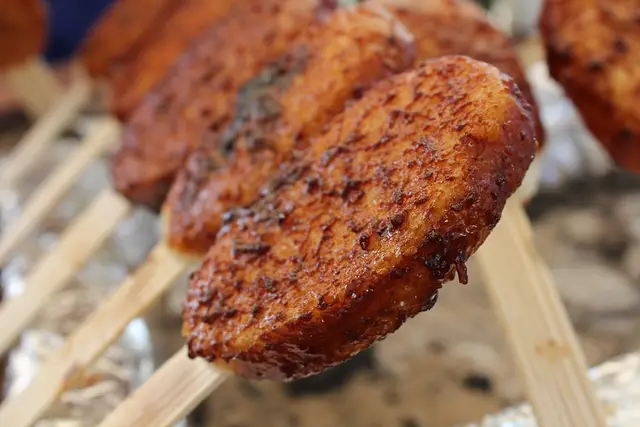
Tono regionStreet food
Gohei-mochi (grilled rice skewer with soy or miso sauce)
五平餅
Mashed rice wrapped on a skewer and grilled with soy or miso sauce; common in the Tono region.
HidaSweets
Hida midarashi dango (soy-glazed rice dumplings)
飛騨のみだらし団子
Grilled rice dumplings with soy flavor; in Hida often without sweet glaze, five on a skewer.
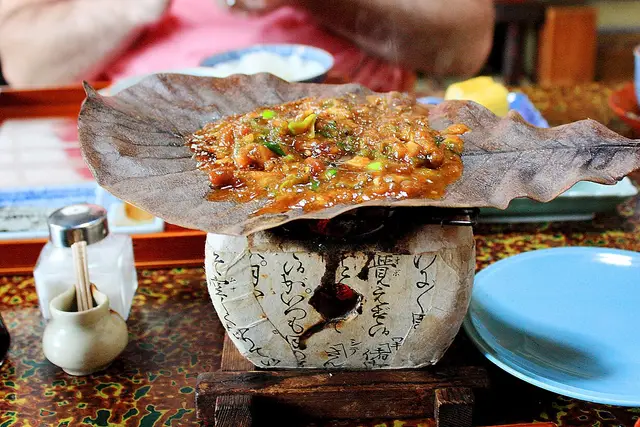
HidaJapanese cuisine
Hoba miso (miso grilled on a magnolia leaf)
朴葉味噌
Miso and chopped scallion grilled on a magnolia leaf; some places add Hida beef.
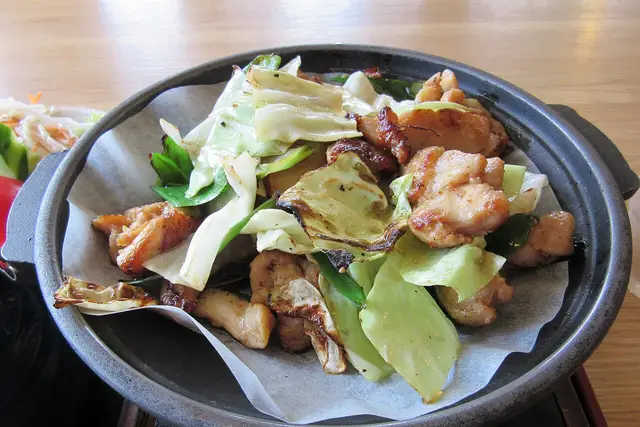
Gero, Gujo and NakatsugawaMeat
Keichan (miso or soy chicken grilled with cabbage)
鶏ちゃん
Chicken marinated in soy or miso sauce, grilled on an iron plate with cabbage.
Hida-TakayamaJapanese cuisine
Tsukemono steak (pickles grilled with egg)
漬物ステーキ
Pickled vegetables grilled on a hot plate and set with egg; a Hida-Takayama home dish also found in pubs.
Kamioka, HidaMeat
Kamioka tonchan (stir-fried beef offal in garlic miso)
神岡とんちゃん
Beef offal and vegetables stir-fried in garlic miso sauce; a dish of Kamioka, Hida City.
Hida-TakayamaMeat
Hida beef (skewers, nigiri, sukiyaki and more)
飛騨牛
Gifu brand wagyu, eaten as skewers, nigiri, sukiyaki, shabu-shabu or grilled on hoba miso.
SekiRice dishes
Seki eel (grilled eel)
関市のうなぎ
Grilled eel from Seki, said to have been eaten by swordsmiths and cormorant fishers for stamina.
TajimiRice dishes
Tajimi eel (grilled eel)
多治見のうなぎ
Grilled eel from Tajimi, said to have been eaten by Mino ware potters for stamina.
EnaRice dishes
Ena hayashi (hashed beef rice of Ena)
えなハヤシ
Hayashi rice of Ena, the town tied to the inventor of hayashi rice.
Nagara River basinSeafood
Gifu ayu (sweetfish) dishes
岐阜の鮎料理
Sweetfish from clean rivers such as the Nagara, grilled with salt and more, mainly summer to autumn.
Regional dishes
Dishes handed down at home and in the community. Some are not served at restaurants (from “Our Regional Cuisines” by Japan's Ministry of Agriculture, Forestry and Fisheries).
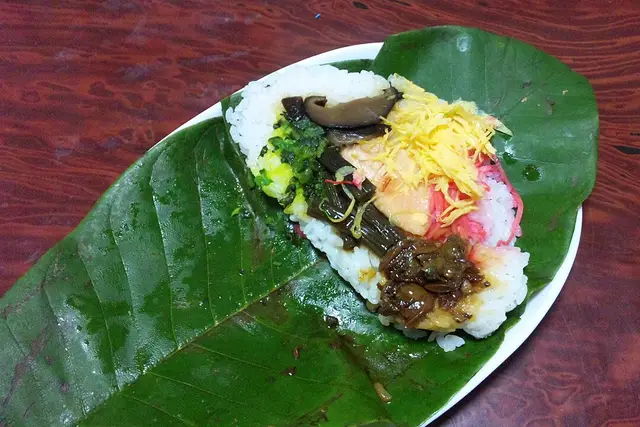 Southern Hida region to Chuno regionHoba zushi朴葉ずし
It is a traditional early summer dish made by wrapping vinegared rice in the leaves of a magnolia tree, and has been eaten as a feast during the farming holidays such as rice planting.
Main ingredients: rice, magnolia leaves, vinegar
- Gujo City, Gero City, southern Takayama CityKeichan鶏ちゃん
Some say that the name "keichan" comes from the fact that grilled pork hormone is called "tonchan (pig-chan)," while others say that the name "keichan" came from "keijan (chicken sauce)," a…
Main ingredients: Chicken, cabbage, onion, miso
- Tono Region, Hida RegionGohei-mochi五平餅
Eventually, gohei-mochi came to be offered to the gods to pray for safe work in the mountains, and was also used as offerings and eaten at harvest celebrations and other festive occasions.
Main ingredients: Polished rice, walnuts, white sesame, peanuts, soy sauce or miso
- Hida/Takayama regionHoba Miso (Magnolia Leaf Miso)朴葉味噌
This dish is prepared by spreading homemade koji miso paste onto hoba (magnolia leaves), which are then grilled.
Main ingredients: Hoba, miso
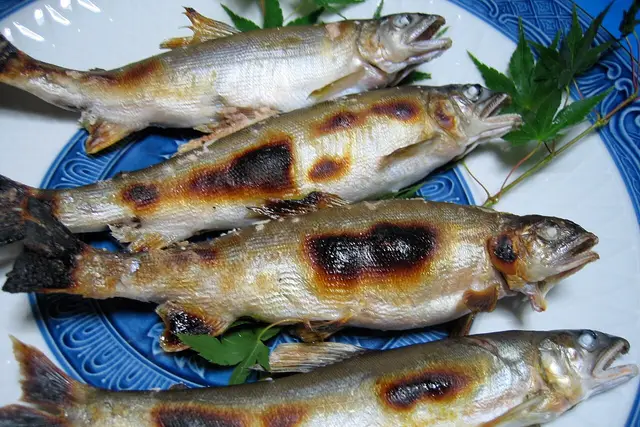 Chuno Area of the Kiso River valley and Seino Area of the Nagara River valley and Ibi River valleyAyu no Shioyaki (Salt-grilled Sweetfish)鮎の塩焼
Fishing weirs for tourists are set up during the summer in the Miyama area and along the Itadori River and tourists can enjoy catching ayu (=sweetfish) with their hands and eat "ayu no shioyaki" and…
Main ingredients: Ayu (=sweetfish), Salt
- Tono areaKarasumiからすみ
Karasumi is said to have been made in the Tono region around the end of the Edo period for the Peach Festival.
Main ingredients: Rice flour, sugar
- Chuno area in the Kiso River basin, Gifu area in the Nagara River basin, and Saino area in the Ibi River basinAyu zosui鮎ぞうすい
Ayu zosui is made by quickly simmering ayu fish, which has been grilled to a golden brown and fragrant, in rice and soup stock.
Main ingredients: sweetfish, cooked rice
- Tono areaHebo meshiへぼ飯
In the "Souzan's Book of Wonders" (Miyoshi Souzan, 1850) written in the Edo period, there is already a description of the eating of "hebo-meshi," rice mixed with rice, seasoned with bee larva and…
Main ingredients: Hebo (black hornet, also called local bee), rice
- Kitagata Town, Gifu CityMyogabochiみょうがぼち
“Myogabochi” is a local confection with a simple flavor made by wrapping bean paste made from broad beans in a skin made from wheat flour, then wrapping it in myoga leaves.
Main ingredients: Wheat Flour, Broad Beans, Myoga Leaves
- Gifu CityFermented Sweetfish Sushi鮎なれずし
“Fermented sweetfish sushi,” a preserved sweetfish dish, is a fermented food made by stuffing sweetfish full of freshly cooked rice and pickling it in a barrel for about two months.
Main ingredients: Sweetfish, rice, salt
- Seino RegionCarp Miso鮒味噌
“Carp miso,” made by simmering unglazed crucian carp with miso, coarse grain, and soybeans.
Main ingredients: Crucian carp, soybeans, soybean miso, coarse grain
- Chuno, Tono, and Hida areasOtoshi no Gottso大歳のごっつぉ
"Otoshi no Gottso" is eaten throughout Gifu Prefecture from New Year's Eve on December 31st to the third day of the New Year.
Main ingredients: Tofu, Shredded kelp, and Root vegetables such as Daikon radish, Carrot, and Taro
- Gero City located in the middle of the Hida Region, Central Mino RegionNezushiねずし
“Nezushi” is a type of flavorful fermented sushi that has been a delicacy as a New Year’s dish in the Central Hida Region since long ago.
Main ingredients: Rice, Malted rice, Radish, Carrots and Salted trout
- The Seino regionMorokozushiもろこずし
“Morokozushi“ is made by filling a sushi box with vinegared rice, topping it with sweet and spicy simmered “moroko”, and making this into pressed sushi.
Main ingredients: Moroko and Vinegared rice
- Keihoku of Nakatsugawa City and Chuno Area of Gifu PrefectureImo Mochiいももち
“Imo mochi” is a traditional dish that is eaten across Japan, in prefectures such as Hokkaido, Wakayama, and Kochi.
Main ingredients: Satoimo(=Japanese taro), rice
- Hashima CityMisogi Dangoみそぎだんご
Later, the second generation of the store owner learned the origin of the "Misogi ritual" at the Hakken Shrine, a shrine in Takehana, and renamed the dumpling "Misogi Dango" by combining the ritual…
Main ingredients: Rice flour, Bean paste, Miso
- Shirakawa VillageSuttate-jiru(Soybean paste soup)すったて汁
"Suttate-jiru" is a soup made by grinding boiled soybeans in a mortar and pestle with miso or soy sauce, and is a popular local dish at festive occasions such as celebrations and "Houonko"…
Main ingredients: Soybean, Soy sauce or Miso
- Tono Area centered on Nakatsugawa City and surrounding AreasKuri Kinton(mashed sweet potatoes with sweetened chestnuts)栗きんとん
When you hear "Kuri Kinton," you might typically think of it as a traditional New Year's dish, but in the area centered on the southeastern part of Gifu Prefecture, Kuri Kinton refers to a simple…
Main ingredients: Chestnut, Sugar
- Ogaki CityMizu Manju (Water Sweet Mochi)水まんじゅう
"Mizu Manju" is a type of steamed bun made with a dough composed of kudzu powder and warabi powder, filled with sweet red bean paste, and then chilled using well water.
Main ingredients: Kuzu ko (=Kudzu starch), Warabi ko (=Bracken starch ), Red Beans
- Hida AreaNita-kumoji煮たくもじ
In ancient times, pickled vegetables were known as "kukizuke," but with time, the "ku" from "kukizuke" was taken to form "ku moji," and as the dish involves simmering the "ku moji" characters, it…
Main ingredients: Pickled Leafy Greens, such as Turnip Leaves
- Takayama City, Hida Area centered on Hida CityAkakabu-zuke赤かぶ漬け
Various vegetables such as daikon radish, turnip, cucumber, and burdock are commonly enjoyed as pickles, but among them, pickled red turnips, known as "Akakabu-zuke," continue to be passed down…
Main ingredients: Hida-Beni Kabu (Red Turnip)
- Chuno Area, Gifu Area, Seino AreaKaki-Namasu柿なます
"Kakinamasu" is a local dish made with daikon radish and carrots, seasoned with vinegar and added with dried persimmons.
Main ingredients: Dried persimmons, Daikon radish, Carrots
- Gifu Area centered around Yamagata CityAkadatsu no Subute赤だつの酢ぶて
"Akadatsu no subute" is a dish made by dressing the stalk part of the satoimo(=japanise taro) leaves (zuiki) with seasoned vinegar.
Main ingredients: Akadatsu (=Japanese taro Stalk), Vinegar
- Gifu CitySengoku Mame no Kakimawashi (Mixed Rice with Sengoku Beans)千石豆のかきまわし
Sengoku-mame, cultivated in the southern area of Gifu City since the Meiji era (1868-1912), is a type of Fuji-mame, so named because its pods resemble a Sengoku-bune (boat), and it is resistant to…
Main ingredients: Sengoku beans, Rice, Chicken, Gobou(=Burdock root), Carrot
- Gunjo City Meihokanomizu chiTsugi-jiru (Tofu Soup)つぎ汁
Tsugi-jiru, a local dish of the Kanomizu district of Meiho, is a rare soup that can only be tasted here.
Main ingredients: Chili pepper, Local tofu, Dried shiitake mushroom
- Hida Area centered on Shirakawa Village, Chuno Area centered on Gujo City, Gifu AreaHatsu-uma Dango初午だんご
On the first horse day of February, before the mulberry leaves that silkworms will eat are prepared, people offered cocoon-shaped dumplings called "Hatsuuma-dango" to the gods and eat them, hoping…
Main ingredients: Rice flour
- Gujo CityTsukemono Misoni漬物味噌煮
Pickles simmered in miso is a dish made by simmering pickled Napa cabbage in a pot of salty "Gujo miso," a soybean miso, and dried fish stock.
Main ingredients: Pickled Napa cabbage, Miso, Dried sardines
- Hida CityKanboshi Daikon Ni (Simmered Dried Daikon Radish)寒干大根煮
"Kanboshi Daikon Ni" is made by simmering "kanboshi" (=dried) daikon radish in dashi (=Japanese soup stock) and soy sauce.
Main ingredients: "Kanboshi" (=dried) daikon radish, Dashi (=Japanese soup stock), Soy sauce
- Yamagata CityKuwanoki-mame Ni (Simmered Mulberry Beans)桑の木豆煮
"Kuwanoki-mame ni" is made by simmering "kuwanoki-mame" (=mulberry beans) grown in Miyama area, located in the northern part of Yamagata city in Gifu, in soy sauce and sugar.
Main ingredients: "Kuwanoki-mame" (=mulberry beans)
- Hida and Takayama Cities of the Hida AreaKomo Dofu (Tofu Cooked in Woven Straw)こも豆腐
"Komo dofu" is made by wrapping tofu in "komo", a mat made of woven straw, and then boiling it.
“Find places serving it” opens a map app search for the dish name and the place name. The results are not chosen or recommended by this site. Please check with the shop whether it serves the dish.
Sources
Local specialties & regional dishes
Source: “Our Regional Cuisines” (Ministry of Agriculture, Forestry and Fisheries), edited by this site (imported 2026-11-15) https://www.maff.go.jp/e/policies/market/k_ryouri/index.html. Names, areas and ingredients are as written on the source pages; descriptions are excerpts of the original text. No photos from the ministry are used (dish photos are from Wikimedia Commons). This page is not made or endorsed by the ministry.
Local food specialties
Each specialty was checked against an official page (prefecture, municipality, tourism association or JNTO) on 2026-11-17. The descriptions were written by this site.
- Takayama ramen (chuka soba): www.kankou-gifu.jp
- Gohei-mochi (grilled rice skewer with soy or miso sauce): www.kankou-gifu.jp
- Hida midarashi dango (soy-glazed rice dumplings): www.kankou-gifu.jp
- Hoba miso (miso grilled on a magnolia leaf): www.kankou-gifu.jp
- Keichan (miso or soy chicken grilled with cabbage): www.kankou-gifu.jp
- Tsukemono steak (pickles grilled with egg): www.kankou-gifu.jp
- Kamioka tonchan (stir-fried beef offal in garlic miso): www.kankou-gifu.jp
- Hida beef (skewers, nigiri, sukiyaki and more): www.kankou-gifu.jp
- Seki eel (grilled eel): www.kankou-gifu.jp
- Tajimi eel (grilled eel): www.kankou-gifu.jp
- Ena hayashi (hashed beef rice of Ena): www.kankou-gifu.jp
- Gifu ayu (sweetfish) dishes: www.kankou-gifu.jp
Photo and data credits
Hitsumabushi: grilled eel sliced over rice in a wooden ohitsu akira yamada from Chigasaki, Japan (CC BY-SA 2.0) / Boiled Echizen snow crabs, male and female, on a plate さかおり (CC BY-SA 4.0) / Hoto: flat noodles simmered in miso with vegetables in an iron pot No machine-readable author provided. Jungle assumed (based on copyright claims). (CC BY-SA 3.0) / Shinshu soba on bamboo trays with tempura and condiments 663highland (CC BY 2.5) / Raw sakura shrimp and whitebait from Suruga Bay on a plate Miyuki Meinaka (CC BY-SA 4.0) / Gohei mochi: flat rice cakes on skewers, grilled with a sweet glaze Kunmap (CC BY-SA 4.0) / Hoba miso grilling on a magnolia leaf over a small stove Andrea Schaffer from Sydney, Australia (CC BY 2.0) / Keichan: chicken and cabbage cooking together in a pan Opqr (CC BY-SA 4.0) / Hoba-zushi: sushi rice with toppings on a magnolia leaf アレックス (CC BY-SA 3.0) / Salt-grilled sweetfish lined up on a plate Pen-dako (CC BY-SA 3.0). Cropped and resized.