주고쿠의 명물·향토 요리
세토 내해와 동해 양쪽의 해산물, 산간 지역의 요리.
주고쿠의 명물 음식 46가지와 향토 요리 142가지입니다.
주고쿠에서 맛보고 싶은 명물
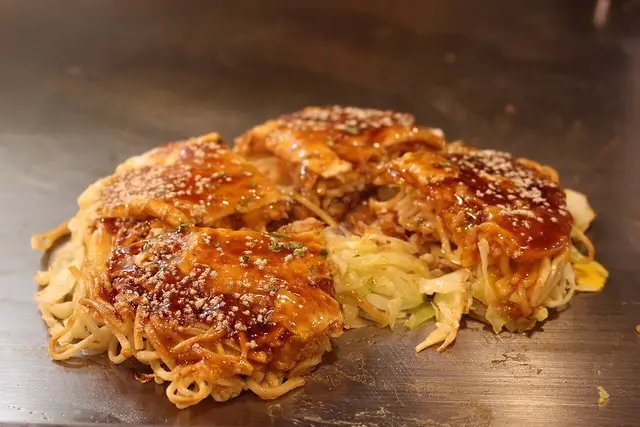 Hiroshima-style okonomiyaki (layered savory pancake with noodles)Hiroshima CitySavory pancake layered with cabbage, bean sprouts and fried noodles on a thin batter. About 1,300 shops in the prefecture.
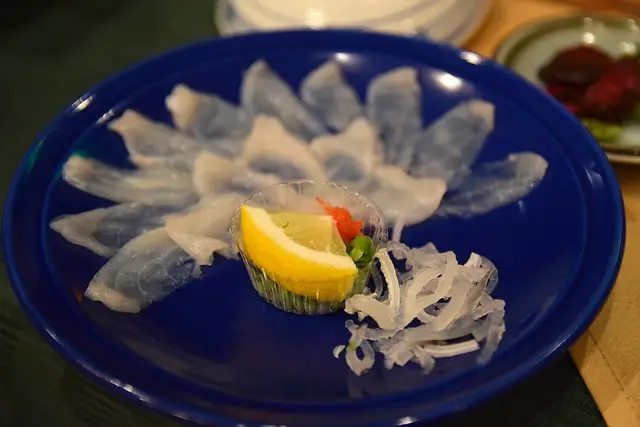 Shimonoseki fugu (blowfish) dishesShimonoseki
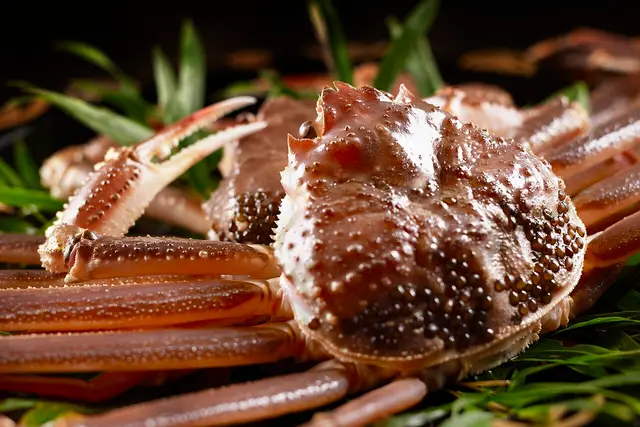 Matsuba crab (male snow crab)
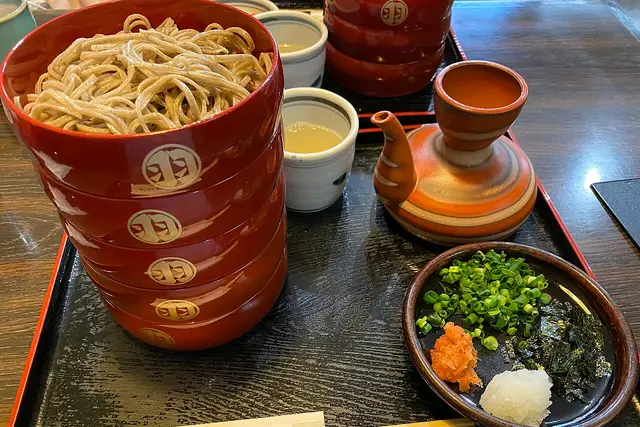 Izumo soba (dark, strongly flavored buckwheat noodles)Izumo and Matsue
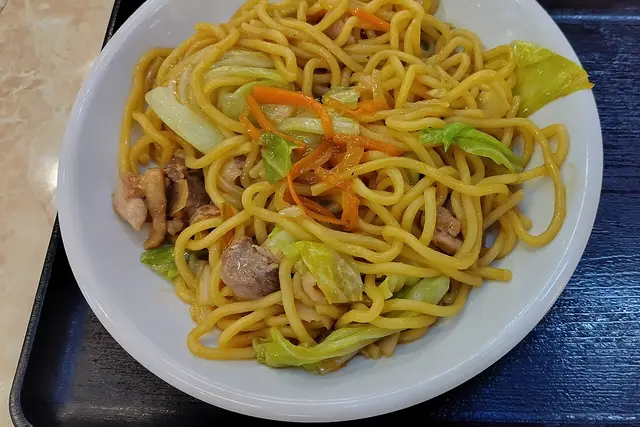 Hiruzen yakisoba (miso-sauce noodles with chicken)Hiruzen Highlands
Tottori
명물 7·향토 요리 27
명물 음식
그 지역에 가면 맛보고 싶은, 가게나 노점에서 먹을 수 있는 명물입니다.
Tottori 각지면
Tottori gyukotsu ramen (ramen in beef-bone broth)
鳥取牛骨ラーメン
Ramen in a beef-bone broth, served at shops scattered across central and western Tottori.
Tottori City면
Horusoba (yakisoba with beef offal)
ホルソバ(鳥取ホルモン焼きそば)
Stir-fried noodles with beef offal, served at diners and yakiniku shops around Tottori City in the east.
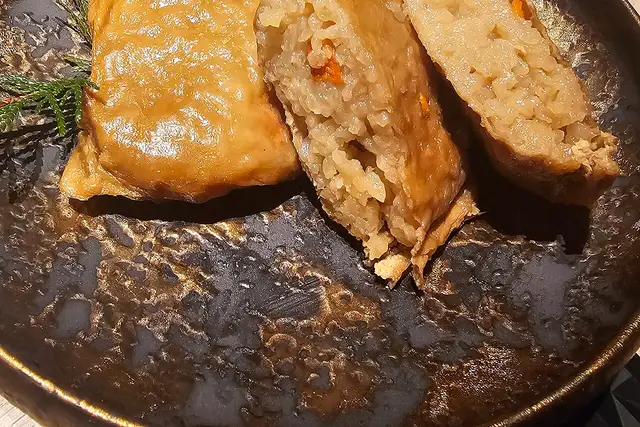
Yonago City일식
Itadaki (rice and vegetables simmered in a fried tofu pouch)
いただき
Large fried tofu pouch filled with raw rice and vegetables, simmered in dashi. Eaten around Yumigahama; some Yonago restaurants serve it.
Sakaiminato해산물
Sakaiminato kaisendon (seafood rice bowl)
境港の海鮮丼
Rice bowl topped with sashimi from the San-in sea, served at eateries and market-side shops in the fishing port of Sakaiminato.
Sakaiminato해산물
Sakaiminato red snow crab (beni-zuwaigani)
境港のベニズワイガニ
Sakaiminato lands the most red snow crab in Japan, caught from September to June, and serves it at local shops.
Tottori 각지해산물
Matsuba crab (male snow crab)
松葉がに
The name for mature male snow crab in Tottori; a winter dish with a season from early November to around March.
Tottori 각지해산물
Iwagaki (summer rock oysters)
岩牡蠣
Large summer oysters, often wild ones taken by free-diving; eaten raw with a squeeze of lemon.
향토 요리
가정과 지역에서 이어져 온 요리입니다. 가게에서 팔지 않는 것도 있습니다(일본 농림수산성 ‘うちの郷土料理’에서).
- Western region, Yumigahama PeninsulaItadakiいただき
The other theory is that the name "Itadaki" came to be used because of its resemblance to the summit of Mt. It is also said that fishermen and farmers brought this dish for lunch.
주요 재료: rice, triangular fried tofu, burdock root, carrot, dried shiitake mushroom
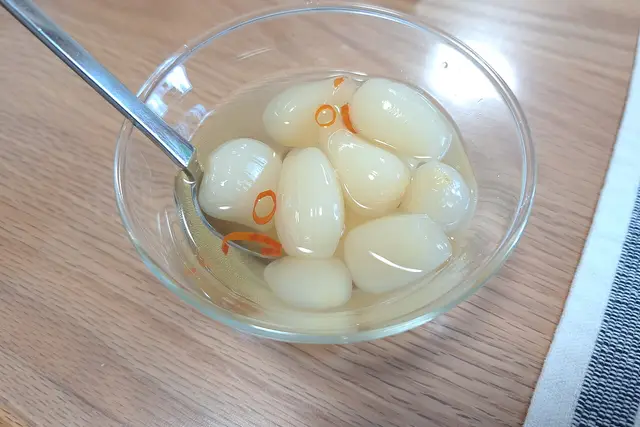 Fukube Town in Tottori City, Hokuei TownPickled Shallotsらっきょう漬け
Shallot cultivation in Tottori Prefecture is old, dating back to the Edo period. It’s said shallots were brought back by Koishikawa Yakuen during one of his official stays in Edo as a daimyo.
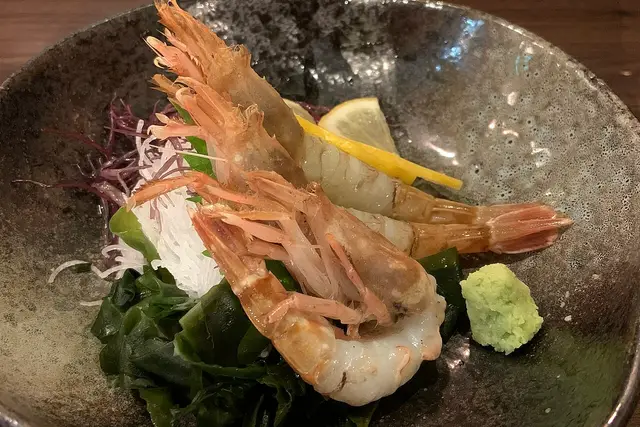 Coastal areas within Tottori PrefectureMosaebi no sashimi (Thinly sliced raw fish of Mosa shrimp)もさえびの刺身
The shrimp known as "Mosa Ebi(=Mosa shrimp)" in Tottori Prefecture is formally called "Kurozako Ebi."
- Chubu areaIgisuいぎす
Igisu" is a dish made from "Igisu grass", also called "egonori". It is said to have been sent to the Imperial Court as a gift as early as the Asuka and Nara periods.
- Eastern region, Central regionAzuki zoni小豆雑煮
Zoni is a local delicacy with a rich regional flavor, and many different types of zoni are eaten throughout the country.
- Western regionDaisen okowa大山おこわ
Daisen Okowa" is a local dish of the western area, made with ingredients from the foot of Mt.
주요 재료: glutinous rice, yaki-chikuwa, chicken, carrots, burdock root, dried shiitake mushrooms
- Chigashira TownKakinoha zushi柿の葉寿司
Kakinoha Sushi" is a local dish that has been handed down in Chigashira Town, Tottori Prefecture since ancient times, and is loved by the townspeople as a dish for entertaining at Bon festivals and…
- Eastern and central areasDondoroke-meshiどんどろけ飯
Rice cooked with tofu and locally grown vegetables is called "dondoroke-meshi" in the eastern to central areas of Tottori Prefecture. "Dondoroke" means "thunder" in the regional dialect.
주요 재료: Rice, shiitake, tofu, konjac noodles, burdock root, carrots, fried tofu triangles
- Central region, Eastern regionTofu Chikuwaとうふちくわ
Generally speaking, a chikuwa fish paste tube is usually made of fish meat, but “tofu chikuwa” is a unique processed food found in the central and eastern regions of Tottori Prefecture made by…
- Yumihama PeninsulaImobotaいもぼた
While at first the imobota looks like any other sweet rice ball, you can see the slight yellow in the cracks of the bean paste, and once eaten the sweetness of the potatoes spreads out from the…
- Kurayoshi City vicinityKomo-dofuこも豆腐
"Komo-dofu" is a simple tofu dish wrapped in a "komo," a roughly woven straw mat.
- Yazu, Kawahara (Tottori City), MisasaTochimochi栃餅
The Japanese horse chestnuts (“tochi”) used for “tochimochi” are so bitter that their intense taste causes a painful tingling sensation on the tongue when consumed raw.
- Tottori cityOyagani no misoshiru (Miso soup with snow crab)親ガニのみそ汁
Miso soup with snow crab is a simple yet delicious soup that is made using female snow crab and daikon radish.
주요 재료: Crab (female snow crab), daikon (Japanese radish)
- Around Ajiro, Iwami TownAkagarei no komaburi (flathead flounder topped with roe)アカガレイの子まぶり
“Akagarei no komaburi” is a type of sashimi made from flathead flounder, which is topped with the fish's roe.
- All of Tottori PrefectureAgo-Chikuwaあごちくわ
The main ingredients of ordinary chikuwa(=fish cake) are walleye pollock, shark, and atka mackerel, but “Ago-Chikuwa" is made from flying fish.
- Tottori City Aoya-choIgai Meshiいがい飯
The Igai mussel has a triangular shape, blackish brown shell, and is found on reefs. It closely resembles mussels, and are also members of the mussel family.
- All of Tottori PrefectureSurume no Kojizukeスルメの麹漬け
To preserve the taste of the harvested squid for a long period of time, and to prepare for the winter season when ingredients are hard to find, "Surume-no koji zuke" (squid marinated in rice…
주요 재료: Japanese common squid, salted vegetables, rice koji(=malted rice)
- Around the coastal Area of Tottori PrefectureIta Wakame板わかめ
"Ita-wakame" is a simple product made by arranging freshly harvested wakame seaweed in a flat, board-like shape and drying it.
- Central Area, Yumigahama peninsulaIwashi Dango (Sardine Ball)いわし団子
"Iwashi Dango" is a traditional local dish made with fresh anchovies. The anchovies are finely chopped with a knife, mixed with eggs and other ingredients, and cooked in a broth.
주요 재료: Sardines, Gobou(=Burdock), Ki no me( a leaf of the Japanese pepper tree)
- Easten regionOiri (Rice Snack mixed with Malt Syrup)おいり
‘Oiri’ is a snack made at home not to waste left over rice. Long time ago, in Inaba region, people washed left over rice and dried under sunshine to make ‘hoshi-ii’ (=dried rice), then made ‘Oiri’.
- All of Tottori PrefectureGancha-jiru (Crab Soup)がんちゃ汁
River crab caught in clear rivers in Tottori Prefecture is used for ‘Gancha-jiru.
주요 재료: River crab (‘Mokuzu-gani’ = Japanese mitten crab), Eggplant
- Central region, Eastern regionJabu (Simmered Meat, Vegetables and Tofu)じゃぶ
The name ‘Jabu’ came from liquid out a lot (in Japanese ‘jabu jabu’ to express liquid is flowing) from tofu and vegetables while simmering them. Also, it means left over.
- Central region, Eastern regionSoramame no Kofuki (Simmered Fava beans)そら豆の粉吹き
Dried one is used for ‘Soramame no Kofuki’. The best season for fava bean is early summer, from April until June.
- Karo RegionHatahatazushi/Shirohatazushi (Japanese sandfish stuffed with soy pulp)ハタハタ寿司/しろはた寿司
"Hatahatazushi", locally called "Shirohatazushi," has been served at the "Hoenya Festival" as a delicacy.
- Eastern regionYaki-saba-no-nitsuke (Grilled Mackerel Simmered in Soy-Based Sauce)焼き鯖の煮付け
“Grilled Mackerel Simmered Dish” has been cherished as a commoner's taste in the eastern region for a long time.
- West Area (Nichinan Town)Goae / Nasu no Zunda-ae呉和え/なすのずんだ和え
"Goae" is a local dish in Nichinan Town, located in the western region, where boiled and mashed soybeans ("go") are used as a coating to mix with vegetables and mushrooms.
- Wakasa TownWakasa-no-Oyaki (Mugwort Mochi)若桜のおやき
The "Wakasa Shrine Grand Festival", held annually in May for approximately 400 years, and the "Wakasa Festival" held every two years on May 3rd, feature portable shrines, processions, lion dances…
주요 재료: Maki powder (mix of short-grain rice flour and glutinous rice flour), Red bean paste, Mugwort
‘먹을 수 있는 가게 찾기’는 요리 이름과 지명으로 지도 앱 검색을 엽니다. 검색에 나오는 가게는 이 사이트가 고르거나 추천한 것이 아닙니다. 그 요리가 있는지는 가게에 확인해 주세요.
출처
명물·향토 요리
출처: 농림수산성 ‘うちの郷土料理 (Our Regional Cuisines)’를 가공하여 작성 (2026-11-15 가져옴) https://www.maff.go.jp/e/policies/market/k_ryouri/index.html. 이름·전해지는 지역·재료는 원문 그대로이며, 설명은 원문의 일부입니다. 농림수산성의 사진은 쓰지 않았습니다(요리 사진은 Wikimedia Commons의 것입니다). 이 페이지는 농림수산성이 만든 것이 아닙니다. 요리 이름과 설명은 영어로 표시됩니다.
지역 명물 음식
명물 음식은 도도부현・시정촌・관광협회・JNTO 등의 공식 안내에서 그 지역의 명물임을 확인한 것입니다(2026-11-17 확인). 설명은 이 사이트에서 썼습니다.
- Tottori gyukotsu ramen (ramen in beef-bone broth): www.pref.tottori.lg.jp
- Horusoba (yakisoba with beef offal): www.pref.tottori.lg.jp
- Itadaki (rice and vegetables simmered in a fried tofu pouch): www.pref.tottori.lg.jp
- Sakaiminato kaisendon (seafood rice bowl): www.sakaiminato.net
- Sakaiminato red snow crab (beni-zuwaigani): www.city.sakaiminato.lg.jp
- Matsuba crab (male snow crab): www.tottori-tour.jp
- Iwagaki (summer rock oysters): www.tottori-tour.jp
사진·데이터 출처
Hiroshima-style okonomiyaki with noodles, fresh off the griddle EllieBellie25 (CC BY-SA 4.0) / Thinly sliced fugu sashimi arranged on a blue plate Raita Futo from Tokyo, Japan (CC BY 2.0) / Matsuba snow crabs laid out on bamboo leaves Nishimuraya Kinosaki Onsen (CC BY 2.0) / Izumo warigo soba in five stacked round dishes with condiments J.Yoshiiiiiiii (CC BY-SA 4.0) / Hiruzen yakisoba with chicken and cabbage on a plate Miyuki Meinaka (CC BY-SA 4.0) / Itadaki: fried tofu pouches stuffed with seasoned rice, one cut open 漱石の猫 (CC0) / Pickled rakkyo shallots with sliced red chili in a glass bowl RuinDig/Yuki Uchida (CC BY 4.0) / Mosa shrimp sashimi on a plate with seaweed, lemon and wasabi ウィキ太郎(Wiki Taro) (Public domain). 잘라내고 축소했습니다.