주고쿠의 명물·향토 요리
세토 내해와 동해 양쪽의 해산물, 산간 지역의 요리.
주고쿠의 명물 음식 46가지와 향토 요리 142가지입니다.
주고쿠에서 맛보고 싶은 명물
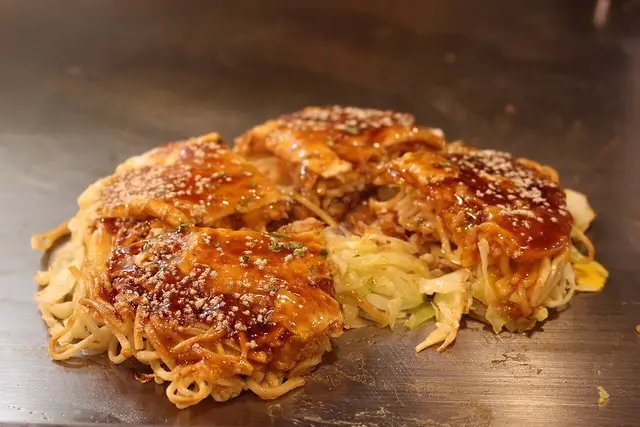 Hiroshima-style okonomiyaki (layered savory pancake with noodles)Hiroshima CitySavory pancake layered with cabbage, bean sprouts and fried noodles on a thin batter. About 1,300 shops in the prefecture.
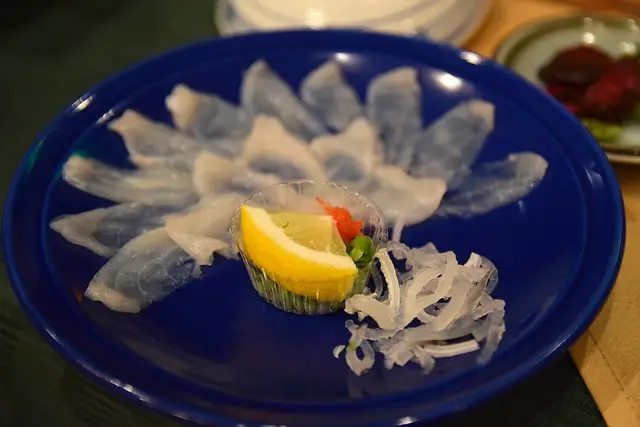 Shimonoseki fugu (blowfish) dishesShimonoseki
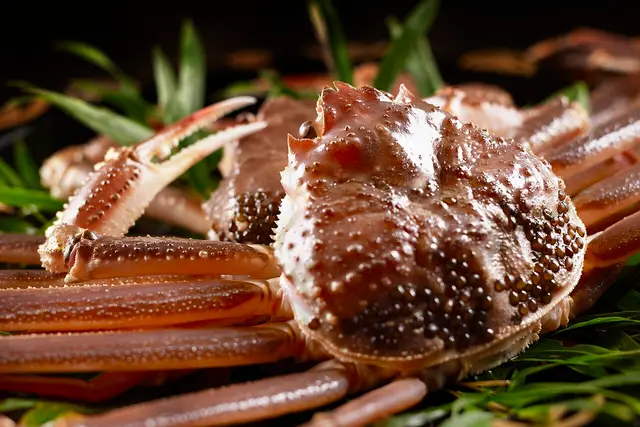 Matsuba crab (male snow crab)
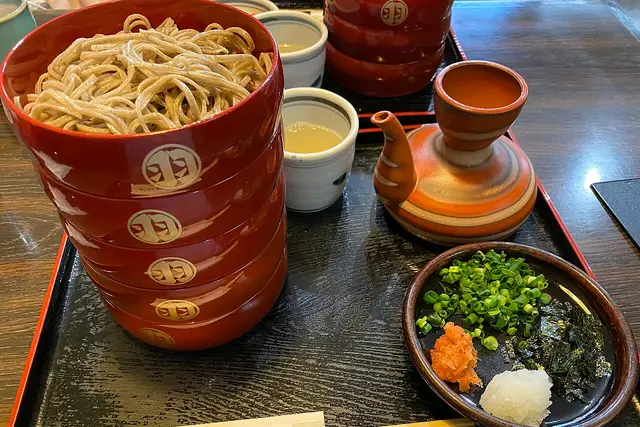 Izumo soba (dark, strongly flavored buckwheat noodles)Izumo and Matsue
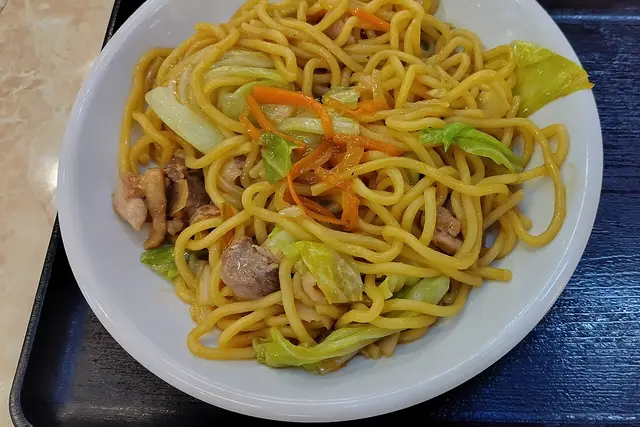 Hiruzen yakisoba (miso-sauce noodles with chicken)Hiruzen Highlands
Shimane
명물 10·향토 요리 28
명물 음식
그 지역에 가면 맛보고 싶은, 가게나 노점에서 먹을 수 있는 명물입니다.
Izumo and Matsue면
Izumo soba (dark, strongly flavored buckwheat noodles)
出雲そば
Buckwheat noodles ground with the husk, so dark and aromatic. Served cold in stacked boxes (warigo) or hot (kamaage).
Izumo Taisha area디저트
Izumo zenzai (sweet red bean soup with mochi)
出雲ぜんざい
Sweet red bean soup with mochi or shiratama. Said to have originated in Izumo; served at shops on Shinmon-dori by Izumo Taisha.
Matsue전골・국물
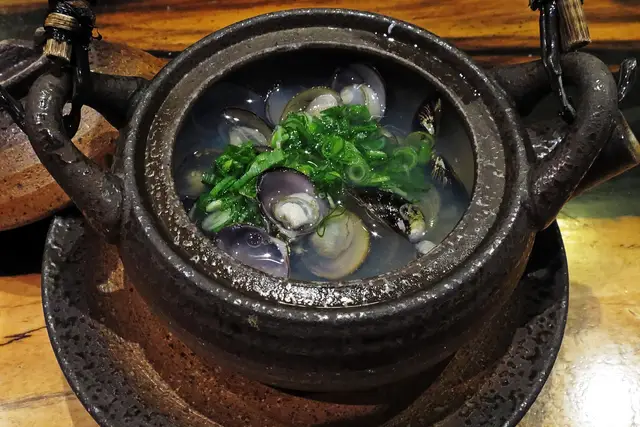
Shinji Lake shijimi clam miso soup
宍道湖のしじみ汁
Miso soup made from large Yamato clams from Lake Shinji. Served at restaurants in Matsue.
Hamada해산물
Hamada kaisendon (seafood rice bowl)
浜田の海鮮丼
Rice bowl of sashimi landed at Hamada Port, some topped with nodoguro. Available at Hamada Fish Market.
Tsuwano밥・덮밥
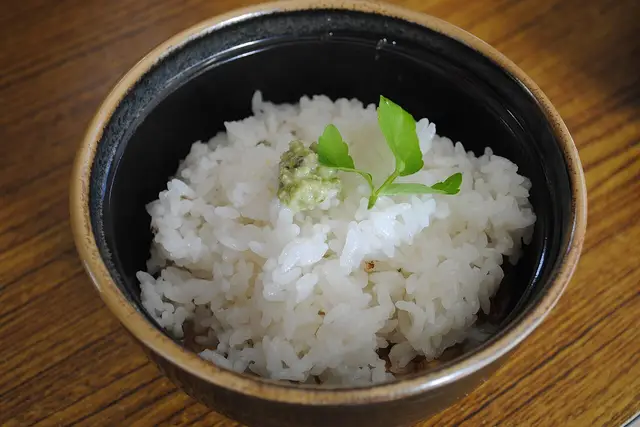
Uzume-meshi (rice with hidden toppings, ochazuke-style)
うずめ飯
Ochazuke-style rice with mountain vegetables and mushrooms hidden beneath it. A dish of Tsuwano and the Iwami region.
Tsuwano전골・국물
Tsuwano imoni (taro simmered in sea bream broth)
津和野の芋煮
Taro simmered in grilled small sea bream stock and soy sauce, topped with yuzu peel. Served at inns in Tsuwano.
Oda City전골・국물
Hekayaki (fish and vegetable hot pot, "fish sukiyaki")
へか焼き
Fish such as nodoguro and tilefish simmered with vegetables in a sweet-savory broth; known as fish sukiyaki. A dish of Oda City.
Oki Islands면
Oki soba (100% buckwheat noodles)
隠岐そば
Pure buckwheat noodles without binder, served in a broth of grilled mackerel and flying fish.
Oki Islands밥・덮밥
Sazae-don (turban shell rice bowl)
さざえ丼
Rice with seaweed topped with soy-simmered turban shell and liver, mixed with a soft egg. Eaten on all four Oki islands.
Nishinoshima해산물
Oki iwagaki (large rock oysters)
隠岐の岩ガキ
Large rock oysters in season from March to June. Nishinoshima is where farming began; eaten at local restaurants.
향토 요리
가정과 지역에서 이어져 온 요리입니다. 가게에서 팔지 않는 것도 있습니다(일본 농림수산성 ‘うちの郷土料理’에서).
- Eastern Region (around Izumo Region)Shijimi-jiru (Shijimi Clam Soup)しじみ汁
Shijimi clams are harvested from Lake Shinji, located at the lower reaches of the Hii River in the eastern part of Shimane Prefecture. Lake Shinji is the seventh-largest brackish lake in Japan.
- Iwami region (Hamada city, Masuda city Hikimi town, Tsuwano town, etc.)Uzume-meshiうずめ飯
In 1939, “Uzume-meshi” was selected by the Imperial Household Agency as one of the "Five Famous Types of Japanese Rice" along with “Sayori-meshi” from Gifu Prefecture, “Fukagawa-meshi” from…
주요 재료: Wasabi, sea bream, japanese parsley, seasonal vegetables (carrots, burdock, shiitake mushrooms, satoimo, tofu and fried tofu, chicken, kamaboko), etc.
- Izumo AreaIzumo Soba出雲そば
Izumo soba is representative of the Izumo region. Along with "wanko soba" in Iwate Prefecture and "Togakushi soba" in Nagano Prefecture, it is one of the three most famous soba in Japan.
- Eastern Region, Oki RegionSasamaki (Mochi rapped in Bamboo Leaves)笹巻き
It is made by rolling kneaded rice flour with kumazasa (bamboo grass) and then boiling it. It is a traditional food for the lunar calendar's Children's Day (Tango no Sekku).
주요 재료: Kumazasa (bamboo grass), Rice flour, Igusa (mugwort)
- Eastern area of the prefectureAzuki-zoni小豆雑煮
On New Year's Day, people eat "Sumashi-zoni" with iwanori seaweed in it, and in some areas they start eating "Azuki-zoni" on January 2. There is a tradition of using round rice cakes.
- All of Shimane prefectureSumashi Zoni (Mochi in Soup)すまし雑煮
Sumashi Zoni is eaten in a soy sauce-based dashi (=Japanese soup stock), similar to clear soup, with round rice cakes added to the broth.
주요 재료: Round rice cakes, Rock seaweed, Bonito flakes, Agodashi (flying fish broth), Hazedashi (goby fish broth), Irikodashi (anchovy broth), etc.
- Iwami Region (Oda City etc.) , Eastern RegionHeka (Fish Sukiyaki Hot Pot)へか
Called "Heka-nabe," it involves cooking seafood in an iron flat pot similar to a sukiyaki pot. In some cases, wild boar meat is used instead of seafood.
주요 재료: Seafood, seasonal vegetables such as onions, napa cabbage, and shimeji mushrooms.
- All of Shimane PrefectureKashiwa Mochi (Leaf Wrapped Mochi)かしわ餅
In Shimane Prefecture, during the Boys' Festival (Tango no Sekku), a snack known as "kashiwamochi" is commonly made and enjoyed by children.
주요 재료: Sarutoriibara leaves(Smilax china leaves), Glutinous rice, Short-grain rice, etc.
- Iwami regionKakuzushi/Hakozushi角ずし/箱ずし
“Kakuzushi” and “Hakozushi” are both types of pressed sushi. The difference lies in the shape and size of the wooden box used.
주요 재료: Seasonal vegetables such as vinegared rice, carrots, burdock, and shiitake mushrooms
- Oki IslandsBraised Oki Arame隠岐アラメの炒め煮
Especially “Braised Oki Arame” is a familiar dish to the locals.
- Eastern Area, Oki AreaTobiuo no Sashimiトビウオの刺身
In Shimane Prefecture, known for its abundant "Tobiuo(=Flying fish)" catch, these fish are affectionately called "Ago" by the locals.
- Entire Oki Area, Iwami Area, Izumo Coastal AreaSazae Meshiさざえ飯
Sazae is an essential ingredient on the Oki Islands' dining tables, cherished in various culinary preparations, with "Sazae Meshi" being one of the popular Sazae dishes.
- Tobu Area (Unnan City etc.)Sumojiすもじ
Sumoji is a type of chirashi-sushi, and is a type of sushi made with grilled mackerel, which is a specialty of the prefecture, served over vinegared rice.
- Izumo Area, Iwami Area, Oki Area etc.Tsumire Niつみれ煮
The offshore smelt, horse mackerel, and flying fish harvested by these fishing methods are made into surimi, which is then made into tsumire (fish ball) with gobou(=burdock) and green onion, and…
주요 재료: Okigisu fish, horse mackerel, flying fish, gobou(=burdock), carrot, etc.
- Eastern region (Shimada area)Takenoko sanshouni(simmered bamboo shoots with Japanese pepper)たけのこ山椒煮
The Shimada area was mostly surrounded by mountains and could not produce enough rice.
- Izumo region, Iwami region, etc.Fukinotou-miso (butterbur sprouts with miso)ふきのとう味噌
"Fukinotou miso" is a popular dish made with miso and butterbur sprouts, which is often served with rice and as a snack with alcoholic beverages.
주요 재료: butterbur sprouts, white miso, country miso, etc.
- The eastern region (Yasugi City, etc.)Dojo kenchinjiruドジョウのけんちんじる
There are a variety of loach dishes, including fried loach, Yanagawa hotpot, and candied stew, but dojo kenchinjiru, which is made with loach and plenty of other ingredients from the mountains of…
주요 재료: Loach, burdock, shiitake mushrooms, carrot, radish, etc.
- Izumo regionSteamed blood clams (akagai garan mushi/akagai no kara mushi)赤貝がらん蒸し/赤貝の殻蒸し
The salt water-packed wetlands that sit between fresh and sea water are called brackish lakes.
- Matsue CityKoi no Ito-zukuri鯉の糸造り
"Koi no Ito-zukuri" was a noble cuisine eaten by emperors and shoguns from the Kamakura period to the Meiji period.
- Matsue cityWhitebait tempura白魚のかき揚げ
One of these is whitebait tempura, a regular fixture at local restaurants as an accompaniment to udon noodles or a bowl of rice.
주요 재료: Whitebait, bamboo shoots, rapeseed blossom, seasonal vegetables etc
- Matsue CitySuzuki no Hoshoyakiスズキの奉書焼き
"Suzuki no Hoshoyaki" is a specialty cuisine of Matsue City, which has flourished as a castle town since the Edo period.
- Izumo RegionEel Tofuうなぎ豆腐
Even today, eels are still eaten in the Izumo region, and are enjoyed in a variety of dishes such as shiroyaki (grilled eel without sauce), kabayaki (grilled eel with sauce), unaju (eel over rice)…
주요 재료: Eel, grilled tofu, Kyo-negi (green onions), seasonal mushrooms, garland chrysanthemum, etc.
- Matsue CityKurodaseri to horenso no ohitashi黒田せりとほうれんそうのおひたし
Kuroda Seri is a local vegetable of Matsue City, Shimane Prefecture, which has been handed down since the Edo period. The name "Kuroda" comes from the old name of the area, Kuroda-cho.
- Iwami area (Hamada City, Masuda City, etc.)Kujira gohanくじらご飯
Hamada City and Masuda City are located in the western part of Shimane Prefecture, facing the Sea of Japan. Iwami Sanda, which includes both cities and Ota, is the main city of the Iwami region.
주요 재료: Whale skin, rice, radish, burdock root, shiitake mushrooms, etc.
- Izumo region, Oki regionBakudan onigiriばくだんおにぎり
Bakudan-onigiri" is a popular lunch box or snack that makes lavish use of iwanori. The name "bakudan" is derived from the appearance of the large, round rice ball covered with iwanori seaweed.
- All over the prefectureKakinamasu柿なます
One of these is "kakinamasu," dried persimmons made into a vinegared dish.
주요 재료: Dried persimmons, radishes (or turnips), carrots, etc.
- Iwami region (Hamada city, etc.)Nishime (simmered dish) of dried daikon干し大根の煮しめ
Dried daikon is made in all parts of Shimane Prefecture, but "Nishime (simmered dish) of dried daikon" is a local dish mainly made in the Iwami region.
- Oki island areaAgono ko umani (braised flying fish roe)アゴの子旨煮
The locals recommend agono ko umani (braised flying fish roe), which goes well with sake. Dishes using the roe of flying fish are well-loved and eaten by locals.
‘먹을 수 있는 가게 찾기’는 요리 이름과 지명으로 지도 앱 검색을 엽니다. 검색에 나오는 가게는 이 사이트가 고르거나 추천한 것이 아닙니다. 그 요리가 있는지는 가게에 확인해 주세요.
출처
명물·향토 요리
출처: 농림수산성 ‘うちの郷土料理 (Our Regional Cuisines)’를 가공하여 작성 (2026-11-15 가져옴) https://www.maff.go.jp/e/policies/market/k_ryouri/index.html. 이름·전해지는 지역·재료는 원문 그대로이며, 설명은 원문의 일부입니다. 농림수산성의 사진은 쓰지 않았습니다(요리 사진은 Wikimedia Commons의 것입니다). 이 페이지는 농림수산성이 만든 것이 아닙니다. 요리 이름과 설명은 영어로 표시됩니다.
지역 명물 음식
명물 음식은 도도부현・시정촌・관광협회・JNTO 등의 공식 안내에서 그 지역의 명물임을 확인한 것입니다(2026-11-17 확인). 설명은 이 사이트에서 썼습니다.
- Izumo soba (dark, strongly flavored buckwheat noodles): www.kankou-shimane.com
- Izumo zenzai (sweet red bean soup with mochi): www.kankou-shimane.com
- Shinji Lake shijimi clam miso soup: www.kankou-shimane.com
- Hamada kaisendon (seafood rice bowl): www.kankou-shimane.com
- Uzume-meshi (rice with hidden toppings, ochazuke-style): www.kankou-shimane.com
- Tsuwano imoni (taro simmered in sea bream broth): www.kankou-shimane.com
- Hekayaki (fish and vegetable hot pot, "fish sukiyaki"): www.kankou-shimane.com
- Oki soba (100% buckwheat noodles): www.kankou-shimane.com
- Sazae-don (turban shell rice bowl): www.kankou-shimane.com
- Oki iwagaki (large rock oysters): www.kankou-shimane.com
사진·데이터 출처
Hiroshima-style okonomiyaki with noodles, fresh off the griddle EllieBellie25 (CC BY-SA 4.0) / Thinly sliced fugu sashimi arranged on a blue plate Raita Futo from Tokyo, Japan (CC BY 2.0) / Matsuba snow crabs laid out on bamboo leaves Nishimuraya Kinosaki Onsen (CC BY 2.0) / Izumo warigo soba in five stacked round dishes with condiments J.Yoshiiiiiiii (CC BY-SA 4.0) / Hiruzen yakisoba with chicken and cabbage on a plate Miyuki Meinaka (CC BY-SA 4.0) / Shijimi clam soup topped with green onion in an earthenware pot Aiko99ann (CC BY-SA 3.0) / Uzume-meshi: a bowl of rice topped with wasabi and a sprig of mitsuba MIURA, Yuji (CC BY-SA 4.0). 잘라내고 축소했습니다.