도호쿠의 명물·향토 요리
쌀의 고장. 겨울 추위에 대비한 전골·국물 요리와 저장 음식, 소바 같은 면 요리가 많은 지역입니다.
도호쿠의 명물 음식 53가지와 향토 요리 176가지입니다.
도호쿠에서 맛보고 싶은 명물
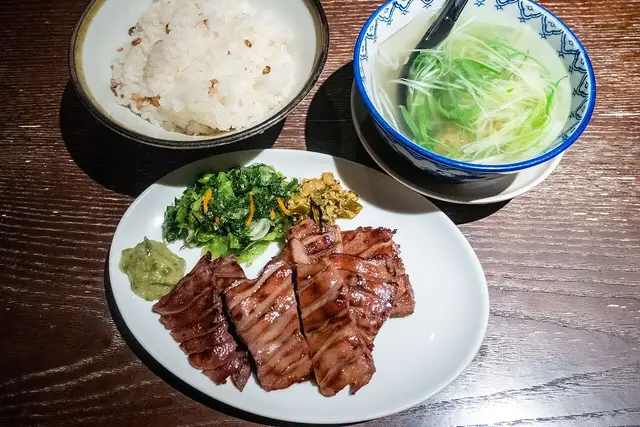 Gyutan-yaki (grilled beef tongue, Sendai specialty)SendaiSliced beef tongue grilled over a fire. The first specialty shop opened in Sendai in 1948, and about 100 now operate in the city.
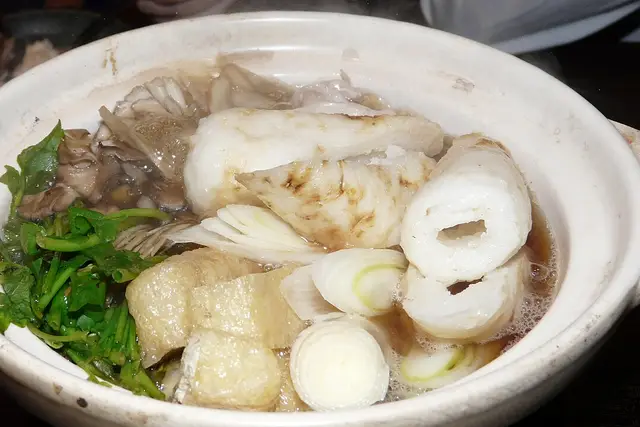 Kiritanpo nabe (hot pot with grilled rice sticks and Hinai chicken broth)Odate
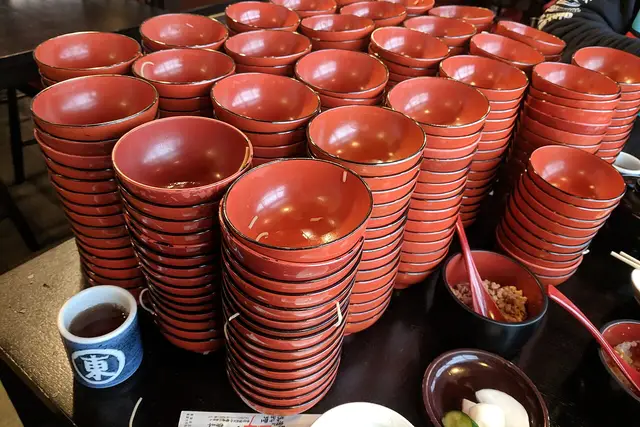 Wanko soba (bite-size soba refilled into your bowl until you stop)Morioka and Hanamaki
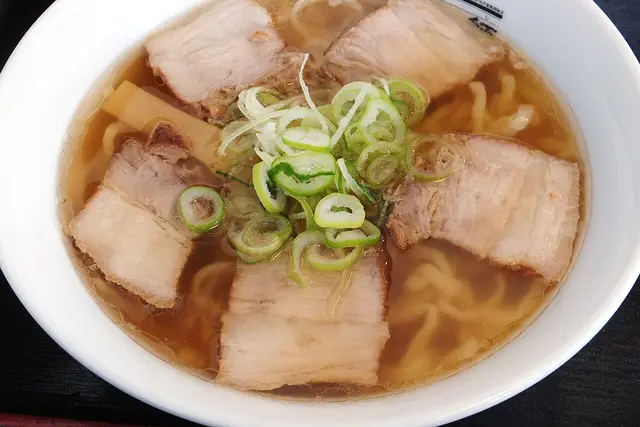 Kitakata ramen (soy ramen with thick curly noodles)Kitakata
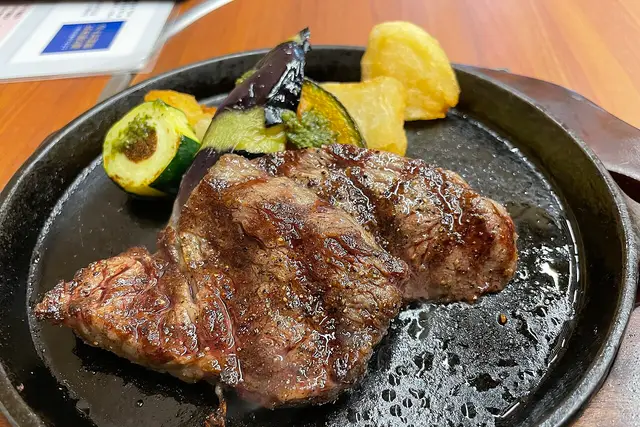 Yonezawa beef (premium marbled wagyu from the Okitama area)Yonezawa
Aomori
명물 10·향토 요리 29
명물 음식
그 지역에 가면 맛보고 싶은, 가게나 노점에서 먹을 수 있는 명물입니다.
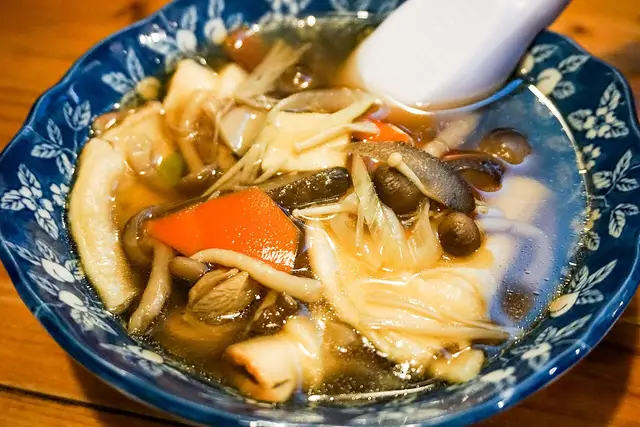
Hachinohe전골・국물
Hachinohe senbei-jiru (soup with broken Nanbu rice-cracker-style wheat crackers)
八戸せんべい汁
Broth with meat, fish and vegetables, simmered with broken Nanbu wheat crackers made for soup. A Hachinohe regional dish.
Hachinohe해산물
Hachinohe Maeoki mackerel (served as pickled mackerel rice bowl)
八戸前沖さば(銀サバトロづけ丼)
Mackerel caught off Hachinohe and landed at its port, rich in fat. Eaten as a soy-marinated rice bowl, among other ways.
Aomori City면
Aomori miso curry milk ramen (miso ramen with curry and milk)
青森味噌カレー牛乳ラーメン
Miso ramen combined with curry and milk, topped with butter, bean sprouts, bamboo shoots and wakame. Served at a few shops in Aomori City.
Furukawa Market, Aomori City해산물
Nokke-don (build-your-own seafood rice bowl at the market)
のっけ丼
A seafood rice bowl built at Aomori's Furukawa fish market by collecting rice, then choosing sashimi toppings from stalls.
Aomori City면
Tsugaru niboshi ramen (dried-sardine broth ramen)
津軽の煮干しラーメン
Soy-based ramen with a broth made from dried sardines. Most ramen shops in Aomori City serve a niboshi version.
Kuroishi면
Kuroishi tsuyu yakisoba (flat-noodle yakisoba served in soup)
黒石つゆやきそば
Kuroishi's flat-noodle yakisoba served with broth poured over it. Over 70 shops in Kuroishi serve it, each with its own taste.
Towada City고기
Towada barayaki (beef short rib and onion stir-fried on a griddle in sweet-savory sauce)
十和田バラ焼き
Beef short rib and plenty of onion grilled in a sweet soy-based sauce. Available at over 40 restaurants in Towada.
Oma해산물
Oma tuna (bluefin tuna landed at Oma)
大間まぐろ
Bluefin tuna landed at Oma, caught by pole and line, fished from about August to January. Eaten as sashimi or sushi.
Lake Jusan면
Lake Jusan shijimi ramen (ramen with freshwater clam broth)
十三湖しじみラーメン
Salt-flavored ramen with broth from Lake Jusan's freshwater clams, also topped with the clams.
Hirosaki전골・국물
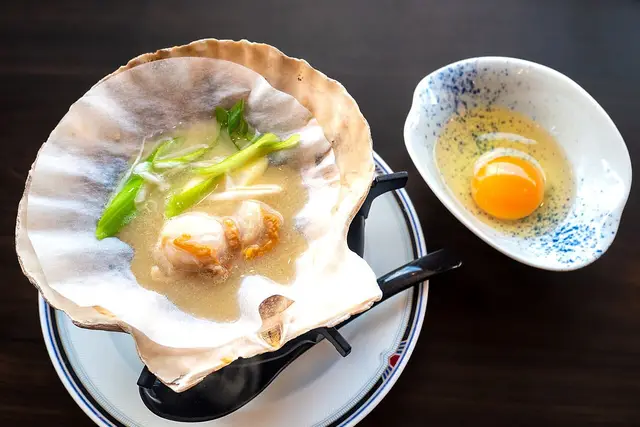
Kaiyaki miso (miso and egg cooked in a scallop shell)
貝焼き味噌
A Tsugaru dish of dashi, miso, leek and scallop with beaten egg, cooked in a large scallop shell.
향토 요리
가정과 지역에서 이어져 온 요리입니다. 가게에서 팔지 않는 것도 있습니다(일본 농림수산성 ‘うちの郷土料理’에서).
- Hachinohe CitySenbei jiruせんべい汁
The name "senbei-jiru" was not firmly established until the Heisei era (1989), when a tourism organization in Hachinohe City began publicizing what was once thought to be a humble dish eaten only at…
주요 재료: rice crackers, green onions, chicken, thread konnyaku, fu, burdock root, frozen tofu, carrots, mushrooms
- Shimokita region, Tsugaru regionKaiyaki miso貝焼き味噌
Around Tsugaru Bay, which has long been known as a scallop production area, people have been eating "shellfish miso" since the Edo period (1603-1868).
주요 재료: Eggs, dried bonito flakes, grilled dried fish, fu, miso
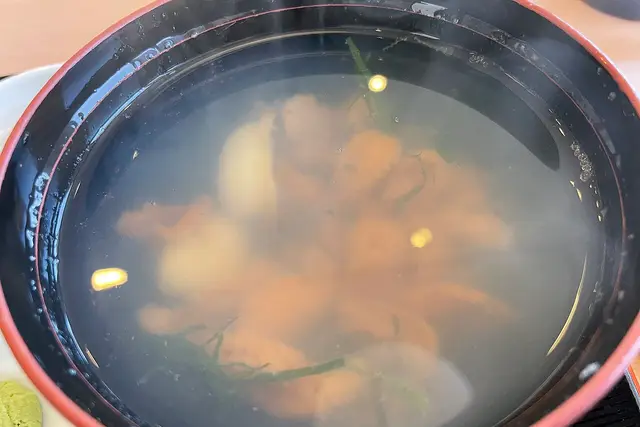 Southwestern regionIchigo Niいちご煮
"Ichigo-ni" got its name from the golden sea urchin floating in the milky white broth produced from abalone extract and other ingredients, as it looked like a hazy wild strawberry in the morning dew…
주요 재료: Fresh sea urchin, abalone, green perilla, green onion
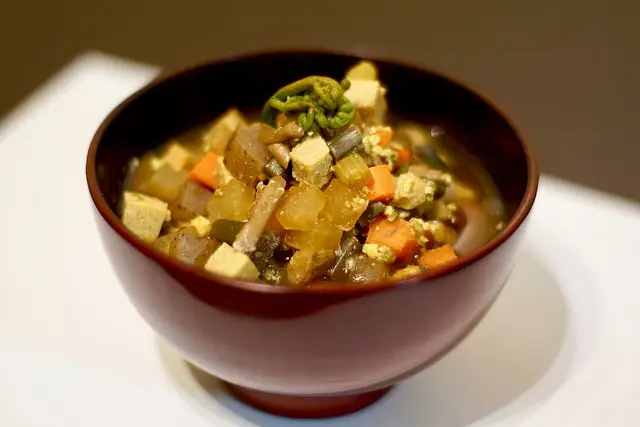 Tsugaru areaKenojiruけの汁
This is a typical local dish of Tsugaru region.
주요 재료: Daikon radish, carrot, burdock root, bracken, bean curd, dried bean curd, soybeans, kelp, miso
- Tsugaru RegionKyabetsu to Masu no Tsukemono (Cabbage and Trout Pickles)キャベツとマスの漬物
Salted trout used for “Kyabetsu to masu no tsukemono” was preserved over the winter and eaten daily with white rice.
주요 재료: Cabbage, Salt, Trout, Vinegar, Carrots, Red chili peppers, Raw ginger, Amazake (=sweet, fermented rice drink)
- Shimokita regionKeiranけいらん
Keiran" is one of the most popular dishes among the autumn-finishing feasts. It is a light-flavored clear soup with two white egg-shaped dumplings floating on the top of the bowl.
- Tsugaru areaTara no jappajiru鱈のじゃっぱ汁
Jappa" is a word of Tsugaru dialect, which means "something to be thrown away". It is usually made from fish heads, bones, skins and entrails, which are thrown away without being eaten.
- Shimokita RegionBekomochiべこもち
"Bekomochi" has been passed down from generation to generation as a special sweet eaten during the Dragon Boat Festival, and is now eaten as a snack.
주요 재료: Glutinous rice flour, non-glutinous rice flour, sugar, instant coffee, tea, food coloring
- Nanbu RegionMameshitogi豆しとぎ
Afterwards, they would either steam or grill the "mameshitogi" and eat them.
주요 재료: Green soybeans, blended rice flour (non-glutinous rice flour + glutinous rice flour), sugar
- southwestern regionKinka mochiきんかもち
"Kinkamochi" is an unusual local delicacy born from this environment. It is made from brown sugar, walnuts and miso paste, wrapped in a flour skin, shaped into a half-moon shape and boiled.
- Tsugaru regionTaranoko-aeたらの子和え
"Taranoko-ae " is a dish with seasoned and boiled radish, frozen tofu, carrots, konjac noodles, etc., are mixed with shredded cod roe.
주요 재료: cod roe, carrot, freeze dried tofu, green onion, konjac noodles, salt
- Tsugaru regionNasu no Akashiso-maki (Aubergine and red shiso leaf rolls)なすの赤しそ巻き
This is an everyday staple in the Tsugaru region, handed down in each family since olden times, that combines the aubergines and shiso leaves that are gathered in large quantities during summertime.
- The Shimokita regionNiaekko煮あえっこ
"Niaekko" is a local dish of the Shimokita region.
주요 재료: Daikon radish, carrot, bracken, burdock, fried tofu, and tofu
- The Tsugaru regionNerikomiねりこみ
It is said to have its roots in Buddhist vegetarian cuisine and was created long ago by the monks of the 33 temples of the "Hirosaki Zen Forest" who made “kuzuyose” from vegetables collected through…
주요 재료: Sweet potatoes, dried shiitake mushrooms, carrots, konjac, field peas, and fried tofu
- Southern RegionHittsumi (Wheat Flour Dumpling Soup)ひっつみ
According to one theory, "hittsumi", wheat flour dumpling, has been made since the Heian period (794-1192).
주요 재료: Wheat flour, chicken, carrot, gobou (= burdock), Japanese leek
- Tsugaru RegionHoshi Mochi(Dried rice cake)干し餅
It has long been a preserved food made during the extremely cold season to take advantage of the cold and humid climate.
- Tsugaru RegionMizu to Hoya no Mizumono (Sea squirt and Mizu soup)ミズとホヤの水物
During the short summer of the Tsugaru region, locals enjoy a dish called "Hoya Mizu" which is made from seasonal ingredients.
- Tsugaru RegionSake no Iizushi (Fermented salmon sushi)鮭の飯ずし
In Tsugaru region, surrounded by snow during the winter, people harvest farm products and hunt fish as much as possible during the harvest season, and preserve food by drying or pickling them.
- Tsugaru RegionIka Menchi (Squid hamburger)イカメンチ
It is a home-cooked dish spread in Tsugaru region, and made from minced ‘Geso’, squid legs left over after preparing squid sashimi, mixed with vegetables like onions and carrots, and wheat flour…
- Tsugaru RegionInarizushiいなりずし
"Inarizushi" in general refers to a dish where vinegared rice or glutinous rice is stuffed inside sweet and savory fried tofu pouches.
주요 재료: Glutinous rice, Red pickled ginger, “Inari-age (fried tofu pouch seasoned with a sweet soy-based broth)”
- Nanbu RegionKakkeかっけ
"Kakke" is a dish made by kneading “Soba (buckwheat)” flour with a little salt, rolling out the dough thinly, cutting it into triangles, boiling them, and serving with garlic miso.
주요 재료: “Soba (buckwheat)” flour, Daikon radish, Tofu, Garlic, Miso
- Tsugaru RegionGappara-mochiがっぱらもち
In the past, when ironing at home to achieve crispness, people used a mixture called "rice paste" applied to fabric. It was made by mushing soaked rice in water.
- Tsugaru RegionGoma-gohan (Sesami seeds Rice)ごまご飯
"Goma-gohan" or "goma-mama" is one example of this. Because of its pitch-black color, it was made and offered at Buddhist altars on "Ke-no-hi," such as Buddhist memorial services and days of devotion.
- Southern RegionJyune-mochi (Potato Cake with Sweet Egoma Souce)じゅね餅
The word "Jyune" refers to egoma (perilla) and "Jyune-mochi" is eaten with a paste made with roasted perilla seeds which are grinded and mixed with miso and sugar.
주요 재료: "Kannakake-imo" (=dried white potatoes with its starch removed) powder, Egoma(=perilla) seeds
- Aomori CityShouga Miso Oden (Japanese Fishcake Stew with Ginger Miso)しょうが味噌おでん
"Shouga miso oden" is unique in that it uses local ingredients such as whelk caught in Mutsu Bay, "Nemagaridake" (=curved-root young bamboo shoots), "Daikakuten" (=thin and large deep-fried fish…
주요 재료: Daikon radish, Konjac (=Yam cake), Satsuma-age (=Deep fried fishcake), Eggs, Chikuwa (=Fishcake), Miso, Ginger
- Tsugaru RegionSushikoすしこ
“Sushiko” is a traditional dish which has been eaten by the local people, particularly those living in the northwestern part of Tsugaru, along the Sea of Japan.
주요 재료: Glutinous rice, Cucumbers, Red shiso leaves, Purple cabbage, Vinegar
- Tsugaru RegionAkakabu no Senmaizuke (Red Turnip Pickles)赤かぶの千枚漬け
“Akakabu no senmaizuke” refers to traditional red turnip pickles of the Tsugaru region of Aomori prefecture. Red turnips are harvested just before the snowy season begins.
주요 재료: Red turnips, Salt, Zarame (=Coarse white sugar), Gobai-su(=Vinegar condensed by five times), Kombu (=Kelp)
- Tsugaru RegionSame no Sukume鮫のすくめ
"Same no Sukume" is a dish made from flaked boiled shark head marinated with daikon radish or cabbage and miso vinegarette, and it is said that it was invented not to waste shark at the time when…
주요 재료: Shark, Daikon radish or Cabbage, Green onion, Vinegar, Miso
- Shimokita Peninsula, Hachinohe CityKujira Jiru (Whale Soup)くじら汁
The taste of whale varies in each part, but "shiromi" (=white part) close to the back skin is used for "Kujira Jiru".
주요 재료: Cured whale meat (fat), Carrot, Gobou(=Burdock root) , "Kan-Daikon" (=Daikon radish dried under the cold weather), Shimi-tofu (=Freeze-dried tofu), Potato, Pickled takana (=mustard green), Miso, Soy sauce
‘먹을 수 있는 가게 찾기’는 요리 이름과 지명으로 지도 앱 검색을 엽니다. 검색에 나오는 가게는 이 사이트가 고르거나 추천한 것이 아닙니다. 그 요리가 있는지는 가게에 확인해 주세요.
출처
명물·향토 요리
출처: 농림수산성 ‘うちの郷土料理 (Our Regional Cuisines)’를 가공하여 작성 (2026-11-15 가져옴) https://www.maff.go.jp/e/policies/market/k_ryouri/index.html. 이름·전해지는 지역·재료는 원문 그대로이며, 설명은 원문의 일부입니다. 농림수산성의 사진은 쓰지 않았습니다(요리 사진은 Wikimedia Commons의 것입니다). 이 페이지는 농림수산성이 만든 것이 아닙니다. 요리 이름과 설명은 영어로 표시됩니다.
지역 명물 음식
명물 음식은 도도부현・시정촌・관광협회・JNTO 등의 공식 안내에서 그 지역의 명물임을 확인한 것입니다(2026-11-17 확인). 설명은 이 사이트에서 썼습니다.
- Hachinohe senbei-jiru (soup with broken Nanbu rice-cracker-style wheat crackers): aomori-tourism.com
- Hachinohe Maeoki mackerel (served as pickled mackerel rice bowl): aomori-tourism.com
- Aomori miso curry milk ramen (miso ramen with curry and milk): aomori-tourism.com
- Nokke-don (build-your-own seafood rice bowl at the market): aomori-tourism.com
- Tsugaru niboshi ramen (dried-sardine broth ramen): aomori-tourism.com
- Kuroishi tsuyu yakisoba (flat-noodle yakisoba served in soup): aomori-tourism.com
- Towada barayaki (beef short rib and onion stir-fried on a griddle in sweet-savory sauce): aomori-tourism.com
- Oma tuna (bluefin tuna landed at Oma): aomori-tourism.com
- Lake Jusan shijimi ramen (ramen with freshwater clam broth): aomori-tourism.com
- Kaiyaki miso (miso and egg cooked in a scallop shell): www.hirosaki-kanko.or.jp
사진·데이터 출처
Grilled beef tongue set with barley rice and oxtail soup くろふね (CC BY 4.0) / Kiritanpo hot pot with grilled rice sticks, maitake and seri greens Chensiyuan (CC BY-SA 4.0) / Tall stacks of empty wanko soba bowls on the table Koltonsmith (CC BY-SA 4.0) / Kitakata ramen in clear soy broth topped with chashu and green onion Lombroso (CC BY-SA 4.0) / Yonezawa beef steak on a sizzling iron plate with grilled vegetables Totti (CC BY-SA 4.0) / Senbei-jiru soup with pieces of Nanbu rice cracker, mushrooms and vegetables くろふね (CC BY-SA 4.0) / Kaiyaki miso: scallops simmered in miso in a scallop shell, with a raw egg くろふね (CC BY 4.0) / Ichigoni, a clear soup with sea urchin and sliced abalone Totti (CC BY-SA 4.0) / Kenojiru, a miso soup of finely diced vegetables, wild plants and tofu EAT&ART TARO (CC BY-SA 4.0). 잘라내고 축소했습니다.