도호쿠의 명물·향토 요리
쌀의 고장. 겨울 추위에 대비한 전골·국물 요리와 저장 음식, 소바 같은 면 요리가 많은 지역입니다.
도호쿠의 명물 음식 53가지와 향토 요리 176가지입니다.
도호쿠에서 맛보고 싶은 명물
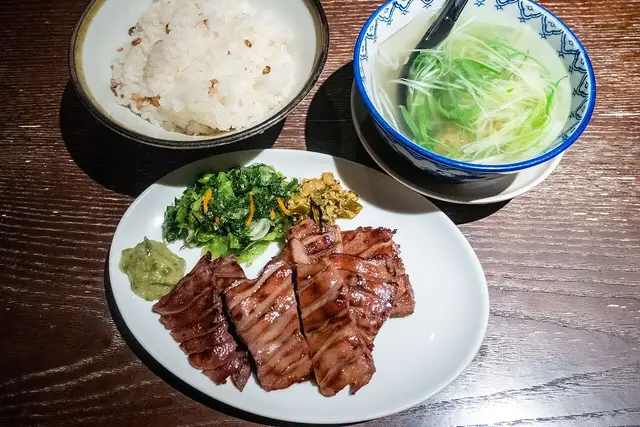 Gyutan-yaki (grilled beef tongue, Sendai specialty)SendaiSliced beef tongue grilled over a fire. The first specialty shop opened in Sendai in 1948, and about 100 now operate in the city.
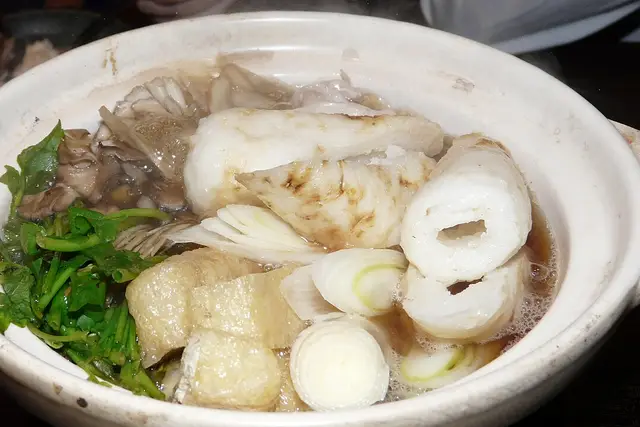 Kiritanpo nabe (hot pot with grilled rice sticks and Hinai chicken broth)Odate
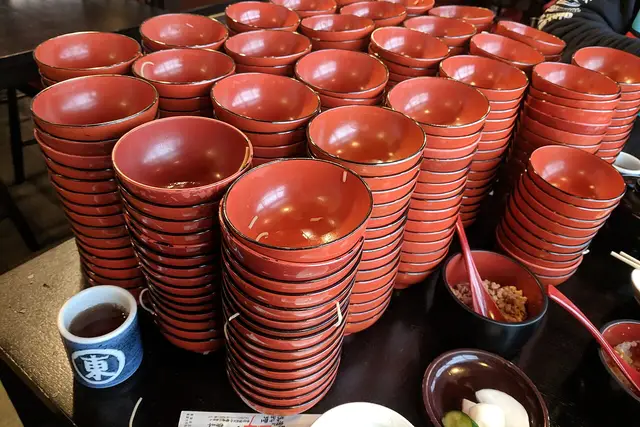 Wanko soba (bite-size soba refilled into your bowl until you stop)Morioka and Hanamaki
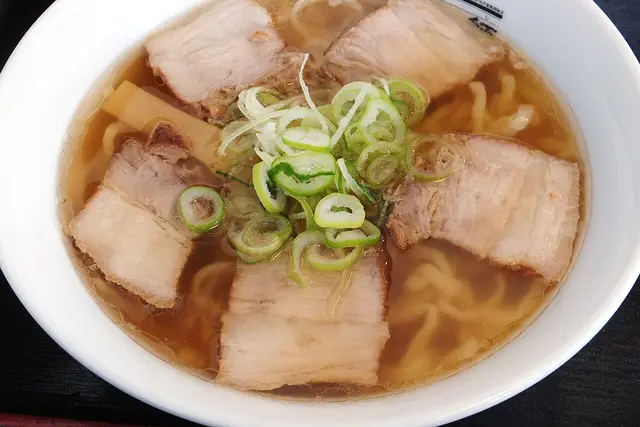 Kitakata ramen (soy ramen with thick curly noodles)Kitakata
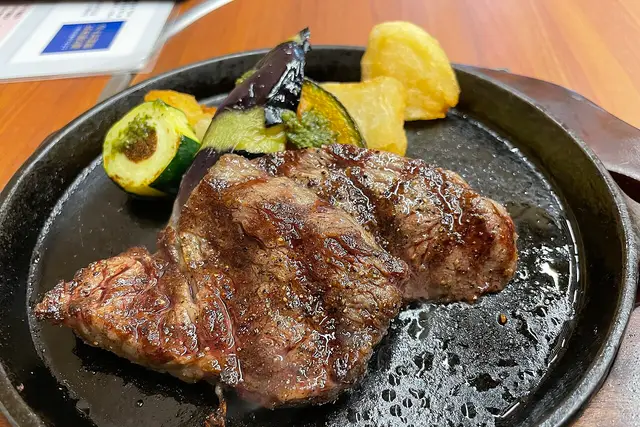 Yonezawa beef (premium marbled wagyu from the Okitama area)Yonezawa
Miyagi
명물 9·향토 요리 29
명물 음식
그 지역에 가면 맛보고 싶은, 가게나 노점에서 먹을 수 있는 명물입니다.
Sendai고기
Gyutan-yaki (grilled beef tongue, Sendai specialty)
牛たん焼き
Sliced beef tongue grilled over a fire. The first specialty shop opened in Sendai in 1948, and about 100 now operate in the city.
Sendai디저트
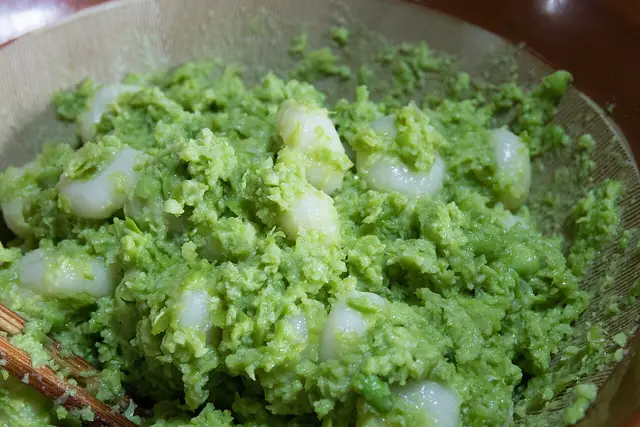
Zunda mochi (rice cake coated in sweet mashed edamame)
ずんだ餅
Rice cake coated in sweet mashed edamame. Once a Bon-season dish in Sendai, now eaten year-round.
Sendai면
Sendai hiyashi chuka (cold ramen salad, said to have originated here)
仙台冷やし中華
Cold noodles with toppings and sauce, eaten in summer. Said to have been created at a Sendai Chinese restaurant in 1937.
Sendai전골・국물
Sendai seri nabe (hot pot with Japanese parsley, roots included)
仙台せり鍋
A hot pot featuring seri (Japanese parsley), roots included. Miyagi is Japan's top producer; the season runs from winter to early spring.
Sendai해산물
Sendai zuke-don (marinated white fish rice bowl)
仙台づけ丼
A rice bowl topped with white fish from Sendai Bay marinated in sauce.
Ishinomaki면
Ishinomaki yakisoba (brown twice-steamed noodles fried in seafood stock)
石巻焼きそば
Brown, twice-steamed noodles pan-steamed in seafood stock. Locals taste it plain first, then add sauce.
Kesennuma해산물
Kesennuma shark fin dishes (rice bowl, sushi, ramen, soft serve)
気仙沼のふかひれ
Shark fin dishes in Kesennuma, including rice bowls, sushi, ramen and soft-serve ice cream.
Shiroishi면
Shiroishi umen (short, oil-free wheat noodles)
白石温麺
Umen noodles, a specialty of Shiroishi. The Shiroishi tourist association publishes a map of serving shops.
Matsushima해산물
Matsushima oysters (eaten raw, grilled, as kaki-don and more)
松島のかき
Small, firm oysters from Matsushima, in season from October to March. Eaten raw or as oyster rice, hot pot or rice bowls.
향토 요리
가정과 지역에서 이어져 온 요리입니다. 가게에서 팔지 않는 것도 있습니다(일본 농림수산성 ‘うちの郷土料理’에서).
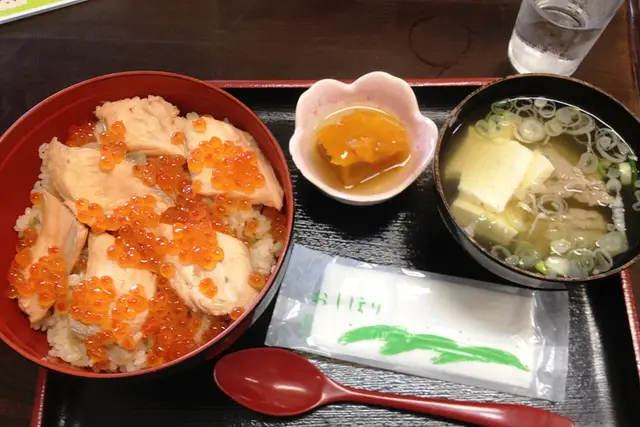 Watari TownHarakomeshiはらこ飯
The most famous local dish using salmon in Miyagi is "harako-meshi" (harako rice).
- All over the prefectureZunda mochiずんだ餅
There are various theories about the name "Zundamochi," including that it was created by a farmer named Jinta, or that Lord Date Masamune crushed edamame (soybeans) with the handle of his sword.
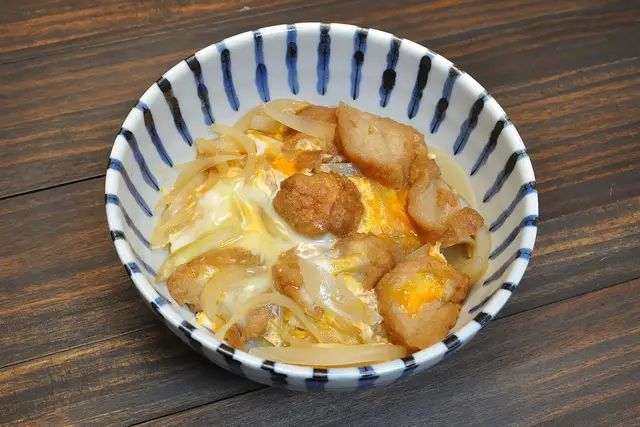 Tome CityAburafu don (Rice Bowl with deep-fried wheat gluten)油麩丼
"Aburafudon (Rice Bowl with deep-fried wheat gluten)" is a famous dish made with "Aburafu" and was made up by the hostess of a local inn.
- Southern part of the prefectureOkuzukakeおくずかけ
Shojin ryori (vegetarian food) is eaten mainly in the southern part of the prefecture during the higan (equinox) and obon (Bon festival) seasons in spring and fall.
주요 재료: Vegetables such as taro, carrots, burdocks, shiitake mushrooms, deep-fried tofu, tofu, umen (Shiraishi hot noodles), thread konnyaku
- Sendai area and other areas in the prefectureSendai zoni仙台雑煮
Sendai Zoni has been eaten since the end of the Edo period.
주요 재료: grilled goby, daikon radish, carrots, harako (harako is a type of fish), Japanese parsnip, gobo (burdock root), zuki (dried taro's stem), frozen tofu, and rice cakes
- Northern part of the prefecture (Kurihara, Senboku and Osaki arable land, Kitakami hills, Sanriku coastal area)Hattojiruはっと汁
Hatto is a local flour dish eaten throughout the northern part of the prefecture.
주요 재료: Flour, daikon radish, carrots, burdock root, dried shiitake mushrooms
- Sendai CityNametagarei no nitsuke(Boiled slime flounder)ナメタガレイの煮つけ
The slime flounder is also known as “granny flounder” or “Indian flounder” in other regions. It is said that it came to be called “slime flounder” because it is very slimy.
- Kurihara CityFusube Mochiふすべ餅
The “fusube mochi” combines Miyagi's mochi culture and the unique food culture in Kurihara City, which is far inland from the sea.
주요 재료: Grilled loach powder (loach), burdock root, mochi, radish
- The coast of Miyagi PrefectureSea Squirtホヤの酢の物
Sea squirts are raised in the coastal areas of Sanriku. The main kind of sea squirts cultivated are maboya, which are lowered by attaching oyster shells to ropes and attaching sea squirt spores.
- Kurihara City and northern Miyagi PrefectureEbi mochi(Shrimp mochi)エビ餅
Miyagi Prefecture has an abundance of mochi dishes; there are said to be over 50 different kinds.
- Entire Miyagi prefectureSasa Kamaboko no Isobeage笹かまぼこの磯部揚げ
Miyagi prefecture is rich in fishing grounds, with fishing ports in Kesennuma, Ishinomaki, Shiogama, and Yuriage, and large amounts of fish such as flounder, sea bass, and sea bream have been caught…
- All over Miyagi PrefectureDonko Jiru (brown hakeling soup)どんこ汁
"Donko jiru" is a winter delicacy that uses plenty of donko, which goes well with miso. It is a local dish that warms the body from the inside out and is often eaten mainly in coastal areas.
- Northern Miyagi PrefectureMyoga no Hayakiみょうがの葉焼き
In Miyagi Prefecture, around the time that the "myoga leaves" grow large, "Myoga no Hayaki" is eaten as a children's' snack during breaks from farm work.
- Kesennuma cityAzaraあざら
"Azara", a popular dish made from this fish, has been enjoyed by the locals for a long time.
주요 재료: Pickled Chinese cabbage, ocean perch (fish meat and fish scraps), sake lees
- Miyagi PrefectureIchijiku no Kanroni (Fig Compote)いちじくの甘露煮
Fig has been used since antient time. In Japan, it is said that "Fig was introduced to Nagasaki via China", and was used for medicinal purposes. During the Meiji Era (1868-1912), Mr.
- Kurihara City and environsIwana no Shioyaki (Salt-grilled Char)いわなの塩焼き
Char is a fish only lives in the upper stream of headwater areas where clear water flows.
- Southern Region of Miyagi PrefectureKaki Namasu(Pickled Daikon Radish and Carrot with Dried Persimmon)柿なます
“Kaki Namasu” is a New Year's dish that incorporates "Korogaki" persimmons, which have stored sweetness after being exposed to severe cold weather.
- All of Miyagi PrefectureGanzukiがんづき
"Ganzuki", so named because of its resemblance to "Gan (goose in Japanese) meat", is a familiar snack for Miyagi residents.
- All of Miyagi PrefectureKishazu-iriきしゃず炒り
Traditional local dish also known as "Kirazu-iri" or "Kishazu-iri".
주요 재료: “Kirazu”, Carrot, Gobou(=Burdock root), Dried Shiitake mushroom
- All of Miyagi PrefectureGo-jiru (mashed soybeans miso soup)呉汁
Local dishes using Soybeans, can be found all over Japan, and one of the most favorite dishes is "Go-jiru". Soybeans, soaked in water and mashed are called "Go" .
주요 재료: Soybeans, Satoimo(=Japanese taro), Daikon radish, Carrot, fried thin tofu, Green onion
- Port Towns such as KesennumaSanma no Kigakiサンマのきがき
In the Motoyoshi region of Kesennuma, Bonito fish flocks have been migrating to the vicinity of the coast and were landed in large quantities since long ago.
- Miyagi PrefectureSanma no Surimi-jiruサンマのすり身汁
Sanma(pacific saury) is a fish that represents the waters off Mt. Kinkasan and has long been a favorite autumn delicacy.
- Miyagi PrefectureShiso-makiしそ巻き
"Shiso-maki" is made by kneading Sendai miso with sesame and walnuts, wrapping it in green shiso, and deep fry it. Its origin is attributed to Lord Date Masamune.
- Miyagi PrefectureSendai Hakusai no Tsukemono仙台白菜の漬物
It was not until the Meiji period (1868-1912) that napa cabbage began to be cultivated in Japan.
- All of Miyagi PrefectureTakenoko-gohan (Bamboo shoots rice)たけのこご飯
Bamboo shoots are plucked everywhere in the prefecture, and after the rains, there are more than enough to eat, so farmers serve them as Takenoko-gohan (bamboo shoot rice), Nishime (simmered bamboo…
- All of Miyagi PrefectureNasu-iriなす炒り
The nutritious eggplant stir fried with its skin intact is called Nasu-iri.
- All of Miyagi PrefectureBakke-misoばっけ味噌
Among these seasonal Miso paste, "Bakke-miso" is the most commonly eaten Miso in Miyagi Prefecture. "Bakke" is the Miyagi dialect word for Butterbur sprouts.
- South AreaHeso-daikon no nisimeへそ大根のにしめ
In the Tohoku region, where the weather is severely cold, there has long been a custom of making preserved foods by exposing vegetables and fish to the cold wind.
주요 재료: "Heso- Daikon radish (Daikon radish which has navel)", Carrot, Satoimo (Japanese taro), Dried shiitake mushrooms, Knotted Kombu (kelp), Freeze-dried tofu
- All of Miyagi PrefectureHokki-meshiほっきめし
In Yamamoto Town, the fishing cooperative's resource management regulations stipulate that the catch size must be 9.5 cm or larger, and the large Hokki-gai are prized as high-end sushi items, and…
‘먹을 수 있는 가게 찾기’는 요리 이름과 지명으로 지도 앱 검색을 엽니다. 검색에 나오는 가게는 이 사이트가 고르거나 추천한 것이 아닙니다. 그 요리가 있는지는 가게에 확인해 주세요.
출처
명물·향토 요리
출처: 농림수산성 ‘うちの郷土料理 (Our Regional Cuisines)’를 가공하여 작성 (2026-11-15 가져옴) https://www.maff.go.jp/e/policies/market/k_ryouri/index.html. 이름·전해지는 지역·재료는 원문 그대로이며, 설명은 원문의 일부입니다. 농림수산성의 사진은 쓰지 않았습니다(요리 사진은 Wikimedia Commons의 것입니다). 이 페이지는 농림수산성이 만든 것이 아닙니다. 요리 이름과 설명은 영어로 표시됩니다.
지역 명물 음식
명물 음식은 도도부현・시정촌・관광협회・JNTO 등의 공식 안내에서 그 지역의 명물임을 확인한 것입니다(2026-11-17 확인). 설명은 이 사이트에서 썼습니다.
- Gyutan-yaki (grilled beef tongue, Sendai specialty): www.sentabi.jp
- Zunda mochi (rice cake coated in sweet mashed edamame): www.sentabi.jp
- Sendai hiyashi chuka (cold ramen salad, said to have originated here): www.sentabi.jp
- Sendai seri nabe (hot pot with Japanese parsley, roots included): www.sentabi.jp
- Sendai zuke-don (marinated white fish rice bowl): www.sentabi.jp
- Ishinomaki yakisoba (brown twice-steamed noodles fried in seafood stock): www.city.ishinomaki.lg.jp
- Kesennuma shark fin dishes (rice bowl, sushi, ramen, soft serve): kesennuma-kanko.jp
- Shiroishi umen (short, oil-free wheat noodles): www.city.shiroishi.miyagi.jp
- Matsushima oysters (eaten raw, grilled, as kaki-don and more): www.matsushima-kanko.com
사진·데이터 출처
Grilled beef tongue set with barley rice and oxtail soup くろふね (CC BY 4.0) / Kiritanpo hot pot with grilled rice sticks, maitake and seri greens Chensiyuan (CC BY-SA 4.0) / Tall stacks of empty wanko soba bowls on the table Koltonsmith (CC BY-SA 4.0) / Kitakata ramen in clear soy broth topped with chashu and green onion Lombroso (CC BY-SA 4.0) / Yonezawa beef steak on a sizzling iron plate with grilled vegetables Totti (CC BY-SA 4.0) / Zunda mochi: rice cakes coated in sweet mashed green edamame Σ64 (CC BY 4.0) / Harakomeshi, rice topped with simmered salmon and salmon roe, with soup クリオネサラダ (CC BY-SA 3.0) / Aburafu-don: fried wheat gluten and onion simmered with egg over rice Ocdp (CC0). 잘라내고 축소했습니다.