中部・北陆的名产・乡土料理
名古屋口味浓郁的料理、日本海一侧(北陆)的海鲜、山区的荞麦面和面粉类食物。
中部・北陆的名产美食 87 种,乡土料理 266 种。
来中部・北陆要尝的名产
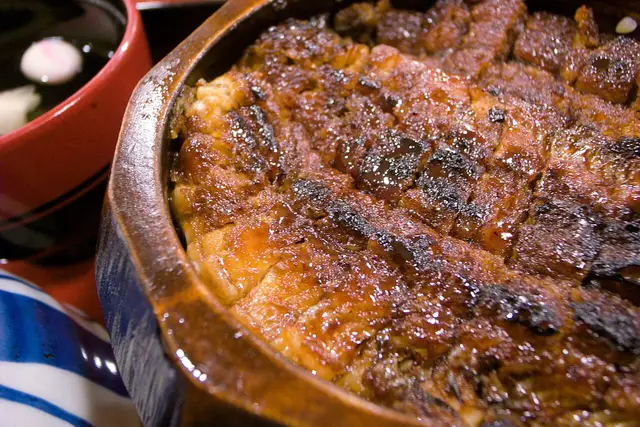 Hitsumabushi (chopped grilled eel over rice, eaten three ways)NagoyaChopped grilled eel on rice, eaten plain, with condiments, then as tea or broth ochazuke.
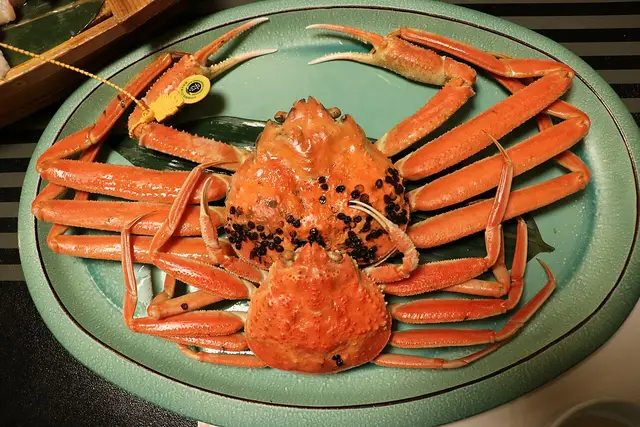 Echizen-gani (Fukui snow crab)
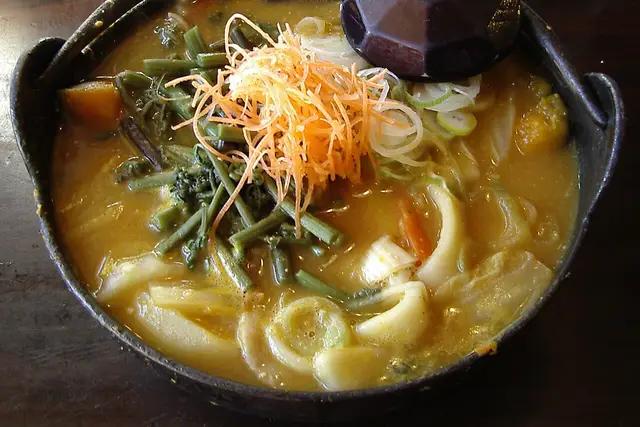 Hoto (wide flat noodles simmered in miso with pumpkin and vegetables)
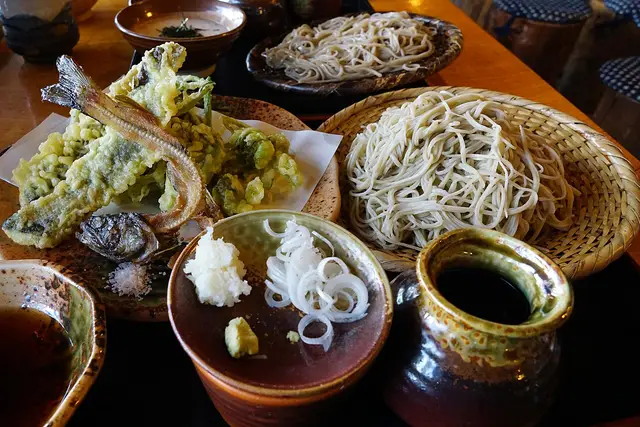 Shinshu soba (buckwheat noodles)
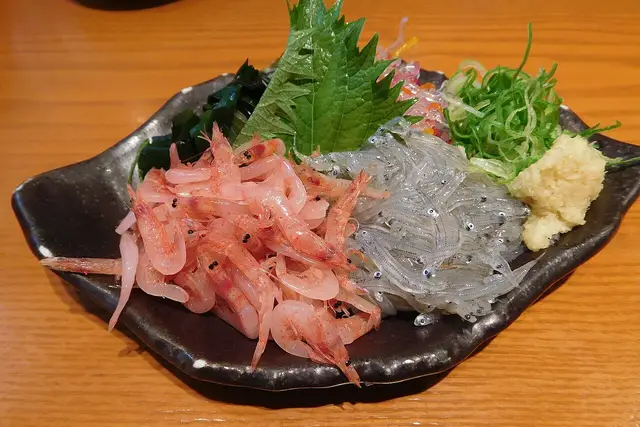 Sakura ebi (Suruga Bay sakura shrimp)Shizuoka City
Fukui
名产 8・乡土料理 29
名产美食
到访当地时值得一尝、在店铺或摊位能吃到的名产。
Fukui各地海鲜
Echizen-gani (Fukui snow crab)
越前がに
Male snow crab landed in Fukui ports; eaten boiled, grilled, shabu-shabu, in hot pot or as sashimi in winter.
Echizen Coast海鲜
Hama no Katsudon (seafood bowl of the Echizen coast)
浜の活丼
Seafood bowl topped with the day catch, served along the Echizen coast.
乡土料理
家庭和地方传承下来的料理。有些店里没有供应(取自日本农林水产省“うちの郷土料理”)。
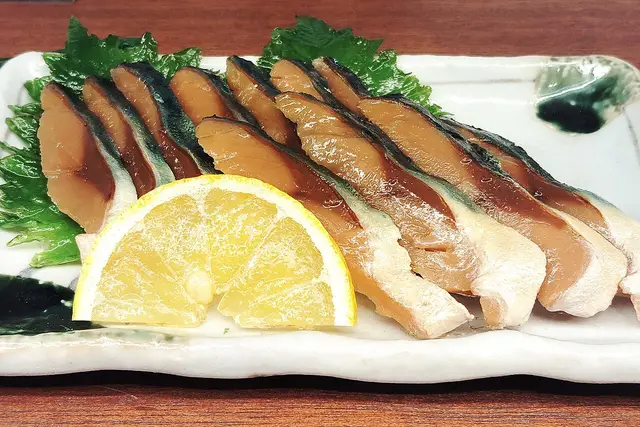 Wakasa area (including Kono district in Reihoku)Heshikoへしこ
There are several theories as to how it came to be called heshiko.
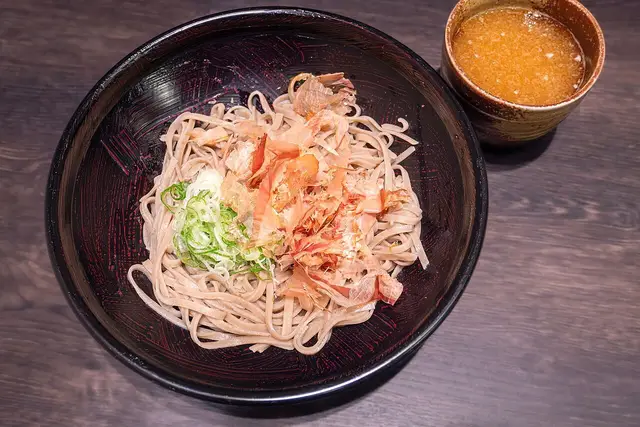
- All of Fukui Prefecture (Mainly in the Reihoku Region)Oroshi-soba (Soba Noodles with grated daikon)おろしそば
In Fukui Prefecture, where life expectancy is one of the highest in Japan, the most commonly eaten soba is “Oroshi Soba”, “Soba” Noodles with grated Daikon radish.
主要食材: Raw Buckwheat noodles, Daikon radish, Bonito flakes, Green onion
- Shinbo District, Obama CityNamagusa jiruなまぐさ汁
Taking advantage of this, "Namagusa-jiru" is a traditional dish that has been made only in this area.
主要食材: grilled mackerel, fu, tofu, chikuwa (bean curd), fresh shiitake mushrooms, shimeji mushrooms, kamaboko (fish paste), green onions
- Obama areaSabanutaさばぬた
The local people call it "Saba Nuta. Locals call it "nota" or "dorozu," and it has been handed down from generation to generation.
主要食材: Mackerel, green onion, miso, mustard paste, sugar, vinegar, salt
- Wakasa areaMaruyaki saba丸焼き鯖
In the Wakasa region, where mackerel of such high quality are caught, "Maruyaki Saba" is a local dish made by grilling the whole fish on bamboo skewers.
- All over the prefectureHonkosan/Houonko ryoriほんこさん/報恩講料理
In Fukui Prefecture, it is called "Honkosan" or "Oko-sama. It is meant to honor Shinran's teachings and to express gratitude for his virtues.
- Reihoku areaGojiru miso soup呉汁
Mashed soybeans dissolved in miso soup is called "gojiru miso soup." There are all sorts of ingredients and ways of making the soup depending on the region and the individual households.
- Reihoku areaAtsuage no Nitano厚揚げの煮たの
The largest event of the year in Jodo Shinshu Buddhism, called Hoonko, takes place from fall to New Year’s around the anniversary of sect founder Shinran’s death (November 28 in the lunar calendar…
- Reihoku regionFu no karashi ae麩の辛し和え
“Fu no karashi ae” is one of the vegetarian dishes served to the people who gather to observe the Hoonko, and because it uses wheat gluten and miso, it’s a valuable source of protein among…
主要食材: Wheat gluten, cucumber, Japanese mustard, miso, sugar, vinegar, salt
- Okuetsu AreaSukoすこ
"Suko" is one of the vegetarian dishes that is given out to the people who gather for Hoonko.
- All areas within Fukui PrefectureFuru-takuan no Nimono古たくあんの煮物
It is a local food representative of Fukui Prefecture, which has been loved since long ago. It is called "yomokonji" in the Kono area of Minamiechizen Town (formerly Kono Village).
- All over Fukui PrefectureKobumaki/Boumaki (Kelp Roll/Stick Roll)昆布巻き/棒巻き
During the mid-18th century, from the middle of the Edo period to the Meiji 30s, merchant ships called "Kitamae-bune" sailed westbound from Hokkaido to Osaka, trading goods as they traveled from one…
- Okuetsu RegionSatoimo no Koroni (Simmered Taro)里芋のころ煮
"Hoonko” is an annual major event of the Jodo Shinshu sects of Buddhism, in honor of the anniversary of the passing of its founder, Shinran Shonin.
- Reihoku regionChoju Namasu長寿なます
Choju Namasu is a dish that is popular during the New Year's holiday. Its name implies that it brings about longevity. The dish contains daikon radish, which is rich in an enzyme called diastase.
主要食材: Daikon radish, Carrot, Pea pod, Deep-fried tofu, White sesame seeds, Vinegar, Sugar, Miso, Melted mustard
- East Side Area of Fukui CityGonza/Gonji Namasuごんざ/ごんじなます
Gonza is a simmered dish made with smashed soybeans and daikon radish. It received its name from someone named "Gonzaburou" who created it.
主要食材: Daikon Radish, Carrot, Uchimame (boiled and smashed soybeans), Soy Sauce
- Reinan AreaNishin Sushi/ Herring Sushiにしんすし
One of the preserved foods made from herring is "Nishin Sushi" or "Nishin-zushi." This sushi, pickled with herring, is prepared during the summer and consumed in autumn, maturing over 2 to 4 weeks.
主要食材: Daikon radish, Carrot, Filleted herring (Nishin), Koji (fermented rice malt)
- Denga Area Fukui City, Tannan AreaHa Zushi/Leaf Rapped Sushi葉ずし
"Hazushi" is a type of sushi wrapped in leaves of Aburagiri (Tung tree), a deciduous tall tree belonging to the Theaceae family.
主要食材: Short-grain rice, Glutinous rice, Adzuki beans (sweet red beans), Hijiki seaweed, Dried shiitake mushrooms, Aburaage (fried thin tofu), Carrots, Aburagiri leaves (Tung tree leaves)
- Kuzuryu river Area (mainly Eiheiji District)Happa Sushi (Leaf Rapped Sushi)葉っぱずし
"Happazushi" is a type of sushi that involves wrapping vinegared rice, Masu(=trout), and ginger in the leaves of the Vernicia (Aburagiri), a deciduous tall tree belonging to the Toadflax family.
主要食材: Rice, Salted trout, Ginger, Vinegar, Sugar, Salt and Vernicia leaves
- All of Fukui PrefectureHoba Meshi (Kinako Mochi Rice)ほうばめし
Despite its simplicity, "hobameshi" was recognized for its cultural significance, and in 1986, during the "Furusato Onigiri Matsuri" (Hometown Rice Ball Festival) held by the Food Agency (now the…
主要食材: Hoba Leaves(Magnolia Leaves), Rice, Kinako (Roasted soybean flour), Sugar
- All of Fukui PrefectureZoni雑煮
Leftover Mochi is then used to prepare "Zoni," a traditional soup. During this time, gratitude is expressed for the previous year's harvest and the safe passage into the new year.
- Reihoku RegionHamana-miso (Amazake based Miso with salt-pickled eggplant)はまなみそ
"Hamana Miso" is a seasonal local dish, available only in winter.
主要食材: Rice koji(=malted rice), Beans koji(=malted beans), Salt-pickled eggplant, Soy sauce
- Reihoku Region, Sakai City, Katsuyama City, and othersBokkakeぼっかけ
"Bokkake" is a local dish that has been enjoyed in Fukui Prefecture for over 100 years (since the early Taisho period).
主要食材: Atsuage(=thick deep-fried tofu), Gobou(=burdock root), Carrot, Konjac(=yam cake) noodles,Bonito flakes
- Imajo districtCha-meshi (rice boiled in tea flavored with sake and shoyu)茶飯
Cha-meshi is said to have originated from "Nara Cha-meshi," which was first served at Todaiji Temple and Kofukuji Temple in Nara, and was handed down by travellers to Imajo, which was an post town.
主要食材: Glutinous rice, Short-grain rice, Soybeans, Hojicha (coarse tea) with beans
- Miyama districtAkakabura-no-suzuke (Pickled red turnips)赤かぶらの酢漬け
The famous red turnip in Fukui Prefecture is a traditional vegetable known as "Kochi Akakabura," cultivated vigorously in the Kohi community of the Miyama area in Fukui City for over 800 years.
- Kouno districtSeige (Female snow crab hotpot)せいげ
"Seige (se-e-ge)" is a local dish in Fukui Prefecture, featuring the winter delicacy known as Echizen crab. Specifically, it uses female snow crabs called "seiko gani" .
主要食材: Seiko gani (=female snow crabs), Daikon radish, Miso, Rock laver
- Awara City, Part of Sakai CityTobitsuki Dangoとびつき団子
"Tobitsuki Dango" is a traditional sweets used to be cooked at home commonly as an offering for ancestors during "obon".
主要食材: Glutinous rice flour, Rice flour, "Sasage" (=Cowpea), Sugar, Salt
- All of Fukui PrefectureDecchi Yokanでっち羊かん
"Decchi Yokan" is a soft sweet red bean jelly familiar as an ordinal taste of local people in Fukui, and served during cold time as a winter food.
主要食材: "Koshi-an" (=Mashed red bean paste), Bar-style Kanten (=agar-agar), White sugar, Salt
- Obama City, Wakasa TownKashiwa-mochi (Mochi Wrapped with Oak Leaf)柏餅
When they have festivals during mid-May to early July, every home prepared "Kashiwa-mochi" to offer the god of fields.
主要食材: Glutinous rice flour, Short-grain rice, Red beans, Sugar, Salt, Oak leaf
- Reihoku RegionOtsubo (Simmered Red Beans and Japanese Taro)おつぼ
"Otsubo" is one of "shojin ryori" (vegan cuisine for Buddhist monks) to be served to people joining the event, and served with "ozen" (four-legged small tray to serve meals) at "Hoonko".
“查找能吃到的店”会用料理名称和地名打开地图应用的搜索。搜索出的店不是本站挑选或推荐的。是否供应这道料理,请向店家确认。
来源
名产・乡土料理
出处:根据农林水产省“うちの郷土料理 (Our Regional Cuisines)”加工制作(2026-11-15 获取) https://www.maff.go.jp/e/policies/market/k_ryouri/index.html. 名称、流传地区和食材按原页面所写,介绍是原文的一部分。不使用农林水产省的照片(料理照片来自 Wikimedia Commons)。本页面不是农林水产省制作的。料理名称和介绍以英语显示。
当地特色美食
各项美食均已通过都道府县、市町村、观光协会或 JNTO 的官方页面确认为当地特色(2026-11-17 确认)。说明由本站撰写。
- Echizen oroshi soba (cold soba with grated radish): www.fuku-e.com
- Echizen-gani (Fukui snow crab): www.fuku-e.com
- Sauce katsudon (cutlet rice bowl with Worcestershire-type sauce): www.fuku-e.com
- Ono shoyu katsudon (cutlet rice bowl in soy sauce): www.fuku-e.com
- Volga rice (omelet rice topped with a cutlet): www.fuku-e.com
- Tsuruga ramen: www.fuku-e.com
- Hama no Katsudon (seafood bowl of the Echizen coast): www.fuku-e.com
- Hamayaki-saba (whole grilled mackerel): wakasa-obama.jp
照片与数据出处
Hitsumabushi: grilled eel sliced over rice in a wooden ohitsu akira yamada from Chigasaki, Japan (CC BY-SA 2.0) / Boiled Echizen snow crabs, male and female, on a plate さかおり (CC BY-SA 4.0) / Hoto: flat noodles simmered in miso with vegetables in an iron pot No machine-readable author provided. Jungle assumed (based on copyright claims). (CC BY-SA 3.0) / Shinshu soba on bamboo trays with tempura and condiments 663highland (CC BY 2.5) / Raw sakura shrimp and whitebait from Suruga Bay on a plate Miyuki Meinaka (CC BY-SA 4.0) / Echizen oroshi soba topped with bonito flakes, with grated daikon broth くろふね (CC BY 4.0) / Thin slices of heshiko, mackerel cured in rice bran, with lemon Asturio Cantabrio (CC BY-SA 4.0)。已裁剪并缩小。