中部・北陆的名产・乡土料理
名古屋口味浓郁的料理、日本海一侧(北陆)的海鲜、山区的荞麦面和面粉类食物。
中部・北陆的名产美食 87 种,乡土料理 266 种。
来中部・北陆要尝的名产
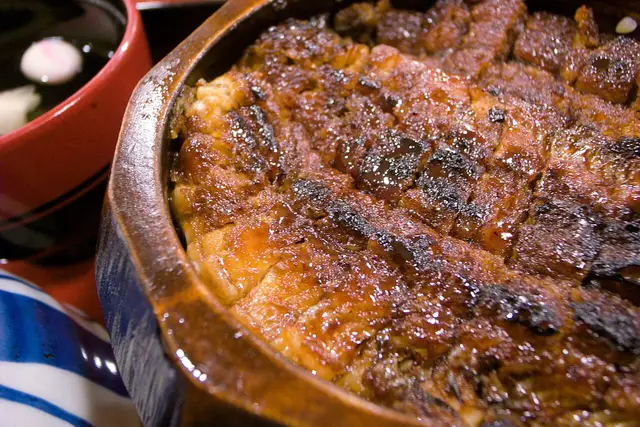 Hitsumabushi (chopped grilled eel over rice, eaten three ways)NagoyaChopped grilled eel on rice, eaten plain, with condiments, then as tea or broth ochazuke.
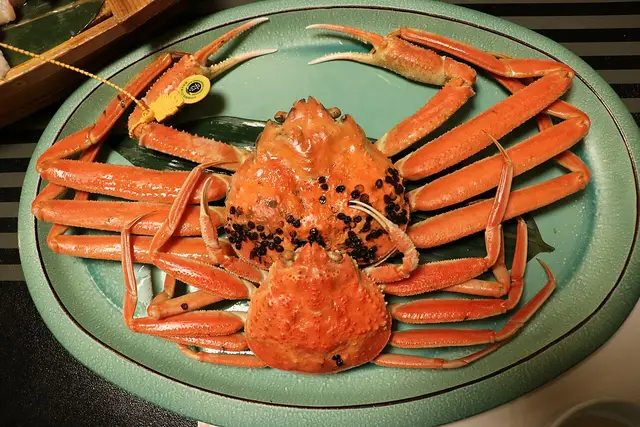 Echizen-gani (Fukui snow crab)
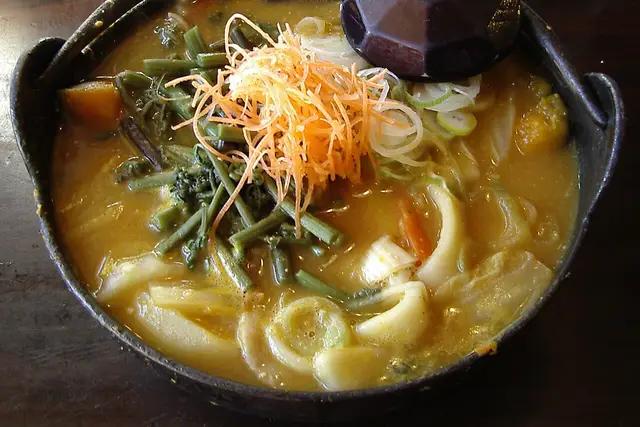 Hoto (wide flat noodles simmered in miso with pumpkin and vegetables)
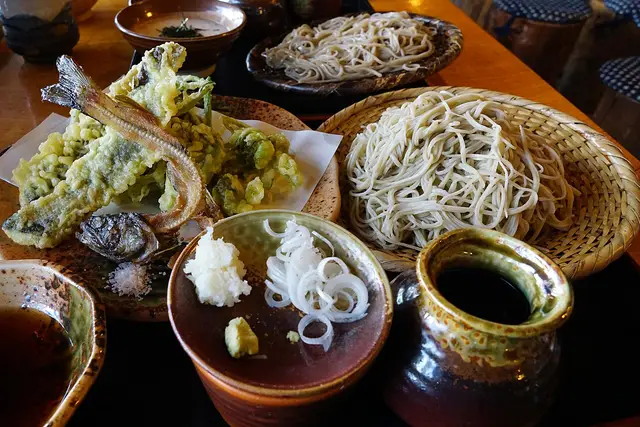 Shinshu soba (buckwheat noodles)
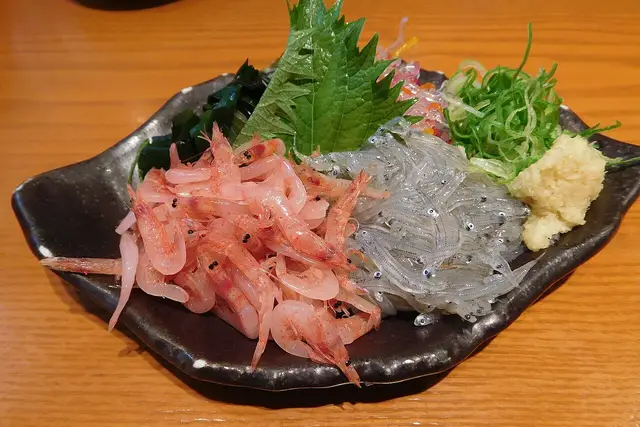 Sakura ebi (Suruga Bay sakura shrimp)Shizuoka City
Shizuoka
名产 11・乡土料理 28
名产美食
到访当地时值得一尝、在店铺或摊位能吃到的名产。
Fujinomiya面类
Fujinomiya yakisoba (chewy steamed-noodle fried noodles)
富士宮やきそば
Fried noodles with firm steamed noodles, topped with pork cracklings and sardine powder.
Fuji City海鲜
Tagonoura shirasu (whitebait from Fuji)
田子の浦しらす
Whitebait landed in Suruga Bay and chilled on ice; clear with a plump texture.
Asagiri Highlands甜品
Asagiri Highlands soft serve (made with local milk)
朝霧高原のソフトクリーム
Soft serve made straight from milk produced in the Asagiri Highlands dairy region.
乡土料理
家庭和地方传承下来的料理。有些店里没有供应(取自日本农林水产省“うちの郷土料理”)。
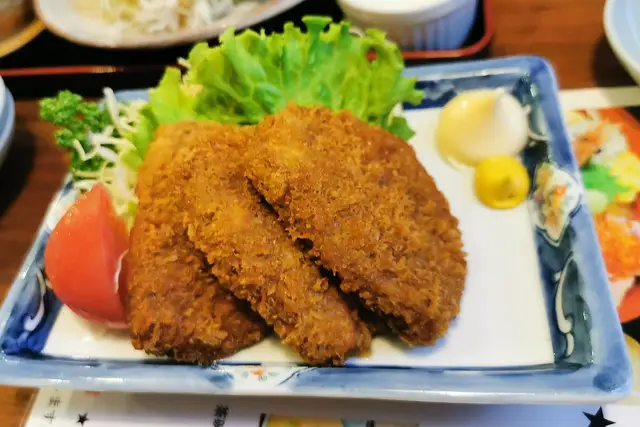 Yaizu CityKuro hanpen furai黒はんぺんフライ
Kurohanpen is made by boiling ground mackerel, horse mackerel, or sardine, and is semi-circular in shape and gray in color.
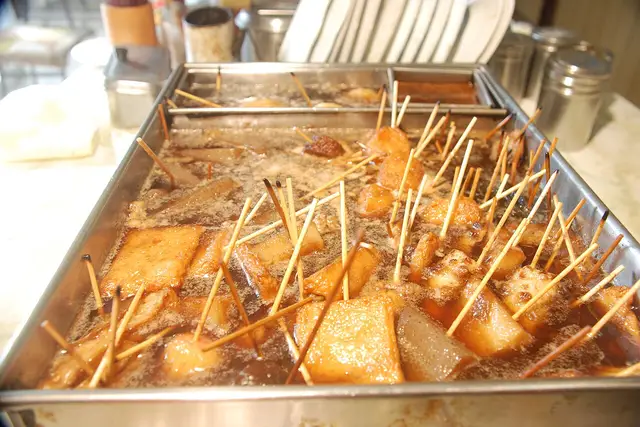
- Shizuoka CityShizuoka Oden静岡おでん
"Shizuoka Oden" is a local dish of Shizuoka City where all the ingredients such as beef tendon, black hanpen, fish paste, daikon radish, and eggs are skewered, stewed in a black colored Dashi…
主要食材: Black hanpen, Beef tendon, Daikon radish, Konjac(=yam cake), Egg, Kombu(=kelp), Dashi (=Japanese soup stock) powder
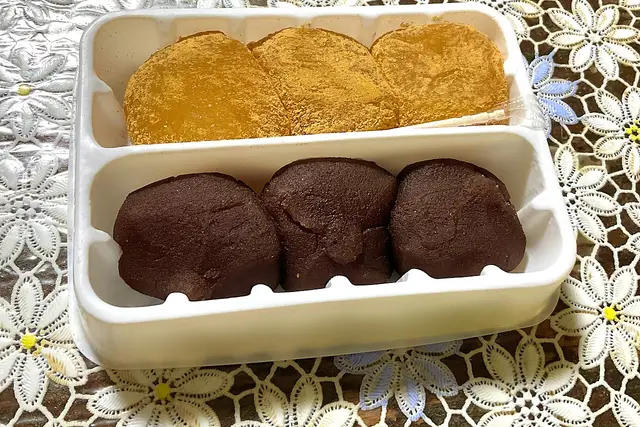 Shizuoka CityAbekawa Mochi安倍川もち
"Abekawa Mochi" is a regional dish in the Chubu region, with Shizuoka City at its center. It consists of freshly made mochi (rice cakes) coated with kinako (roasted soybean flour) mixed with sugar.
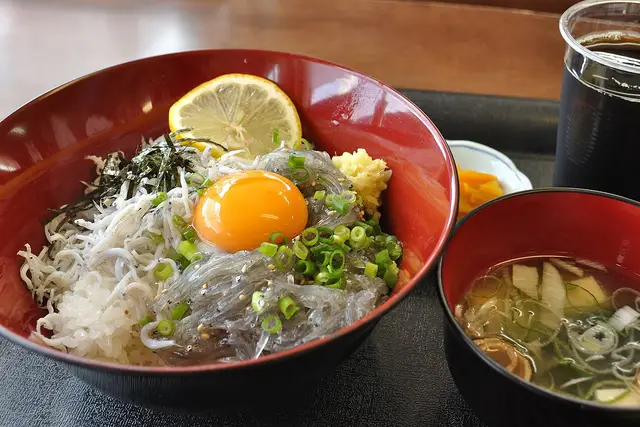 Western Area (Hamamatsu City Maisaka )~Central Area~Eastern Area (Numazu City Shizuura)Nama Shirasu-don (Raw Baby Anchovy Bowl)生しらす丼
Shirasu are the 1-2 month old young of Japanese anchovy and Japanese pilchard, and Shizuoka Prefecture boasts the largest catch of shirasu in Japan.
主要食材: Fresh shirasu, Wakegi (=green onion), Shredded nori (=seaweed), Wasabi (=Japanese horseradish)
- Omaezaki CityGawaがわ
Gawa" is a chilled miso soup made by chopping raw bonito, cucumbers, pickled plums, green perilla, etc., and adding them to water with miso paste, and was first made by fishermen on board their…
主要食材: Bonito, onion, cucumber, green perilla, ginger, pickled plum, miso
- Central region (Shizuoka City), Izu Peninsula (Izu City), Eastern region (Gotemba City, Oyama Town)Wasabi zuke山葵漬け
Wasabi pickles are made by marinating chopped wasabi leaves, stems, and roots in sake lees.
- Chubu area (Shizuoka City)Tororo jiruとろろ汁
Tororo soup is made by grating yam and mixing it with soup stock and miso paste, and served over barley rice. The yam, also called "yam," is 1.5 meters long and about 3 centimeters in diameter.
- Gotemba City, Oyama TownMizukakena no tsukemono水かけ菜の漬物
Gotemba City and Oyama Town are semi-high temperature areas with cold winters and cool summers. In this area, there is an abundance of groundwater from the snowmelt of Mt.
- Ito CityIruka no Miso-ni (Dolphin Miso Stew)イルカの味噌煮
“Iruka no Miso-ni” is a traditional, local delicacy of Izu.
- Fujieda CitySomeii (Colored Rice)染飯
Someii, also known as "Seto's Someii," has been sold at teahouses in the former Sechimachi Village (now part of Fujieda City) along the old Tokaido highway since the Warring States period.
主要食材: Rice, glutinous rice, gardenia (kuchinashi) fruit, roasted green tea (sencha)
- Ito, Izu regionMackerel hakozushi (pressed sushi)鯖の箱寿司
This local dish is made in the Izu region for special days such as festivals. As it was originally made as a meal for fishermen, it uses locally caught mackerel.
- Gotemba CityMikuriya Soba御厨そば
A local dish of the Mikuriya area in Gotemba City.
- Yoshida Town (Chubu Region)Bokumeshiぼくめし
“Bokumeshi” is a mixed rice made by combining boiled eel and burdock root to cooked rice. The name is derived from a thick stake called a “bokkui.”
- Higashiizu Town (Inatori)Gennarizushiげんなり寿司
Splendid alfonsino fishing in Inatori began in the Meiji era.
- Toi (west Izu), Inatori (east Izu)Tokorotenところてん
The Izu Peninsula is Japan's largest producer of red algae, the raw material for tokoroten.
- Yui, Shizuoka CityOkiagari沖あがり
Okiagari is a hot pot dish where fresh sakura shrimp are simmered with tofu and spring onions in sukiyaki-style seasoning.
- Mishima City, Kannami-choOzakuおざく
"Ozaku" is a vegetable soup made by boiling vegetables such as satoimo(=Japanese taro), daikon radish, and carrots in Dashi (=Japanese soup stock), soy sauce, and sugar.
主要食材: Satoimo(=Japanese taro), Daikon radish, Carrot, Shiitake mushroom, Konjac(=yam cake), Fried thin tofu
- All of Shizuoka PrefectureKinzanji-Miso金山寺味噌
"Kinzanji-Miso" is a fermented food made by fermenting grains, and contains Tougan(=White gourd), eggplant, perilla seeds, ginger, etc.
主要食材: Natto kouji(Rice kouji, Mame kouji), Tougan(=White gourd), Eggplant, Gobou(=Burdock), Carrot, Fresh ginger, Perilla seed, Ki-Zarame(Sugar)
- Shimoda City, Higashi-Izu-cho (Inatori)Kinme no Nitsuke (Stewed Red Snapper)金目の煮付け
The Izu Peninsula in Shizuoka Prefecture is a production area for Kinmedai (splendid alfonsino), and Shimoda Port is Japan's leading fishing port for the catch of Kinmedai.
- Omaezaki City, Shimada City, Yaizu CityKiriboshi Imo (Dried strips of Sweet Potato)切り干しいも
It is said that the origin of ‘kiriboshi imo’ is Shizuoka Prefecture. In Edo Era, Gon’emon Ohsawa rescued the ship from Satsuma (current Kagoshima Prefecture) wrecked at the offshore of Omaezaki.
- Yoshida-Cho, Makinohara City, Yaizu City, etc. (Central Region), Western RegionTakenoko no Arame-ni (Simmered Bamboo Shoot with Arame)筍のアラメ煮
"Takenoko no Arame-ni" is a local dish mainly in the central area, and simmered bamboo shoot and "arame". ‘Arame’ is a type of kelp.
主要食材: Bamboo shoot, "Kiriboshi Daikon"(=Dried strips of Daikon radish), "Arame" (a type of kelp)
- Eastern Region (Fujinomiya City, Fuji City)Rakkasei Namasu (Vegetable Salad Marinated with Vinegar and Peanuts)落花生なます
"Kouhaku Namasu" (vegetable salad marinated with vinegar), one of the must dishes in "osechi" new year dishes, is known with vinaigrette mixed vinegar and sugar and tastes sweet and sour.
- Shizuoka CityOrido-nasu no Dengaku (Grilled Eggplant with Miso Sauce)折戸なすの田楽
"Orido-nasu" is a native species of eggplant from Miho area in Shimizu Ward, Shizuoka City, and its characteristics are round shape, sharp thorns, dark purple skin and rich and sweet teste.
- Ito City, Izu AreaMago-chazuke (Horse mackerel rice bowl with tea)まご茶漬け
Mago-chazuke is a local dish eaten throughout the Izu Peninsula, and was originally a fisherman's meal eaten on boats during fishing.
- Yaizu CityNamari-bushi to Shiro-tamanegi no Salad (Bonito and Onion Salad)なまり節と白玉葱のサラダ
Namaribushi is one step before becoming dried bonito, which are soft and can be cut into thin slices and eaten like sashimi.
- Fukuroi CityTamago Fuwa Fuwa (Fluffy Eggs)たまごふわふわ
"Tamago fuwa fuwa" was served at Fukuroi-juku station during the Edo period and the Fukuroi-city Tourism Association has revived the dish as a new local specialty.
- Central and Western Regions (mainly west of the Fuji River)Heso Mochi (Dented Rice Cakes)へそもち
"Heso mochi" is offered on the 15th day of August or the 13th day of September of the old calendar when the night is perfect for moon-viewing.
- Shizuoka CitySakura Ebi no Kakiage (Sakura Shrimp Tempura)サクラエビのかき揚げ
"Sakura ebi no kakiage" (=sakura shrimp tempura) is a local dish that is eaten throughout Shizuoka prefecture and is made at home or served at local restaurants.
“查找能吃到的店”会用料理名称和地名打开地图应用的搜索。搜索出的店不是本站挑选或推荐的。是否供应这道料理,请向店家确认。
来源
名产・乡土料理
出处:根据农林水产省“うちの郷土料理 (Our Regional Cuisines)”加工制作(2026-11-15 获取) https://www.maff.go.jp/e/policies/market/k_ryouri/index.html. 名称、流传地区和食材按原页面所写,介绍是原文的一部分。不使用农林水产省的照片(料理照片来自 Wikimedia Commons)。本页面不是农林水产省制作的。料理名称和介绍以英语显示。
当地特色美食
各项美食均已通过都道府县、市町村、观光协会或 JNTO 的官方页面确认为当地特色(2026-11-17 确认)。说明由本站撰写。
- Shizuoka oden (black-broth oden with black hanpen): www.visit-shizuoka.com
- Sakura ebi (Suruga Bay sakura shrimp): fujinokuni.shokunomiyako-shizuoka.pref.shizuoka.jp
- Hamamatsu gyoza (round-arranged dumplings with bean sprouts): hamamatsu-daisuki.net
- Hamanako unagi (grilled eel): fujinokuni.shokunomiyako-shizuoka.pref.shizuoka.jp
- Enshu-yaki (okonomiyaki-style pancake with pickled radish): fujinokuni.shokunomiyako-shizuoka.pref.shizuoka.jp
- Fujinomiya yakisoba (chewy steamed-noodle fried noodles): www.city.fujinomiya.lg.jp
- Tagonoura shirasu (whitebait from Fuji): fujinokuni.shokunomiyako-shizuoka.pref.shizuoka.jp
- Asagiri Highlands soft serve (made with local milk): fujinokuni.shokunomiyako-shizuoka.pref.shizuoka.jp
- Mishima unagi (grilled eel): fujinokuni.shokunomiyako-shizuoka.pref.shizuoka.jp
- Shimoda kinmedai (golden eye snapper): www.city.shimoda.shizuoka.jp
- Toda takaashi-gani (giant spider crab): fujinokuni.shokunomiyako-shizuoka.pref.shizuoka.jp
照片与数据出处
Hitsumabushi: grilled eel sliced over rice in a wooden ohitsu akira yamada from Chigasaki, Japan (CC BY-SA 2.0) / Boiled Echizen snow crabs, male and female, on a plate さかおり (CC BY-SA 4.0) / Hoto: flat noodles simmered in miso with vegetables in an iron pot No machine-readable author provided. Jungle assumed (based on copyright claims). (CC BY-SA 3.0) / Shinshu soba on bamboo trays with tempura and condiments 663highland (CC BY 2.5) / Raw sakura shrimp and whitebait from Suruga Bay on a plate Miyuki Meinaka (CC BY-SA 4.0) / Shizuoka oden: skewered ingredients simmered in a dark broth 広報課 (CC BY 4.0) / Fried kuro hanpen fish cakes served with salad Akahito Yamabe (CC0) / Abekawa mochi coated with kinako and with sweet bean paste Kyu3 (CC BY-SA 4.0) / Raw whitebait rice bowl topped with egg yolk and green onion Ocdp (CC0)。已裁剪并缩小。