中部・北陆的名产・乡土料理
名古屋口味浓郁的料理、日本海一侧(北陆)的海鲜、山区的荞麦面和面粉类食物。
中部・北陆的名产美食 87 种,乡土料理 266 种。
来中部・北陆要尝的名产
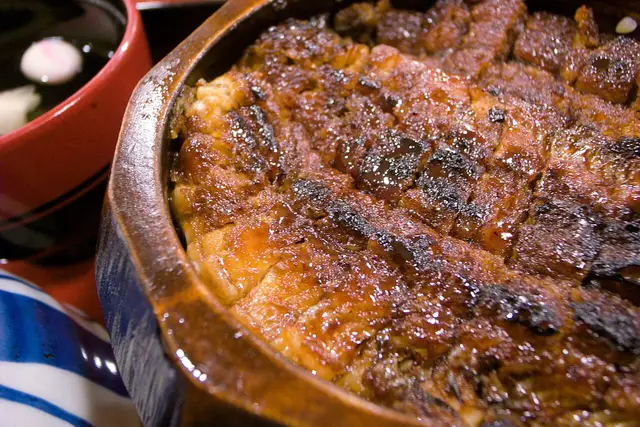 Hitsumabushi (chopped grilled eel over rice, eaten three ways)NagoyaChopped grilled eel on rice, eaten plain, with condiments, then as tea or broth ochazuke.
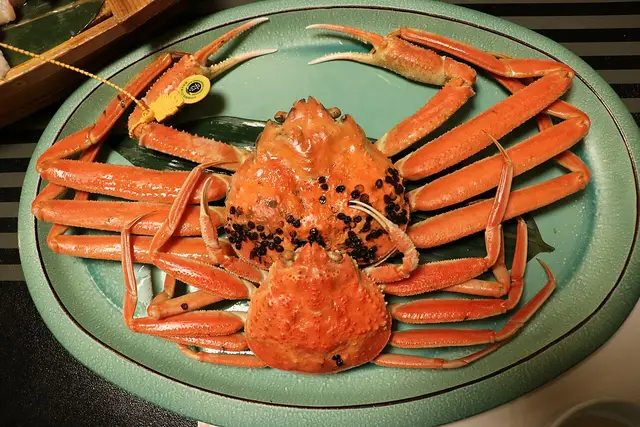 Echizen-gani (Fukui snow crab)
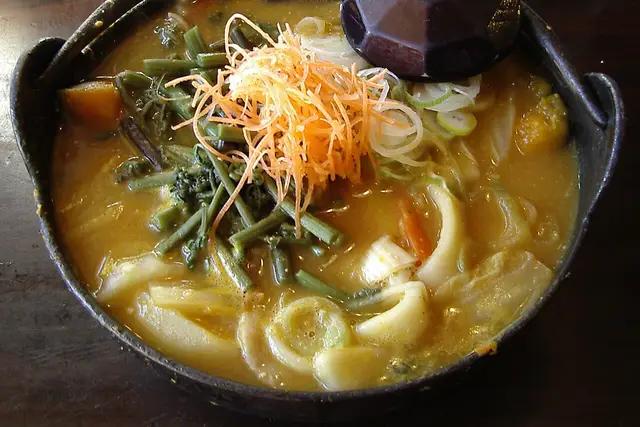 Hoto (wide flat noodles simmered in miso with pumpkin and vegetables)
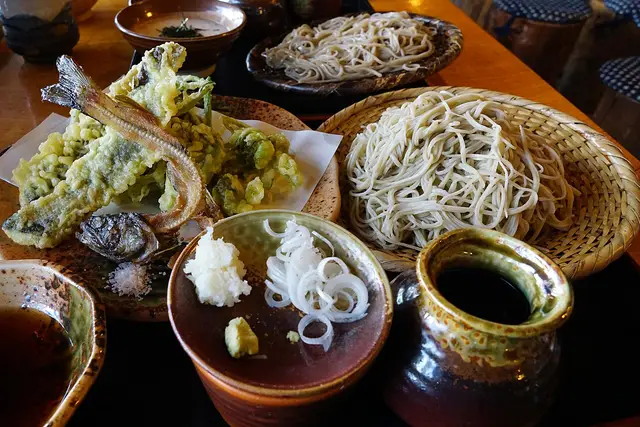 Shinshu soba (buckwheat noodles)
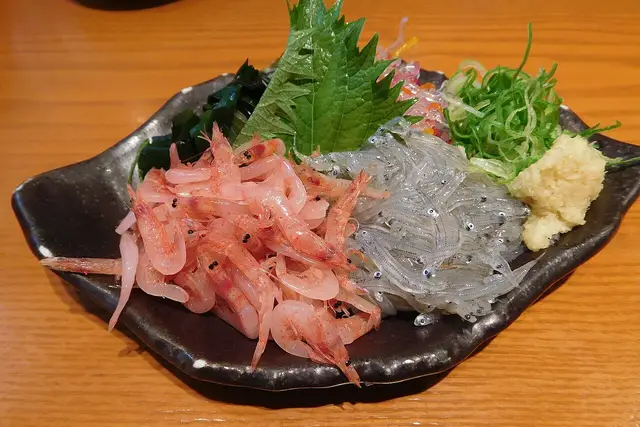 Sakura ebi (Suruga Bay sakura shrimp)Shizuoka City
Nagano
名产 11・乡土料理 29
名产美食
到访当地时值得一尝、在店铺或摊位能吃到的名产。
Nagano各地面类
Shinshu soba (buckwheat noodles)
信州そば
Buckwheat noodles from across Nagano; Togakushi soba is counted among Japan three great soba.
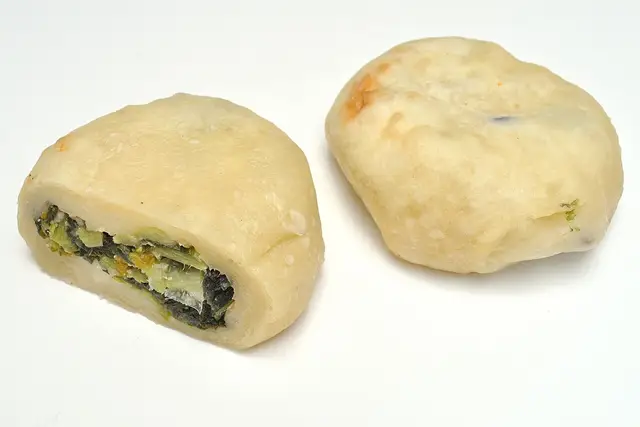
Nagano各地街头小吃
Oyaki (stuffed dumplings of grain flour)
おやき
Dough of wheat, grains or buckwheat wrapped around vegetables and grilled, steamed or pan-fried.
Sakaki and Chikuma面类
Oshibori udon (udon dipped in spicy radish juice)
おしぼりうどん
Udon dipped in grated spicy mouse-radish juice with miso dissolved in it.
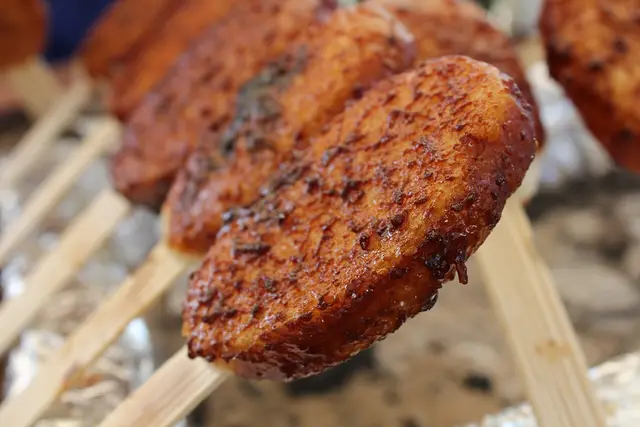
Ueda肉类
Ueda bimidare yakitori (yakitori with garlic soy sauce)
美味だれ焼き鳥
Yakitori topped with garlic-soy sauce; a local specialty of Ueda.
乡土料理
家庭和地方传承下来的料理。有些店里没有供应(取自日本农林水产省“うちの郷土料理”)。
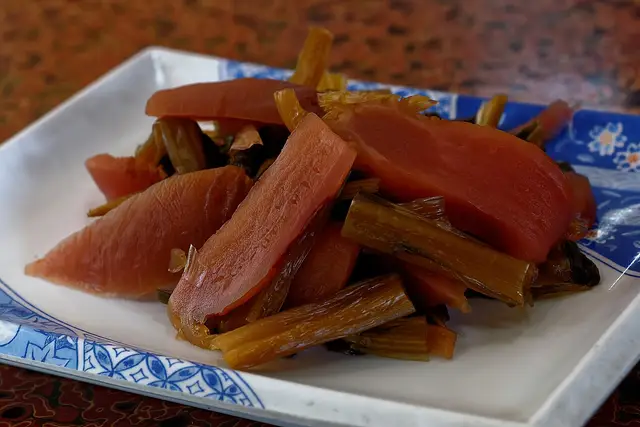 Kiso AreaSunki-zukeすんき漬け
The mountainous Kiso region has a unique culinary tradition that includes a dish called "Sunki-zuke," using the leaves of red turnips.
- Kiso Area, Ina Area, Kamiina Area, Shimoina AreaGohei Mochi五平餅
"Gohei-mochi" is made by skewering half-pounded Uruchi rice(short-grain rice), dipping it in miso or soy sauce-based sauce, and baking it.
- Hokushin Area, Chushin Area (All of Nagano Prefecture)Oyaki (Japanese stuffed dumplings)おやき
"Oyaki" is a local dish representing Shinshu, made by mixing flour such as wheat and buckwheat flour with water or hot water, kneading it, wrapping seasonal ingredients such as sweet red bean paste…
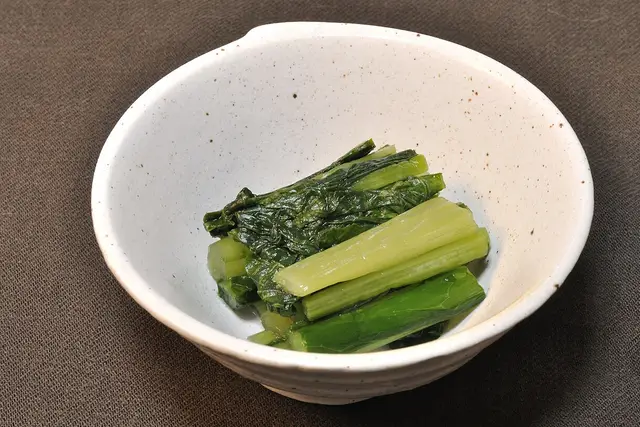 All of Nagano Prefecture (Nozawa onsen village)Nozawana-zuke (Nozawana pickles)野沢菜漬
Among them, 'Nozawana-zuke' is one of the two representative pickles in the prefecture and an essential ingredient during the winter in Shinshu.
- Kiso AreaHooba Makiほう葉巻
Hooba maki is a traditional festive rice cake in the Kiso region.
主要食材: Rice flour, Wheat flour, Magnolia leaves, Igusa (=Japanese mugwort), Red beans
- Saku AreaKobuna-no-kanroni (Sweet and Savory Simmered Small Crucian Carp)小鮒の甘露煮
Saku City, located in the eastern part of the prefecture, is situated near the border with Gunma Prefecture and is blessed with clean water sources suitable for cultivating freshwater fish such as…
- Iiyama City (Hokushin Area)Sasazushi (Bamboo Sushi)笹ずし
"Sasazushi" is a regional dish passed down in the city of Iiyama and the Joetsu region of Niigata Prefecture.
- Hokushin Area, Chushin AreaYashouma (Colorful Mochi)やしょうま
In the northern regions, February 15th is a day known as Nehan-e, commemorating the death of Buddha, and there is a custom to make "yashouma" and offer it on the Buddhist altar.
主要食材: Rice flour, Katakuriko(=potato starch), Aonori (seaweed), Sesame seeds, Black soybeans
- All of Nagano PrefectureInago-no-tsukudani (Locust cooked in soy sauce)いなごの佃煮
The Ina Valley in the southern part of Nagano Prefecture has a long-standing culture of eating insects, including locusts, bee larvae, cicadas, and grasshoppers.
- Hokushin area (Iiyama City)Imonamasuいもなます
Imo-Namasu" is a local dish using potatoes in the Iiyama City area. In Japan, "Namasu" is a dish made by dressing ingredients with vinegar, and is used as a New Year's osechi dish.
- Saku CityKoikoku鯉こく
Koikoku," a traditional soup in Saku City, is made by boldly cutting the fish into cylindrical slices and simmering them in miso paste, and is an indispensable New Year's dish in the Saku area.
- Hoku-shin and Nan-shin areas (throughout the prefecture)Shioika no sunomono塩いかの酢の物
Because Nagano Prefecture is far from the sea, marine products were processed in the area where they were landed and transported via the "salt road.
- All over the prefectureTeuchi soba手打ちそば
Soba is a typical local cuisine, so much so that Nagano Prefecture is known for its "Shinshu soba" (buckwheat noodles).
- Hoku-shin area, To-shin areaKonetsukeこねつけ
"Konetsuke" is said to have been eaten by Yukimura Sanada, a feudal warlord, to fill his stomach before going into battle.
- Hokushin RegionTakenoko jiru(Bamboo Shoot Soup)たけのこ汁
Takenoko jiru(Bamboo shoot soup) is a miso soup that uses Nemagari bamboo. It is a regional dish eaten in the Hokushin Region and Niigata Prefecture's Joetsu region.
- Suwa RegionTenyose Jelly Cake天寄せ
The Suwa region’s kanten (agar agar) producing industry developed due to the area’s low temperatures and stable weather, which allowed for longer production seasons than other areas, and the opening…
- Hokushin regionGarlic Chive Senbeiにらせんべい
The recipes for garlic chive senbei or usuyaki also differ slightly between households, with many variations; like mixing in miso with the flour and vegetables when frying, or eating with a miso or…
- Suwa area, Kamiina areaNotamochiのたもち
“Notamochi” is a local dish eaten in the Suwa and Kamiina regions. The “nota” in “notamochi” is made by boiling edamame beans, grinding them with a mortar and pestle, and adding sugar and salt.
- Hokushin RegionYataraやたら
“Yatara” is a mixture of finely chopped vegetables and pickles, similar to a “furikake” (sprinkles) of summer vegetables.
主要食材: Cucumber, eggplant, myoga ginger, green pepper, and miso-pickled radish
- Hokushin and Chushin areasEgo no Sumiso-aeえごの酢味噌あえ
The name "Ego" comes from boiled and kneaded seaweed called "egogusa," and it is a regional cuisine passed down throughout Niigata Prefecture.
- Hokushin areaOshibori Udonおしぼりうどん
“Oshibori Udon” is a local dish that originated from the Sakaki area in Hanishina County. It is made by grating spicy daikon radish and squeezing out its juice.
- The entire prefecture (especially around Nagano City and Matsumoto City)Gudakusan Misosiru (Gudakusan Miso Soup)具だくさん味噌汁
“Gudakusan miso soup” is a soup with lots of ingredients such as seasonal vegetables, meat, and fish.
主要食材: Seasonal ingredients (Examples of winter ingredients: Wheat flour, Potatoes, Radish, Carrots, Burdock, Chikuwa, and Green onions)
- Toshin Area, Kamiina AreaSake no Kasuni (Simmered Salmon in Sake Lees)鮭の粕煮
In Japan, as part of the preparations to welcome Toshigami (the deity of the New Year), there is a tradition of preparing a special feast called "Toshikoshi" on New Year's Eve.
- All of Nagano PrefectureShimi Daikon no Otaue no Nimono凍み大根のお田植えの煮物
"Frozen Daikon Radish" is one of the preserved foods made by utilizing the cold of winter. It involves exposing daikon radishes to the cold outdoor air to dry them.
主要食材: Daikon Radish, Gutted Herring, Kombu(=kelp), Warabi (=bracken fern), Carrot, Konjac (=yam cake), Chikuwa (fish cake), Satsuma Age (fried fish cake)
- Hokushin Area, Chushin AreaShoyu Mame / Shoyu no Mi (Soy Sauce Beans / Soy sauce seeds)しょうゆ豆/しょうゆの実
"Shoyu Mame" or "Soy Sauce Beans" is a fermented food traditional to the northern and central Shinshu region.
- Toshin AreaHangoroshi半ごろし
"Hangoroshi" refers to "botamochi" or "ohagi" in Nagano Prefecture, and it indicates the state of mochi rice that is pounded until it becomes semi-crushed with a surikogi (pestle).
主要食材: Glutinous rice, Short-grain rice, Azuki beans (Red beans), Kinako (Roasted soybean flour)
- Hokushin Area, Toushin AreaHitashi Mame (Soaked Beans)ひたし豆
"Hitashi Mame" is a regional dish eaten not only in the northern and eastern Shinano regions of Nagano Prefecture but also in Niigata Prefecture and the Tohoku region.
- Hokushin AreaHoshi-kabocha no Egoma-ae (Dried pumpkin dressed with perilla seeds)干しかぼちゃのえごま和え
The region known as Kinasa, also called the "Valley Capital," has a long-standing food culture of drying and preserving vegetables.
- Matsumoto AreaTanabata Hotoたなばたほうとう
Matsumoto City, situated in the almost exact center of Nagano Prefecture, offers views of the Northern Alps to the west and the Utsukushi-gahara Plateau to the east.
主要食材: All-purpose flour, Azuki (=Red beans), Goma (=Sesame seeds), Kinako (=Roasted soybean flour)
“查找能吃到的店”会用料理名称和地名打开地图应用的搜索。搜索出的店不是本站挑选或推荐的。是否供应这道料理,请向店家确认。
来源
名产・乡土料理
出处:根据农林水产省“うちの郷土料理 (Our Regional Cuisines)”加工制作(2026-11-15 获取) https://www.maff.go.jp/e/policies/market/k_ryouri/index.html. 名称、流传地区和食材按原页面所写,介绍是原文的一部分。不使用农林水产省的照片(料理照片来自 Wikimedia Commons)。本页面不是农林水产省制作的。料理名称和介绍以英语显示。
当地特色美食
各项美食均已通过都道府县、市町村、观光协会或 JNTO 的官方页面确认为当地特色(2026-11-17 确认)。说明由本站撰写。
- Shinshu soba (buckwheat noodles): www.go-nagano.net
- Oyaki (stuffed dumplings of grain flour): www.go-nagano.net
- Shinshu-Shinmachi Jingisukan (grilled marinated lamb): www.go-nagano.net
- Oshibori udon (udon dipped in spicy radish juice): www.go-nagano.net
- Sanzoku-yaki (large deep-fried marinated chicken thigh): www.city.shiojiri.lg.jp
- Komagane sauce katsudon (cutlet over cabbage on rice): www.go-nagano.net
- Gohei-mochi (grilled rice skewer with miso sauce): www.go-nagano.net
- Romen (Ina mutton and steamed noodles): db.go-nagano.net
- Matsumoto basashi (raw horse meat sashimi): www.go-nagano.net
- Suwa unagi (grilled eel, also eaten in winter): www.go-nagano.net
- Ueda bimidare yakitori (yakitori with garlic soy sauce): www.go-nagano.net
照片与数据出处
Hitsumabushi: grilled eel sliced over rice in a wooden ohitsu akira yamada from Chigasaki, Japan (CC BY-SA 2.0) / Boiled Echizen snow crabs, male and female, on a plate さかおり (CC BY-SA 4.0) / Hoto: flat noodles simmered in miso with vegetables in an iron pot No machine-readable author provided. Jungle assumed (based on copyright claims). (CC BY-SA 3.0) / Shinshu soba on bamboo trays with tempura and condiments 663highland (CC BY 2.5) / Raw sakura shrimp and whitebait from Suruga Bay on a plate Miyuki Meinaka (CC BY-SA 4.0) / Oyaki dumplings, one cut open to show the vegetable filling Ocdp (CC0) / Gohei mochi: flat rice cakes on skewers, grilled with a sweet glaze Kunmap (CC BY-SA 4.0) / Sunki-zuke, salt-free fermented turnip greens, on a plate Kurokawa t (CC BY-SA 4.0) / Nozawana-zuke pickled greens in a white bowl Ocdp (CC0)。已裁剪并缩小。