Matsumoto guide
A castle town facing the Northern Alps. The National Treasure castle, streets of old storehouses, spring-water wells and museums are all walkable. Also the gateway to Kamikochi and Azumino.
Things to see 9 classics
"Classics" and "Hidden gems" are this site's editorial picks, not a measured popularity ranking.
- 1
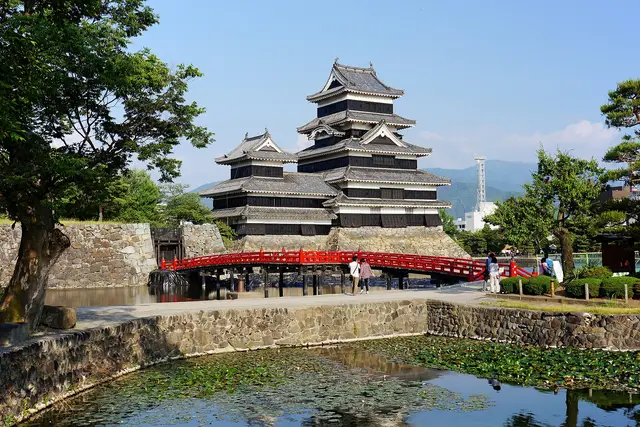
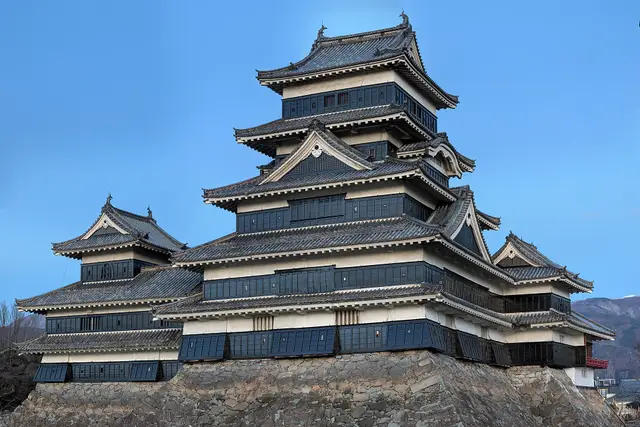
Matsumoto Castle
A black-walled keep, a National Treasure that has stood for over 400 years. The stairs inside are very steep. Beautiful across the moat.
Many overseas visitors
191,748 foreign visitors in 2024, the highest number and share since records began in 2009 Source: Matsumoto City, Mayor's press conference of 8 January 2025
- History & buildings
- Views
about 60 minPaid entryFine on a rainy dayPartly step-free
Walk · About 20 min from Matsumoto ・ 1000m
- 2
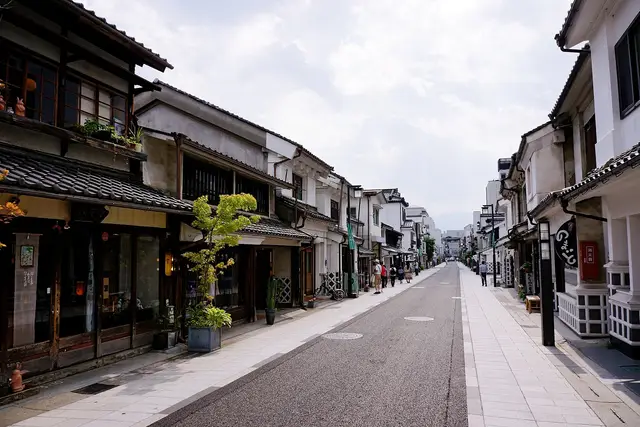
Nakamachi Street
A street of old storehouses with black-and-white lattice plaster walls, now home to craft shops and cafes.
- History & buildings
- Shopping & strolling
about 45 minFree
Walk · About 12 min from Matsumoto ・ 700m
- 3
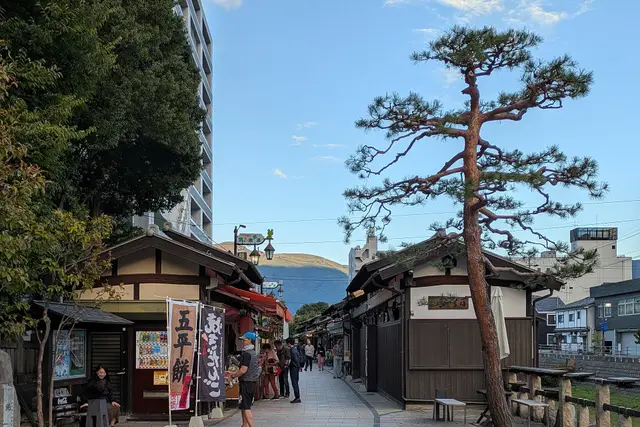
Nawate Street and Yohashira Shrine
A car-free lane of tiny shops along the river, with frogs as its mascot. A shrine stands right beside it.
- Shopping & strolling
- Food & markets
- Temples, shrines & churches
about 30 minFree
Walk · About 12 min from Matsumoto ・ 700m
- 4
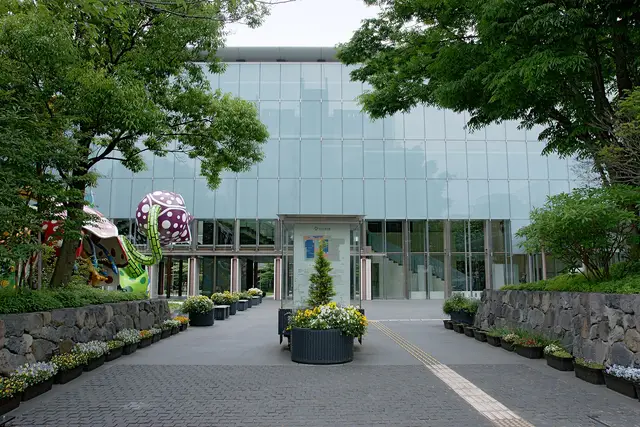
Matsumoto City Museum of Art
Always shows works by Yayoi Kusama, who was born in Matsumoto. Her giant flower sculpture stands in front of the building.
- Museums
about 60 minPaid entryFine on a rainy dayWheelchair & stroller friendly
Walk · About 15 min from Matsumoto ・ 1.1km
- 5
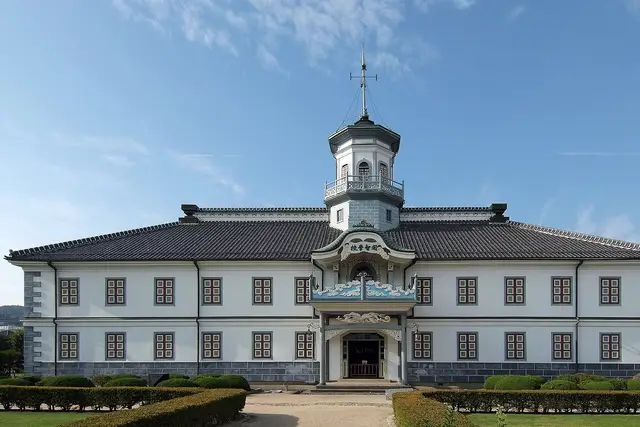
Former Kaichi School
A school built in the 1870s in a mix of Western and Japanese styles; a National Treasure. About 10 minutes on foot north of the castle.
- History & buildings
- Museums
about 45 minPaid entryFine on a rainy day
Bus · About 25 min from Matsumoto ・ Town Sneaker bus to Former Kaichi School ・ 1.4km
- 6
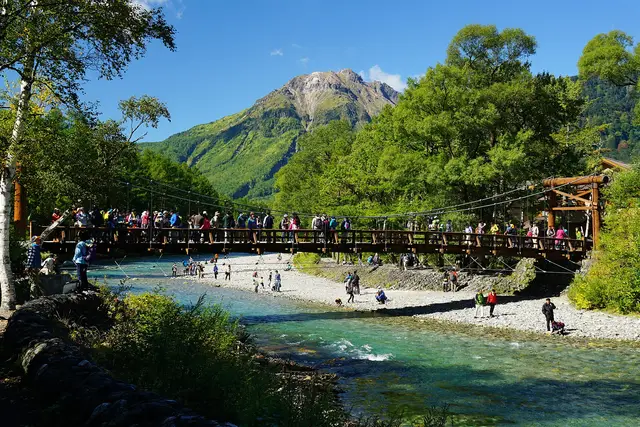
Kamikochi (Kappa Bridge)
A mountain valley for walks along the clear Azusa River below the Hotaka peaks. Private cars are banned. Closed in winter, with no buses.
- Nature
- Views
- Activities
about 3 hrFree
Bus · About 110 min from Matsumoto ・ Kamikochi Line to Shin-Shimashima, then bus to Kamikochi Bus Terminal ・ 29km
Show on map
ClassicsHidden gems
Suggested routes
Times assume a 9:00 start. Travel times are estimated from distance and vary with waiting and crowds.
Matsumoto Castle and the castle town on foot
Leave 9:00 → until about 14:13 (about 5 hr)
- 9:00Matsumoto
about 20 min on foot
9:20Matsumoto Castlestay about 60 minabout 9 min on foot
10:29Former Kaichi Schoolstay about 45 minabout 15 min on foot
11:29Nawate Street and Yohashira Shrinestay about 30 minabout 4 min on foot
12:03Nakamachi Streetstay about 45 minabout 4 min on foot
12:52Genchi Well (castle-town springs)stay about 15 minabout 6 min on foot
13:13Matsumoto City Museum of Artstay about 60 min
All on foot. The castle is less crowded in the morning.
Plan this routeAzumino wasabi farm, then the castle town in the afternoon
Leave 9:00 → until about 13:47 (about 5 hr)
- 9:00Matsumoto
about 50 min by transport
9:50Daio Wasabi Farm (Azumino)stay about 1.5 hrabout 50 min by transport
12:10Matsumoto Castlestay about 60 minabout 7 min on foot
13:17Nawate Street and Yohashira Shrinestay about 30 min
Take the Oito Line to Hotaka in the morning. Rent a bicycle at the station and ride through the rice fields to the wasabi farm.
Plan this route
When to go
Fairly dry and sunny all year. Summer averages about 25°C with cool mornings and evenings. Winter is cold (around 0°C on average) but snowfall in town is light.
Point at a month to see its temperature and precipitation.
Temperature (line: average; band: low to high)
Precipitation (mm)
Typical seasons
Cherry blossoms (Matsumoto Castle)
Matsumoto Bonbon Festival
Autumn leaves (Kamikochi to the castle)
Show as a table
| Jan | Feb | Mar | Apr | May | Jun | Jul | Aug | Sep | Oct | Nov | Dec | |
|---|---|---|---|---|---|---|---|---|---|---|---|---|
| High (℃) | 5.1 | 6.6 | 11.2 | 17.9 | 23.6 | 26.4 | 30 | 31.4 | 26.2 | 19.8 | 13.9 | 8 |
| Avg (℃) | -0.3 | 0.6 | 4.6 | 10.8 | 16.5 | 20.2 | 24.2 | 25.1 | 20.4 | 13.9 | 7.8 | 2.5 |
| Low (℃) | -4.9 | -4.5 | -1 | 4.4 | 10.4 | 15.4 | 19.8 | 20.5 | 16.2 | 9.2 | 2.6 | -2.2 |
| Rain (mm) | 39.8 | 38.5 | 78 | 81.1 | 94.5 | 114.9 | 131.3 | 101.6 | 148 | 128.3 | 56.3 | 32.7 |
Temperature and precipitation are Japan Meteorological Agency normals (1991–2020, Matsumoto). Seasons are typical timings and can shift by a week or two each year. JMA data
Main ways to get around
Limited Express Azusa and Shinano
The Azusa takes about 2.5–3 hours from Shinjuku. The Shinano takes about 2 hours from Nagoya and about 50 minutes from Nagano.
Town Sneaker loop bus
Small loop buses from Matsumoto Station passing near the castle, the Former Kaichi School, Nakamachi and the art museum. A one-day pass is sold.
Alpico Kamikochi Line
About 30 minutes from Matsumoto to Shin-Shimashima, where you change to the bus for Kamikochi. A combined train-and-bus ticket is sold.
JR Oito Line and JR Chuo Line
The Oito Line reaches Hotaka in Azumino in about 30 minutes; the Chuo Line goes to Narai for Narai-juku. Trains are few on both, so check your return time first.
Highway bus (Takayama, Shinjuku)
Matsumoto Bus Terminal is across from the station. Takayama is about 2.5 hours away via Hirayu Onsen. Buses also run to Shinjuku and other cities.
Getting to Matsumoto
“Classics” and “Hidden gems” are our editors' picks, not a measured popularity ranking. Travel times are estimates. Please check prices, opening hours and operating days with the official sources before you go.
Photo and data credits
Matsumoto Castle keep with the red Uzumi Bridge over the moat 663highland (CC BY 2.5) / The black keep of Matsumoto Castle Syced (CC0) / Storehouse-style buildings along Nakamachi Street 663highland (CC BY 2.5) / Small shops and a pine tree along Nawate Street Willi Weasel (CC BY-SA 4.0) / Front of the Matsumoto City Museum of Art with a Yayoi Kusama flower sculpture 663highland (CC BY 2.5) / The Former Kaichi School building with its octagonal tower Wiiii (CC BY-SA 3.0) / Kappa Bridge over the Azusa River with the Hotaka peaks behind 663highland (CC BY 2.5). Cropped and resized.
Local food
Regional dishes handed down in Nagano. Many are home and community cooking, so not every dish is served at restaurants.
Oyaki (Japanese stuffed dumplings)
おやき
"Oyaki" is a local dish representing Shinshu, made by mixing flour such as wheat and buckwheat flour with water or hot water, kneading it, wrapping seasonal ingredients such as sweet red bean paste…
- Where it is made
- Hokushin Area, Chushin Area (All of Nagano Prefecture)
Yashouma (Colorful Mochi)
やしょうま
In the northern regions, February 15th is a day known as Nehan-e, commemorating the death of Buddha, and there is a custom to make "yashouma" and offer it on the Buddhist altar.
- Where it is made
- Hokushin Area, Chushin Area
Ego no Sumiso-ae
えごの酢味噌あえ
The name "Ego" comes from boiled and kneaded seaweed called "egogusa," and it is a regional cuisine passed down throughout Niigata Prefecture.
- Where it is made
- Hokushin and Chushin areas
Gudakusan Misosiru (Gudakusan Miso Soup)
具だくさん味噌汁
“Gudakusan miso soup” is a soup with lots of ingredients such as seasonal vegetables, meat, and fish.
- Where it is made
- The entire prefecture (especially around Nagano City and Matsumoto City)
Shoyu Mame / Shoyu no Mi (Soy Sauce Beans / Soy sauce seeds)
しょうゆ豆/しょうゆの実
"Shoyu Mame" or "Soy Sauce Beans" is a fermented food traditional to the northern and central Shinshu region.
- Where it is made
- Hokushin Area, Chushin Area
Tanabata Hoto
たなばたほうとう
Matsumoto City, situated in the almost exact center of Nagano Prefecture, offers views of the Northern Alps to the west and the Utsukushi-gahara Plateau to the east.
- Where it is made
- Matsumoto Area
“Find places serving it” opens a map app search for the dish name and the place name. The results are not chosen or recommended by this site. Please check with the shop whether it serves the dish.
Source: “Our Regional Cuisines” (Ministry of Agriculture, Forestry and Fisheries), edited by this site (imported 2026-11-15) https://www.maff.go.jp/e/policies/market/k_ryouri/index.html. Names, areas and ingredients are as written on the source pages; descriptions are excerpts of the original text. No photos are used. This page is not made or endorsed by the ministry.