Local specialties & regional dishes of Kansai
The cooking of Kyoto, the old capital, Osaka's flour-based street food, and produce from sea and mountains.
65 local specialties and 207 regional dishes from Kansai.
Specialties to taste in Kansai
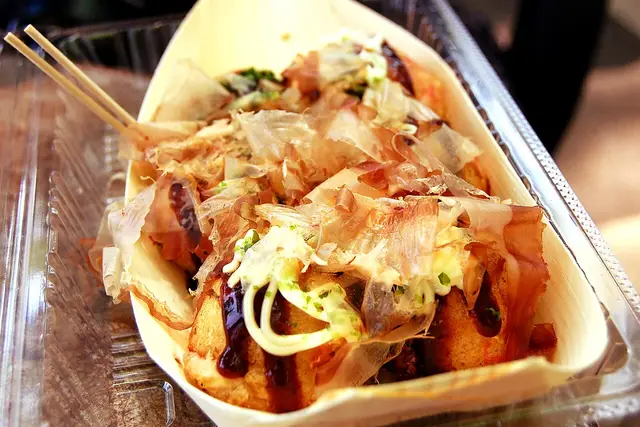 Takoyaki (octopus balls)Round balls of batter with octopus, cooked on a griddle and eaten from street stalls and shops.
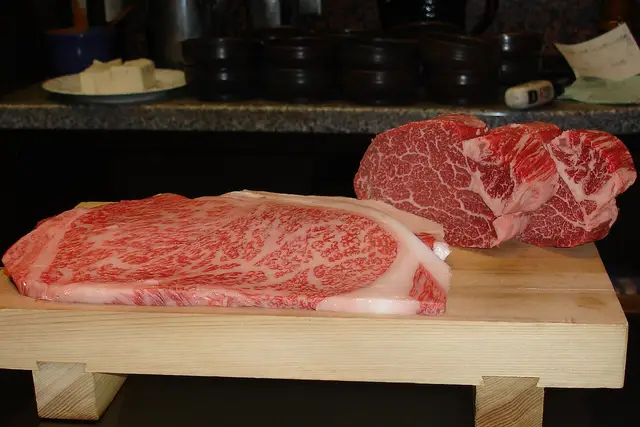 Kobe beef (premium wagyu: steak, teppanyaki)Kobe
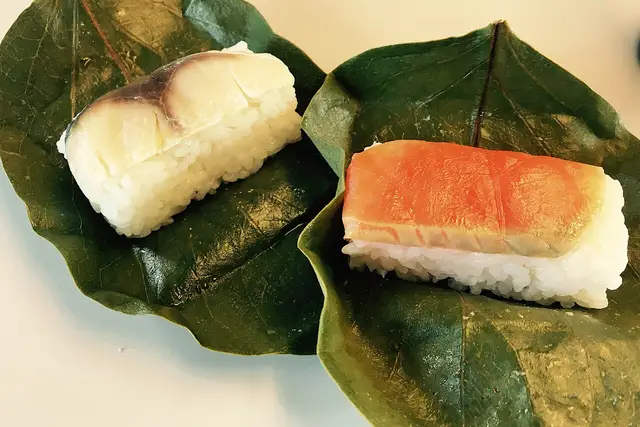 Kakinoha-zushi (salted mackerel sushi wrapped in persimmon leaf)
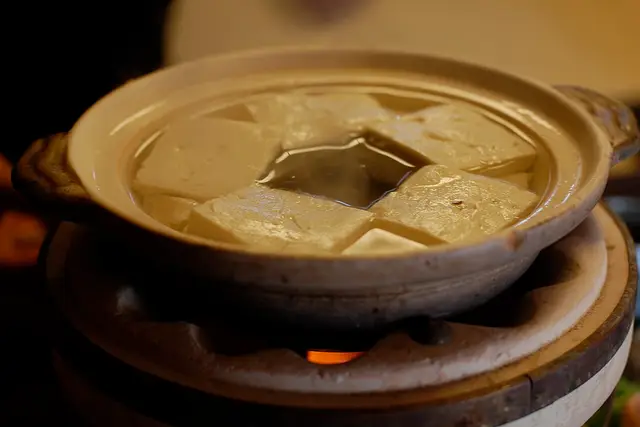 Yudofu (simmered tofu hot pot)Kyoto City
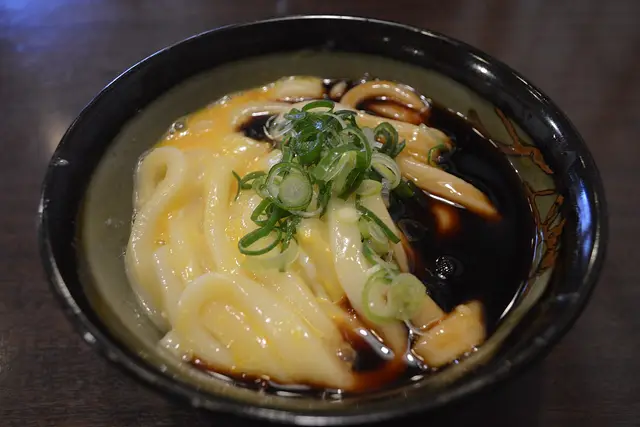 Ise udon (thick soft noodles in dark tamari sauce)Ise
Nara
6 specialties · 30 regional dishes
Local specialties
Local specialties worth tasting when you visit, served at restaurants and food stalls.
All over NaraRice dishes
Kakinoha-zushi (salted mackerel sushi wrapped in persimmon leaf)
柿の葉寿司
Pressed sushi topped with salted mackerel and wrapped in persimmon leaves; a Nara local dish.
Miwa, SakuraiNoodles
Miwa somen (hand-stretched thin wheat noodles)
三輪そうめん
Thin hand-stretched noodles from Miwa in Sakurai, regarded as the birthplace of somen.
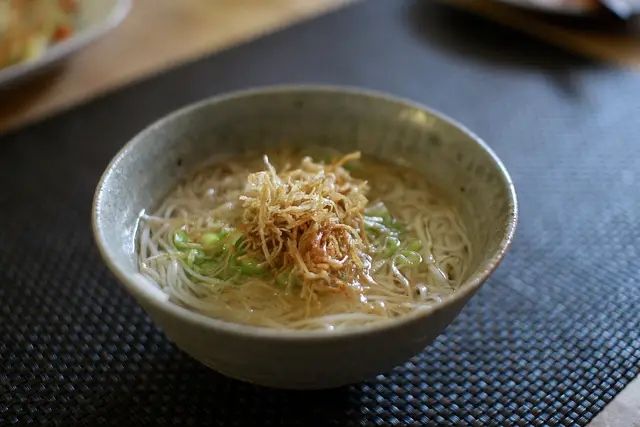
Miwa, SakuraiNoodles
Nyumen (somen in hot broth)
にゅうめん
Somen noodles served in hot broth, a Nara dish; Miwa is regarded as the birthplace of somen.
All over NaraRice dishes
Nara chagayu (rice porridge cooked in roasted tea)
奈良の茶がゆ
Rice porridge cooked in roasted green tea; originally home cooking, served at some restaurants in Nara.
TenriNoodles
Tenri Stamina ramen (garlic and napa cabbage ramen)
天理スタミナラーメン
Ramen loaded with garlic and napa cabbage, a local specialty of Tenri.
Kashihara and AsukaHot pots & soups
Asuka-nabe (chicken and tofu hot pot simmered in milk)
飛鳥鍋
A hot pot of chicken, scallion and tofu simmered in milk, from the Asuka and Kashihara area.
Regional dishes
Dishes handed down at home and in the community. Some are not served at restaurants (from “Our Regional Cuisines” by Japan's Ministry of Agriculture, Forestry and Fisheries).
- Gojo City, Yoshino areaKakinoha zushi柿の葉寿司
Kakinoha-zushi is pressed sushi made of salted mackerel wrapped in kakinoha (persimmon leaf) with vinegared rice. There are various theories about the origin of Kakinoha Sushi.
Main ingredients: Rice, mackerel, persimmon leaves
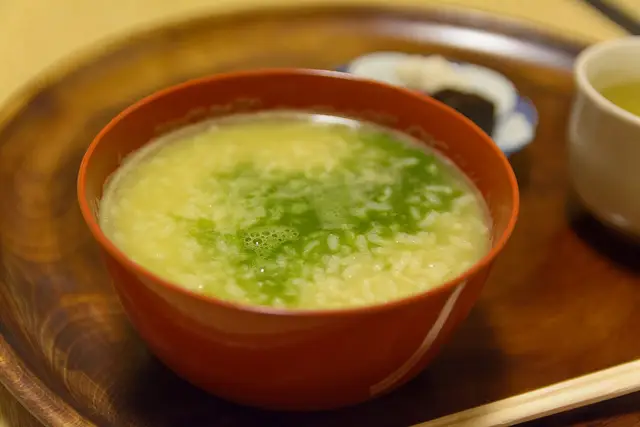 All over the prefectureChagayu茶粥
Tea cultivation in Japan is said to have begun in the early 9th century when Kobo Daishi (Kukai) brought back tea seeds from Tang China and sowed them at Butsuryuji Temple in Uda City.
Main ingredients: Rice, hojicha (green tea)
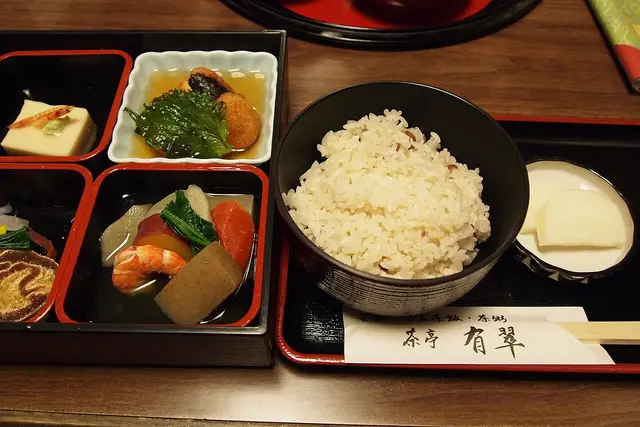 All over the prefectureNara chameshi奈良茶飯
The "Omizutori" ceremony held every March at Todaiji Temple has a history of more than 1,200 years, and the original chahan (rice with green tea), called "gecha," is served along with tea porridge…
Main ingredients: Rice, soybeans, hojicha green tea, water
- Entire prefectureNyumenにゅうめん
Miwa, Sakurai City, Nara prefecture is known as the birthplace of somen, and the somen made in this region is called Miwa Somen.
Main ingredients: Somen noodles, dashi broth
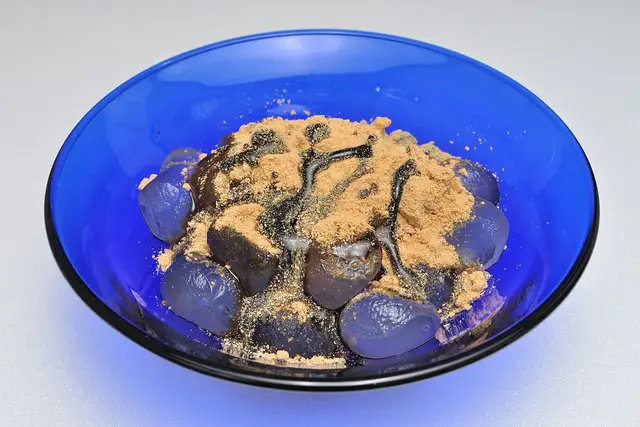 The whole prefectureWarabimochi蕨餅
"Warabimochi" is a Japanese confectionary made by adding water and sugar to bracken starch, mixing together while heating, then cooling to a solid shape.
Main ingredients: Pure bracken starch, sugar, flour
- All over Nara PrefectureNaranoppei奈良のっぺ
One of Nara's local dishes, "Nokpe" is a stew of taro, radish, carrots, and other ingredients.
Main ingredients: taro, deep-fried tofu, radish, carrot, dried shiitake mushroom, konnyaku
- All over the prefectureYamato no zoni大和の雑煮
In Nara, it is a white miso soup with tofu, festive radish, carrot, taro, and round rice cake, etc. In many areas, the rice cake is taken out of the soup and dipped in soybean flour with sugar.
Main ingredients: round rice cake, celebratory radish, carrot, taro, cotton (momen) tofu, white miso paste, soybean flour
- Entire prefectureImobotaいもぼた
"Imobota" refers to botamochi (adzuki-bean covered glutinous rice balls) with taro inside.
Main ingredients: Rice, taro, adzuki bean
- Entire prefectureKashiwa no Sukiyakiかしわのすき焼き
In the Kansai region, chicken that is eaten is called "Kashiwa." The guardian deity of Tenjin is a cow, so chicken sukiyaki (hot pot) was eaten during the autumn festivals at Tenmangu Shrine.
Main ingredients: Chicken, napa cabbage, shirataki noodles, grilled tofu, green onion, shiitake mushroom, chrysanthemum leaves, etc.
- Central and Southern Nara BasinAsuka Nabe飛鳥鍋
"Asuka Nabe" is a regional cuisine of Nara prefecture in which chicken and vegetables are simmered in a broth of milk and dashi.
Main ingredients: Chicken, milk, vermicelli noodles, shiitake mushroom, napa cabbage, chrysanthemum leaves, carrot, long green onion, burdock root, etc.
- Entire prefectureHagessho Mochi/Komugi Mochi/Sanaburi Mochi半夏生餅/小麦餅/さなぶり餅
In the Nara Basin, the wheat harvest ends and the first stage of the rice planting is completed around the time of "Hagessho," so "Hagessho Mochi" is made as a way to take a break.
Main ingredients: Crushed wheat, glutinous rice, roasted soybean powder
- Entire prefectureKuzumochi葛餅
"Kuzumochi" is a transparent, pulpy mochi made from kudzu powder.
Main ingredients: Yoshino Kudzu Powder, sugar, water, soybean flour, black sugar syrup, etc.
- Entire prefectureKakigori (Shaved ice)かき氷
The syrup is poured over fluffy shaved ice which is created in such shops. There is a reason why "shaved ice" in Nara Prefecture is becoming a new food fad.
- All of Nara PrefectureTako Momiuri蛸もみうり
‘Tako Momiuri’ is a salad marinated octopus, round-sliced cucumber salted and rubbed in salt, and Japanese vinegarette.
Main ingredients: Octopus, cucumber, white sesame, vinegar, etc.
- Totsukawa VillageSanma zishi (Pacific Saury Sushi)さんま寿司
‘Sanma zushi’ is prevailed as a local cuisine mainly in Yoshino-gun Totsukawa Village in Nara Prefecture, and was an important ‘nare-zushi’, type of traditional sushi fermented with salted fish and…
Main ingredients: Sanma (=Pacific saury), rice, vinegar, salt, etc.
- Along the Yoshino RiverAyu zushi (Sweetfish Sushi)鮎寿司
Originally ‘Ayu-zushi’ was a ‘nare-zushi’, sushi fermented from 1week to 1 month, but it had became less served as time went by because of its unique flavor.
Main ingredients: Ayu (= sweetfish), rice, vinegar, etc.
- All of Nara PrefectureNara Ae奈良和え
"Nara-ae" is a dish that uses Nara's specialty, "Nara-zuke", and is a popular dish even among children.
Main ingredients: Nara-zuke (=pickled vegetables), Fiddlehead ferns, Kampyo (=dried gourd strips), Dried shiitake mushrooms, Tsukikonnyaku (konjac strips), Carrots, Fried thin tofu
- All of Nara PrefectureKaki Namasu柿なます
In Nara Prefecture, the traditional New Year's dish known as "Kaki-namasu" has been enjoyed for a long time.
Main ingredients: Daikon Radish, Carrot, Dried Persimmons, Vinegar
- Higashi Yoshino Village , Kawakami VillageDengara (Leaf Wrapped Rice Cake)でんがら
"Dengara" is a traditional confection, wrapping sweet bean paste-filled rice cakes in magnolia leaves.
Main ingredients: Rice flour, Ho leaves (Magnolia leaves), Azuki beans (Red bean), etc.
- Yamato Kogen AreaFuki-dawara (Soybean Rice wrapped in Butterbur Leaves)ふき俵
In the Yamato Kogen region, the day marking the beginning of rice planting is called "Sabiraki", and on this day, people create "Fukidawara" and offer it on household altars, praying for a bountiful…
Main ingredients: Soybeans, Rice, Butterbur leaves
- Shimokita-yama Village regionManamehari (Sushi wrapped in Pickled Mana-green)まなめはり
“Manamehari" is a type of mehari-zushi made with salted Shimokita harumana.
Main ingredients: Pickeled Harumana (Mustard green), Rice, Bonito flakes, Soy sauce
- All of Nara prefectureIro-gohan (Soy sauce-flavored mixed Rice)色ご飯
In Nara Prefecture, "Iro-gohan" refers to soy sauce-flavored mixed rice.
Main ingredients: Rice, Carrot, Gobou(=Burdock root) , Thinly sliced and deep-fried tofu, Soy sauce, etc.
- All of Nara PrefectureZuiki no Nimonoずいきの煮もの
‘Zuiki’ is a Japanese taro stem. Stems from red stem species like ‘tou no imo’ and ‘yatsugashira’ (both are species of Japanese taro) have relatively less scum, so it is suitable for food.
Main ingredients: ‘Zuiki’ (=Japanese taro stem), Fried thin tofu, etc.
- All of Nara PrefectureNanairo Oae七色お和え
This is one of offering dishes during "obon" (mid-August) in Shingon Buddhism.
Main ingredients: Carrot, Pumpkin, Eggplant, "Sando mame" (=common green beans), "Zuiki" (=Japanese taro stem), "Myoga" (=Japanese ginger), Gobou (=Burdock root), etc.
- Central Nara BasinShiki Shikiしきしき
‘Shiki shiki’ is a local snack in Nara by grilling dough made from wheat flour, water and sugar, and has been eaten since before war. Eggs can be added these days. It’s like a crape.
Main ingredients: Wheat flour, Sugar, etc.
- All of Nara PrefectureYamato-mana to Usuage no Nimono (Simmered Yamato-mana and fried thin tofu)大和まなと薄揚げの煮もの
"Yamato-mana to usuage no nimono" (simmered yamato-mana and fried thin tofu) is a home-style dish using yamato-mana, a traditional vegetable of Yamato (Nara Prefecture).
Main ingredients: Yamato-mana, Fried thin tofu, Soy sauce, Sugar, Japanese mustard paste
- Yoshino mountainous Area and other Areas in the Nara PrefectureItadori no Nimono (Simmered Japanese knotweed)いたどりの煮もの
Itadori is a perennial herb of the Polygonaceae family that grows wild throughout Japan and is an indispensable spring wild plant. It is also called "gonpachi" and "sukampo".
Main ingredients: Itadori (Japanese knotweed), Soy sauce, Mirin (=sweet rice wine) etc.
- Yoshino District, Uda DistrictAmago no Kanroni (Candied simmering Amago trout)あまごの甘露煮
"Amago no kanroni" is a traditional home-style dish.
Main ingredients: Amago trout, Hoji-cha (roasted green tea)
- All of Nara PrefectureNamabushi to Negi no Nimono (Simmerd dish of Half-dried bonito and Japanese leek)生節とねぎの煮もの
In Nara Prefecture, which does not face the sea, people used to eat a simmered dish of namabushi (half dried bonito), which lasts for a long time.
Main ingredients: Namabushi (half dried bonito), Yuzaki nebuka (Japanese leek)
- Katsuragi Area and other Areas in Nara PrefectureEi no Nikogori (Stewed Ray dish)エイの煮こごり
"Ei no nikogori" is a stewed ray dish with sweet and spicy sauce. It is a standard local dish in the Katsuragi area and other areas in the prefecture.
“Find places serving it” opens a map app search for the dish name and the place name. The results are not chosen or recommended by this site. Please check with the shop whether it serves the dish.
Sources
Local specialties & regional dishes
Source: “Our Regional Cuisines” (Ministry of Agriculture, Forestry and Fisheries), edited by this site (imported 2026-11-15) https://www.maff.go.jp/e/policies/market/k_ryouri/index.html. Names, areas and ingredients are as written on the source pages; descriptions are excerpts of the original text. No photos from the ministry are used (dish photos are from Wikimedia Commons). This page is not made or endorsed by the ministry.
Local food specialties
Each specialty was checked against an official page (prefecture, municipality, tourism association or JNTO) on 2026-11-17. The descriptions were written by this site.
- Kakinoha-zushi (salted mackerel sushi wrapped in persimmon leaf): yamatoji.nara-kankou.or.jp
- Miwa somen (hand-stretched thin wheat noodles): yamatoji.nara-kankou.or.jp
- Nyumen (somen in hot broth): www.japan.travel
- Nara chagayu (rice porridge cooked in roasted tea): yamatoji.nara-kankou.or.jp
- Tenri Stamina ramen (garlic and napa cabbage ramen): yamatoji.nara-kankou.or.jp
- Asuka-nabe (chicken and tofu hot pot simmered in milk): www.city.kashihara.nara.jp
Photo and data credits
Takoyaki topped with sauce and bonito flakes in a paper boat sayo ts (CC0) / Marbled cuts of Kobe beef on a wooden board Orlando G. Calvo (CC BY-SA 3.0) / Kakinoha-zushi of mackerel and salmon on persimmon leaves ZhengZhou (CC BY-SA 4.0) / Yudofu: tofu simmering in a clay pot over a flame Flickr user cobacco(hiro kobashi) (CC BY 2.0) / Ise udon: thick soft noodles in dark tamari sauce with green onion Asturio Cantabrio (CC BY-SA 4.0) / Nyumen: thin somen noodles in hot broth in a ceramic bowl sekimura (CC BY 2.0) / Chagayu, Nara's rice porridge cooked in tea, in a red lacquer bowl Degueulasse (CC BY 3.0) / Nara chameshi, rice cooked in tea, served as a set meal with side dishes Kentaro Ohno (CC BY 2.0) / Warabimochi dusted with roasted soybean flour in a blue glass bowl Ocdp (CC0). Cropped and resized.