Nara guide
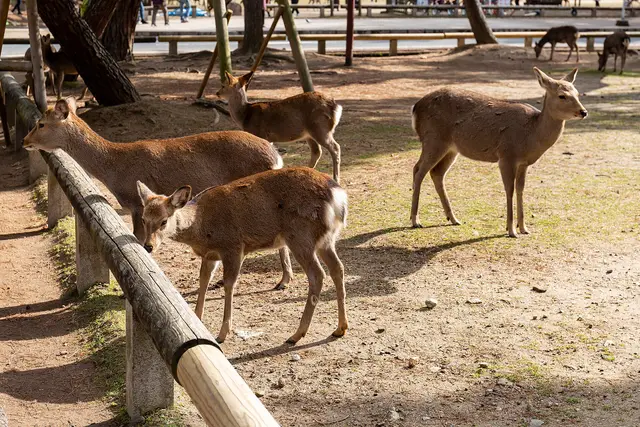
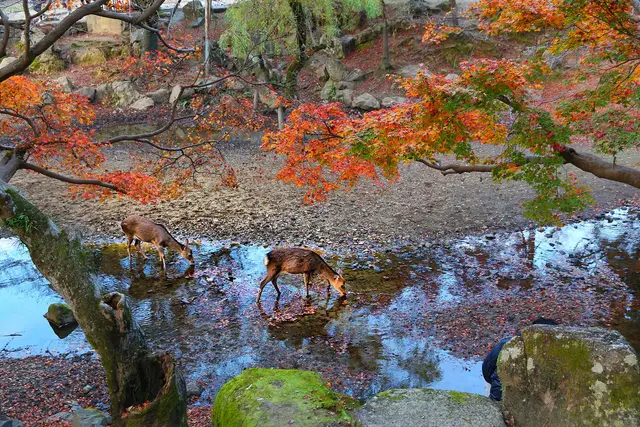
Japan's capital 1,300 years ago. Todai-ji with its Great Buddha, Kasuga Taisha and Kofuku-ji all stand around Nara Park, where deer roam freely. An easy day trip from Kyoto or Osaka.
Things to see 10 classics
"Classics" and "Hidden gems" are this site's editorial picks, not a measured popularity ranking.
- 1
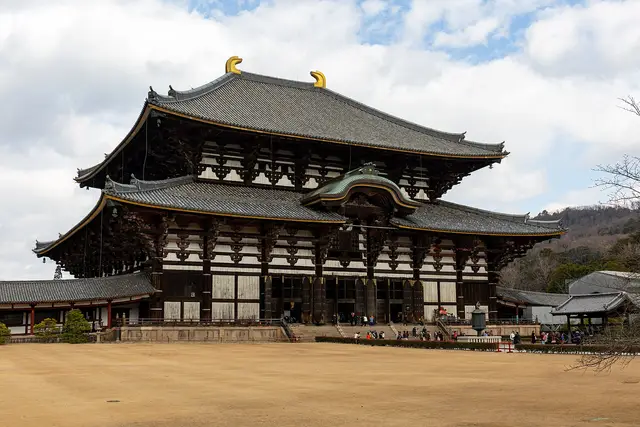
Todai-ji (Great Buddha Hall)
A vast wooden hall housing a seated Buddha about 15 m tall. Don't miss the fierce guardian statues in the Great South Gate.
- Temples, shrines & churches
- History & buildings
about 60 minPaid entryFine on a rainy dayWheelchair & stroller friendly
Bus · About 20 min from Nara ・ Loop bus to Todaiji Daibutsuden / Kasuga Taisha-mae, then about 5 minutes on foot ・ 2.1km
- 3
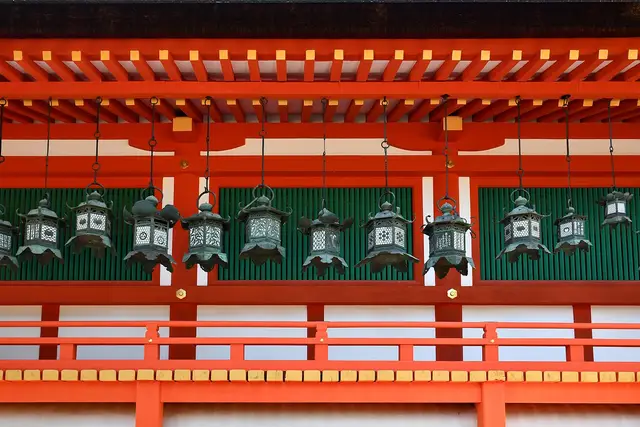
Kasuga Taisha
A vermilion shrine in the forest. Countless stone lanterns line the approach, and bronze lanterns hang along the halls.
- Temples, shrines & churches
- Nature
about 60 minFreePartly step-free
Bus · About 25 min from Nara ・ Bus to Kasuga Taisha Honden; or loop bus to Kasuga Taisha Omotesando and about 10 minutes on foot ・ 2.6km
- 4
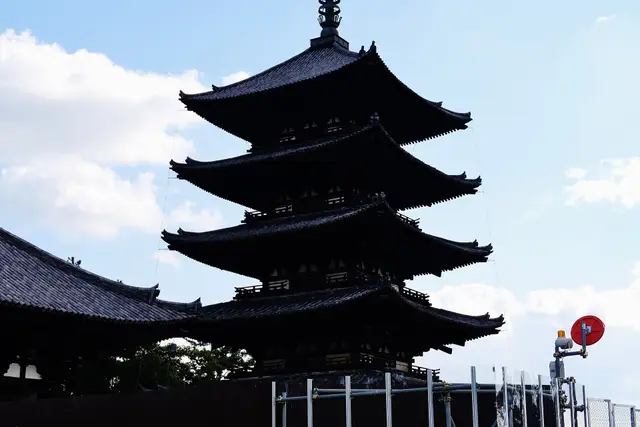
Kofuku-ji
See the Ashura and other famous statues up close in the National Treasure Hall. The vermilion Central Golden Hall was rebuilt in 2018.
- Temples, shrines & churches
- History & buildings
- Museums
about 60 minPartly paidPartly step-free
Walk · About 20 min from Nara ・ 1.1km
- 5
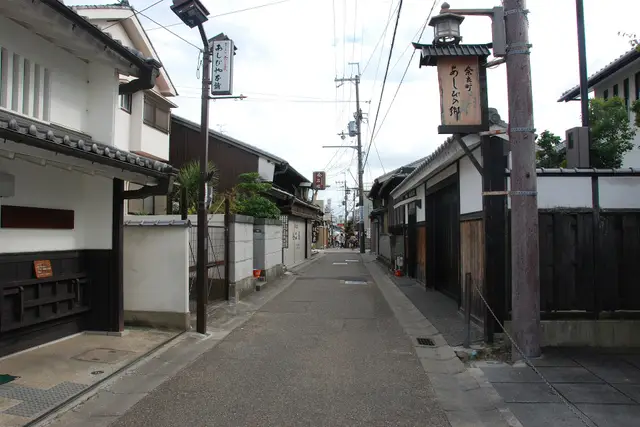
Naramachi
A quarter of narrow lanes and latticed townhouses around Gango-ji, a World Heritage temple. Many houses are now shops and cafes.
- History & buildings
- Shopping & strolling
- Food & markets
about 1.5 hrFree
Walk · About 20 min from Nara ・ 1.0km
- 6
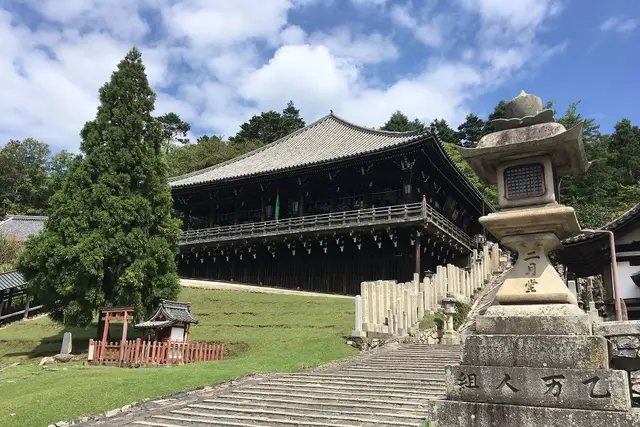
Nigatsu-do Hall (Todai-ji)
A hall on the slope east of the Great Buddha Hall. Its balcony looks out over Nara, and is best around sunset.
- Temples, shrines & churches
- Views
about 30 minFreePartly step-free
Bus · About 35 min from Nara ・ Loop bus to Todaiji Daibutsuden / Kasuga Taisha-mae, then about 15 minutes on foot ・ 2.5km
Show on map
ClassicsHidden gems
Suggested routes
Times assume a 9:00 start. Travel times are estimated from distance and vary with waiting and crowds.
Kofuku-ji, Todai-ji, Nigatsu-do, then Kasuga Taisha
Leave 9:00 → until about 15:04 (about 6 hr)
- 9:00Nara
about 20 min on foot
9:20Kofuku-jistay about 60 minabout 13 min on foot
10:33Nara Parkstay about 1.5 hrabout 8 min on foot
12:11Todai-ji (Great Buddha Hall)stay about 60 minabout 7 min on foot
13:18Nigatsu-do Hall (Todai-ji)stay about 30 minabout 16 min on foot
14:04Kasuga Taishastay about 60 min
Take the bus out, then walk the rest. You can stop in Naramachi on the way back.
Plan this routeNishinokyo, the Heijo Palace Site and Horyu-ji
Leave 9:00 → until about 16:10 (about 7 hr)
- 9:00Nara
about 25 min by transport
9:25Heijo Palace Sitestay about 1.5 hrabout 15 min by transport
11:10Yakushi-ji and Toshodai-ji (Nishinokyo)stay about 2.5 hrabout 30 min by transport
14:10Horyu-jistay about 2 hr
World Heritage sites west of the centre, good for a second day. Uses Kintetsu trains, buses and JR.
Plan this route
When to go
April–May and October–November are best for walking. Summer is hot and humid (27–28°C on average). Winter is cold (about 5°C) but has Yamayaki and Omizutori.
Point at a month to see its temperature and precipitation.
Temperature (line: average; band: low to high)
Precipitation (mm)
Typical seasons
Cherry blossoms (Nara Park, Yoshino)
Wisteria (Kasuga Taisha)
Wakakusa Yamayaki
Omizutori at Todaiji Nigatsudo
Autumn leaves (Nara Park)
Show as a table
| Jan | Feb | Mar | Apr | May | Jun | Jul | Aug | Sep | Oct | Nov | Dec | |
|---|---|---|---|---|---|---|---|---|---|---|---|---|
| High (℃) | 8.7 | 9.9 | 13.9 | 19.8 | 24.9 | 28.1 | 31.7 | 33.4 | 28.8 | 22.6 | 17.1 | 11.6 |
| Avg (℃) | 4.5 | 5.1 | 8.5 | 14 | 19 | 22.9 | 26.8 | 27.8 | 23.8 | 17.7 | 11.8 | 6.8 |
| Low (℃) | 0.8 | 1 | 3.6 | 8.7 | 13.9 | 18.4 | 23 | 24.1 | 20.1 | 13.5 | 7.3 | 3 |
| Rain (mm) | 52.4 | 63.1 | 105.1 | 98.9 | 138.5 | 184.1 | 173.5 | 127.9 | 159 | 134.7 | 71.2 | 56.8 |
Temperature and precipitation are Japan Meteorological Agency normals (1991–2020, Nara). Seasons are typical timings and can shift by a week or two each year. JMA data
Main ways to get around
Kintetsu Railway (from Kyoto and Osaka-Namba)
About 35–50 minutes from Kyoto and 40 minutes from Osaka-Namba. Kintetsu-Nara Station is just west of Nara Park, within walking distance of Todai-ji.
JR (Nara Line and Yamatoji Line)
About 45 minutes from Kyoto by Miyakoji Rapid and 50 minutes from Osaka by Yamatoji Rapid. From JR Nara Station to Nara Park, take a bus or walk about 20 minutes.
Nara Kotsu Bus (city loop)
Loop buses run often from JR Nara and Kintetsu-Nara stations past the Todai-ji Daibutsuden / Kasuga Taisha-mae stop. A one-day pass is sold.
On foot
Kofuku-ji, Nara Park, Todai-ji, Kasuga Taisha and Naramachi can all be linked on foot. It adds up to a long walk, so wear comfortable shoes.
Airport limousine bus (Kansai Airport)
About 1.5 hours direct from Kansai Airport to Kintetsu-Nara and JR Nara stations. Departures are not frequent.
Getting to Nara
“Classics” and “Hidden gems” are our editors' picks, not a measured popularity ranking. Travel times are estimates. Please check prices, opening hours and operating days with the official sources before you go.
Photo and data credits
A herd of deer in Nara Park Balon Greyjoy (CC0) / The Great Buddha Hall of Todai-ji Balon Greyjoy (CC0) / Deer drinking under autumn leaves in Nara Park Marek Ślusarczyk (Tupungato) Photo portfolio (CC BY 3.0) / Hanging lanterns along a vermilion corridor at Kasuga Taisha Gzzz (CC BY-SA 4.0) / The five-storied pagoda of Kofuku-ji against a blue sky Zairon (CC BY 4.0) / A quiet street of traditional townhouses in Naramachi Maarten Heerlien from Voorschoten, The Netherlands (CC BY 2.0) / Nigatsu-do Hall of Todai-ji above stone steps and a lantern Christophe95 (CC BY-SA 4.0). Cropped and resized.
Local food
Regional dishes handed down in Nara. Many are home and community cooking, so not every dish is served at restaurants.
Naranoppei
奈良のっぺ
One of Nara's local dishes, "Nokpe" is a stew of taro, radish, carrots, and other ingredients.
- Where it is made
- All over Nara Prefecture
Asuka Nabe
飛鳥鍋
"Asuka Nabe" is a regional cuisine of Nara prefecture in which chicken and vegetables are simmered in a broth of milk and dashi.
- Where it is made
- Central and Southern Nara Basin
Shiki Shiki
しきしき
‘Shiki shiki’ is a local snack in Nara by grilling dough made from wheat flour, water and sugar, and has been eaten since before war. Eggs can be added these days. It’s like a crape.
- Where it is made
- Central Nara Basin
Yamato no zoni
大和の雑煮
In Nara, it is a white miso soup with tofu, festive radish, carrot, taro, and round rice cake, etc. In many areas, the rice cake is taken out of the soup and dipped in soybean flour with sugar.
- Where it is made
- All over the prefecture
Chagayu
茶粥
Tea cultivation in Japan is said to have begun in the early 9th century when Kobo Daishi (Kukai) brought back tea seeds from Tang China and sowed them at Butsuryuji Temple in Uda City.
- Where it is made
- All over the prefecture
Nara chameshi
奈良茶飯
The "Omizutori" ceremony held every March at Todaiji Temple has a history of more than 1,200 years, and the original chahan (rice with green tea), called "gecha," is served along with tea porridge…
- Where it is made
- All over the prefecture
“Find places serving it” opens a map app search for the dish name and the place name. The results are not chosen or recommended by this site. Please check with the shop whether it serves the dish.
Source: “Our Regional Cuisines” (Ministry of Agriculture, Forestry and Fisheries), edited by this site (imported 2026-11-15) https://www.maff.go.jp/e/policies/market/k_ryouri/index.html. Names, areas and ingredients are as written on the source pages; descriptions are excerpts of the original text. No photos are used. This page is not made or endorsed by the ministry.