Local specialties & regional dishes of Kansai
The cooking of Kyoto, the old capital, Osaka's flour-based street food, and produce from sea and mountains.
65 local specialties and 207 regional dishes from Kansai.
Specialties to taste in Kansai
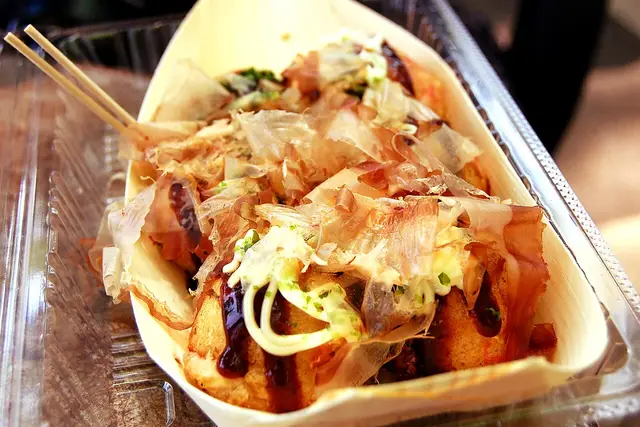 Takoyaki (octopus balls)Round balls of batter with octopus, cooked on a griddle and eaten from street stalls and shops.
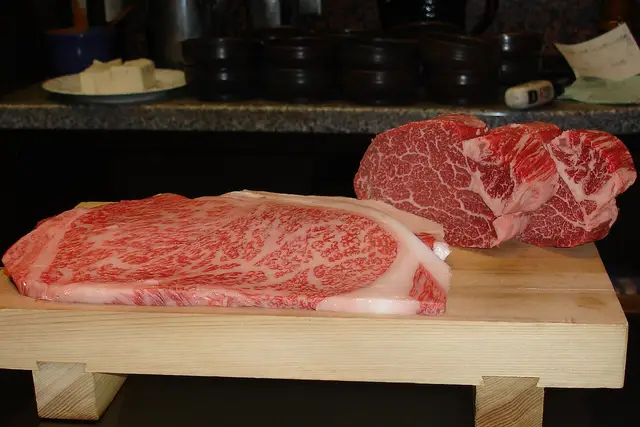 Kobe beef (premium wagyu: steak, teppanyaki)Kobe
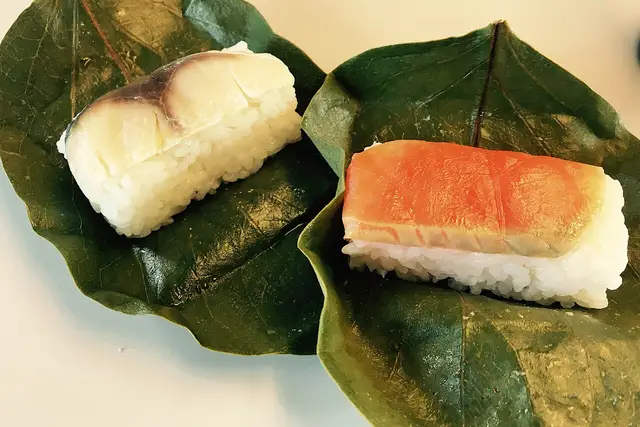 Kakinoha-zushi (salted mackerel sushi wrapped in persimmon leaf)
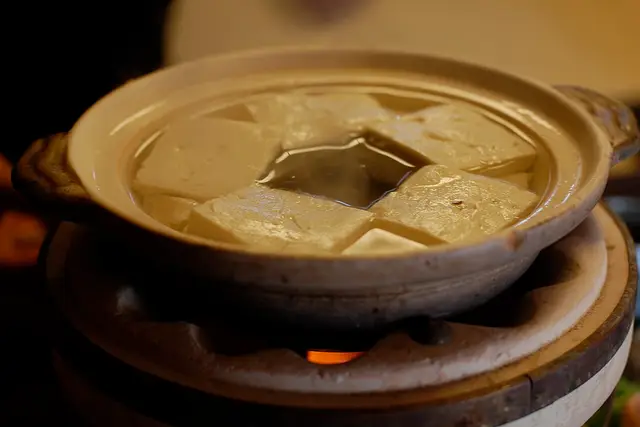 Yudofu (simmered tofu hot pot)Kyoto City
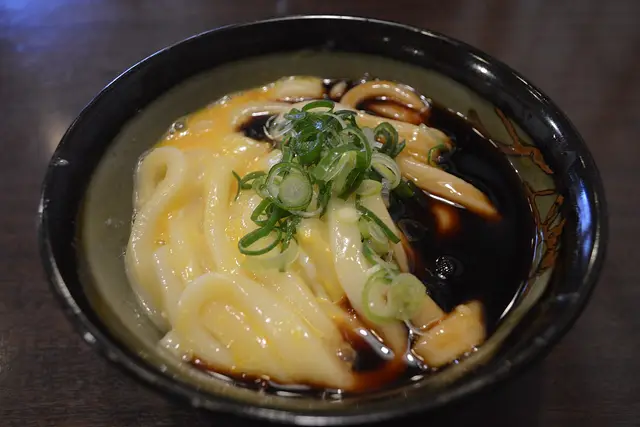 Ise udon (thick soft noodles in dark tamari sauce)Ise
Wakayama
10 specialties · 27 regional dishes
Wakayama travel guideSee all regional dishes of Wakayama (27)
Local specialties
Local specialties worth tasting when you visit, served at restaurants and food stalls.
Wakayama CityNoodles
Wakayama ramen (chuka soba, soy-pork bone broth)
和歌山ラーメン
Soy-flavored ramen in a chicken or pork bone broth; locally also called chuka soba.
Wakayama CityRice dishes
Haya-zushi (pressed mackerel sushi eaten with ramen)
早寿司
Pressed mackerel sushi served alongside Wakayama ramen; many shops use the honor system for payment.
KumanoRice dishes
Mehari-zushi (rice ball wrapped in pickled mustard greens)
めはり寿司
A large rice ball wrapped in pickled takana greens, once packed as lunch for mountain work in Kumano.
NachikatsuuraSeafood
Nachikatsuura fresh (unfrozen) tuna
那智勝浦の生まぐろ
Nachikatsuura lands Japan's largest catch of fresh longline tuna; winter is the peak season.
TaijiMeat
Taiji whale dishes (sashimi, tatsuta-age, hari-hari nabe)
太地の鯨料理
Whale meat as sashimi, fried tatsuta-age or hari-hari hot pot; Taiji is said to be the birthplace of traditional whaling.
Southern WakayamaHot pots & soups
Kue nabe (giant grouper hot pot)
クエ鍋
A hot pot of kue (giant grouper), a prized winter fish with a small catch.
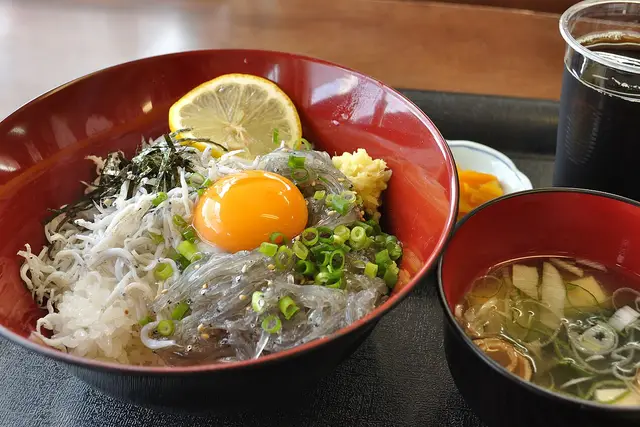
Wakayama coastSeafood
Shirasu-don (whitebait rice bowl)
しらす丼
Rice bowl topped with boiled or raw whitebait, served near the landing ports.
KumanoMeat
Kumano beef (local branded wagyu)
熊野牛
Branded wagyu of Wakayama, bred from cattle long raised in the Kumano region.
KoyasanJapanese cuisine
Koyasan shojin ryori (Buddhist vegetarian cuisine)
高野山の精進料理
Meat- and fish-free Buddhist cuisine of Koyasan, served at temples and restaurants.
AridaSeafood
Arida hairtail (tachiuo, called tacchyo locally)
有田の太刀魚
Hairtail caught in the Kii Channel; called 'tacchyo' in Arida.
Regional dishes
Dishes handed down at home and in the community. Some are not served at restaurants (from “Our Regional Cuisines” by Japan's Ministry of Agriculture, Forestry and Fisheries).
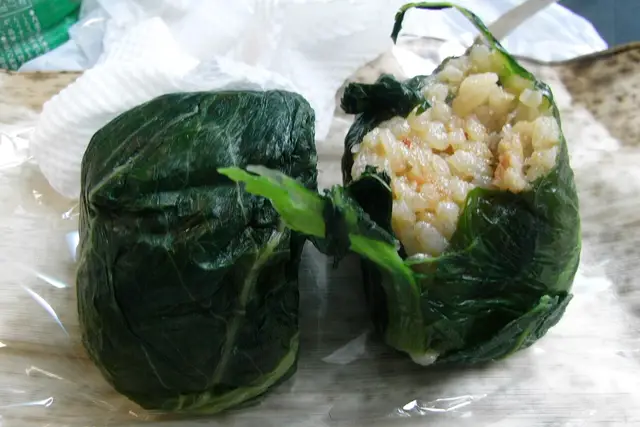 Southern regionMehari zushiめはりずし
In the southern region of the prefecture, where fishing and forestry are thriving, mehari-zushi became popular as an easy-to-eat lunch between busy fishing and mountain work.
Main ingredients: rice, leaf mustard
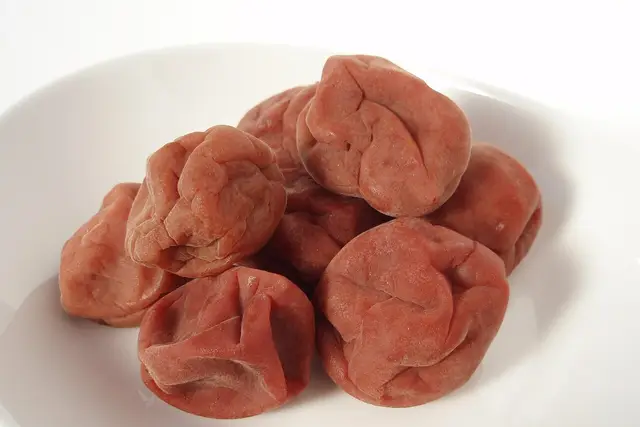 Minabe Town, Tanabe CityUmeboshi (pickled plums)梅干し
The high-quality umeboshi produced in this region came to be known as “Tanabe plums”, and were highly praised, even in Edo.
Main ingredients: Plums
- North Area, Central AreaShirasu Don (Whitebait on top of rice)しらす丼
Whitebait fishing reaches its peak from late March until May. During that time, lots of young Japanese anchovy, Japanese sardine or round herring are caught.
Main ingredients: Whitebait, Rice
- All over the prefectureOkaisan/Chagayuおかいさん/茶がゆ
In Wakayama Prefecture, chagayu is affectionately called "okai-san" or "okayu-san.
Main ingredients: Rice, Bancha (green tea) or Hojicha (roasted green tea)
- Chubu areaKinzanji miso金山寺味噌
In 1249, Kakushin (Houtou Kokushi), a high priest in Yura, learned how to make Kaizanji miso in Sou (China), where he had trained, and brought it back to Japan.
Main ingredients: Rice, wheat, soybeans, vegetables such as eggplant, cucumber, ginger, and perilla
- Taiji TownOnomi no sashimi尾の身の刺身
Whales fed and fattened up in high latitude waters head for low latitude waters after summer to engage in breeding activities, passing through the Kumano-nada Sea in midwinter.
Main ingredients: Whale meat
- Southern regionSanma zushiさんまずし
Sanma-zushi was originally made to preserve rice and fish, and was a feast served at autumn festivals, New Year's, and other gatherings.
Main ingredients: Pacific saury, rice
- Northern Wakayama PrefectureGomadoufu(Sesame tofu)ごま豆腐
“Sesame tofu” is said to have originated as one of the vegetarian Buddhist dishes eaten by monks practicing austere asceticism at Mount Koya, a temple settlement founded by Kobo Daishi (Kukai)…
Main ingredients: Sesame seeds, Yoshino arrowroot
- Arita RegionNarezushiなれずし
Narezushi has long been a common sight at festivals as well as local and regional events.
Main ingredients: Rice, mackerel
- Around Tanabe CitySimmered igami (Japanese parrotfish)いがみの煮付け
Commonly known as “budai”, igami (Japanese parrotfish) is a typical inshore fish that can be found in the southern regions of Wakayama Prefecture.
Main ingredients: Igami
- Southern Wakayama PrefectureUtsubo (moray eel) cuisine/utsubo tsukudaniうつぼ料理/うつぼの佃煮
Known as the “gangster of the sea”, the utsubo (moray eel) has an unpredictable temperament as well as sharp upper and lower teeth.
Main ingredients: Utsubo, soy sauce, sugar, etc.
- Katsuragi, KudoyamaKaki no Ha Zushi (Persimmon Leaf Sushi)柿の葉寿司
The Ito region in the Kinokawa River basin is famous for its persimmons, especially Kudoyama for Fuyu persimmons and Katsuragi for seedless persimmons.
Main ingredients: Persimmon leaves, rice, mackerel, shiitake mushrooms, shrimp
- Hidaka RegionKaki-made Gohan (Kaki-made Rice)かきまでご飯
In the Hidaka region, “kaki-made rice” has traditionally been served at celebrations, memorial services, Hina-matsuri, festivals, and other gatherings.
Main ingredients: Rice, grilled mackerel, carrots, freeze-dried tofu, dried shiitake mushrooms, fried tofu, chikuwa (fish cakes), konjac, bamboo shoots
- Iwade city, Kinokawa cityKakimaburiかきまぶり
Kakimaburi, a chirashi-zushi dish made by mixing sushi rice with seasonal vegetables and other ingredients, is a local delicacy.
Main ingredients: rice, dried tofu, dried shiitake mushrooms, carrots, bamboo shoots, etc.
- North Area, South AreaKokera-Sushiこけら寿司
‘Kokera-Sushi’ is a kind of sushi. Grilled fish flake, Shiitake mushroom, carrots and thin omelette are placed on the vinegared rice into a wooden flame, then pressed.
Main ingredients: Rice, Fish, Shrimp, Vegetables
- Arita CityMikan Mochi (Mandarin Mochi)みかん餅
Wakayama Prefecture is one of the top mandarin oranges producing prefecture. Especially Arita area, origin of ‘Arita Mikan’, most mountains are covered with mandarin plantation.
Main ingredients: Glutinous Rice, Mandarin orange, Sugar
- Northern and Southern AreaInoko Mochiいのこ餅
In the northern regions where rice cultivation was prosperous, there was a tradition of offering "Inoko Mochi," rice cakes coated with sweet red bean paste, to express gratitude for the harvest on…
Main ingredients: Rice, Glutinous rice, Satoimo(=Japanese taro), Sweet red bean paste
- Southern AreaImo Mochi / Sweet Potato Mochiいももち
Apart from "imomochi" (sweet potato rice cake), there are other local dishes using sweet potatoes, such as "ukeja" (sweet potato with tea), "imochagayu" (sweet potato rice porridge), "imogohan"…
Main ingredients: Sweet potato, Glutinous rice flour
- Kozagawa TownUzumi (Soup with Rice hidden by Tofu and Shiitake Mushroom)うずみ
‘Uzumi’ is a clear soup made from ‘dashi’ soup stock from shiitake mushroom or kombu(=kelp) placed cooked rice at the bottom of a bowl berried by tofu and shiitake mushroom.
Main ingredients: Rice, Shiitake mushroom, Tofu, etc.
- Central regionMame Gohan (Green Peas Rice)豆ごはん
The size of ‘Usui Endou’ pea is big, and the pea has sweet taste and fluffy texture, and this pea is registered as a regional collective trademark ‘Kishu Usui’ in 2006. ‘Mame Gohan’ (=Green Peas…
Main ingredients: ‘Usui Endou’ (Green Pea), Rice
- Southern regionGonbachi no Abura-itame (Fried ‘Gonbachi’ Wild Vegetable)ゴンバチの油炒め
‘Gonbachi’ is officially called ‘Itadori’ and a Polygonaceae plant, and is a kind of wild vegetables grown in mountains in spring.
Main ingredients: Gonbachi
- Wakayama CityShouga-meshi (Ginger Rice)しょうが飯
In sandy area with soft ground along the Kinokawa River (like Kasei and Nunohiki area in Wakayama City), ginger has been grown since early Era (early 20th century) to make most of its mild climate.
Main ingredients: Ginger, Rice
- Arita CityTachiuo-ryouri / Tachiuo-zushi (=scabbard fish dish, and sushi)太刀魚料理/太刀魚寿司
“Tachiuo”, are caught in many parts of Wakayama Prefecture.
Main ingredients: Tachiuo (=scabbard fish)
- Hashimoto CityHata-gonbo-zushi (Burdock Sushi)はたごんぼずし
“Hata-gonbo”, is a Burdock, grown in the Nishihata district of Hashimoto City, located halfway up the 552-meter-high Kunishiro Mountain.
Main ingredients: Hata-gonbo(=burdock root)
- Tanabe CityBouri (Simmered Japanese taro)ぼうり
The villagers apologized for their rudeness, and as an act of atonement, they stopped making mochi for 600 years during New Year's and began eating "bouri", a dish made by boiling the mother tuber…
Main ingredients: Satoimo(=Japanese taro) (mother tuber of a taro)
- Yura TownWakame Zushi (Wakame Seaweed Sushi)わかめずし
"Wakame-zushi" is a type of sushi where fresh wakame is thinly spread and rolled with white rice like a sushi roll.
Main ingredients: Wakame seaweed, Rice
- Aritagawa TownWasabi Zushi (Wasabi Sushi)わさびずし
In the Arita region, various types of sushi such as "Narezushi" and "Hayazushi" have been made for seasonal events like rice planting, Obon, and autumn festivals since ancient times.
Main ingredients: Wasabi leaves, Rice, Salted mackerel.
“Find places serving it” opens a map app search for the dish name and the place name. The results are not chosen or recommended by this site. Please check with the shop whether it serves the dish.
Sources
Local specialties & regional dishes
Source: “Our Regional Cuisines” (Ministry of Agriculture, Forestry and Fisheries), edited by this site (imported 2026-11-15) https://www.maff.go.jp/e/policies/market/k_ryouri/index.html. Names, areas and ingredients are as written on the source pages; descriptions are excerpts of the original text. No photos from the ministry are used (dish photos are from Wikimedia Commons). This page is not made or endorsed by the ministry.
Local food specialties
Each specialty was checked against an official page (prefecture, municipality, tourism association or JNTO) on 2026-11-17. The descriptions were written by this site.
- Wakayama ramen (chuka soba, soy-pork bone broth): www.wakayama-kanko.or.jp
- Haya-zushi (pressed mackerel sushi eaten with ramen): www.wakayama-kanko.or.jp
- Mehari-zushi (rice ball wrapped in pickled mustard greens): www.wakayama-kanko.or.jp
- Nachikatsuura fresh (unfrozen) tuna: www.wakayama-kanko.or.jp
- Taiji whale dishes (sashimi, tatsuta-age, hari-hari nabe): www.wakayama-kanko.or.jp
- Kue nabe (giant grouper hot pot): www.wakayama-kanko.or.jp
- Shirasu-don (whitebait rice bowl): www.wakayama-kanko.or.jp
- Kumano beef (local branded wagyu): www.wakayama-kanko.or.jp
- Koyasan shojin ryori (Buddhist vegetarian cuisine): www.wakayama-kanko.or.jp
- Arida hairtail (tachiuo, called tacchyo locally): www.wakayama-kanko.or.jp
Photo and data credits
Takoyaki topped with sauce and bonito flakes in a paper boat sayo ts (CC0) / Marbled cuts of Kobe beef on a wooden board Orlando G. Calvo (CC BY-SA 3.0) / Kakinoha-zushi of mackerel and salmon on persimmon leaves ZhengZhou (CC BY-SA 4.0) / Yudofu: tofu simmering in a clay pot over a flame Flickr user cobacco(hiro kobashi) (CC BY 2.0) / Ise udon: thick soft noodles in dark tamari sauce with green onion Asturio Cantabrio (CC BY-SA 4.0) / Shirasu-don: raw and boiled whitebait on rice with an egg yolk and lemon Ocdp (CC0) / Mehari-zushi: rice balls wrapped in pickled mustard-green leaves, one cut open woinary from Osaka International Airport (CC BY-SA 2.0) / A pile of red umeboshi (pickled plums) on a white plate Batholith (talk) (Public domain). Cropped and resized.