Local specialties & regional dishes of Tohoku
Rice country, with hot pots, soups and preserved foods for the cold winters, and plenty of noodles such as soba.
53 local specialties and 176 regional dishes from Tohoku.
Specialties to taste in Tohoku
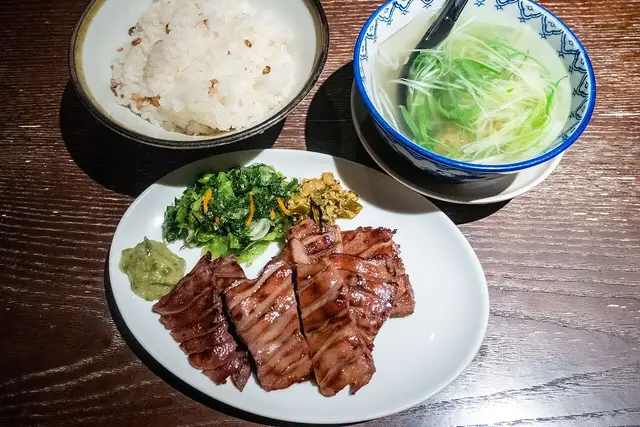 Gyutan-yaki (grilled beef tongue, Sendai specialty)SendaiSliced beef tongue grilled over a fire. The first specialty shop opened in Sendai in 1948, and about 100 now operate in the city.
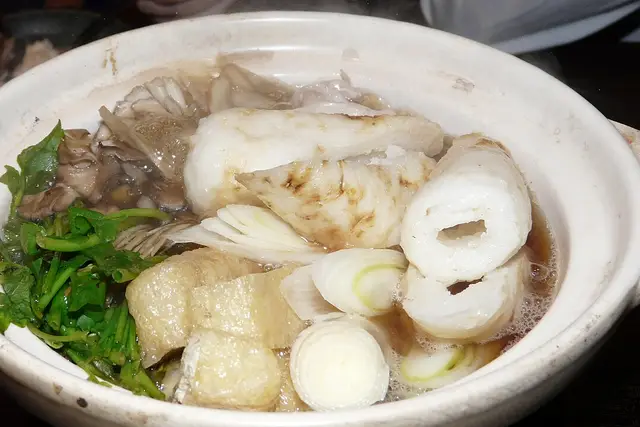 Kiritanpo nabe (hot pot with grilled rice sticks and Hinai chicken broth)Odate
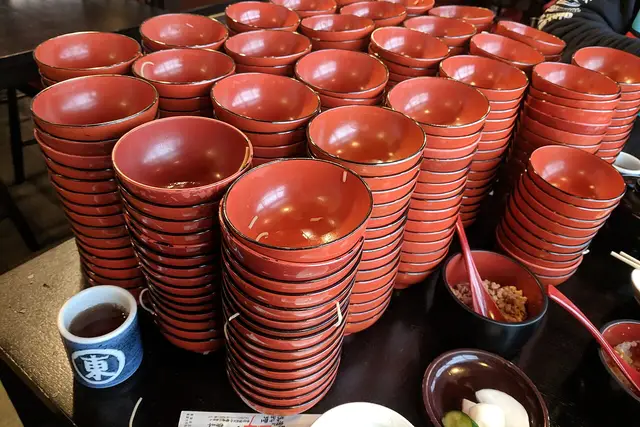 Wanko soba (bite-size soba refilled into your bowl until you stop)Morioka and Hanamaki
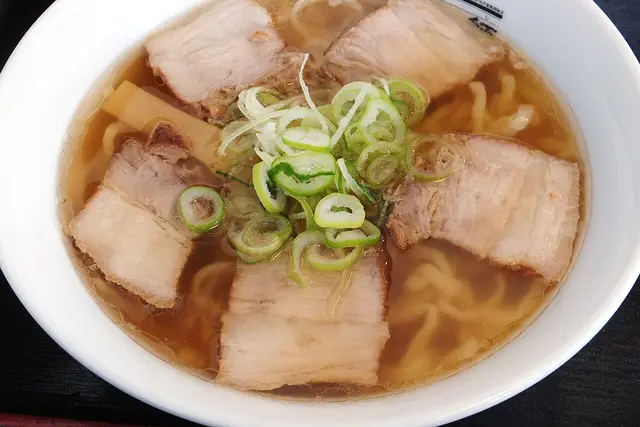 Kitakata ramen (soy ramen with thick curly noodles)Kitakata
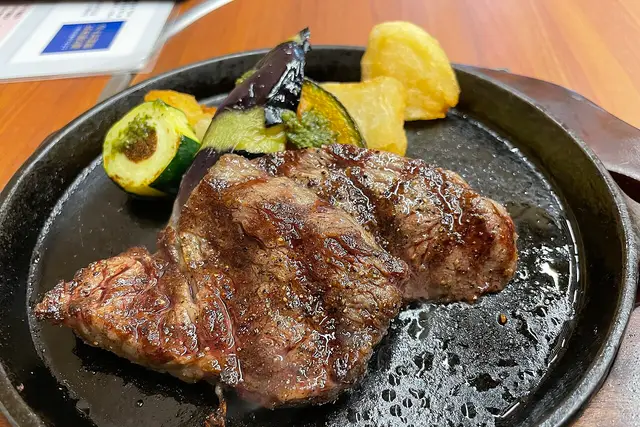 Yonezawa beef (premium marbled wagyu from the Okitama area)Yonezawa
Aomori
10 specialties · 29 regional dishes
Local specialties
Local specialties worth tasting when you visit, served at restaurants and food stalls.
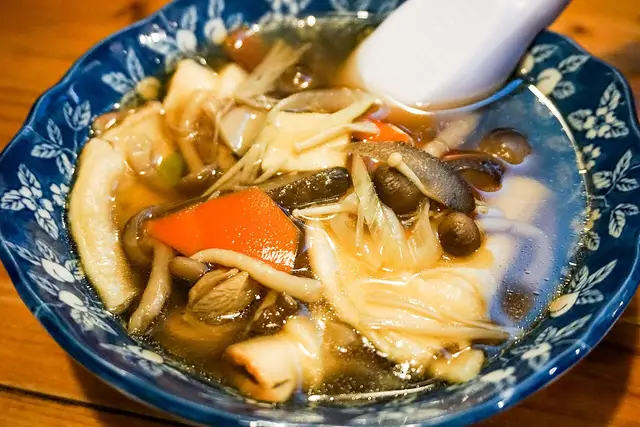
HachinoheHot pots & soups
Hachinohe senbei-jiru (soup with broken Nanbu rice-cracker-style wheat crackers)
八戸せんべい汁
Broth with meat, fish and vegetables, simmered with broken Nanbu wheat crackers made for soup. A Hachinohe regional dish.
HachinoheSeafood
Hachinohe Maeoki mackerel (served as pickled mackerel rice bowl)
八戸前沖さば(銀サバトロづけ丼)
Mackerel caught off Hachinohe and landed at its port, rich in fat. Eaten as a soy-marinated rice bowl, among other ways.
Aomori CityNoodles
Aomori miso curry milk ramen (miso ramen with curry and milk)
青森味噌カレー牛乳ラーメン
Miso ramen combined with curry and milk, topped with butter, bean sprouts, bamboo shoots and wakame. Served at a few shops in Aomori City.
Furukawa Market, Aomori CitySeafood
Nokke-don (build-your-own seafood rice bowl at the market)
のっけ丼
A seafood rice bowl built at Aomori's Furukawa fish market by collecting rice, then choosing sashimi toppings from stalls.
Aomori CityNoodles
Tsugaru niboshi ramen (dried-sardine broth ramen)
津軽の煮干しラーメン
Soy-based ramen with a broth made from dried sardines. Most ramen shops in Aomori City serve a niboshi version.
KuroishiNoodles
Kuroishi tsuyu yakisoba (flat-noodle yakisoba served in soup)
黒石つゆやきそば
Kuroishi's flat-noodle yakisoba served with broth poured over it. Over 70 shops in Kuroishi serve it, each with its own taste.
Towada CityMeat
Towada barayaki (beef short rib and onion stir-fried on a griddle in sweet-savory sauce)
十和田バラ焼き
Beef short rib and plenty of onion grilled in a sweet soy-based sauce. Available at over 40 restaurants in Towada.
OmaSeafood
Oma tuna (bluefin tuna landed at Oma)
大間まぐろ
Bluefin tuna landed at Oma, caught by pole and line, fished from about August to January. Eaten as sashimi or sushi.
Lake JusanNoodles
Lake Jusan shijimi ramen (ramen with freshwater clam broth)
十三湖しじみラーメン
Salt-flavored ramen with broth from Lake Jusan's freshwater clams, also topped with the clams.
HirosakiHot pots & soups
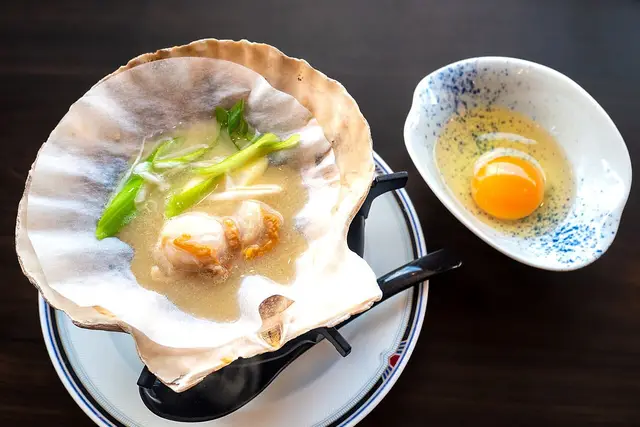
Kaiyaki miso (miso and egg cooked in a scallop shell)
貝焼き味噌
A Tsugaru dish of dashi, miso, leek and scallop with beaten egg, cooked in a large scallop shell.
Regional dishes
Dishes handed down at home and in the community. Some are not served at restaurants (from “Our Regional Cuisines” by Japan's Ministry of Agriculture, Forestry and Fisheries).
- Hachinohe CitySenbei jiruせんべい汁
The name "senbei-jiru" was not firmly established until the Heisei era (1989), when a tourism organization in Hachinohe City began publicizing what was once thought to be a humble dish eaten only at…
Main ingredients: rice crackers, green onions, chicken, thread konnyaku, fu, burdock root, frozen tofu, carrots, mushrooms
- Shimokita region, Tsugaru regionKaiyaki miso貝焼き味噌
Around Tsugaru Bay, which has long been known as a scallop production area, people have been eating "shellfish miso" since the Edo period (1603-1868).
Main ingredients: Eggs, dried bonito flakes, grilled dried fish, fu, miso
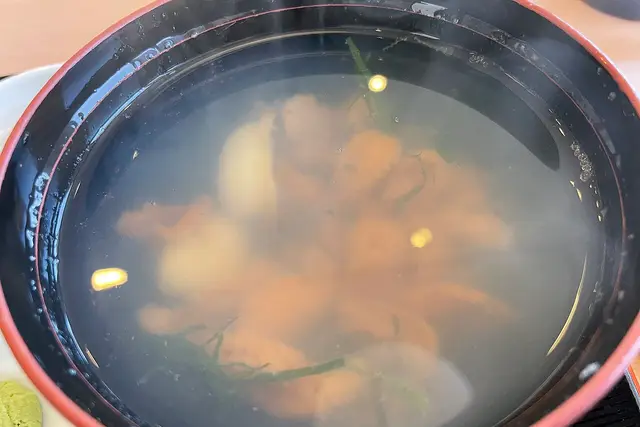 Southwestern regionIchigo Niいちご煮
"Ichigo-ni" got its name from the golden sea urchin floating in the milky white broth produced from abalone extract and other ingredients, as it looked like a hazy wild strawberry in the morning dew…
Main ingredients: Fresh sea urchin, abalone, green perilla, green onion
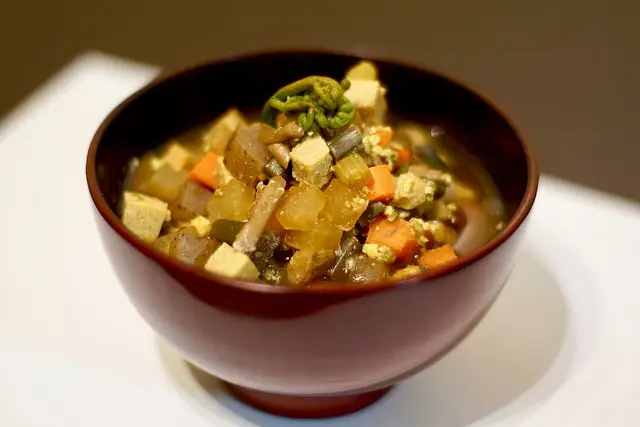 Tsugaru areaKenojiruけの汁
This is a typical local dish of Tsugaru region.
Main ingredients: Daikon radish, carrot, burdock root, bracken, bean curd, dried bean curd, soybeans, kelp, miso
- Tsugaru RegionKyabetsu to Masu no Tsukemono (Cabbage and Trout Pickles)キャベツとマスの漬物
Salted trout used for “Kyabetsu to masu no tsukemono” was preserved over the winter and eaten daily with white rice.
Main ingredients: Cabbage, Salt, Trout, Vinegar, Carrots, Red chili peppers, Raw ginger, Amazake (=sweet, fermented rice drink)
- Shimokita regionKeiranけいらん
Keiran" is one of the most popular dishes among the autumn-finishing feasts. It is a light-flavored clear soup with two white egg-shaped dumplings floating on the top of the bowl.
Main ingredients: glutinous rice flour, sweet bean paste
- Tsugaru areaTara no jappajiru鱈のじゃっぱ汁
Jappa" is a word of Tsugaru dialect, which means "something to be thrown away". It is usually made from fish heads, bones, skins and entrails, which are thrown away without being eaten.
Main ingredients: Cod, radish, carrot, green onion, miso
- Shimokita RegionBekomochiべこもち
"Bekomochi" has been passed down from generation to generation as a special sweet eaten during the Dragon Boat Festival, and is now eaten as a snack.
Main ingredients: Glutinous rice flour, non-glutinous rice flour, sugar, instant coffee, tea, food coloring
- Nanbu RegionMameshitogi豆しとぎ
Afterwards, they would either steam or grill the "mameshitogi" and eat them.
Main ingredients: Green soybeans, blended rice flour (non-glutinous rice flour + glutinous rice flour), sugar
- southwestern regionKinka mochiきんかもち
"Kinkamochi" is an unusual local delicacy born from this environment. It is made from brown sugar, walnuts and miso paste, wrapped in a flour skin, shaped into a half-moon shape and boiled.
Main ingredients: Flour, walnuts, miso, brown sugar.
- Tsugaru regionTaranoko-aeたらの子和え
"Taranoko-ae " is a dish with seasoned and boiled radish, frozen tofu, carrots, konjac noodles, etc., are mixed with shredded cod roe.
Main ingredients: cod roe, carrot, freeze dried tofu, green onion, konjac noodles, salt
- Tsugaru regionNasu no Akashiso-maki (Aubergine and red shiso leaf rolls)なすの赤しそ巻き
This is an everyday staple in the Tsugaru region, handed down in each family since olden times, that combines the aubergines and shiso leaves that are gathered in large quantities during summertime.
Main ingredients: Aubergine, shiso leaves
- The Shimokita regionNiaekko煮あえっこ
"Niaekko" is a local dish of the Shimokita region.
Main ingredients: Daikon radish, carrot, bracken, burdock, fried tofu, and tofu
- The Tsugaru regionNerikomiねりこみ
It is said to have its roots in Buddhist vegetarian cuisine and was created long ago by the monks of the 33 temples of the "Hirosaki Zen Forest" who made “kuzuyose” from vegetables collected through…
Main ingredients: Sweet potatoes, dried shiitake mushrooms, carrots, konjac, field peas, and fried tofu
- Southern RegionHittsumi (Wheat Flour Dumpling Soup)ひっつみ
According to one theory, "hittsumi", wheat flour dumpling, has been made since the Heian period (794-1192).
Main ingredients: Wheat flour, chicken, carrot, gobou (= burdock), Japanese leek
- Tsugaru RegionHoshi Mochi(Dried rice cake)干し餅
It has long been a preserved food made during the extremely cold season to take advantage of the cold and humid climate.
Main ingredients: sticky rice, Sugar
- Tsugaru RegionMizu to Hoya no Mizumono (Sea squirt and Mizu soup)ミズとホヤの水物
During the short summer of the Tsugaru region, locals enjoy a dish called "Hoya Mizu" which is made from seasonal ingredients.
Main ingredients: Mizu (=elatostema umbellatum), Hoya(=Sea squirt)
- Tsugaru RegionSake no Iizushi (Fermented salmon sushi)鮭の飯ずし
In Tsugaru region, surrounded by snow during the winter, people harvest farm products and hunt fish as much as possible during the harvest season, and preserve food by drying or pickling them.
Main ingredients: Salted salmon, bamboo shoot, glutinous rice
- Tsugaru RegionIka Menchi (Squid hamburger)イカメンチ
It is a home-cooked dish spread in Tsugaru region, and made from minced ‘Geso’, squid legs left over after preparing squid sashimi, mixed with vegetables like onions and carrots, and wheat flour…
Main ingredients: Squid, Cabbage, Carrot, Onion
- Tsugaru RegionInarizushiいなりずし
"Inarizushi" in general refers to a dish where vinegared rice or glutinous rice is stuffed inside sweet and savory fried tofu pouches.
Main ingredients: Glutinous rice, Red pickled ginger, “Inari-age (fried tofu pouch seasoned with a sweet soy-based broth)”
- Nanbu RegionKakkeかっけ
"Kakke" is a dish made by kneading “Soba (buckwheat)” flour with a little salt, rolling out the dough thinly, cutting it into triangles, boiling them, and serving with garlic miso.
Main ingredients: “Soba (buckwheat)” flour, Daikon radish, Tofu, Garlic, Miso
- Tsugaru RegionGappara-mochiがっぱらもち
In the past, when ironing at home to achieve crispness, people used a mixture called "rice paste" applied to fabric. It was made by mushing soaked rice in water.
Main ingredients: Rice, Wheat flour, Brown sugar, Black sesame seeds
- Tsugaru RegionGoma-gohan (Sesami seeds Rice)ごまご飯
"Goma-gohan" or "goma-mama" is one example of this. Because of its pitch-black color, it was made and offered at Buddhist altars on "Ke-no-hi," such as Buddhist memorial services and days of devotion.
Main ingredients: Glutinous rice, Black Sesame seeds
- Southern RegionJyune-mochi (Potato Cake with Sweet Egoma Souce)じゅね餅
The word "Jyune" refers to egoma (perilla) and "Jyune-mochi" is eaten with a paste made with roasted perilla seeds which are grinded and mixed with miso and sugar.
Main ingredients: "Kannakake-imo" (=dried white potatoes with its starch removed) powder, Egoma(=perilla) seeds
- Aomori CityShouga Miso Oden (Japanese Fishcake Stew with Ginger Miso)しょうが味噌おでん
"Shouga miso oden" is unique in that it uses local ingredients such as whelk caught in Mutsu Bay, "Nemagaridake" (=curved-root young bamboo shoots), "Daikakuten" (=thin and large deep-fried fish…
Main ingredients: Daikon radish, Konjac (=Yam cake), Satsuma-age (=Deep fried fishcake), Eggs, Chikuwa (=Fishcake), Miso, Ginger
- Tsugaru RegionSushikoすしこ
“Sushiko” is a traditional dish which has been eaten by the local people, particularly those living in the northwestern part of Tsugaru, along the Sea of Japan.
Main ingredients: Glutinous rice, Cucumbers, Red shiso leaves, Purple cabbage, Vinegar
- Tsugaru RegionAkakabu no Senmaizuke (Red Turnip Pickles)赤かぶの千枚漬け
“Akakabu no senmaizuke” refers to traditional red turnip pickles of the Tsugaru region of Aomori prefecture. Red turnips are harvested just before the snowy season begins.
Main ingredients: Red turnips, Salt, Zarame (=Coarse white sugar), Gobai-su(=Vinegar condensed by five times), Kombu (=Kelp)
- Tsugaru RegionSame no Sukume鮫のすくめ
"Same no Sukume" is a dish made from flaked boiled shark head marinated with daikon radish or cabbage and miso vinegarette, and it is said that it was invented not to waste shark at the time when…
Main ingredients: Shark, Daikon radish or Cabbage, Green onion, Vinegar, Miso
- Shimokita Peninsula, Hachinohe CityKujira Jiru (Whale Soup)くじら汁
The taste of whale varies in each part, but "shiromi" (=white part) close to the back skin is used for "Kujira Jiru".
Main ingredients: Cured whale meat (fat), Carrot, Gobou(=Burdock root) , "Kan-Daikon" (=Daikon radish dried under the cold weather), Shimi-tofu (=Freeze-dried tofu), Potato, Pickled takana (=mustard green), Miso, Soy sauce
“Find places serving it” opens a map app search for the dish name and the place name. The results are not chosen or recommended by this site. Please check with the shop whether it serves the dish.
Sources
Local specialties & regional dishes
Source: “Our Regional Cuisines” (Ministry of Agriculture, Forestry and Fisheries), edited by this site (imported 2026-11-15) https://www.maff.go.jp/e/policies/market/k_ryouri/index.html. Names, areas and ingredients are as written on the source pages; descriptions are excerpts of the original text. No photos from the ministry are used (dish photos are from Wikimedia Commons). This page is not made or endorsed by the ministry.
Local food specialties
Each specialty was checked against an official page (prefecture, municipality, tourism association or JNTO) on 2026-11-17. The descriptions were written by this site.
- Hachinohe senbei-jiru (soup with broken Nanbu rice-cracker-style wheat crackers): aomori-tourism.com
- Hachinohe Maeoki mackerel (served as pickled mackerel rice bowl): aomori-tourism.com
- Aomori miso curry milk ramen (miso ramen with curry and milk): aomori-tourism.com
- Nokke-don (build-your-own seafood rice bowl at the market): aomori-tourism.com
- Tsugaru niboshi ramen (dried-sardine broth ramen): aomori-tourism.com
- Kuroishi tsuyu yakisoba (flat-noodle yakisoba served in soup): aomori-tourism.com
- Towada barayaki (beef short rib and onion stir-fried on a griddle in sweet-savory sauce): aomori-tourism.com
- Oma tuna (bluefin tuna landed at Oma): aomori-tourism.com
- Lake Jusan shijimi ramen (ramen with freshwater clam broth): aomori-tourism.com
- Kaiyaki miso (miso and egg cooked in a scallop shell): www.hirosaki-kanko.or.jp
Photo and data credits
Grilled beef tongue set with barley rice and oxtail soup くろふね (CC BY 4.0) / Kiritanpo hot pot with grilled rice sticks, maitake and seri greens Chensiyuan (CC BY-SA 4.0) / Tall stacks of empty wanko soba bowls on the table Koltonsmith (CC BY-SA 4.0) / Kitakata ramen in clear soy broth topped with chashu and green onion Lombroso (CC BY-SA 4.0) / Yonezawa beef steak on a sizzling iron plate with grilled vegetables Totti (CC BY-SA 4.0) / Senbei-jiru soup with pieces of Nanbu rice cracker, mushrooms and vegetables くろふね (CC BY-SA 4.0) / Kaiyaki miso: scallops simmered in miso in a scallop shell, with a raw egg くろふね (CC BY 4.0) / Ichigoni, a clear soup with sea urchin and sliced abalone Totti (CC BY-SA 4.0) / Kenojiru, a miso soup of finely diced vegetables, wild plants and tofu EAT&ART TARO (CC BY-SA 4.0). Cropped and resized.