규슈의 명물·향토 요리
돼지고기·닭고기 요리, 면, 겐카이나다와 아리아케해의 해산물. 해외와의 교류에서 생겨난 요리도 있습니다.
규슈의 명물 음식 65가지와 향토 요리 204가지입니다.
규슈에서 맛보고 싶은 명물
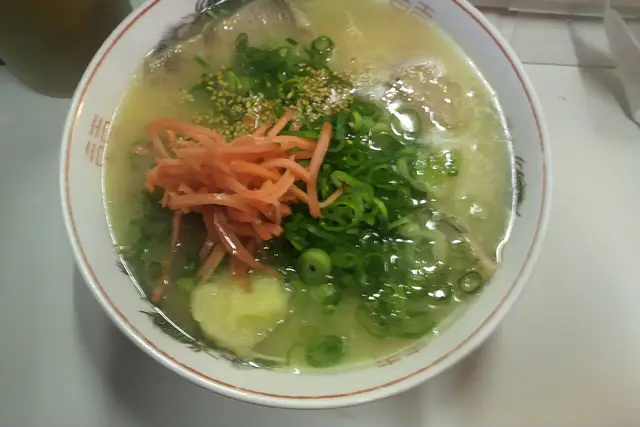 Hakata ramen (pork-bone broth with thin noodles)HakataRamen with milky pork-bone broth and thin straight noodles, also served at yatai stalls.
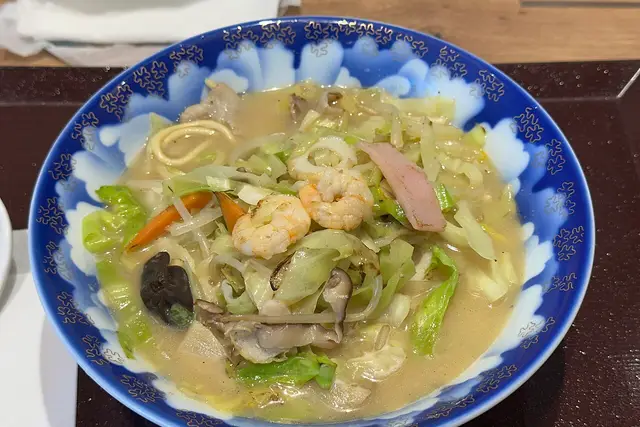 Nagasaki champon (noodles in rich soup with seafood and vegetables)Nagasaki City
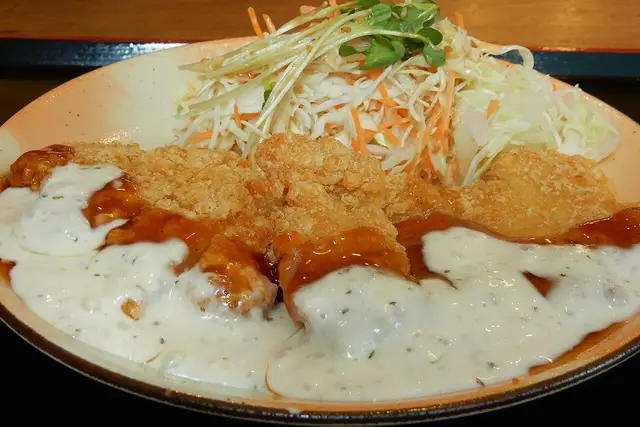 Chicken nanban (fried chicken in sweet vinegar sauce)Nobeoka
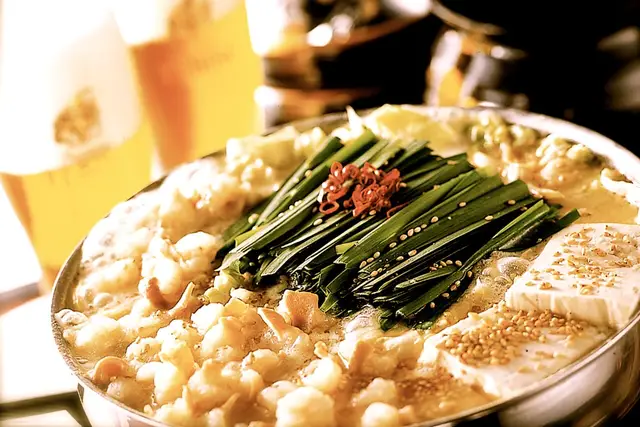 Hakata motsunabe (beef offal hot pot)Fukuoka City
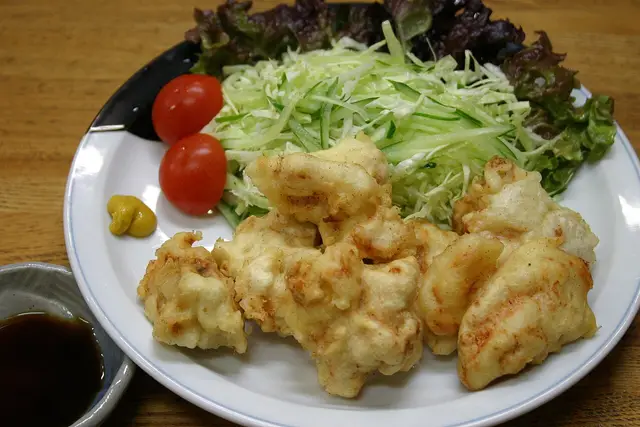 Toriten (tempura-battered fried chicken)Oita and Beppu
Miyazaki
명물 10·향토 요리 30
명물 음식
그 지역에 가면 맛보고 싶은, 가게나 노점에서 먹을 수 있는 명물입니다.
Nobeoka고기
Chicken nanban (fried chicken in sweet vinegar sauce)
チキン南蛮
Fried chicken dipped in sweet vinegar sauce, often with tartar sauce; said to have originated in Nobeoka.
Miyazaki City고기
Jidori sumibiyaki (charcoal-grilled local chicken)
地鶏炭火焼き
Local free-range chicken grilled over charcoal, served at specialty shops and izakaya.
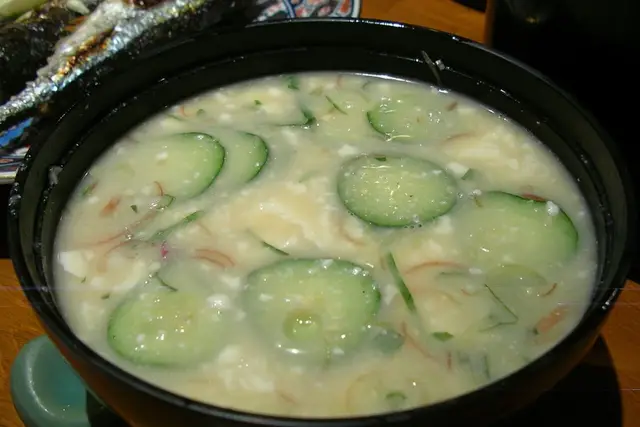
Miyazaki 각지밥・덮밥
Hiyajiru (cold fish-and-sesame miso soup over rice)
冷や汁
Chilled soup of grilled fish, miso and sesame poured over rice.
Miyazaki City밥・덮밥
Niku-maki onigiri (pork-wrapped rice ball)
肉巻きおにぎり
A rice ball wrapped in soy-marinated pork and grilled, from Miyazaki.
Miyazaki 각지면
Karamen (spicy noodle soup with konjac noodles)
辛麺
Spicy soup with konjac-blended noodles, a Miyazaki regional noodle dish.
Obi, Nichinan길거리 음식
Obi tempura (fried fish paste cakes)
おびの天ぷら
Fried cakes of fish paste from the Nichinan coast, a local food of the Obi district.
Nichinan City면
Sakana udon (udon made from fish paste)
魚うどん
Noodles made from fish paste, born in Nichinan during wartime and postwar food shortages.
Miyakonojo City전골・국물
Miyakonojo oden (chicken-bone and kelp broth oden)
都城おでん
Oden simmered in a broth of chicken bones, kelp and bonito, from Miyakonojo.
Takachiho Gorge면
Takachiho nagashi somen (flowing somen noodles)
高千穂の流しそうめん
Somen noodles scooped from flowing bamboo troughs; said to have started at Takachiho Gorge, eaten in summer.
Nobeoka City면
Nobeoka ankake yakisoba (crispy noodles with thick vegetable sauce)
延岡あんかけ焼きそば
Pan-fried noodles topped with a thick vegetable sauce, a Nobeoka favorite.
향토 요리
가정과 지역에서 이어져 온 요리입니다. 가게에서 팔지 않는 것도 있습니다(일본 농림수산성 ‘うちの郷土料理’에서).
- All over the prefectureChicken nanbanチキン南蛮
Chicken Nanban" is known to have originated in Nobeoka City. It is said that it was first prepared as a bribe dish at a Western-style restaurant in Nobeoka City in the 1950s.
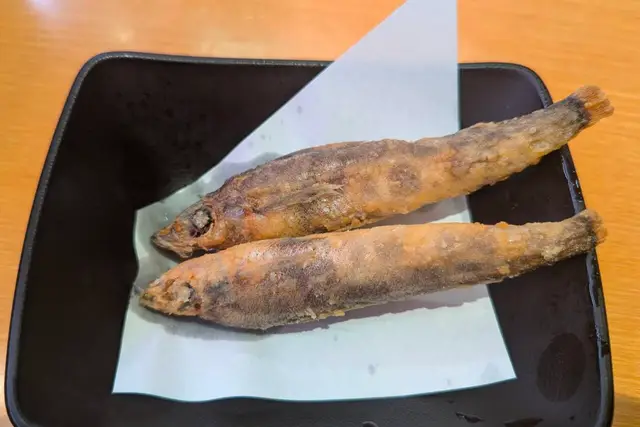 Northern part of the prefecture (coastal area), Nobeoka CityMehikari no karaage(Fried Chlorophthalmus borealis)めひかりの唐揚げ
small fish, 5-15 cm in length, caught off the coast of Nobeoka City in the Hyuga Sea at a depth of around 300 m. They are called "mehikari" because of their large, sparkling blue eyes.
- Central regionHiyajiru (cold soup)冷や汁
"Hiyajiru(cold soup)" is a local delicacy of the plains in Miyazaki Prefecture.
주요 재료: dried sardines, tofu, cucumbers, eggplant, barley rice, green perilla, Japanese ginger
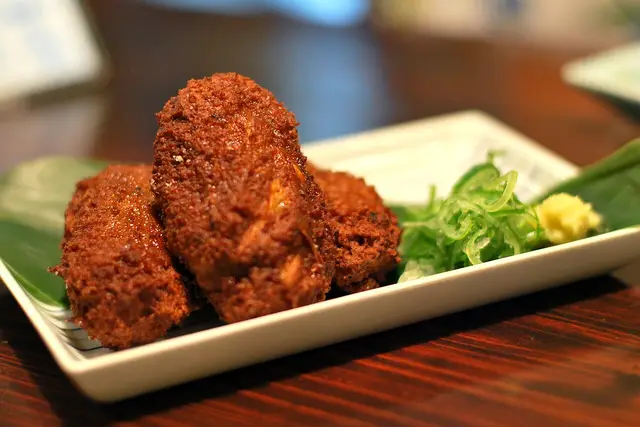 Obi DistrictObiten (Fried fish cake mixed with tofu blend)おび天
"Obiten" is a local dish from the Obi area of Nichinan City, Miyazaki Prefecture, Japan. It is a type of fish paste product classified as fried "Kamaboko(=Fish cake)."
주요 재료: Iwashi (sardine), Aji (horse mackerel), Shiira (mahi-mahi), Saba (mackerel), Tobiuo (flying fish), Sawara (Japanese spanish mackerel), Firm tofu, Ginger
- All over Miyazaki PrefectureNishime煮しめ
The name "nishime" comes from the way it is cooked, which is to simmer it slowly so that no liquid remains.
주요 재료: Shiitake mushrooms, taro, bamboo shoots, konnyaku, deep-fried tofu, dried radish, kombu (kelp)
- Northern Miyazaki Prefecture (coastal area)Sakana zushi(Fish sushi)魚ずし
Fish sushi" is a type of zushi made with mackerel or horse mackerel, and is commonly called "saba-zushi" or "aji-zushi".
- Northern part of the prefecture (coastal area)Futatabi dangoふたたびだんご
Nobeoka City, located in the northeastern part of Miyazaki Prefecture and facing the Sea of Hyuga to the east with five rivers flowing through it, is rich in nature and has a popular snack called…
- In the northern and central regions, etc.Toshi-tori Zen/Toshi-tori Zen/Toshi-koshi Ryori (New Year’s Eve Feast)歳とり膳/年取り膳/年越し料理
On the night of New Year's Eve, the family gathers together to enjoy a lavish meal served on a high table tray to welcome the New Year. It is the time when 'Toshi-tori Zen' is eaten.
주요 재료: Fish such as sea bream and salt sardines, kelp, daikon radish, carrots, tofu, shiitake mushrooms.
- Northern part of prefecture (mountainous area)Nadofu菜豆腐
One is the tofu dish "nadofu."
주요 재료: Soybeans, magnesium chloride, fragrant vegetables
- Northern region of the prefecture (mountainous area)Kappodoriかっぽ鶏
Kappodori is a dish that uses kappo (bamboo) as a bowl and has been eaten since ancient times in Takachiho, where bamboo is abundant.
주요 재료: Local chicken, shiitake mushrooms, carrots, burdock, and kuretake
- Northern part of the prefecture (mountainous region)Somageそまげ
“Somage” is a term rooted in “soma” (buckwheat) and “ge” (porridge).
- Northern Miyazaki Prefecture (Mountainous Region)Hie Zoushi / Hie Gayu稗ずーしー/稗がゆ
The dish known as "zushi" refers to a type of rice porridge.
- The northern region of the prefecture (the mountainous region)Tokibi Meshi (Rice with Corn)とうきびめし
A long time ago in this region, "tokibimeshi (rice with Corn)" was a staple food item that played a central role with boiled barley and rice.
- Central area of prefectureSengiri Daikon (Kiriboshi Daikon) no Madaka-zuke千切り大根(切り干し大根)のまだか漬け
Containing sengiri daikon, roasted soybeans, carrots, squid, konbu, etc., it is a healthy food that is full of ingredients that are good for your body.
- Central Region of PrefectureNuta-Imoぬた芋
"Nuta-Imo" is a local dish using satoimo(=Japanese taro) that has been commonly eaten since long ago. It is rarely found on menus at restaurants, but it is sometimes served as an appetizer.
- Hyuga City, Miyakonojo City, Kushima City, Kawanami-cho, Takachiho-cho, Gokase-cho, etc.Ocha no ha tempura (Green tea leaf tempura)お茶の葉天ぷら
"Ocha no ha tempura (=Green tea leaf tempura)" is a local dish eaten when freshly harvested green tea leaves are ready.
- East-Central part of the PrefectureZabu-Jiruざぶ汁
"Zabu-Jiru" is said to have gotten its name from the fact that various ingredients, mainly root vegetables, are boiled "zabu-zabu".
주요 재료: Carrot, Gobou(=Burdock), potato, Daikon radish, pumpkin
- All of Miyazaki Prefecture, Shintomi-choTori Meshiとりめし
“Tori Meshi” is a rice seasoned and cooked with vegetables and chicken meat and has been a popular recipe for years, particularly as a farmer’s dish.
주요 재료: Chicken meat, rice, carrots, gobou (=burdock), shiitake mushrooms
- Miyazaki CityHyuuga Kurokawa Kabocha No Nimono日向黒皮かぼちゃの煮物
With its elegant sweetness and firmness, this pumpkin is perfect for dishes such as “Hyuuga Kurokawa Kabocha No Nimono”. The skin looks rough but can be eaten as well.
- Central RegionsRenkon no Suri-Nagashi Jiru / Renkon no Gori-Gori Jiruれんこんのすり流し汁/れんこんのごりごり汁
“Renkonno suri nagashi jiru / renkonno gori gori jiru” is made by grating lotus roots and placing them in a soup flavored with “dashi” (=Japanese soup stock) and miso.
주요 재료: Lotus root, Fried bean curd, Green onions, Miso, Yuzu peel
- Central RegionsGaneがね
“Gane” is a traditional dish from Minamikyushu of Kagoshima prefecture and Miyakonojo city of Miyazaki prefecture. “Gane” means crab in the local dialect.
주요 재료: Sweet potato, Gobou(=Burdock root), Carrot, Wheat flour
- All of Miyazaki PrefectureIriko Mochiいりこもち
“Iriko mochi” literally means rice cake made from parched rice flour. The dish has been handed down in the Satsuma domain since the Edo period.
- Kobayashi City (Western Part of the Prefecture)Jidori no Miso Korobakashi地鶏の味噌ころばかし
“Jidori no miso koro bakashi” is a traditional homemade dish and the words “koro bakashi” means to boil and roll the chicken meat in a pot in the local dialect of the western part of the prefecture.
- Western areas of Miyazaki prefectureSuno Shui (Sardine Vinegar Soup)酢のしゅい
"Suno shui" is a hot vinegar soup made with grated daikon radish and sardines simmered in vinegar and soy sauce. In Japanese, "shui" means soup.
- All of Miyazaki prefectureSerino Yogoshi (Japanese Parsley Mashed Tofu Salad)せりのよごし
"Seri" (Japanese parsley) is a perennial herb of the parsley family that grows wild in the mountains and fields throughout Japan.
주요 재료: "Seri" (Japanese parsley), Salt, Tofu, Sesame seeds, Sugar, Miso
- Miyakonojo City, Miyazaki City, Nichinan Town, Takachiho Town, Nobeoka City, Hyuga CityNanatoko Zushi (Japanese Rice Soup with Seven Vegetables)七とこずし
"Nanatoko zushi" is a traditional dish from the Miyakonojo region dating back to the Satsuma Domain when the Shimazu clan was in rule.
주요 재료: Rice, Rice cake, Carrot, Gobou (=burdock Root), Satoimo (=Japanese taro), Napa cabbage, Dried shiitake mushroom, Fried thin tofu, Soybean sprouts, Seri (=Japanese parsley)
- Nishimorokata district (Takaharu town and Kobayashi city) and Shiiba villageMeno Mochi Arare (Bite-sized Japanese Rice Crackers made from Old Decorations)めの餅あられ
"Meno mochi kazari" is a traditional event taking place in the southern Kyushu area on Little New Year.
- Kitago Town, Nichinan City, Kitago and Sakatani areasKanimaki-jiru (crab miso soup)かに巻き汁
"Kanimaki-jiru" is a local dish of Kitago Town in southern Miyazaki Prefecture, using Yamataro-gani (officially called Mokuzu-gani in Kitago Town, a member of the Shanghai crab family), which are…
- Miyakonojo CityNerikuri, Nettabo, Imo-mochi (Sweet Potato and Mochi Dumpling)ねりくり/ねったぼ/芋もち
In Miyazaki Prefecture, sweet potatoes are called "Kansho", and "Nerikuri" made from sweet potatoes is eaten mainly in the vicinity of Miyakonojo City.
주요 재료: Sweet potato, Mochi, Sugar, Kinako (Roasted soybean flour)
- Miyazaki City, Miyakonojo City, Nichinan CityTsuwabukino-aburaitame (fried tsuwabuki)つわぶきの油炒め
Tsuwabuki is native to Japan and grows wild south of Fukushima and Ishikawa prefectures in Honshu, but has long been used as a food mainly in Kyushu and some other regions.
‘먹을 수 있는 가게 찾기’는 요리 이름과 지명으로 지도 앱 검색을 엽니다. 검색에 나오는 가게는 이 사이트가 고르거나 추천한 것이 아닙니다. 그 요리가 있는지는 가게에 확인해 주세요.
출처
명물·향토 요리
출처: 농림수산성 ‘うちの郷土料理 (Our Regional Cuisines)’를 가공하여 작성 (2026-11-15 가져옴) https://www.maff.go.jp/e/policies/market/k_ryouri/index.html. 이름·전해지는 지역·재료는 원문 그대로이며, 설명은 원문의 일부입니다. 농림수산성의 사진은 쓰지 않았습니다(요리 사진은 Wikimedia Commons의 것입니다). 이 페이지는 농림수산성이 만든 것이 아닙니다. 요리 이름과 설명은 영어로 표시됩니다.
지역 명물 음식
명물 음식은 도도부현・시정촌・관광협회・JNTO 등의 공식 안내에서 그 지역의 명물임을 확인한 것입니다(2026-11-17 확인). 설명은 이 사이트에서 썼습니다.
- Chicken nanban (fried chicken in sweet vinegar sauce): www.city.nobeoka.miyazaki.jp
- Jidori sumibiyaki (charcoal-grilled local chicken): www.kanko-miyazaki.jp
- Hiyajiru (cold fish-and-sesame miso soup over rice): www.kanko-miyazaki.jp
- Niku-maki onigiri (pork-wrapped rice ball): www.kanko-miyazaki.jp
- Karamen (spicy noodle soup with konjac noodles): www.kanko-miyazaki.jp
- Obi tempura (fried fish paste cakes): www.kanko-miyazaki.jp
- Sakana udon (udon made from fish paste): www.kanko-miyazaki.jp
- Miyakonojo oden (chicken-bone and kelp broth oden): www.kanko-miyazaki.jp
- Takachiho nagashi somen (flowing somen noodles): www.kanko-miyazaki.jp
- Nobeoka ankake yakisoba (crispy noodles with thick vegetable sauce): www.kanko-miyazaki.jp
사진·데이터 출처
Hakata ramen in milky pork-bone broth with red pickled ginger and green onions vigorous_action (CC BY-SA 3.0) / Nagasaki champon with shrimp, cabbage and other vegetables in a blue bowl ノボホショコロトソ (CC BY 4.0) / Chicken nanban covered with tartar sauce, with shredded cabbage Lombroso (CC BY-SA 4.0) / Hakata motsunabe hot pot with beef offal, garlic chives, chili and sesame 徳永涼 (CC BY-SA 3.0) / Plate of toriten (chicken tempura) with shredded cabbage and tomatoes Toritencat (Public domain) / Hiyajiru, a cold miso soup with sliced cucumber and crumbled tofu Hajime NAKANO (CC BY 2.0) / Two deep-fried mehikari (greeneye fish) on paper Hanabishi (CC0) / Plate of obiten, fried fish cakes from Obi [puamelia] (CC BY-SA 2.0). 잘라내고 축소했습니다.