주부·호쿠리쿠의 명물·향토 요리
맛이 진한 나고야 요리, 동해 쪽(호쿠리쿠)의 해산물, 산간 지역의 소바와 밀가루 음식.
주부·호쿠리쿠의 명물 음식 87가지와 향토 요리 266가지입니다.
주부·호쿠리쿠에서 맛보고 싶은 명물
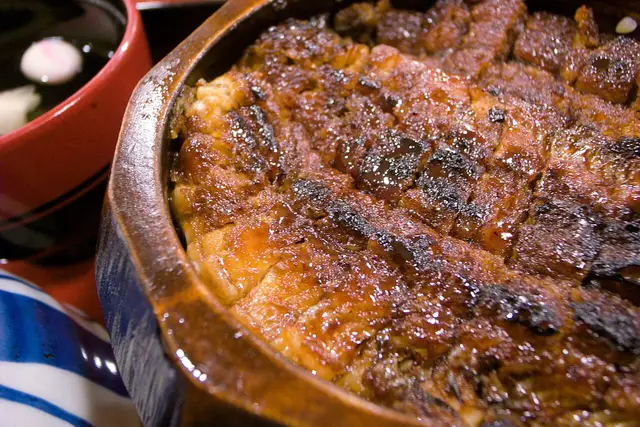 Hitsumabushi (chopped grilled eel over rice, eaten three ways)NagoyaChopped grilled eel on rice, eaten plain, with condiments, then as tea or broth ochazuke.
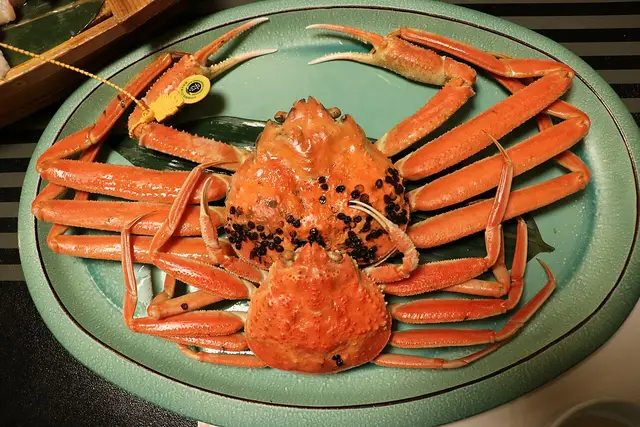 Echizen-gani (Fukui snow crab)
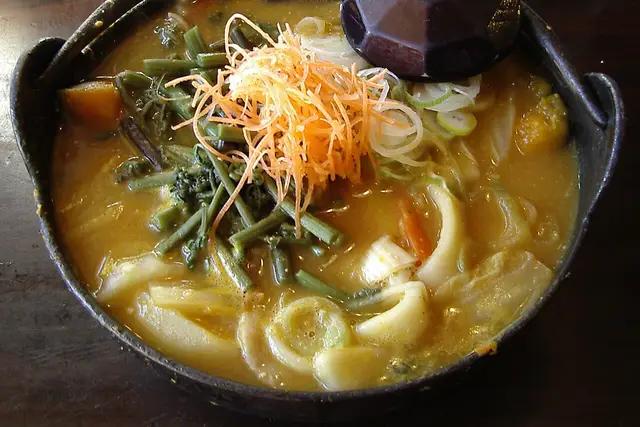 Hoto (wide flat noodles simmered in miso with pumpkin and vegetables)
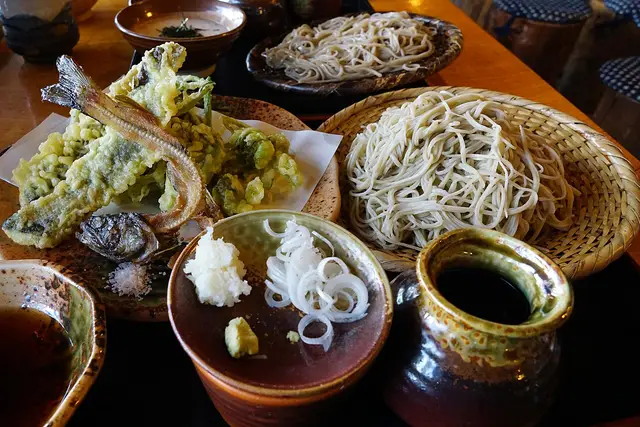 Shinshu soba (buckwheat noodles)
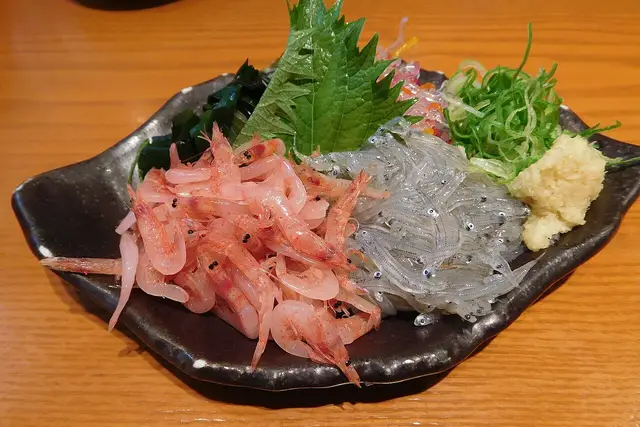 Sakura ebi (Suruga Bay sakura shrimp)Shizuoka City
Ishikawa
명물 8·향토 요리 30
명물 음식
그 지역에 가면 맛보고 싶은, 가게나 노점에서 먹을 수 있는 명물입니다.
Kanazawa밥・덮밥
Kanazawa curry (thick curry with cutlet and shredded cabbage)
金沢カレー
Thick curry served on a steel plate with shredded cabbage, topped with cutlet and sauce.
Komatsu면
Komatsu udon (thin udon in light seafood broth)
小松うどん
Thin, firm noodles in a mild seafood broth; said to have started in 1897 at a shop near Komatsu Station.
Kanazawa전골・국물
Kanazawa oden (stewed fish cakes and other items)
金沢おでん
Oden with local items like wheat-gluten wheels and whelk; in winter, crab shell stuffed with snow crab meat.
Kanazawa밥・덮밥
Hanton rice (omelet rice topped with fried fish and tartar sauce)
ハントンライス
Rice under a soft egg, topped with fried white fish or shrimp, with ketchup and tartar sauce.
Kanazawa전골・국물
Jibuni (stewed duck with wheat gluten)
治部煮
Kanazawa dish of duck simmered with sudare wheat gluten and vegetables.
Oku-Noto밥・덮밥
Noto-don (rice bowls of Oku-Noto ingredients)
能登丼
Rice bowls made with Oku-Noto rice and water and local seafood, meat or vegetables; each shop differs.
Ishikawa 각지해산물
Kano-gani and Kobako-gani (Ishikawa snow crab)
加能ガニ・香箱ガニ
Winter snow crab of Ishikawa: the male is kano-gani and the female is kobako-gani.
Nanao해산물
Nanao sushi (the sushi kingdom of Noto)
七尾のお寿司
Nanao is called the sushi kingdom, with many shops serving Noto seafood.
향토 요리
가정과 지역에서 이어져 온 요리입니다. 가게에서 팔지 않는 것도 있습니다(일본 농림수산성 ‘うちの郷土料理’에서).
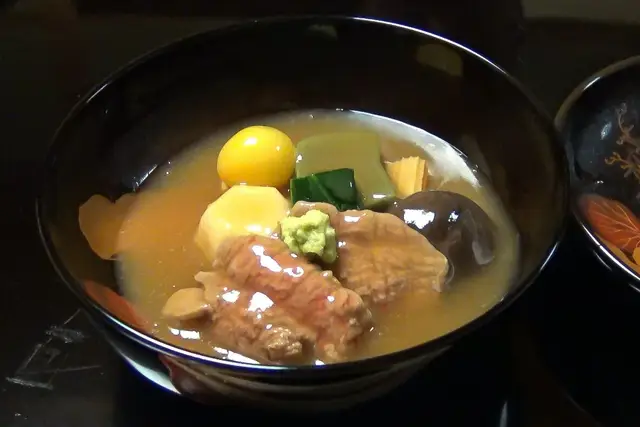 The whole prefectureJibuniじぶ煮
“Jibuni” is a simmered dish that represents Ishikawa Prefecture. It is simmered with duck, sudare-fu (wheat-gluten bread) and seasonal vegetables.
주요 재료: Duck meat (or chicken), sudare-fu (wheat-gluten bread) , wasabi, japanese parsley, shiitake mushrooms, etc.
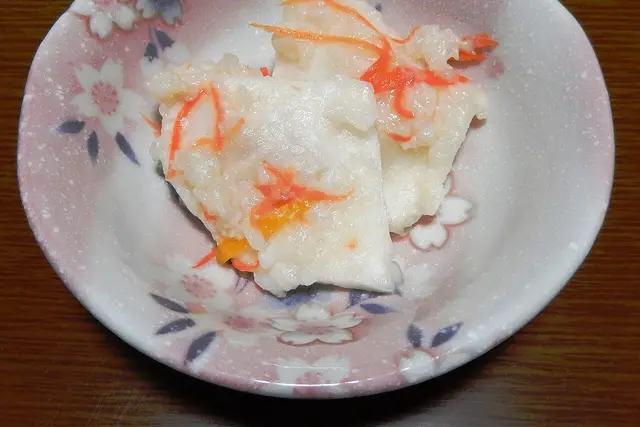 All of Ishikawa prefectureKabura-zushi (Fermented yellowtail sushi)かぶらずし
A traditional fermented food representing Ishikawa Prefecture, with Salted yellowtail sandwiched between salted pickled Kabura (turnips).
- Around City of KanazawaHasu-mushi (Steamed lotus root)はす蒸し
"Hasu-mushi" is a local dish popular among the locals for its texture of Kaga lotus root. "Hasu-mushi" is a steamed dish made by grating Kaga lotus root and mixing it with other ingredients.
주요 재료: Kaga lotus root, White fish, Shrimp, Eggs, etc.
- All of Ishikawa PrefectureEbisu/Berobero (Chilled agar jelly with whisked egg)えびす / べろべろ
"Ebisu" is a chilled Kanten (agar-agar) jelly with whisked eggs. It is an essential ceremonial dish for festivals and celebrations.
- Noto RegionIshiru-nabe (Ishiru Hotpot)いしる鍋
"Ishiru Nabe," a hot pot dish made with seasonal seafood and vegetables, and "Ishiru no Kaiyaki," grilled shellfish with "Ishiru," are local winter classics.
주요 재료: Ishiru (=local fish sauce), Various seafood, Various vegetables, etc.
- Noto RegionHine-zushi (Fermented sushi)ひねずし
“Hine-zushi” is a fermented food made by marinating salted fish with rice and allowing it to mature.
주요 재료: Seafood (horse mackerel, mackerel, etc.), Rice, Red pepper, Sansho leaves, etc.
- All of Ishikawa prefectureDaikon-zushi (Fermented sushi with daikon)大根ずし
The background of "Daikon-zushi" is largely due to the “Kitamae-bune”, a group of merchant ships that have been in contact with the local people since the feudal domain period.
- Kanazawa and Kaga areaOshi-zushi (Sushi pressed overnight)押しずし
In Ishikawa Prefecture, “Oshi-zushi” is eaten on festivals and celebratory occasions.
- Kanazawa City and surrounding areasSawara no kobujimeさわらの昆布じめ
Sliced Spanish mackerel is seasoned with kombu (kelp). Spanish mackerel is known as "Spanish mackerel" used for Saikyo-yaki (grilled fish).
- All of Ishikawa PrefectureMako no Nitsuke (Stewed Cod Roe)真子の煮つけ
In Ishikawa Prefecture, when people mention "Tara" (Cod), it generally refers to Madara (Pacific cod) rather than Skesodara (Alaska pollock).
- Noto Area, Kanazawa City AreaTara no Kotsuke (Cod Sashimi Marinated with Cod Roe)たらの子つけ
Moreover, "tarako" (cod roe) coated sashimi, known as "tara no ko-tsuke," is widely known both within and outside the region and has become a classic local dish in Kanazawa City.
- The whole prefectureNishin no Konbumaki(herring rolled in kelp)にしんの昆布まき
The traditional dish using the dried herring and kelp is "Nishin no Konbumaki” (herring rolled in kelp).
주요 재료: Migaki nishin/mikaki nishin(dried herring), kelp, Kanpyo
- Around KanazawaEggplant Somenなすそうめん
The vestiges of the production center of somen can be seen in the local dish, "Eggplant Somen", eaten in Kanazawa City. “Eggplant Somen" is a dish of simmered eggplant and somen.
- Around Kanazawa CityNasu no Oranda Niなすのオランダ煮
“Nasu no orandani” is eaten during the harvest season of eggplants. Depending on the family that makes it, the eggplants are either boiled, deep-fried, or stir fried.
- Around Kanazawa CityTai no Karamushi鯛の唐蒸し
“Tai no karamushi” is a classic Kaga dish made with red seabream stuffed with okara, vegetables and other ingredients. This traditional dish is symbolic of samurai culture.
주요 재료: Red seabream, okara (=soy pulp), carrots, “gobou” (=burdock)
- All of Ishikawa PrefectureMegisu no Dango Jiruメギスのだんご汁
“Megisu no dango jiru” is a way to prepare large amounts of megisu without letting it go to waste.
- The whole prefectureItoko-jiruいとこ汁
"Itoko-jiru" is an essential part of the Hoonko meal. It is a soup made by slowly simmering various vegetables, with adzuki beans and tofu as the main elements, then flavoring it like miso soup.
- Noto areaAimazeあいまぜ
One of them is "Aimaze". “Aimaze” is a traditional dish eaten mainly in the Noto region. It is a simmered dish made mainly of root vegetables such as daikons and carrots.
- The whole prefectureBuri Daikon(yellowtail and Japanese radish)ぶり大根
You can enjoy a variety of yellowtail dishes in the prefecture, including the now-standard "Buri Daikon" (yellowtail and Japanese radish) and sashimi, as well as "Kabura Zushi" (yellowtail…
- The coastal areaBekanabeべか鍋
In the Noto region, “bekanabe,” a dish made with rice bran sardines, has been popular for a long time.
주요 재료: Rice bran sardines, Chinese cabbage, Radish, Mushrooms, Sake lees, etc.
- Around Anamizu TownIsaza no Tamagotoji (Simmered Isaza With Egg)いさざの卵とじ
Anamizu Town is situated in the heart of the Noto Peninsula. The town is famous for the "Isaza" delicacy, which is a kind of ice goby fish. Locally, it is also known as "suberi" in the Kaga region.
- Noto regionSazaemeshi/Sazaebeshiさざえめし/さざえべし
Turban shells are not only eaten as sashimi or grilled in their own shell, but also as “sazaemeshi” boiled rice and “sazaebeshi” pickled in rice malt.
- The entire prefectureMitamaみたま
Mitama refers to black soybean okowa made by steaming black beans (black soybeans) and glutinous rice. Depending on the region and people, it may be called “medama” because of its appearance.
- Throughout prefectureMettajiru (Pork Miso Soup)めった汁
“Mettajiru” is a hearty pork miso soup with plenty of ingredients; mainly root vegetables like sweet potato, daikon, and carrots.
주요 재료: Sweet potato, daikon radish, carrots, burdock root, pork, etc.
- Around Wajima CitySuizenすいぜん
"Suizen " is one of the local dishes of Wajima that has been passed down the ages since ancient times. Tengusa is boiled, rice flour is added, and the mixture is left to harden.
- Around Kaga CityKishizuきしず
Kishizu" is a vegetarian dish served at Buddhist memorial services and on the occasion of Hoonko (a traditional event held around the anniversary of the death of Shinran Shonin, the founder of Jodo…
주요 재료: Kuzukiri, wakame seaweed, kikurage mushrooms, bamboo shoots, sudare-fu, yuba, white sesame, white miso, sake lees, sugar, etc.
- Around Kanazawa CityKaga Futo Kyuri no Ankake加賀太きゅうりのあんかけ
Kaga giant cucumbers are used in vinegared dishes and soups, but “Kaga futo kyuri no ankake” is a popular summer staple dish.
주요 재료: Kaga giant cucumber, minced meat, potato starch, etc.
- Kanazawa City and surrounding areasTakenoko konbuたけのこ昆布
The mountains near the historical city of Kanazawa, which once flourished as a castle town, are now known as a production center of bamboo shoots.
- Kanazawa City and surrounding areasGoshiki namagashi五色生菓子
In Kanazawa City, which has a history as a castle town of the Kaga Domain, "Goshiki Nama Gashi" is eaten.
- Around Nanao CityNamako no sunomonoなまこの酢の物
Sea cucumbers have become a popular winter delicacy in the Noto Peninsula. The history of sea cucumbers in Noto is said to date back to the 8th century.
‘먹을 수 있는 가게 찾기’는 요리 이름과 지명으로 지도 앱 검색을 엽니다. 검색에 나오는 가게는 이 사이트가 고르거나 추천한 것이 아닙니다. 그 요리가 있는지는 가게에 확인해 주세요.
출처
명물·향토 요리
출처: 농림수산성 ‘うちの郷土料理 (Our Regional Cuisines)’를 가공하여 작성 (2026-11-15 가져옴) https://www.maff.go.jp/e/policies/market/k_ryouri/index.html. 이름·전해지는 지역·재료는 원문 그대로이며, 설명은 원문의 일부입니다. 농림수산성의 사진은 쓰지 않았습니다(요리 사진은 Wikimedia Commons의 것입니다). 이 페이지는 농림수산성이 만든 것이 아닙니다. 요리 이름과 설명은 영어로 표시됩니다.
지역 명물 음식
명물 음식은 도도부현・시정촌・관광협회・JNTO 등의 공식 안내에서 그 지역의 명물임을 확인한 것입니다(2026-11-17 확인). 설명은 이 사이트에서 썼습니다.
- Kanazawa curry (thick curry with cutlet and shredded cabbage): www.hot-ishikawa.jp
- Komatsu udon (thin udon in light seafood broth): www.hot-ishikawa.jp
- Kanazawa oden (stewed fish cakes and other items): www.hot-ishikawa.jp
- Hanton rice (omelet rice topped with fried fish and tartar sauce): www.hot-ishikawa.jp
- Jibuni (stewed duck with wheat gluten): www.hot-ishikawa.jp
- Noto-don (rice bowls of Oku-Noto ingredients): www.hot-ishikawa.jp
- Kano-gani and Kobako-gani (Ishikawa snow crab): www.hot-ishikawa.jp
- Nanao sushi (the sushi kingdom of Noto): www.hot-ishikawa.jp
사진·데이터 출처
Hitsumabushi: grilled eel sliced over rice in a wooden ohitsu akira yamada from Chigasaki, Japan (CC BY-SA 2.0) / Boiled Echizen snow crabs, male and female, on a plate さかおり (CC BY-SA 4.0) / Hoto: flat noodles simmered in miso with vegetables in an iron pot No machine-readable author provided. Jungle assumed (based on copyright claims). (CC BY-SA 3.0) / Shinshu soba on bamboo trays with tempura and condiments 663highland (CC BY 2.5) / Raw sakura shrimp and whitebait from Suruga Bay on a plate Miyuki Meinaka (CC BY-SA 4.0) / Jibuni: meat and vegetables in a thickened broth, topped with wasabi Asacyan (CC BY-SA 4.0) / Kabura-zushi: turnip fermented with rice koji and carrot Ttaakkaco (CC BY-SA 4.0). 잘라내고 축소했습니다.