간사이의 명물·향토 요리
수도였던 교토의 요리와 오사카의 밀가루 음식, 바다와 산의 먹거리.
간사이의 명물 음식 65가지와 향토 요리 207가지입니다.
간사이에서 맛보고 싶은 명물
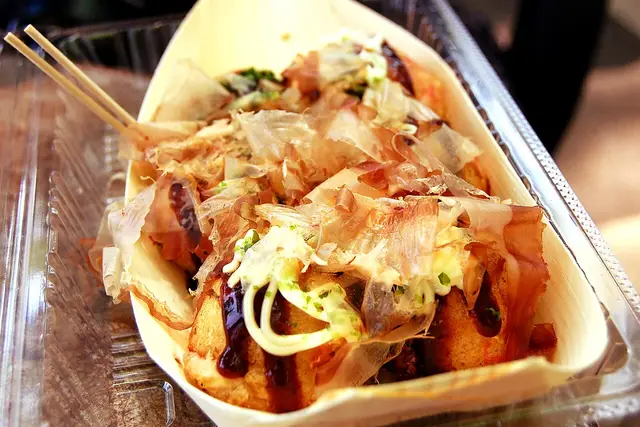 Takoyaki (octopus balls)Round balls of batter with octopus, cooked on a griddle and eaten from street stalls and shops.
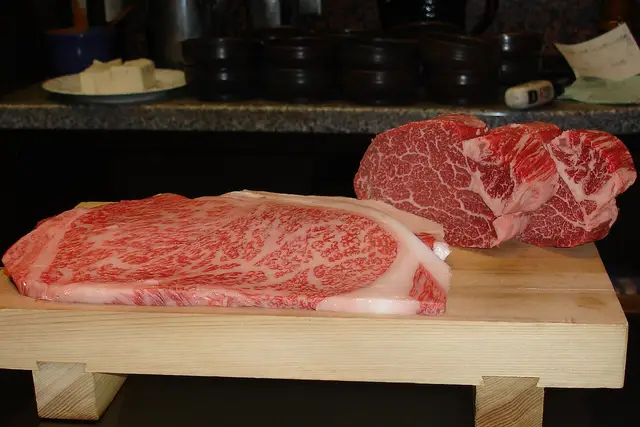 Kobe beef (premium wagyu: steak, teppanyaki)Kobe
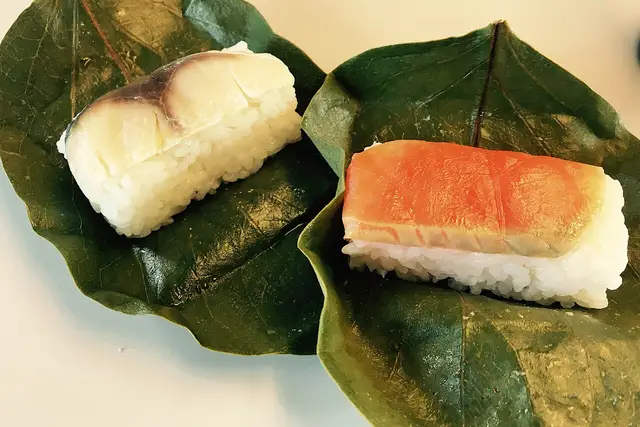 Kakinoha-zushi (salted mackerel sushi wrapped in persimmon leaf)
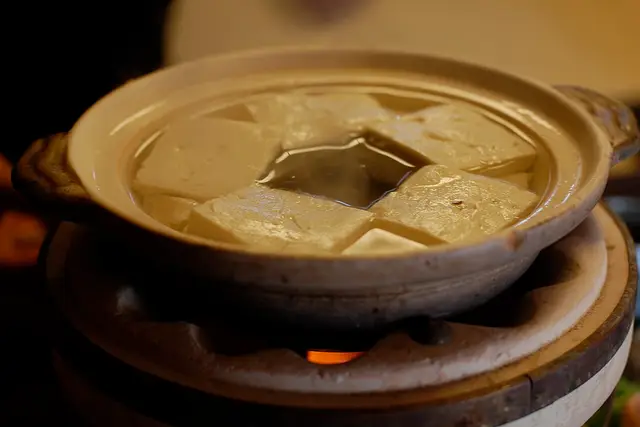 Yudofu (simmered tofu hot pot)Kyoto City
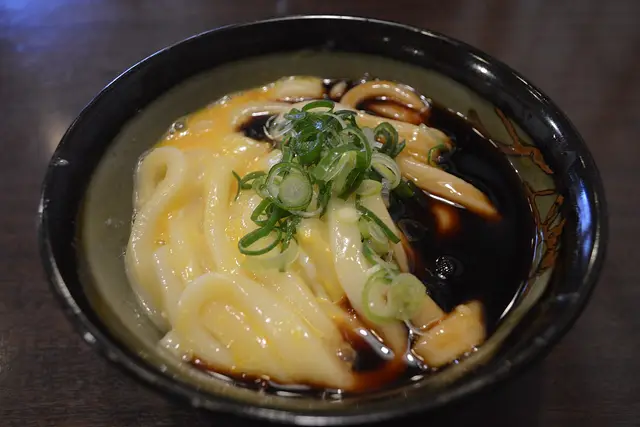 Ise udon (thick soft noodles in dark tamari sauce)Ise
Mie
명물 11·향토 요리 30
명물 음식
그 지역에 가면 맛보고 싶은, 가게나 노점에서 먹을 수 있는 명물입니다.
Ise면
Ise udon (thick soft noodles in dark tamari sauce)
伊勢うどん
Very thick, soft udon noodles served in a dark tamari-based sauce, topped with just chopped scallion and chili pepper.
Yokkaichi고기
Yokkaichi tonteki (thick pork steak with garlic sauce)
四日市とんてき
Thick pork sauteed with garlic in a rich sauce, served with a mound of shredded cabbage.
Kuwana해산물
Kuwana grilled clams (hamaguri)
桑名の焼きハマグリ
Clams from the shallows around Kuwana, a local specialty since the Edo period, eaten grilled or in soup.
Tsu고기
Tsu gyoza (giant deep-fried dumpling)
津ぎょうざ
A large fried gyoza made with a 15 cm wrapper. Available at many restaurants in Tsu.
Tsu밥・덮밥
Tsu unagi (grilled eel dishes)
津のうなぎ料理
Tsu has more than 20 restaurants specializing in grilled eel dishes.
Matsusaka고기
Matsusaka beef (sukiyaki, steak, shabu-shabu)
松阪牛(すき焼き・ステーキ)
Branded beef from Matsusaka, eaten as sukiyaki, shabu-shabu or steak at local restaurants.
Matsusaka고기
Matsusaka chicken yakiniku (miso-marinated grilled chicken)
松阪鶏焼き肉
Chicken coated in sweet-spicy miso sauce and grilled over a net, served at restaurants in Matsusaka.
Shima밥・덮밥
Tekone-zushi (marinated bonito over rice)
てこね寿司
A Shima local dish of fresh bonito chunks mixed with rice and soy sauce.
Toba and Shima해산물
Amagoya grilled seafood (spiny lobster, abalone, turban shell)
海女小屋の浜焼き
Spiny lobster, abalone and turban shells grilled live over a fire at ama diver huts in Toba and Shima.
Kumano밥・덮밥
Mehari-zushi (rice ball wrapped in pickled mustard greens)
めはり寿司
A large rice ball wrapped in pickled takana mustard greens, a typical lunch around Kumano.
Owase밥・덮밥
Sanma-zushi (pickled saury sushi)
さんま寿司
Saury from Kumano-nada, salted and soaked in mikan vinegar, laid whole on sushi rice. An Owase specialty.
향토 요리
가정과 지역에서 이어져 온 요리입니다. 가게에서 팔지 않는 것도 있습니다(일본 농림수산성 ‘うちの郷土料理’에서).
- Ise-Shima food culture area (Ise City, Toba City)Ise udon伊勢うどん
In the Ise food culture, people used to make thick udon noodles without the time and effort to stretch them, and eat them with miso dashi (miso paste).
주요 재료: Ise udon, Ise udon soup (sauce) (made from kombu (kelp), dried sardines, mirin (sweet cooking sake), tamari soy sauce, and sugar)
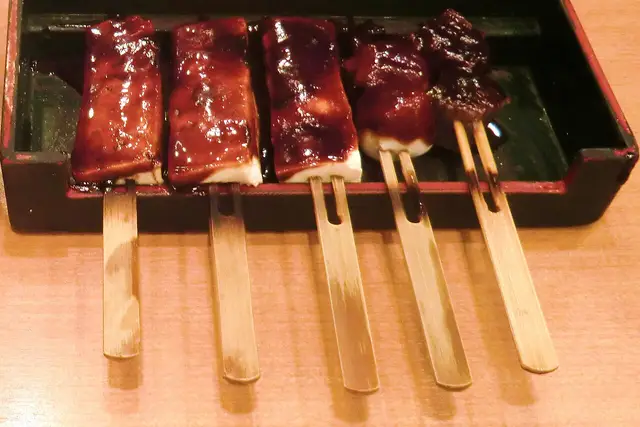 Iga food culture areaTofu Dengaku (Grilled Tofu Dressed With Sweet Miso Paste)豆腐でんがく
The Iga region, surrounded by mountains, used to be an area where seafood was scarce. Therefore, tofu, made from processed beans, was a crucial source of nutrition.
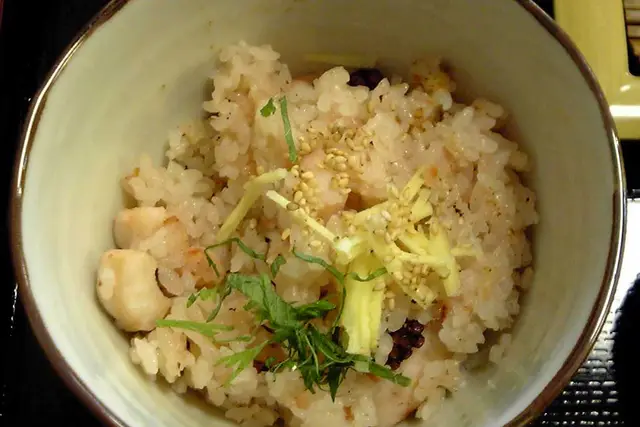 Ise-Shima Food Culture Zone (mainly Toba City)Tako-meshi (Octopus Rice)たこ飯
The history of octopus consumption in Japan is long, and in Mie Prefecture, fishing tools that look like octopus pots have been excavated from a shell mound in Kakizuka Shinden (named after the…
- Ise-Shima food culture areaTekone zushiてこねずし
Tekone-zushi was originally called "tekone-zushi" because fishermen would cut the fish they caught on the boat and mix them together by hand on the spot, and has been eaten mainly in coastal areas.
- Ise-Shima food culture zone (Toba area (Toshi Island, Kamijima, etc.), Hokusei food culture zone, Higashi-Kishu food culture zone)Arame makiあらめ巻き
The commercialized dried arame is returned to water for about 20 minutes, rolled with seasonal fish fillets, and seasoned with a sweet and spicy sauce to make "arame-maki".
- Central and South Sei food culture area, Ise-Shima food culture area (Ise City and Toba City area)Aimazeあいまぜ
It is said that the name "aimaze" comes from the fact that the ingredients are boiled separately, seasoned, and mixed together.
주요 재료: Dried shiitake mushrooms, lotus root, burdock root, carrot, konnyaku, fu, kombu, etc.
- Higashi-Kishu food culture areaKokera zushiこけらずし
In the Higashi-Kishu area, "oshi-zushi" is often made by pressing sushi into a mold and hardening it on occasions such as a gathering of people or on special occasions.
주요 재료: Rice, carrots, dried shiitake mushrooms, pea pods, shime saba (mackerel), eggs, and any other 5 colorful ingredients
- Eastern Kishu Food Culture AreaSanmazushiさんまずし
At the Ubuta Shrine, located in the town of Arima, in Kumano City, the priests and priestesses perform a ritual called “Houhan,” during which children are served foods such as “Sanmazushi (a sushi…
- Iga food culture region, Nakanansei food culture region (primarily Matsuzaka City)Fukidawara (Butterbur Lead-wrapped Soybean Rice Balls)ふき俵
In the Iga region, for example, people offer fukidawara (butterbur bales) to the god of the rice fields along with things like Japanese pampass grass, which easily diverts water to the mouth of the…
- Chunansei Food Culture Area/Eastern Kishu Food Culture AreaBon Jiru盆汁
In the Edo period (1813) “Matsuzaka Fuzokuki” (previously called “Matsuzaka”), which recorded the annual events and customs of Matsuzaka, there’s a record which is thought to indicate “bon jiru.”
주요 재료: Soybean, burdock, eggplant, carrot, pumpkin, fried tofu, yard bean, taro stem, etc.
- Entire prefectureIbara Mochiいばら餅
“Ibara mochi” is a rice cake wrapped in greenbriar leaves. “Ibara mochi,” which was eaten during the May Festival, has different names depending on the region.
주요 재료: Top-grade non-glutinous rice flour, sugar, greenbriar leaves
- The Ise-Shima Food Culture ZoneSame Namasu (Raw Shark and Vegetables Seasoned in Vinegar)さめなます
One of the dishes that appears in the "tebiki cuisine" served during celebrations in the Wagu region of Shima, or "sahachi cuisine" as it is called in the Koshika region, is "same namasu" (raw shark…
- Higashikishu food culture area (mainly fishing villages along the Kumano Nada coast)Sakana no Jifu/Sakana no Sukiyaki (Fish Jifu/Fish Sukiyaki)魚のじふ/魚のすき焼き
Generally called uosuki or okisuki, this is a hotpot dish in which seafood, vegetables, and many other ingredients are simmered in a light broth, and it is a popular dish in fishing towns.
주요 재료: Freshly caught blue-backed fish (Saury, Mackerel, Mullet, Bonito, etc.), Seasonal vegetables such as Chinese cabbage and Green onions, Tofu, Konjac noodles, and Mushrooms
- The Iga food culture area, Higashikishu food culture area, and Chunansei food culture areaChagayu茶粥
According to the Kojiruien, an encyclopedia from the Meiji period, it has been eaten since the time of Emperor Shomu, and even today, after the Omizutori at Nigatsu-do Hall, a chagayu dish prepared…
- All of Mie PrefectureNarezushi (lactic acid fermented sushi)なれずし
"Narezushi" is a traditional type of sushi, consisting of salt-pickled fish and rice fermented through lactic acid.
주요 재료: Ayu, rice, salt (fish varieties may include Pacific saury, mackerel, barracuda, Japanese pilchard, sea bream, horse mackerel, etc., depending on the region)
- Iga Food Culture AreaNoppeiのっぺい
One of the nationally renowned regional dishes, "Noppei," also known as "Noppei-jiru," "Noppe," "Nuppei," and called by various names in other prefectures, is a beloved cuisine.
주요 재료: Satoimo(=Japanese taro), carrot, daikon radish, konjac(=yam cake), fried thin tofu, chikuwa(=fish cake), dried shiitake mushrooms, gobou(=burdock), kamaboko(=fish cake), lotus root, bamboo shoots, etc.
- Hokusei Food Culture Area in Mie PrefectureAhodaki (Simmered pickled daikon radish)あほだき
The dish "ahodaki" is a preserved side dish that ingeniously reuses takuan, which tends to lose its flavor and smell around the following summer after pickling.
주요 재료: Pickled daikon radish, soy sauce, Dashi (=Japanese soup stock), sugar
- Iga, Chunansei and Hokusei Food Culture ZoneIwashi Sushi (Sardine Sushi)いわしずし
The fishing catch by fish species in Mie Prefecture is ranked first in the nation for spiny lobsters (Ise Ebi), second for Japanese pilchards (Katakuchi Iwashi), and sixth for sardines (Iwashi)…
- East Kishu Food Culture Zone (Around Kumano City, Mihama-cho, Kihou-cho)Kakimaze(Mixed Sushi)かきまぜ
This is generally known as "Gomoku-zushi" (mixed sushi), a unique dish in the southern part of the Tokishu region, also referred to as "Omaze," "Kakimaze," or "Kakimaze-zushi."
주요 재료: Rice, fish, Dried shiitake mushrooms, Fried thin tofu, Freeze-dried tofu, Gobo (=burdock root), Carrot, Green beans, Awase-zu( =sweet and sour dressing), Dashi (=Japanese soup stock).
- “Hokusei” (North) food culture zone, “Chu-Nansei" (Middle-South) food culture zoneGaragara-Oroshiガラガラおろし
"Garagara-Oroshi" is a local dish of Mie Prefecture made with a special bamboo grater which is named “Oni-Oroshi-Ki” (Demon grater).
주요 재료: Daikon radish, Fried thin tofu, Chikuwa(=fish cake), Green onion, Yuzu(=Japanese citrus fruit), Niboshi(=dried sardines), Red Miso, White Miso, Vinegar, etc.
- Iga Food Culture AreaKyuuri no Hiya-Jiru (cold soup of cucumber)きゅうりの冷や汁
In the Iga region, the heat and humidity characteristic of the basin increases during the summer months, causing people to lose their appetites.
주요 재료: Cucumber, Miso, white Sesame seeds, Ni-Dashi-jiru(=Japanese soup stock)
- Hokusei Food Culture Zone, Chu-Nansei Food Culture Zone, Ise-Shima Food Culture Zone (mainly Toba) along the Ise Bay CoastKounago no Kuginiこうなごのくぎ煮
The “Kounago”, which is said to be the fish that heralds spring, is another name for the “Ikanago”. In Mie Prefecture, it is called” Kounago “exclusively.
주요 재료: “Kounago” (young lance fish), Crystal Sugar, Dark Soy sauce, Sake, Mirin(=sweet rice wine), Ginger
- All of Mie PrefectureZouni雑煮
Such complexity was passed down in “Zouni” as a mixture of ancient and modern, East and West cultures.
주요 재료: “Mochi” (square, round, or pressed rice cakes), “Komatsuna” (Japanese mustard spinach), Satoimo(=Japanese taro), Daikon radish, Green onion, Tofu, etc. Ingredients change depending on the region.
- Central and South Food Culture AreaNaisho Mochi / Nabe Mochiないしょ餅/なべ餅
Rice cakes (mochi) are considered a food for celebratory occasions, so it is common to make them using a mortar and pestle and distribute them to neighbors.
주요 재료: Glutinous rice, Short grain rice, Mugwort, Red bean paste, Kinako (=Roasted soybean flour)
- All of Mie PrefectureYasai no Tsukemono (Vegetables Pickles)野菜の漬物
There are a variety of pickled vegetables in Mie Prefecture. The "Hinona (radish) pickles" are pickled in the Suzuka foothills area, as well as in the central Nansei and Higashi-Kishu areas.
- Eastern-Kishu Food Culture AreaManbo Sumiso-ae (Sunfish dressed withVinegered Miso)まんぼう酢味噌あえ
Sunfish are sometimes caught during the traditional fishing season along the Kumano-nada coast from the Shima region to the Nanki region.
주요 재료: Sunfish meat, Liver, Miso, Sugar, Vinegar, Salt, Japanese mustard paste
- Easten Kishu Food Culture Area, Ise-Shima Food Culture Area (Fisher’s Village Area along the Kumano-nada Sea)Sakana no Tataki/Namerou (Minced Fish)魚のたたき/なめろう
A part of Shima region it is called "Namerou", but people in Eastern Kishu region don’t call same.
주요 재료: Small fresh fish like small horse mackerel and threeline grunt, Meat of big fish like bonito, Green shiso
- Hokusei Food Culture Area, Chunanzei Food Culture AreaChatsu (Simmered Vegetables with Vinegar)ちゃつ
The plate to serve this dish was a wooden lacquerware which had edge warped a bit toward outside and a little high rim at the bottom, and its name was "chatsu".
주요 재료: Daikon radish, Carrot, Lotus root, Kombu (=kelp), Fried thin tofu
- Ise-Shima Food Culture AreaSakana no Tsukemono (Shiokara) (Pickled Fish)魚の漬物(塩辛)
"Sakana no Tsukemono" (pickled fish) was invented as one of the method to preserve fish.
주요 재료: Sardine, Pacific saury, Mackerel, Bonito, Guts of fish, etc.
- Eastern Kishu Food Culture Area, Chunanzei Food Culture AreaRakkasei no Nimame (Simmered Peanuts)落花生の煮豆
As there is lots of sunshine and the average of temperature is high in the south of Eastern Kishu region and Chunanzei region, these areas are suitable for growing peanuts.
주요 재료: Peanuts, Dashi (=Japanese soup stock), Sugar, Soy sauce
‘먹을 수 있는 가게 찾기’는 요리 이름과 지명으로 지도 앱 검색을 엽니다. 검색에 나오는 가게는 이 사이트가 고르거나 추천한 것이 아닙니다. 그 요리가 있는지는 가게에 확인해 주세요.
출처
명물·향토 요리
출처: 농림수산성 ‘うちの郷土料理 (Our Regional Cuisines)’를 가공하여 작성 (2026-11-15 가져옴) https://www.maff.go.jp/e/policies/market/k_ryouri/index.html. 이름·전해지는 지역·재료는 원문 그대로이며, 설명은 원문의 일부입니다. 농림수산성의 사진은 쓰지 않았습니다(요리 사진은 Wikimedia Commons의 것입니다). 이 페이지는 농림수산성이 만든 것이 아닙니다. 요리 이름과 설명은 영어로 표시됩니다.
지역 명물 음식
명물 음식은 도도부현・시정촌・관광협회・JNTO 등의 공식 안내에서 그 지역의 명물임을 확인한 것입니다(2026-11-17 확인). 설명은 이 사이트에서 썼습니다.
- Ise udon (thick soft noodles in dark tamari sauce): www.kankomie.or.jp
- Yokkaichi tonteki (thick pork steak with garlic sauce): www.kankomie.or.jp
- Kuwana grilled clams (hamaguri): www.kankomie.or.jp
- Tsu gyoza (giant deep-fried dumpling): www.kankomie.or.jp
- Tsu unagi (grilled eel dishes): www.kankomie.or.jp
- Matsusaka beef (sukiyaki, steak, shabu-shabu): www.kankomie.or.jp
- Matsusaka chicken yakiniku (miso-marinated grilled chicken): www.kankomie.or.jp
- Tekone-zushi (marinated bonito over rice): www.kankomie.or.jp
- Amagoya grilled seafood (spiny lobster, abalone, turban shell): www.kankomie.or.jp
- Mehari-zushi (rice ball wrapped in pickled mustard greens): www.kankomie.or.jp
- Sanma-zushi (pickled saury sushi): www.kankomie.or.jp
사진·데이터 출처
Takoyaki topped with sauce and bonito flakes in a paper boat sayo ts (CC0) / Marbled cuts of Kobe beef on a wooden board Orlando G. Calvo (CC BY-SA 3.0) / Kakinoha-zushi of mackerel and salmon on persimmon leaves ZhengZhou (CC BY-SA 4.0) / Yudofu: tofu simmering in a clay pot over a flame Flickr user cobacco(hiro kobashi) (CC BY 2.0) / Ise udon: thick soft noodles in dark tamari sauce with green onion Asturio Cantabrio (CC BY-SA 4.0) / Tofu dengaku: skewered tofu grilled with a sweet miso glaze, in a lacquered box Lombroso (CC0) / Tako-meshi: rice cooked with chopped octopus, garnished with herbs and sesame Hykw-a4 (CC BY-SA 3.0). 잘라내고 축소했습니다.