간사이의 명물·향토 요리
수도였던 교토의 요리와 오사카의 밀가루 음식, 바다와 산의 먹거리.
간사이의 명물 음식 65가지와 향토 요리 207가지입니다.
간사이에서 맛보고 싶은 명물
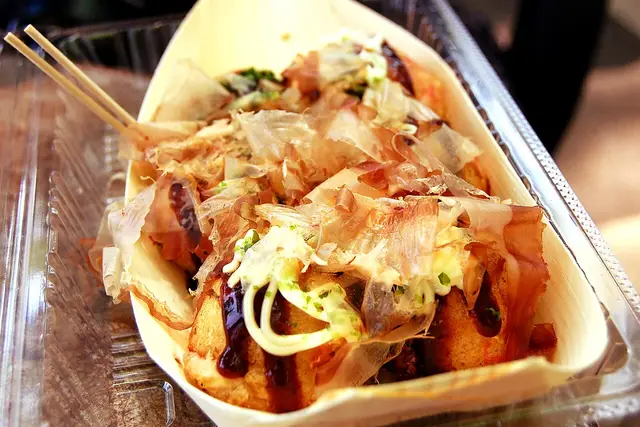 Takoyaki (octopus balls)Round balls of batter with octopus, cooked on a griddle and eaten from street stalls and shops.
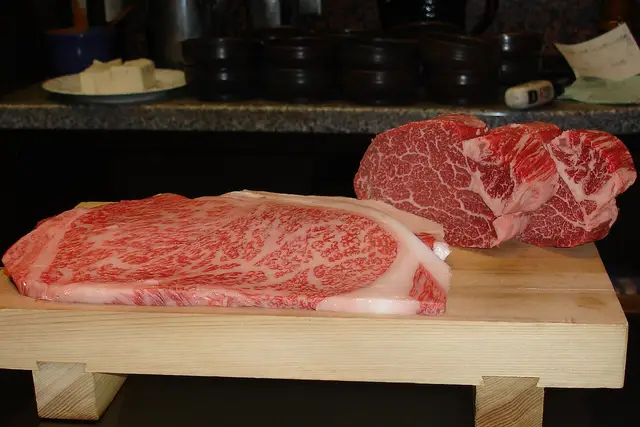 Kobe beef (premium wagyu: steak, teppanyaki)Kobe
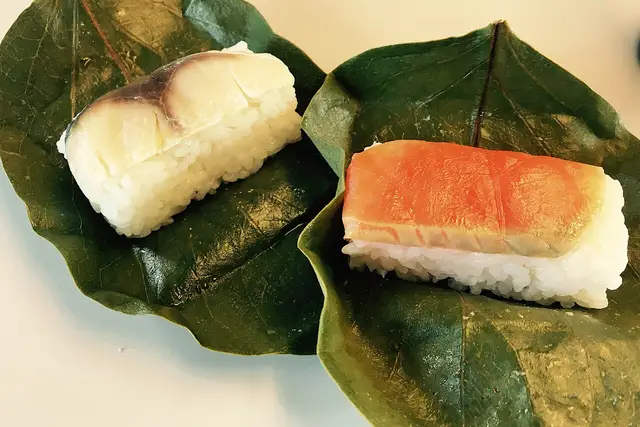 Kakinoha-zushi (salted mackerel sushi wrapped in persimmon leaf)
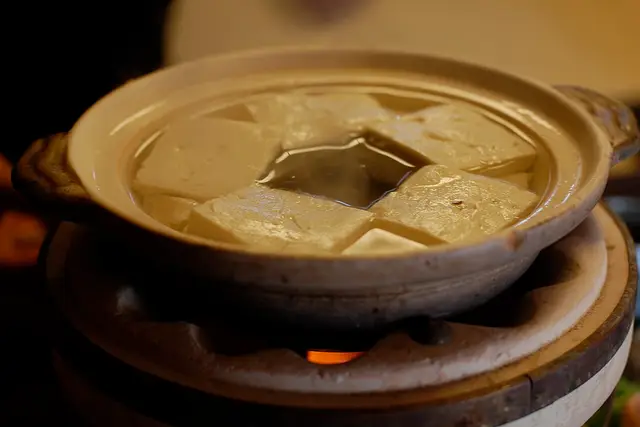 Yudofu (simmered tofu hot pot)Kyoto City
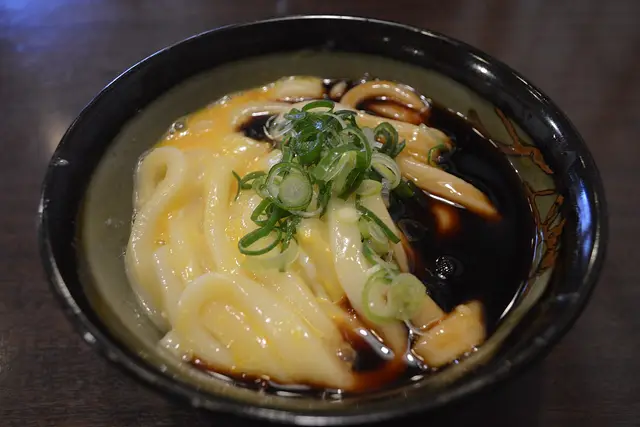 Ise udon (thick soft noodles in dark tamari sauce)Ise
Hyogo
명물 12·향토 요리 30
명물 음식
그 지역에 가면 맛보고 싶은, 가게나 노점에서 먹을 수 있는 명물입니다.
Kobe고기
Kobe beef (premium wagyu: steak, teppanyaki)
神戸ビーフ
Wagyu that only Tajima cattle from Hyogo meeting strict standards can be called; served at steak and teppanyaki restaurants.
Nagata, Kobe밀가루 요리
Sobameshi (fried noodles and rice stir-fried together)
そばめし
Yakisoba and rice chopped and fried together on a griddle; a Nagata, Kobe local dish.
Kobe고기
Kobe miso-dare gyoza (dumplings with miso sauce)
神戸の味噌だれ餃子
Gyoza dipped in a sweet-savory miso sauce, a Kobe style; vinegar, chili oil or garlic can be added.
Akashi밀가루 요리
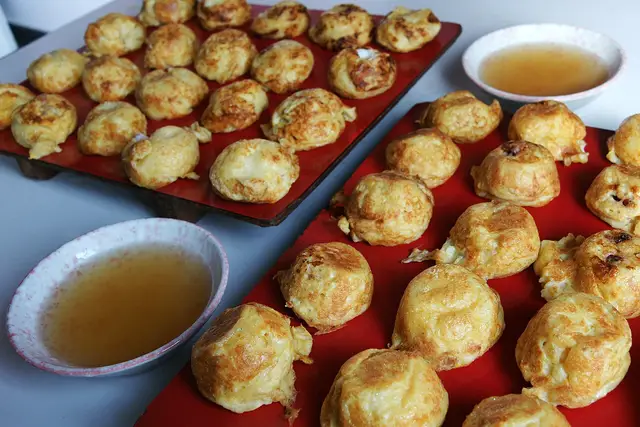
Akashiyaki (egg-rich takoyaki dipped in dashi)
明石焼き(玉子焼き)
Octopus in an egg-rich batter, dipped in dashi broth; locally called tamagoyaki.
Himeji전골・국물
Himeji oden (oden dipped in ginger soy sauce)
姫路おでん
Oden eaten with ginger soy sauce; served at over 100 places in Himeji.
Ako해산물
Ako oysters (large, plump; oyster huts in season)
赤穂の牡蠣
Large oysters from Ako on the Seto Inland Sea; oyster huts open in season.
Tamba-Sasayama전골・국물
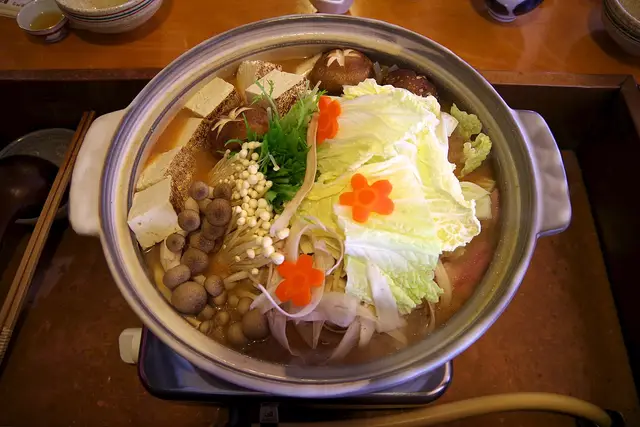
Botan-nabe (wild boar hot pot)
ぼたん鍋
Wild boar simmered in miso broth with sansho pepper and dipped in raw egg; a winter hot pot.
Izushi면
Izushi soba (small plates of soba, five per serving)
出石そば
Soba served on small plates, about five per portion, eaten with changing condiments on Izushi porcelain.
Kakogawa밥・덮밥
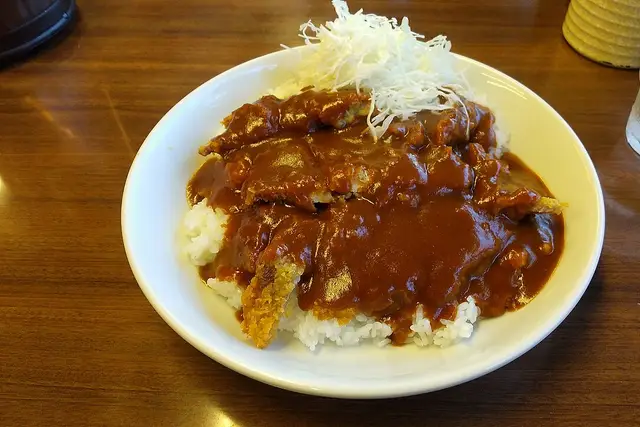
Katsumeshi (beef cutlet on rice with demi-glace)
かつめし
Thin beef cutlet on rice topped with demi-glace sauce; said to have started in Kakogawa.
Tajima해산물
Tajima snow crab (Sea of Japan zuwai crab)
但馬・日本海のカニ
Snow crab from the Sea of Japan, branded by landing port, eaten in winter.
Awaji Island밥・덮밥
Awaji Island gyudon (beef bowl with island beef, onion and rice)
淡路島牛丼
A beef bowl made with island-grown beef, onions and rice; each shop makes its own version.
Iwaya, Awaji Island해산물
Awaji raw shirasu bowl (fresh whitebait over rice)
淡路島の生しらす丼
Fresh raw whitebait from Iwaya served over rice; available from late April to late November.
향토 요리
가정과 지역에서 이어져 온 요리입니다. 가게에서 팔지 않는 것도 있습니다(일본 농림수산성 ‘うちの郷土料理’에서).
- Akashi CityAkashiyaki/Tamagoyaki (Akashi style omelet)明石焼/玉子焼
Akashiyaki is a local dish of Akashi City. It is made by mixing flour, wheat starch, egg, and dashi broth, baking octopus in the batter, and dipping it in dipping sauce.
주요 재료: wheat flour, wheat starch, eggs, octopus, soup stock
- Tanba Sasayama CityBotan nabeぼたん鍋
Botan-nabe" is a local dish of Tamba Sasayama City. It is a one-pot dish of wild boar meat and seasonal vegetables simmered in a broth based on a combination of white and red miso.
주요 재료: wild boar meat, Chinese cabbage, burdock root, leek, carrot, mountain yam (taro), grilled tofu
- Kakogawa City and surrounding areasKatsumeshiかつめし
Katsu-meshi" is a Western-style dish consisting of a flat beef cutlet on top of rice served on a Western-style plate, topped with demi-glace sauce and served with boiled cabbage on the side.
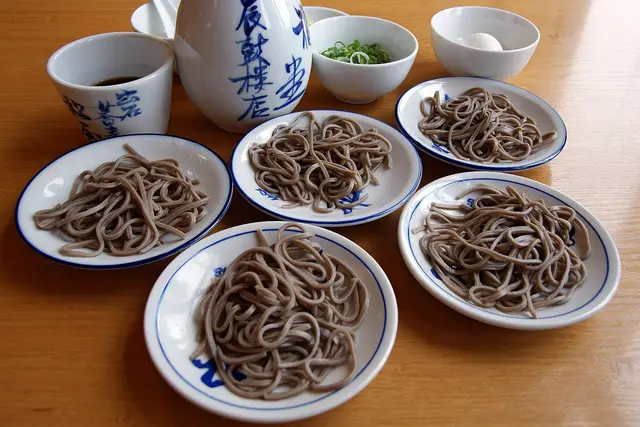 Izushi Town, Toyooka City, Hyogo PrefectureIzushi Sara Soba出石皿そば
Izushi Sara Soba is a local dish of Izushi Town, Toyooka City, where several pieces of soba are served on small white porcelain plates with sauce and condiments in a small sake cup. 5 pieces of soba…
- KobeKobe Beef Steak神戸ビーフステーキ
‘Kobe Beef Steak’, grilled beef on an iron plate flavored with salt and pepper and served with steak sauce or mustard, is famous overseas, too. Actually, however, there is no breed called ‘Kobe beef’.
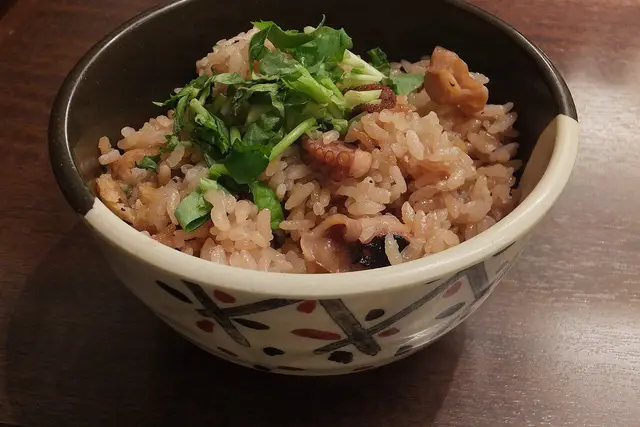 Awaji Island, Higashi HarimaTako Meshi (Octopus rice)たこめし
Records indicate that the common octopus fishery in the Seto Inland Sea was already well known in the Edo period (1603-1867), and "Tako-meshi" (octopus rice) was made after fishing as a rice dish…
- Seto Inland Sea coast (Harima, Settsu, Awaji area)Ikanago no kuginiイカナゴのくぎ煮
Ikanago no kugi-ni" is a local dish made by boiling raw ikanago fry in soy sauce, sugar, ginger, and other seasonings to a sweet and spicy consistency.
- Awaji IslandChobo jiruちょぼ汁
Chobo-jiru is a traditional local dish of Awaji Island that has been served since the Edo period (1603-1868). It consists of dumplings, common beans, and zuki beans in a thick broth.
- Himeji City and its vicinityHimeji oden姫路おでん
Oden is generally served with mustard, but “Himeji Oden” is served with or without ginger soy sauce. This is the characteristic of Himeji oden, a local dish of Himeji.
주요 재료: Radish, a kelp knot, chikuwa (a tube-shaped fish cake paste), konjac, konjac noodle, boiled egg, tempura burdock, hiraten, etc.
- Tamba Sasayama CityTamba black soybean rice丹波黒豆ごはん
Black soybeans from Tamba Sasayama are said to be of the highest quality among black soybeans, with large grains and high sugar content due to the clayey, fertile soil of the region and the intense…
- Harima areaBanshu Hand-pulled Somen (thin wheat noodles)播州手延べそうめん
Ibo No Ito, a Banshu soumen characterized by its firm, crisp texture and resistance to boil-through, is a specialty of the Harima region.
- Tajima area (Shin Onsen Town, Kami Town, Toyooka City)Boiled Snow Crabゆで松葉ガニ
Snow crab is called “Matsuba Crab” in the San'in region and “Echizen Crab” in the Hokuriku region.
- All areasSaba-zushi (Mackerel sushi)鯖寿司
Saba-zushi is a traditional Japanese dish made from salted mackerel that has been pickled in vinegar. It can be served in various forms, such as sugata-zushi, bo-zushi and nigiri-zushi.
- Oyama district of Tamba-SasayamaTofumeshi (Tofu and Rice)とふめし
The dish is called "tofumeshi (tofu and rice)," in which ingredients such as boiled tofu, carrots, burdock root, and mackerel boiled in water are fried and mixed with freshly cooked rice.
주요 재료: Tofu, rice, mackerel (boiled in water and canned), burdock root, carrots, deep-fried tofu
- All areas in the prefectureKasu-jiru (Soup with a sake lees base)粕汁
“Kasu-jiru” is a local dish which consists of daikon radish, carrots, burdock root, konjac, and other ingredients simmered in sake lees, a byproduct of sake brewing process.
주요 재료: Sake lees, daikon radish, carrots, taro, burdock root, deep-fried tofu, konjac, etc.
- Yabu City Youka-cho Asakura (Asakura ‘Sansho’=Japanese Pepper), Kobe City (Arima ‘Sansho’=Japanese Pepper)Sansho no Tsukudani (Japanese Pepper simmered with soy sauce)山椒の佃煮
(AD1603-AD1868) Many locals cooked ‘Sansho no Tsukudani’ with Asakura Sansho at home until around 1965, but many manufacturers have started selling one as the demand of spices has increased since…
- Awaji-ShimaHamo Sukiハモすき
‘Hamo Suki’ is a famous hotpot in Awaji Island and simmered sea ell and onion locally grown in Awaji Island with Dashi (=broth). ‘Hamo’ grown in Awaji Island has thin and soft skin because of muddy…
- Miki CityKajiya Nabe鍛冶屋鍋
"Kajiya-nabe" (blacksmith's hot pot) is said to have been favored by blacksmiths to boost their energy during the summer.
- Kobe CityMiso Dare Gyoza/ Miso Dumplings味噌だれ餃子
In Kobe, it is common to eat "miso-dare gyoza," which are pan-fried dumplings served with a miso-based sauce consisting of vinegar, soy sauce, and chili oil.
주요 재료: Pork, beef, Napa cabbage, Cabbage, Garlic chives, Green onions
- Takasago CityNikuten (Beef Tendon Japanese Pancake)にくてん
In Takasago City, there is a dish called "nikuten," which is a type of okonomiyaki (Japanese pancake) made by folding thinly stretched dough over seasoned potatoes, beef tendon, konjac(=yam cake)…
주요 재료: Beef tendon, Konjac(=yam cake), Potatoes, Cabbage, Wheat flour
- Awaji CityKokera Zushi (Fish Flake Sushi)こけらずし
"Kokera-zushi" is a regional dish eaten in the Nishiura Coast area of Awaji Island, featuring dried and shredded sea bream, beltfish, gurnard, and other ingredients placed on vinegar-seasoned rice…
- Harima DistrictYaki Anago (Grilled Freshwater eel)焼きアナゴ
Grilled conger eel, known as "yaki anago," is a dish where open-cut (freshwater eel) conger eel is skewered and grilled.
- Kitaharima (takacho)Koya-tofuko-to-Yasai-no-nimono (Simmered Freeze-dried tofu Powder and Vegetables)高野豆腐粉と野菜の煮物
Koya tofu powder, also known as "tofu powder," is the powder produced during the process of making Koya tofu.
주요 재료: Freeze-dried tofu powder, Chicken, Carrot, Dried shiitake mushrooms, Gobou(=Burdock root) , (optional: Fried thin tofu, konjac(=yam cake), etc.)
- Toyooka City, Kami Town (Tajima Region)Saba no Jauさばのじゃう
This is a "sukiyaki"-like hotpot simmered mackerel, seasonal vegetables like Japanese leek and napa cabbage, and grilled tofu, and prepared by fishers in towns with fishing harbors in Tajima region.
주요 재료: Mackerel, Napa cabbage, Japanese leek, "Shungiku" (=Crown daisy), Grilled tofu
- Tamba-Sasayama CityTororo Gohanとろろご飯
It is said that "Tororo-jiru" grated Japanese yam mixed with "dashi-jiru" (Japanese soup stock liquid) made from "iriko" (small dried sardines) or bonito flakes, helps digestion, and it was served…
주요 재료: "Yamaimo" (Japanese yam), "Dashi-jiru" (Japanese soup stock liquid), Rice
- Tamba-Sasayama CityKuromame-ni (Simmered Black Beans)黒豆煮
There is a story that the domain head of Sasayama offered black beans to ‘Shogun’ (= the head of samurai government), he was praised a lot. ‘Kuromame-ni’, simmered sweetened black beans, has been…
- Shin-Onsen TownJabuじゃぶ
The name "Jabu" came from liquid out a lot (in Japanese ‘jabu jabu’ to express liquid is flowing) from tofu and vegetables while simmering them although water is not added unlike other simmered…
주요 재료: Chicken (Beef, Pork), Napa cabbage, Onion, Gobou(=Burdock root), Tofu, Konjac noodle
- Tajima AreaHatahata-no-karaage (Fried Hatahata fish)はたはたの唐あげ
Hatahata (a small-sized Japanese sandfish), with the head and entrails removed, is deep-fried whole in oil.
- All of Hyogo PrefectureIbitsu Mochi (Red bean paste mochi)いびつもち
The name "ibitsumochi" is said to originate from the irregular shape of the sarutori-ibara.
주요 재료: Glutinous rice flour, Short-grain rice, Red bean paste, Sarutori-ibara (Smilax china leaves)
- Harima (Shisou City)Yatara zuke (Vegetable Pickeles)やたら漬け
The name "Yatara-zuke" comes from the idea of using a variety of vegetables, such as eggplant, cucumber, perilla seeds, and myoga, and creating something "delicious with an abundance of vegetables".
주요 재료: Seasonal vegetables. Eggplant, Cucumber, Green shiso seed, Myoga, Daikon radish, Small greens (local native vegetables similar to komatsuna (=Japanese Mustard Spinach) and nozawana), etc.
‘먹을 수 있는 가게 찾기’는 요리 이름과 지명으로 지도 앱 검색을 엽니다. 검색에 나오는 가게는 이 사이트가 고르거나 추천한 것이 아닙니다. 그 요리가 있는지는 가게에 확인해 주세요.
출처
명물·향토 요리
출처: 농림수산성 ‘うちの郷土料理 (Our Regional Cuisines)’를 가공하여 작성 (2026-11-15 가져옴) https://www.maff.go.jp/e/policies/market/k_ryouri/index.html. 이름·전해지는 지역·재료는 원문 그대로이며, 설명은 원문의 일부입니다. 농림수산성의 사진은 쓰지 않았습니다(요리 사진은 Wikimedia Commons의 것입니다). 이 페이지는 농림수산성이 만든 것이 아닙니다. 요리 이름과 설명은 영어로 표시됩니다.
지역 명물 음식
명물 음식은 도도부현・시정촌・관광협회・JNTO 등의 공식 안내에서 그 지역의 명물임을 확인한 것입니다(2026-11-17 확인). 설명은 이 사이트에서 썼습니다.
- Kobe beef (premium wagyu: steak, teppanyaki): www.hyogo-tourism.jp
- Sobameshi (fried noodles and rice stir-fried together): www.hyogo-tourism.jp
- Kobe miso-dare gyoza (dumplings with miso sauce): www.hyogo-tourism.jp
- Akashiyaki (egg-rich takoyaki dipped in dashi): www.hyogo-tourism.jp
- Himeji oden (oden dipped in ginger soy sauce): www.hyogo-tourism.jp
- Ako oysters (large, plump; oyster huts in season): www.hyogo-tourism.jp
- Botan-nabe (wild boar hot pot): www.hyogo-tourism.jp
- Izushi soba (small plates of soba, five per serving): www.hyogo-tourism.jp
- Katsumeshi (beef cutlet on rice with demi-glace): www.hyogo-tourism.jp
- Tajima snow crab (Sea of Japan zuwai crab): www.hyogo-tourism.jp
- Awaji Island gyudon (beef bowl with island beef, onion and rice): gourmet.awajishima-kanko.jp
- Awaji raw shirasu bowl (fresh whitebait over rice): gourmet.awajishima-kanko.jp
사진·데이터 출처
Takoyaki topped with sauce and bonito flakes in a paper boat sayo ts (CC0) / Marbled cuts of Kobe beef on a wooden board Orlando G. Calvo (CC BY-SA 3.0) / Kakinoha-zushi of mackerel and salmon on persimmon leaves ZhengZhou (CC BY-SA 4.0) / Yudofu: tofu simmering in a clay pot over a flame Flickr user cobacco(hiro kobashi) (CC BY 2.0) / Ise udon: thick soft noodles in dark tamari sauce with green onion Asturio Cantabrio (CC BY-SA 4.0) / Akashiyaki, soft eggy octopus dumplings on red boards, with dashi for dipping 663highland (CC BY 2.5) / Botan nabe: wild boar hot pot with napa cabbage, mushrooms and carrots pelican from Tokyo, Japan (CC BY-SA 2.0) / Katsumeshi: a cutlet on rice covered in demi-glace sauce, with shredded cabbage Chacmool (CC BY-SA 4.0) / Izushi sara soba: buckwheat noodles served in several small white plates 663highland (CC BY-SA 4.0) / Takomeshi: rice cooked with octopus, topped with herbs, in a ceramic bowl Lombroso (CC BY-SA 4.0). 잘라내고 축소했습니다.