Kamakura guide
A town between hills and sea that became the samurai capital in the late 12th century. The Great Buddha, Zen temples, the Enoden coast and Enoshima fit into one day. About 1 hour by train from Tokyo.
Things to see 10 classics
"Classics" and "Hidden gems" are this site's editorial picks, not a measured popularity ranking.
- 2
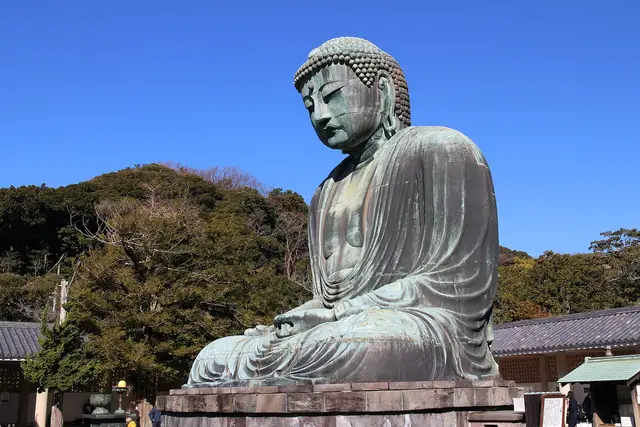
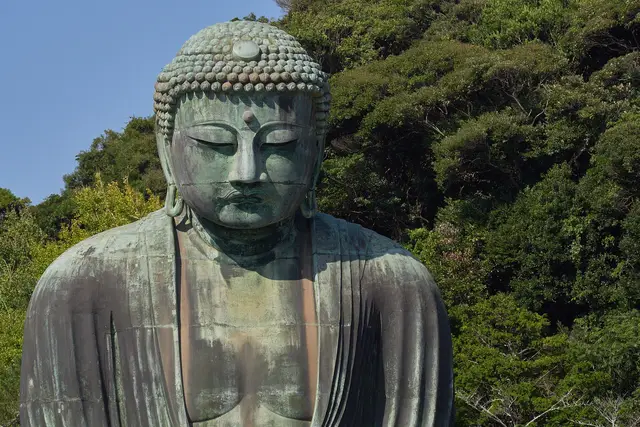
Great Buddha of Kamakura (Kotoku-in)
A bronze Buddha about 11 meters tall, cast in the 13th century. It has no hall and sits in the open air.
- Temples, shrines & churches
- History & buildings
about 30 minPaid entryWheelchair & stroller friendly
Train · About 20 min from Kamakura ・ Enoden to Hase, then about 7 minutes on foot ・ 1.4km
- 3
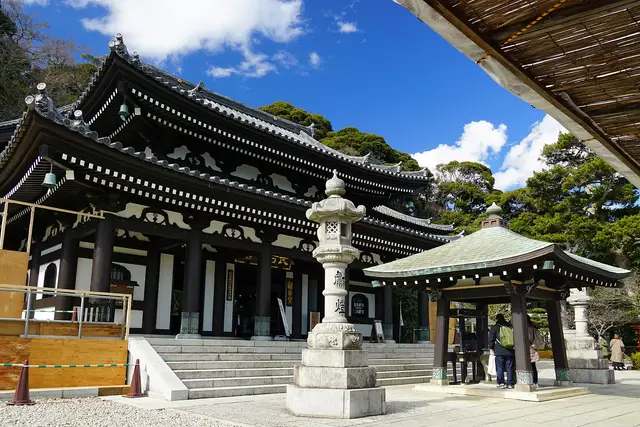
Hasedera Temple
A temple housing a tall wooden statue of Kannon. The terrace looks over Yuigahama beach, and hydrangeas bloom in the rainy season.
- Temples, shrines & churches
- Views
- Nature
about 60 minPaid entry
Train · About 15 min from Kamakura ・ Enoden to Hase, then about 5 minutes on foot ・ 1.8km
- 4
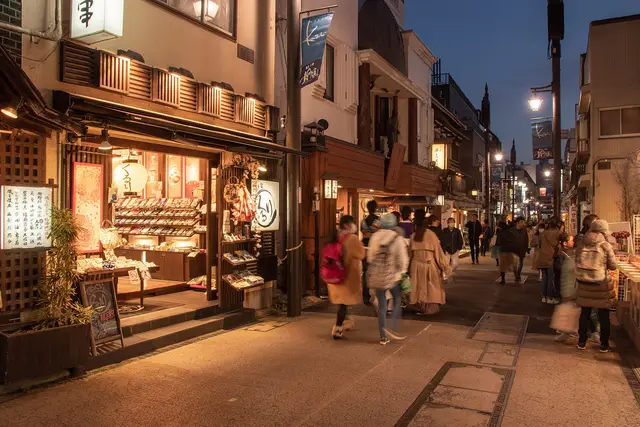
Komachi Street
A lively shopping street running from the station's east exit toward Hachimangu, lined with snack stalls and souvenir shops.
- Food & markets
- Shopping & strolling
about 60 minFree
Walk · About 2 min from Kamakura ・ 200m
- 5
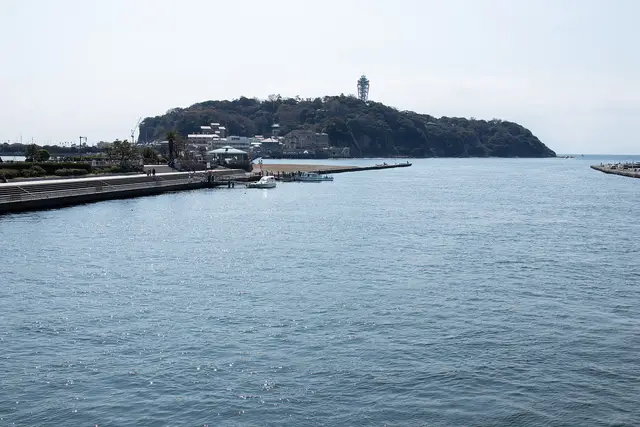
Enoshima Island
A small island reached by a bridge, with Enoshima Shrine, a lighthouse observation tower and sea caves. Mt. Fuji shows on clear days.
- Views
- Temples, shrines & churches
- Food & markets
about 3 hrFree
Train · About 45 min from Kamakura ・ Enoden to Enoshima, then about 20 minutes on foot ・ 6.7km
- 6
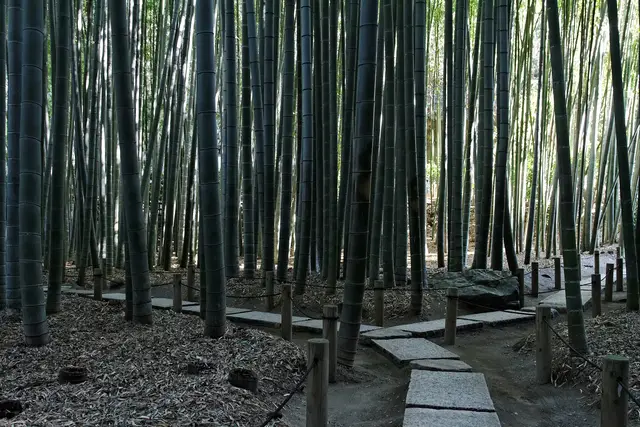
Hokokuji Temple (bamboo garden)
A Zen temple with a bamboo grove behind the main hall. You can drink matcha tea while looking out at the bamboo.
- Nature
- Temples, shrines & churches
about 45 minPaid entry
Bus · About 20 min from Kamakura ・ Bus from Kamakura Station East Exit to Jomyoji, then about 3 minutes on foot ・ 1.7km
Show on map
ClassicsHidden gems
Suggested routes
Times assume a 9:00 start. Travel times are estimated from distance and vary with waiting and crowds.
Komachi Street, Hachimangu, the Great Buddha and Hasedera
Leave 9:00 → until about 13:26 (about 4.5 hr)
- 9:00Kamakura
about 2 min on foot
9:02Komachi Streetstay about 60 minabout 12 min on foot
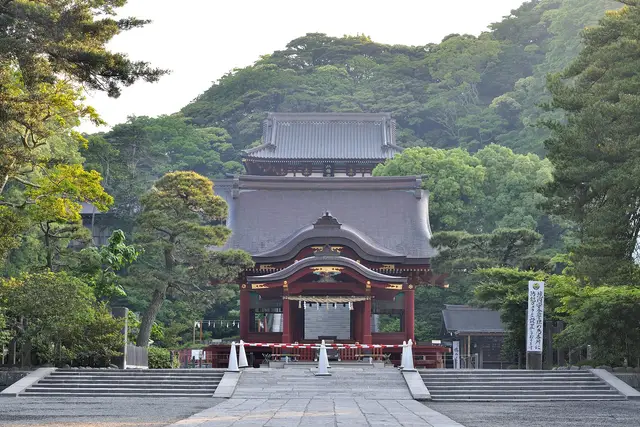
10:14Tsurugaoka Hachimangu Shrinestay about 60 minabout 15 min by transport
11:29Great Buddha of Kamakura (Kotoku-in)stay about 30 minabout 9 min on foot
12:08Hasedera Templestay about 60 minabout 3 min on foot
13:11Goryo Shrinestay about 15 min
Walk back to the station from Hachimangu and take the Enoden to Hase. Around Hase everything is on foot.
Plan this routeAlong the coast to Enoshima by Enoden
Leave 9:00 → until about 13:35 (about 4.5 hr)
- 9:00Kamakura
about 20 min by transport
9:20Cape Inamuragasakistay about 30 minabout 15 min by transport
10:05Kamakurakokomae railway crossingstay about 15 minabout 15 min by transport
10:35Enoshima Islandstay about 3 hr
A one-day Enoden pass is handy. Enoshima has many slopes and steps, so wear comfortable shoes.
Plan this route
When to go
June hydrangeas are popular but rainy and crowded. July–August is beach season. Autumn colours last into early December, and winter is mild (about 6°C).
Point at a month to see its temperature and precipitation.
Temperature (line: average; band: low to high)
Precipitation (mm)
Typical seasons
Cherry blossoms (Dankazura)
Hydrangeas (Meigetsuin, Hasedera)
Tsurugaoka Hachimangu Festival
Swimming (Yuigahama)
Autumn leaves (Hasedera)
Show as a table
| Jan | Feb | Mar | Apr | May | Jun | Jul | Aug | Sep | Oct | Nov | Dec | |
|---|---|---|---|---|---|---|---|---|---|---|---|---|
| High (℃) | 10.8 | 11.4 | 14.2 | 18.5 | 22.4 | 24.9 | 28.2 | 30.3 | 27.6 | 22.7 | 17.8 | 13.2 |
| Avg (℃) | 6 | 6.8 | 9.8 | 14.4 | 18.6 | 21.6 | 25.1 | 26.9 | 23.9 | 18.7 | 13.4 | 8.5 |
| Low (℃) | 1.5 | 2.2 | 5.4 | 10.2 | 15.1 | 18.9 | 22.8 | 24.3 | 20.8 | 15.3 | 9.5 | 4.1 |
| Rain (mm) | 60.8 | 61.1 | 132.6 | 134.4 | 148.1 | 171.9 | 159.6 | 120.6 | 197.3 | 191.1 | 97.7 | 63.7 |
Temperature and precipitation are Japan Meteorological Agency normals (1991–2020, Tsujido (Fujisawa)). Seasons are typical timings and can shift by a week or two each year. JMA data
Main ways to get around
Enoden (Enoshima Electric Railway)
From Kamakura via Hase, Shichirigahama and Enoshima to Fujisawa, squeezing past houses and along the sea. Crowded on holidays, when you may queue to board. A one-day pass is sold.
JR Yokosuka Line
About 1 hour direct from Tokyo Station to Kamakura. Kita-Kamakura, one stop before, is the gateway to Engakuji and Kenchoji temples.
Local buses (from Kamakura Station East Exit)
For the Kanazawa-kaido road (Hokokuji and Sugimotodera temples) and toward the Great Buddha. The roads are narrow, and traffic delays buses on holidays.
Shonan Monorail
About 14 minutes from Ofuna (JR) to Shonan-Enoshima. A way to reach Enoshima without passing through central Kamakura.
Odakyu Line (Katase-Enoshima)
From Shinjuku via Fujisawa to Katase-Enoshima. Handy if you start your day at Enoshima. The Romancecar limited express is all-reserved.
Getting to Kamakura
“Classics” and “Hidden gems” are our editors' picks, not a measured popularity ranking. Travel times are estimates. Please check prices, opening hours and operating days with the official sources before you go.
Photo and data credits
The Great Buddha of Kamakura against a blue sky and green hills Suicasmo (CC BY-SA 4.0) / The vermilion main shrine of Tsurugaoka Hachimangu above its stone steps Ocdp (CC0) / The Great Buddha of Kamakura lumoplank (CC0) / The Kannon Hall of Hasedera under a blue sky 663highland (CC BY-SA 4.0) / Komachi Street at dusk with lit shopfronts Σ64 (CC BY 4.0) / Enoshima Island seen across the water Σ64 (CC BY 4.0) / A path through the bamboo grove of Hokokuji Temple KimonBerlin (CC BY-SA 2.0). Cropped and resized.
Local food
Regional dishes handed down in Kanagawa. Many are home and community cooking, so not every dish is served at restaurants.
Kenchin jiru
けんちん汁
One theory is that the Japanese word "makijen," a type of Chinese vegetarian cuisine known as fucha, became Japanese, while another says that "Kencho soup" made at Kenchoji Temple in Kamakura came…
- Where it is made
- Kamakura, all over Japan
Nama shirasu don (Fresh shirasu rice bowl)
生しらす丼
Fresh raw shirasu (baby sardines) on vinegared rice (or white rice) is served on top of a bowl of rice. It is a well-known specialty of the Shonan area, including Chigasaki, Kamakura, and Enoshima.
- Where it is made
- Shonan area
Maguro no Kabutoyaki (Grilled head of tuna)
マグロのかぶと焼き
The Miura peninsula's Misaki Harbor is known as the preeminent harbor for tuna fishing in Japan.
- Where it is made
- Miura City, Misaki area
Wariboshidaikon no Harihari-zuke
割り干し大根のはりはり漬け
A local dish from Miura City, located at the tip of the Miura Peninsula.
- Where it is made
- Miura City
Sanma-men
サンマーメン
Before World War II, meat soba (roosu noodles) was a common dish in Yokohama Chinatown, but it was expensive, so "sanma-men," a noodle dish with vegetables, came to be prepared as a meal.
- Where it is made
- Yokohama City, All of Kanagawa Prefecture
Shumai
シューマイ
Yokohama City is the largest consumer of“ Shumai” in Japan.
- Where it is made
- Yokohama City, all of Kanagawa Prefecture
“Find places serving it” opens a map app search for the dish name and the place name. The results are not chosen or recommended by this site. Please check with the shop whether it serves the dish.
Source: “Our Regional Cuisines” (Ministry of Agriculture, Forestry and Fisheries), edited by this site (imported 2026-11-15) https://www.maff.go.jp/e/policies/market/k_ryouri/index.html. Names, areas and ingredients are as written on the source pages; descriptions are excerpts of the original text. No photos are used. This page is not made or endorsed by the ministry.