Hiroshima and Miyajima guide
See the Atomic Bomb Dome and Peace Memorial Park, then cross to Miyajima and its shrine gate standing in the sea. Trams and boats cover this city of rivers. Okonomiyaki is the local dish.
Things to see 10 classics
"Classics" and "Hidden gems" are this site's editorial picks, not a measured popularity ranking.
- 2
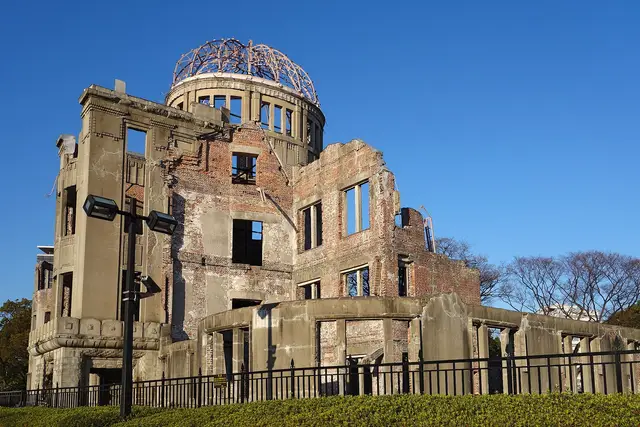
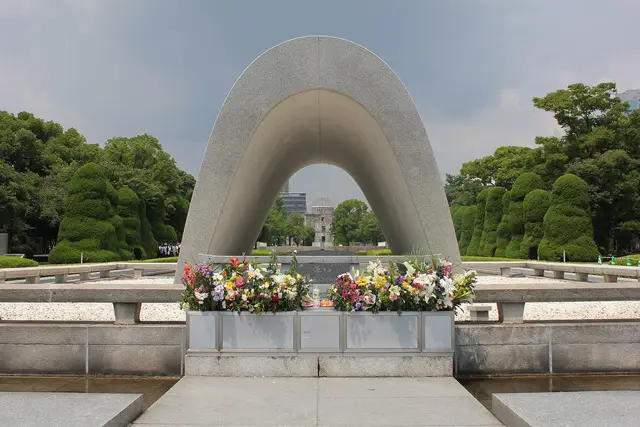
Peace Memorial Park and Museum
A park with the Cenotaph and the Children's Peace Monument. The museum tells of the bombing through belongings and testimony.
Many overseas visitors
The museum had 728,385 foreign visitors in FY2024, the most since it opened in 1955 Source: Hiroshima Peace Culture Foundation, Peace Memorial Museum visitor numbers FY2024
- History & buildings
about 2.5 hrPartly paidFine on a rainy dayWheelchair & stroller friendly
Tram · About 30 min from Hiroshima ・ Tram to Genbaku Dome-mae, then about 10 minutes on foot ・ 2.2km
- 3
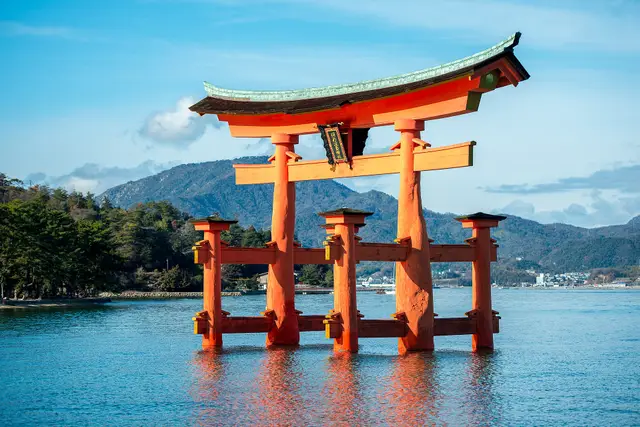
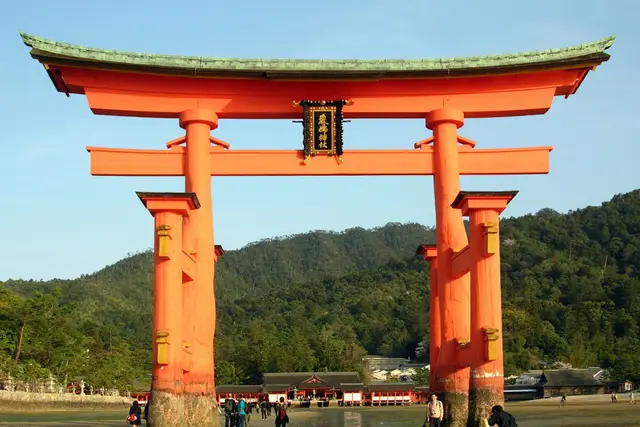
Itsukushima Shrine (Miyajima)
At high tide the red shrine and its great gate seem to float on the sea. At low tide you can walk out to the gate.
- Temples, shrines & churches
- History & buildings
- Views
about 60 minPaid entryFine on a rainy dayWheelchair & stroller friendly
Train · About 70 min from Hiroshima ・ JR to Miyajimaguchi, 10 minutes by ferry, then about 15 minutes on foot ・ 18km
- 4
Mt. Misen (Miyajima Ropeway)
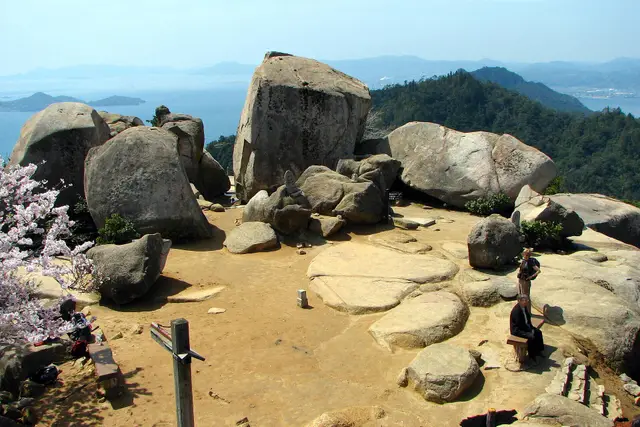
The highest peak on Miyajima. About 30 minutes on foot from the top ropeway station to the summit, with views over the Inland Sea.
- Views
- Nature
- Activities
about 3 hrPaid entryMany stairs or slopes
Ropeway · About 130 min from Hiroshima ・ Walk from Miyajima Pier to Momijidani Station, then two ropeways ・ 19km
- 5
Hiroshima Castle
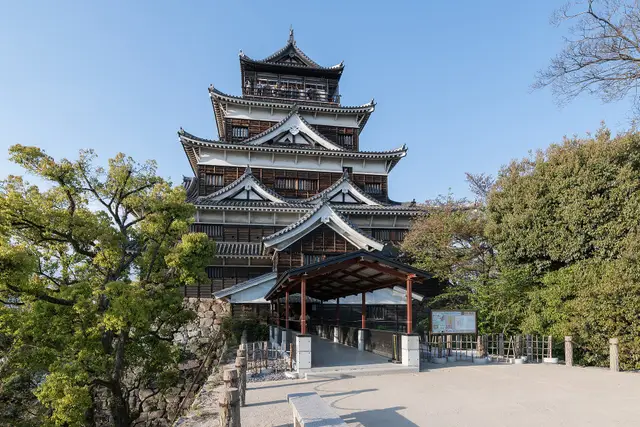
Castle grounds ringed by a moat. The keep closed in March 2026 (outside view only); the Ninomaru gate is a wooden reconstruction.
- History & buildings
about 45 minFree
Tram · About 25 min from Hiroshima ・ Tram to Kamiyacho-higashi, then about 15 minutes on foot ・ 1.6km
- 6
Shukkeien Garden
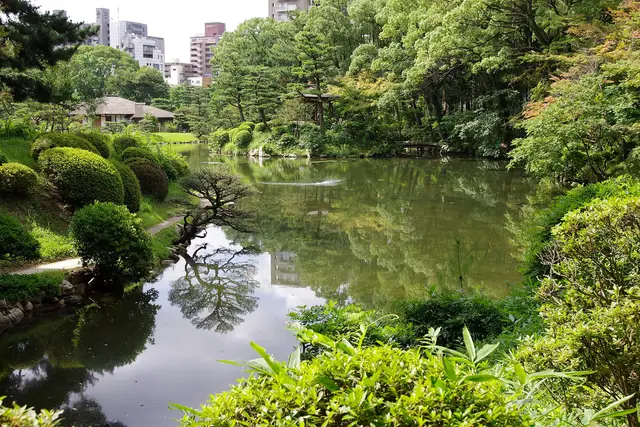
A feudal lord's strolling garden around a pond, dating from the Edo period. Lovely in plum, cherry and autumn-leaf seasons.
- Nature
- History & buildings
about 60 minPaid entryPartly step-free
Walk · About 15 min from Hiroshima ・ 700m
Show on map
ClassicsHidden gems
Suggested routes
Times assume a 9:00 start. Travel times are estimated from distance and vary with waiting and crowds.
Peace Memorial Park, Hiroshima Castle and Shukkeien
Leave 9:00 → until about 16:39 (about 7.5 hr)
- 9:00Hiroshima
about 25 min by transport
9:25Atomic Bomb Domestay about 30 minabout 8 min on foot
10:03Peace Memorial Park and Museumstay about 2.5 hrabout 9 min on foot
12:42Fukuromachi Elementary School Peace Museumstay about 30 minabout 5 min on foot
13:17Okonomimurastay about 60 minabout 22 min on foot
14:39Hiroshima Castlestay about 45 minabout 15 min on foot
15:39Shukkeien Gardenstay about 60 min
Take the tram to Genbaku Dome-mae, then everything is walkable. Allow plenty of time for the museum.
Plan this routeA day on Miyajima
Leave 9:00 → until about 15:42 (about 6.5 hr)
- 9:00Hiroshima
about 70 min by transport
10:10Itsukushima Shrine (Miyajima)stay about 60 minabout 8 min on foot
11:18Daisho-in Temple (Miyajima)stay about 60 minabout 24 min on foot
12:42Mt. Misen (Miyajima Ropeway)stay about 3 hr
The view of the gate changes with the tide, so check the tide times before you go.
Plan this route
When to go
April–May and October–November are the most pleasant. June–July is rainy (about 280 mm in July), and August is hot and humid (about 28°C on average).
Point at a month to see its temperature and precipitation.
Temperature (line: average; band: low to high)
Precipitation (mm)
Typical seasons
Cherry blossoms (Peace Park)
Hiroshima Flower Festival
Autumn leaves (Miyajima Momijidani)
Show as a table
| Jan | Feb | Mar | Apr | May | Jun | Jul | Aug | Sep | Oct | Nov | Dec | |
|---|---|---|---|---|---|---|---|---|---|---|---|---|
| High (℃) | 9.9 | 10.9 | 14.5 | 19.8 | 24.4 | 27.2 | 30.9 | 32.8 | 29.1 | 23.7 | 17.7 | 12.1 |
| Avg (℃) | 5.4 | 6.2 | 9.5 | 14.8 | 19.6 | 23.2 | 27.2 | 28.5 | 24.7 | 18.8 | 12.9 | 7.5 |
| Low (℃) | 2 | 2.4 | 5.1 | 10.1 | 15.1 | 19.8 | 24.1 | 25.1 | 21.1 | 14.9 | 8.9 | 4 |
| Rain (mm) | 46.2 | 64 | 118.3 | 141 | 169.8 | 226.5 | 279.8 | 131.4 | 162.7 | 109.2 | 69.3 | 54 |
Temperature and precipitation are Japan Meteorological Agency normals (1991–2020, Hiroshima). Seasons are typical timings and can shift by a week or two each year. JMA data
Main ways to get around
Hiroden streetcar
From Hiroshima Station to Hatchobori, Kamiyacho and Genbaku Dome-mae. Also runs to Hiroshima Port (Ujina) and Miyajimaguchi, though JR is faster to Miyajimaguchi.
JR Sanyo Line (Hiroshima – Miyajimaguchi)
About 30 minutes from Hiroshima Station to Miyajimaguchi, then about 5 minutes on foot to the ferry pier. The same line continues to Iwakuni.
Ferries to Miyajima
About 10 minutes from Miyajimaguchi to Miyajima, with two companies running frequent boats. There is also a direct boat from Peace Memorial Park to Miyajima.
Hiroshima sightseeing loop bus "Meipuru-pu"
Loops from the Shinkansen side of Hiroshima Station past Hiroshima Castle, Shukkeien Garden, Peace Memorial Park and other sights.
Airport limousine bus
About 50 minutes from Hiroshima Airport to the Shinkansen side of Hiroshima Station. Some buses go to Hiroshima Bus Center (Kamiyacho).
Getting to Hiroshima
“Classics” and “Hidden gems” are our editors' picks, not a measured popularity ranking. Travel times are estimates. Please check prices, opening hours and operating days with the official sources before you go.
Photo and data credits
The great torii of Itsukushima Shrine standing in the blue sea JordyMeow (CC BY-SA 3.0) / The Atomic Bomb Dome standing quietly under a blue sky Oilstreet (CC BY 2.5) / The Memorial Cenotaph in Peace Memorial Park, with flowers laid before it TimMilesWright (CC0) / The great torii on the low-tide shore, with Itsukushima Shrine behind Bernard Gagnon (CC BY-SA 3.0) / Giant boulders on the summit of Mt. Misen above the Seto Inland Sea Bernard Gagnon (CC BY-SA 3.0) / The keep of Hiroshima Castle rising above green trees DXR (CC BY-SA 4.0) / A pond surrounded by greenery in Shukkeien Garden Jakub Hałun (CC BY-SA 4.0). Cropped and resized.
Local food
Regional dishes handed down in Hiroshima. Many are home and community cooking, so not every dish is served at restaurants.
Okonomiyaki
お好み焼き
The okonomiyaki made in Hiroshima is a dish wherein thinly spread batter is cooked in a pan and piled with heaps of cabbage, pork, yakisoba, a thinly fried egg, or other ingredients.
- Where it is made
- All regions in Hiroshima Prefecture
Hiroshima-nazuke-no Onigiri (Rice ball wrapped in pickled Hiroshima mustard)
広島菜漬のおにぎり/広島菜むすび
Rice ball wrapped in pickled Hiroshima mustard. Hiroshima-na is a type of Chinese cabbage belonging to the Brassicaceae family.
- Where it is made
- All of Hiroshima Prefecture
Wani no sashimi
ワニの刺身
It is called "crocodile", but what is actually eaten is "shark". It is also called "fuka.
- Where it is made
- Miyoshi City and Shobara City in Bihoku area
Uzumi
うずみ
Uzumi" is said to have originated in the Edo period (1603-1867), when people buried the ingredients under the rice to make it look more simple.
- Where it is made
- Fukuyama City
Hassun
八寸
Hachisun" is a stew made from a combination of mountain and sea vegetables that was eaten in areas where there were many Aki Monzoku (Jodo Shinshu sect members in the western part of Hiroshima…
- Where it is made
- Kumano Town, Akitakada City
Kaki no dotenabe
かきの土手鍋
There are three origins of the name of "oyster Dote-nabe". The first is that miso is coated on the inside of the pot like a bank. The second is that Chokichi Dote was the inventor of this nabe dish.
- Where it is made
- Hiroshima City, Etajima City, Miyajima, Kure, Ondo area, etc.
“Find places serving it” opens a map app search for the dish name and the place name. The results are not chosen or recommended by this site. Please check with the shop whether it serves the dish.
Source: “Our Regional Cuisines” (Ministry of Agriculture, Forestry and Fisheries), edited by this site (imported 2026-11-15) https://www.maff.go.jp/e/policies/market/k_ryouri/index.html. Names, areas and ingredients are as written on the source pages; descriptions are excerpts of the original text. No photos are used. This page is not made or endorsed by the ministry.