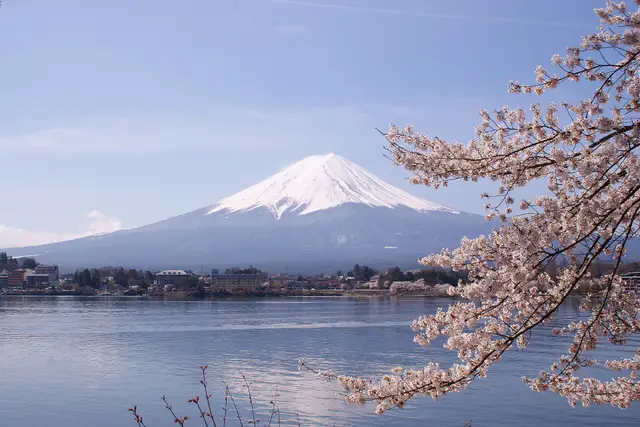
Kawaguchiko and the Fuji Five Lakes guide
The region of five lakes at the northern foot of Mt. Fuji. From Lake Kawaguchi, sightseeing buses and trains reach lake views of Fuji, the Chureito Pagoda and Oshino Hakkai. Fuji is usually clearer in the morning.
Things to see 10 classics
"Classics" and "Hidden gems" are this site's editorial picks, not a measured popularity ranking.
- 2
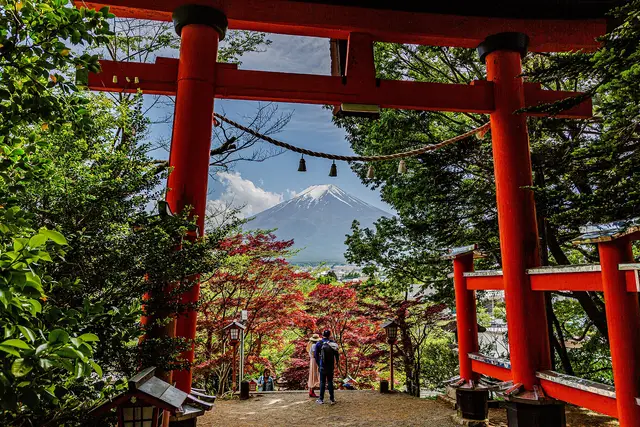
Arakurayama Sengen Park (Chureito Pagoda)
A viewing deck where a five-story pagoda and Mt. Fuji fit in one frame, up about 400 steps. Cherry blossoms join the view in spring.
- Views
about 60 minFreePartly step-free
Train · About 40 min from Kawaguchiko ・ Fujikyu Railway to Shimoyoshida, about 10 minutes on foot, then the steps ・ 2.9km
- 3
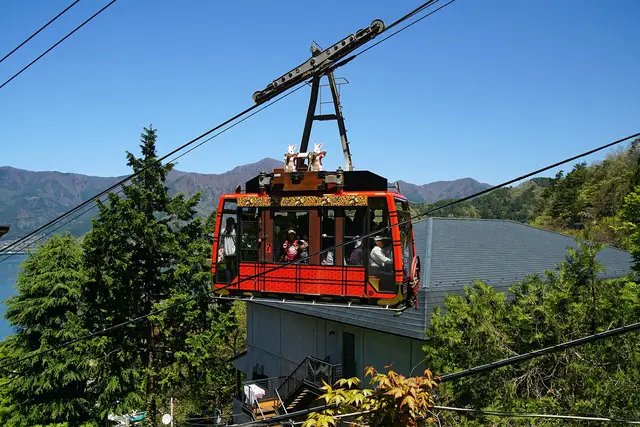
Mt. Fuji Panoramic Ropeway (Mt. Tenjo)
About 3 minutes from the lakeshore up Mt. Tenjo. The observation deck looks across to Mt. Fuji and down on Lake Kawaguchi.
- Views
about 60 minPaid entryPartly step-free
Ropeway · About 25 min from Kawaguchiko ・ About 15 minutes on foot to the lakeside station, then the ropeway ・ 900m
- 4
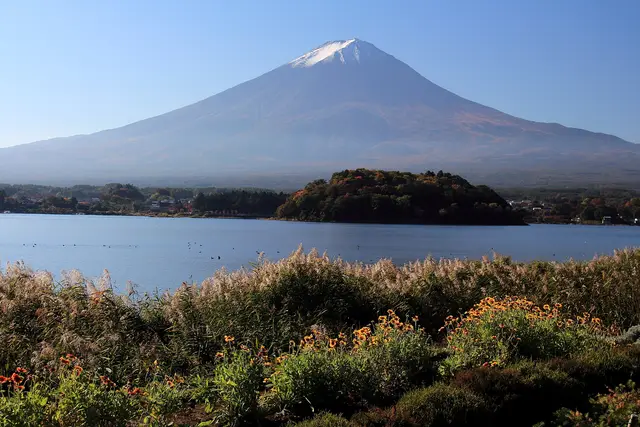
Oishi Park
A park on the north shore of Lake Kawaguchi. Mt. Fuji rises straight ahead beyond flower beds and the lake. Lavender blooms in early summer.
- Views
- Nature
about 45 minFreeWheelchair & stroller friendly
Bus · About 35 min from Kawaguchiko ・ Sightseeing bus (Kawaguchiko route) to Kawaguchiko Natural Living Center ・ 3.4km
- 5
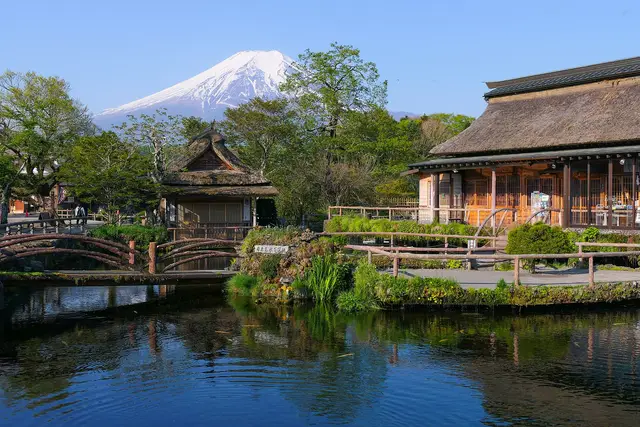
Oshino Hakkai
Eight ponds fed by snowmelt from Mt. Fuji, in a village of thatched houses and waterwheels. The water is clear to the bottom.
- Nature
- Views
about 60 minFreeWheelchair & stroller friendly
Bus · About 45 min from Kawaguchiko ・ Bus from Kawaguchiko Station to Oshino Hakkai ・ 7.1km
- 6
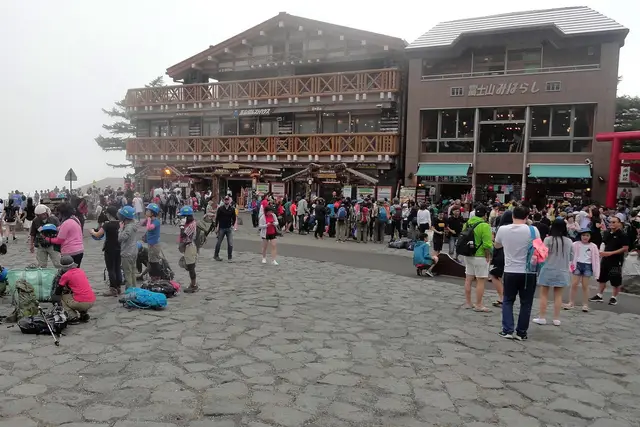
Mt. Fuji 5th Station (Fuji Subaru Line)
The end of the Fuji Subaru Line, at about 2,300 meters. The summit looks close, and clouds often lie below. Bring a jacket even in summer.
- Views
- Nature
about 1.5 hrFree
Bus · About 60 min from Kawaguchiko ・ Bus from Kawaguchiko Station bound for the Mt. Fuji 5th Station ・ 12km
Show on map
ClassicsHidden gems
Suggested routes
Times assume a 9:00 start. Travel times are estimated from distance and vary with waiting and crowds.
Around Lake Kawaguchi by sightseeing bus
Leave 9:00 → until about 15:17 (about 6.5 hr)
- 9:00Kawaguchiko
about 15 min on foot
9:15Lake Kawaguchi (lakeshore and cruise boat)stay about 1.5 hrabout 10 min on foot
10:55Mt. Fuji Panoramic Ropeway (Mt. Tenjo)stay about 60 minabout 20 min by transport
12:15Kawaguchi Asama Shrinestay about 30 minabout 25 min on foot
13:10Itchiku Kubota Art Museumstay about 60 minabout 22 min on foot
14:32Oishi Parkstay about 45 min
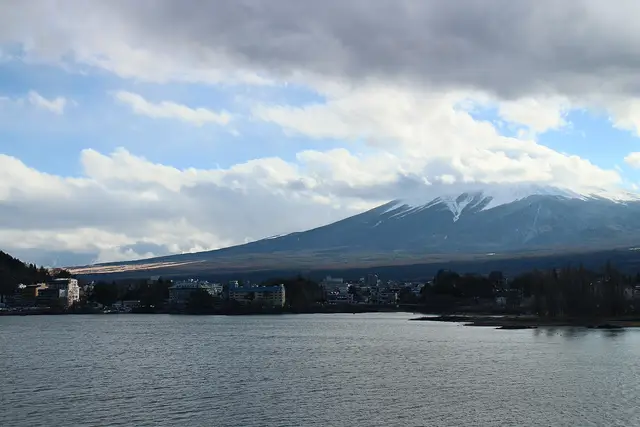
Clouds tend to cover Mt. Fuji in the afternoon, so ride the ropeway in the morning.
Plan this routeChureito Pagoda and Fujiyoshida on the Fujikyu Railway
Leave 9:00 → until about 20:00 (about 11 hr)
- 9:00Kawaguchiko
about 40 min by transport
9:40Arakurayama Sengen Park (Chureito Pagoda)stay about 60 minabout 20 min by transport
11:00Kitaguchi Hongu Fuji Sengen Shrinestay about 45 minabout 15 min by transport
12:00Fuji-Q Highlandstay about 8 hr
Shimoyoshida, Mt. Fuji (Fujisan) and Fujikyu-Highland are all stations on the Fujikyu Railway. The pagoda is quieter in the morning, when Fuji is also clearer.
Plan this route
When to go
Winter is cold (around 0°C on average) but the air is clear and Mt. Fuji is most visible. June–October is cloudy and rainy, so Fuji is often hidden.
Point at a month to see its temperature and precipitation.
Temperature (line: average; band: low to high)
Precipitation (mm)
Typical seasons
Cherry blossoms (lakeshore)
Lavender (Oishi Park)
Autumn leaves (Momiji Corridor)
Snow-capped Mt. Fuji
Show as a table
| Jan | Feb | Mar | Apr | May | Jun | Jul | Aug | Sep | Oct | Nov | Dec | |
|---|---|---|---|---|---|---|---|---|---|---|---|---|
| High (℃) | 5.5 | 6.6 | 10.5 | 16.1 | 20.6 | 23 | 27.2 | 28.1 | 23.8 | 18.3 | 13.8 | 8.5 |
| Avg (℃) | -0.4 | 0.6 | 4.2 | 9.5 | 14.3 | 17.8 | 21.9 | 22.5 | 18.7 | 13 | 7.5 | 2.3 |
| Low (℃) | -5.7 | -4.8 | -1.3 | 3.7 | 8.9 | 13.7 | 18 | 18.5 | 14.8 | 8.7 | 2.2 | -2.9 |
| Rain (mm) | 60.9 | 55.4 | 107.6 | 106.1 | 123.2 | 157.1 | 178.4 | 176.8 | 264.7 | 230 | 76 | 49.8 |
Temperature and precipitation are Japan Meteorological Agency normals (1991–2020, Kawaguchiko). Seasons are typical timings and can shift by a week or two each year. JMA data
Main ways to get around
Fuji Excursion limited express and the Fujikyu Railway
About 2 hours direct from Shinjuku to Kawaguchiko by limited express. At other times, change at Otsuki from the JR Chuo Line to the Fujikyu Railway.
Highway buses (from Shinjuku and Tokyo Station)
About 1 hour 45 minutes from the Shinjuku Expressway Bus Terminal to Kawaguchiko Station. Frequent and handy, but holiday traffic can cause delays. Booking ahead is wise.
Sightseeing loop buses (Kawaguchiko, Saiko, Narusawa and Motosuko)
Three routes from Kawaguchiko Station cover the sights around the lakes. Hop-on, hop-off passes are sold. Service ends in the early evening, so check your return time.
Bus to the Mt. Fuji 5th Station
About 1 hour from Kawaguchiko Station up the Fuji Subaru Line toll road. In winter, snow can cancel the bus or cut the route short.
Rental bicycles
Rental shops are found around Kawaguchiko Station. The lakeshore is mostly flat, but a full circuit is about 20 km. An electric-assist bike makes it easier.
Getting to Kawaguchiko
“Classics” and “Hidden gems” are our editors' picks, not a measured popularity ranking. Travel times are estimates. Please check prices, opening hours and operating days with the official sources before you go.
Photo and data credits
Lake Kawaguchi and snowy Mt. Fuji framed by cherry blossoms Midori (CC BY 3.0) / The surface of Lake Kawaguchi with Mt. Fuji under clouds Suicasmo (CC BY-SA 4.0) / Red torii gates of Arakurayama Sengen Park with Mt. Fuji beyond Otto Domes (CC BY-SA 4.0) / A red ropeway gondola climbing the green slope of Mt. Tenjo 663highland (CC BY-SA 4.0) / Flowers of Oishi Park, Lake Kawaguchi and Mt. Fuji Alpsdake (CC BY-SA 4.0) / A pond and thatched houses at Oshino Hakkai with Mt. Fuji behind MaedaAkihiko (CC BY-SA 4.0) / Lodge-style buildings and the plaza at the Fuji Subaru Line 5th Station Fabio Achilli from Milano, Italy (CC BY 2.0). Cropped and resized.
Local food
Regional dishes handed down in Yamanashi. Many are home and community cooking, so not every dish is served at restaurants.
Memaki
めまき
"Memaki" is a local dish in which fish is wrapped in arame (a kelp related to kombu) and slowly simmered with soy sauce and sugar.
- Where it is made
- Town of Fujikawaguchiko
Yoshida no Udon
吉田のうどん
“Yoshida no udon” is a local dish that originated in the area around the city of Fujiyoshida.
- Where it is made
- Fujiyoshida City
Jagaimo-to-Hijiki-no-Nimono (Simmered Potatoes and Hijiki Seaweed)
じゃがいもとひじきの煮物
It is said that on the opening day of Mount Fuji on July 1st, the Goshi (a role of a clergyman) who provides lodging and hospitality to believers visiting for Mount Fuji faith offered 'Simmered…
- Where it is made
- Fujiyoshida City, Fujikawaguchiko-machi
Yugao no misoshiru (Evening Glory Gourd Miso soup)
夕顔のみそ汁
Yugao (evening glories) are a summer delicacy in the Fuji Hokuroku region, and "yugao no miso soup" is frequently served at the dinner table.
- Where it is made
- Fuji Hokuroku Area
Houtou
ほうとう
Houtou" is a typical local dish of Yamanashi Prefecture, known to everyone as "Uimono da kabocha no houtou," which means "good pumpkin houtou" in Japanese.
- Where it is made
- All over the prefecture
Yakome
やこめ
The offerings presented at the irrigation gate are called "Yakome." The term "Yakome" is said to have originated from Yakome and means roasted rice.
- Where it is made
- All of Yamanashi (Mainly Chuhoku Area)
“Find places serving it” opens a map app search for the dish name and the place name. The results are not chosen or recommended by this site. Please check with the shop whether it serves the dish.
Source: “Our Regional Cuisines” (Ministry of Agriculture, Forestry and Fisheries), edited by this site (imported 2026-11-15) https://www.maff.go.jp/e/policies/market/k_ryouri/index.html. Names, areas and ingredients are as written on the source pages; descriptions are excerpts of the original text. No photos are used. This page is not made or endorsed by the ministry.