Nagasaki guide
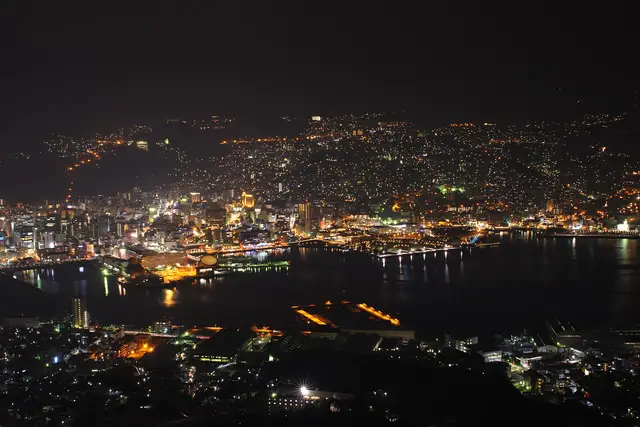
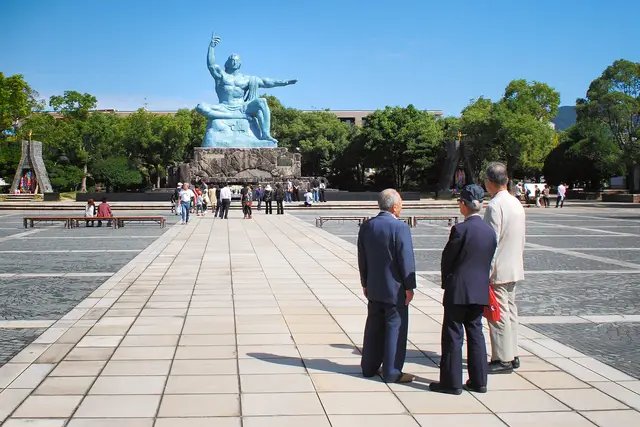
Western houses and churches on the hills, Chinese temples and the site of Dejima: a port long open to the world. Learn about the atomic bombing at the Peace Park, and see the harbor lights from Mt. Inasa.
Things to see 10 classics
"Classics" and "Hidden gems" are this site's editorial picks, not a measured popularity ranking.
- 1
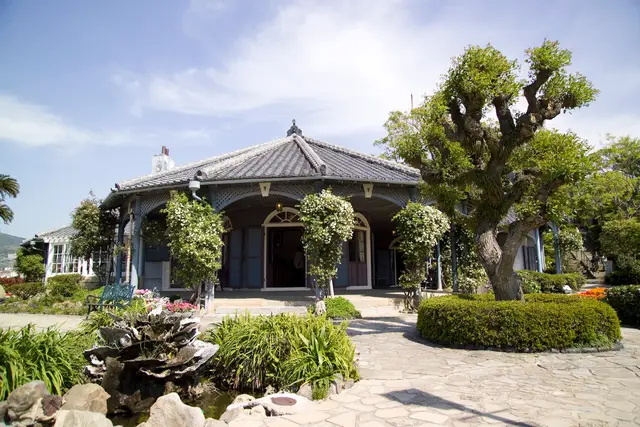
Glover Garden
A hillside garden of Western-style houses from the 1860s onward, overlooking the harbor. The Glover House is part of a World Heritage site.
- History & buildings
- Views
about 1.5 hrPaid entryWheelchair & stroller friendly
Tram · About 30 min from Nagasaki ・ Tram, changing at Shinchi Chinatown, to Oura Tenshudo; then about 8 minutes on foot ・ 2.0km
- 2
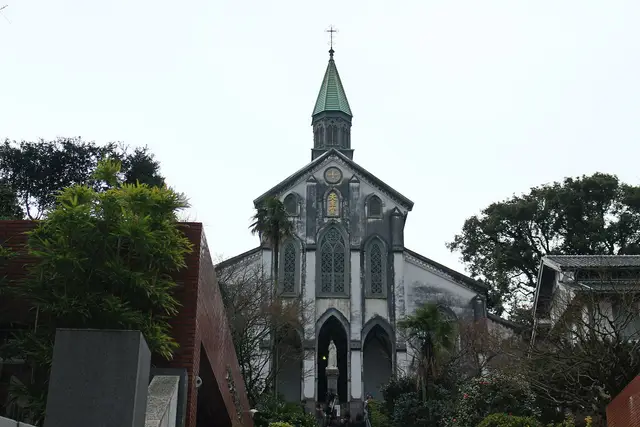
Oura Cathedral
A National Treasure church built in the 1860s, the oldest surviving church building in Japan. Part of a World Heritage site.
- History & buildings
- Temples, shrines & churches
about 30 minPaid entryFine on a rainy day
Tram · About 25 min from Nagasaki ・ Tram, changing at Shinchi Chinatown, to Oura Tenshudo; then about 5 minutes on foot ・ 2.1km
- 4
Nagasaki Atomic Bomb Museum
A museum that tells of the bombing of August 9, 1945 through belongings and photographs. A short walk from the hypocenter park.
- History & buildings
about 1.5 hrPaid entryFine on a rainy dayWheelchair & stroller friendly
Tram · About 20 min from Nagasaki ・ Tram to Genbaku Shiryokan, then about 5 minutes on foot ・ 2.3km
- 5
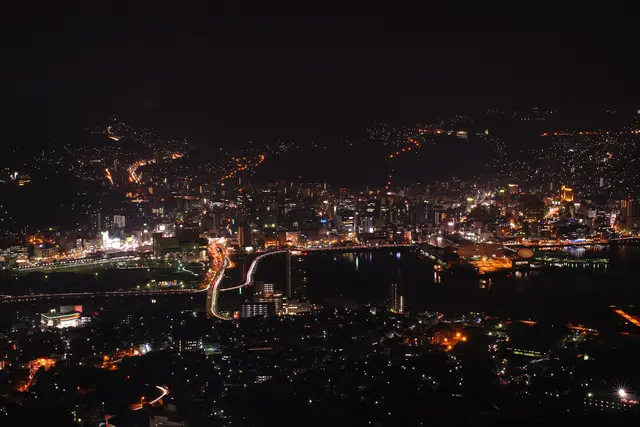
Mt. Inasa
A famous night-view spot looking down on the lights of the hillside city around the harbor. Go up by ropeway or bus.
- Views
- Night views
about 60 minFreeWheelchair & stroller friendly
Ropeway · About 35 min from Nagasaki ・ Bus to Ropeway-mae, then the ropeway from Fuchi Jinja Station ・ 1.9km
Show on map
ClassicsHidden gems
Suggested routes
Times assume a 9:00 start. Travel times are estimated from distance and vary with waiting and crowds.
The Peace Park and Urakami
Leave 9:00 → until about 12:49 (about 4 hr)
- 9:00Nagasaki
about 20 min by transport
9:20Nagasaki Peace Parkstay about 45 minabout 8 min on foot
10:13Urakami Cathedralstay about 30 minabout 9 min on foot
10:52Nagasaki Atomic Bomb Museumstay about 1.5 hrabout 12 min on foot
12:34Sanno Shrine (one-legged torii and A-bombed camphor trees)stay about 15 min
Get off the tram at Heiwa Koen (Peace Park) and walk. There are slopes and steps.
Plan this routeDejima, Chinatown and the hillside of Western houses
Leave 9:00 → until about 15:17 (about 6.5 hr)
- 9:00Nagasaki
about 10 min by transport
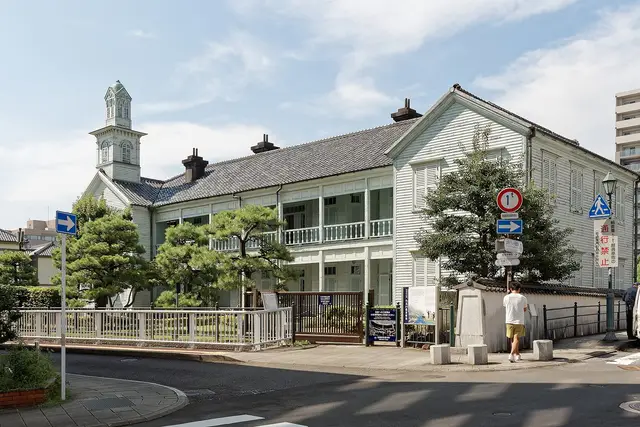
9:10Dejimastay about 1.5 hrabout 5 min on foot
10:45Nagasaki Shinchi Chinatownstay about 45 minabout 8 min on foot
11:38Dutch Slope and Higashi-Yamatestay about 45 minabout 9 min on foot
12:32Oura Cathedralstay about 30 minabout 2 min on foot
13:04Glover Gardenstay about 1.5 hrabout 13 min on foot
14:47Nabekanmuriyama Parkstay about 30 min
Have lunch in Chinatown. Leave Glover Garden by its upper gate for the shortest way to Nabekanmuriyama.
Plan this route
When to go
April–May and October–November are best for walking. June–July is very wet (over 330 mm in June). Winter is mild (7–9°C) and has the Lantern Festival.
Point at a month to see its temperature and precipitation.
Temperature (line: average; band: low to high)
Precipitation (mm)
Typical seasons
Cherry blossoms (Kazagashira Park)
Hydrangeas (around Meganebashi)
Nagasaki Lantern Festival
Nagasaki Kunchi
Show as a table
| Jan | Feb | Mar | Apr | May | Jun | Jul | Aug | Sep | Oct | Nov | Dec | |
|---|---|---|---|---|---|---|---|---|---|---|---|---|
| High (℃) | 10.7 | 12 | 15.3 | 19.9 | 23.9 | 26.5 | 30.3 | 31.9 | 28.9 | 24.1 | 18.5 | 13.1 |
| Avg (℃) | 7.2 | 8.1 | 11.2 | 15.6 | 19.7 | 23 | 26.9 | 28.1 | 24.9 | 20 | 14.5 | 9.4 |
| Low (℃) | 4 | 4.5 | 7.5 | 11.7 | 16.1 | 20.2 | 24.5 | 25.3 | 21.9 | 16.5 | 11 | 6 |
| Rain (mm) | 63.1 | 84 | 123.2 | 153 | 160.7 | 335.9 | 292.7 | 217.9 | 186.6 | 102.1 | 100.7 | 74.8 |
Temperature and precipitation are Japan Meteorological Agency normals (1991–2020, Nagasaki). Seasons are typical timings and can shift by a week or two each year. JMA data
Main ways to get around
Nagasaki Electric Tramway
From Nagasaki Ekimae to the Peace Park, Dejima, Shinchi Chinatown and Oura Cathedral. Almost all the main sights are on the tram. A one-day pass is sold.
Nagasaki Ropeway
About 5 minutes from Fuchi Jinja Station at the foot to near the top of Mt. Inasa. Take a bus from Nagasaki Ekimae to the base. Crowded at night-view time.
Nishi-Kyushu Shinkansen
From Hakata, take the Relay Kamome limited express and change to the Kamome Shinkansen at Takeo-Onsen. The transfer is across the same platform.
Airport limousine bus
About 45 minutes from Nagasaki Airport to Nagasaki Ekimae. It also stops near Shinchi Chinatown.
Gunkanjima landing cruises
Several companies run boats from Nagasaki Port. Book ahead. On rough days the boat may be unable to land, or the cruise may be cancelled.
Getting to Nagasaki
“Classics” and “Hidden gems” are our editors' picks, not a measured popularity ranking. Travel times are estimates. Please check prices, opening hours and operating days with the official sources before you go.
Photo and data credits
Night view of Nagasaki around its harbor, seen from Mt. Inasa Konstantin Leonov | GONE. RIP FLICKR. | http://oldstable.org/ | https://twitter. (CC BY 2.0) / The former Glover House surrounded by flowers and trees Fg2 (Public domain) / The front of Oura Cathedral at the top of the slope Suicasmo (CC BY-SA 4.0) / The Peace Statue in Nagasaki Peace Park, with visitors looking on decade_null (CC BY 2.0) / City lights of Nagasaki from the Mt. Inasa observatory 百合の國 (CC BY 3.0) / The white Western-style former Protestant Seminary on Dejima Jakub Hałun (CC BY 4.0) / The stone arches of Meganebashi over the Nakashima River Fg2 (Public domain). Cropped and resized.
Local food
Regional dishes handed down in Nagasaki. Many are home and community cooking, so not every dish is served at restaurants.
Urakamisoboro
浦上ソボロ
This local dish originated in the Urakami area of Nagasaki Prefecture.
- Where it is made
- Nagasaki City (Urakami area)
Plate Udon
皿うどん
A specialty of Nagasaki, “plate udon” is a noodle based dish renowned throughout Japan.
- Where it is made
- Nagasaki Prefecture
Champon
ちゃんぽん
There are various theories as to where the name champon comes from.
- Where it is made
- Nagasaki
Hikado
ヒカド
A local dish that has been passed down in Nagasaki since the early 1600s. Portuguese missionaries and traders in Nagasaki used to eat stews made with beef and pork during the cold months.
- Where it is made
- Nagasaki City
Nagasaki Tempura
長崎天ぷら
“Nagasaki Tempura” is a traditional dish, which dates to around 400 years ago, from the time of the Nanban trade period. This dish is inspired from fritters made by Portuguese people at the time.
- Where it is made
- All of Nagasaki Prefecture
Kujira-jaga (Whale Potato Stew)
鯨じゃが
"Kujirajaga" is one of them. It emerged in local households as a version of nikujaga (meat and potato stew) with whale meat, developed in the modern era after the birth of the traditional nikujaga.
- Where it is made
- All of Nagasaki Prefecture
“Find places serving it” opens a map app search for the dish name and the place name. The results are not chosen or recommended by this site. Please check with the shop whether it serves the dish.
Source: “Our Regional Cuisines” (Ministry of Agriculture, Forestry and Fisheries), edited by this site (imported 2026-11-15) https://www.maff.go.jp/e/policies/market/k_ryouri/index.html. Names, areas and ingredients are as written on the source pages; descriptions are excerpts of the original text. No photos are used. This page is not made or endorsed by the ministry.