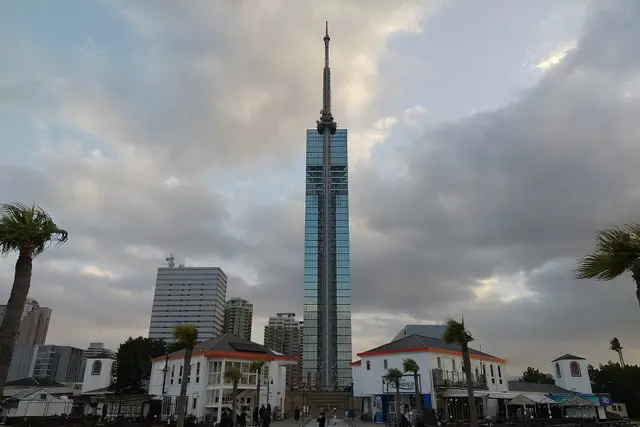
Fukuoka and Hakata guide
Kyushu's largest city, a few minutes by subway from its airport. Hakata's temples and shrines, food stalls by the river, shopping in Tenjin, and Dazaifu Tenmangu Shrine a short train ride away.
Things to see 10 classics
"Classics" and "Hidden gems" are this site's editorial picks, not a measured popularity ranking.
- 1
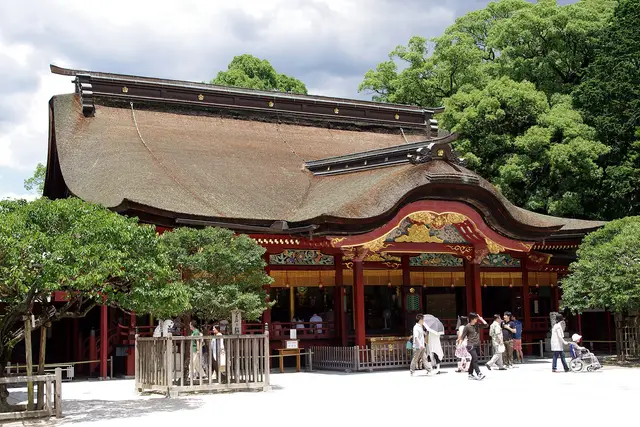
Dazaifu Tenmangu Shrine
A shrine to Sugawara no Michizane, revered as the god of learning. Known for plum blossoms in early spring and grilled umegae-mochi cakes.
- Temples, shrines & churches
- History & buildings
- Food & markets
about 1.5 hrFreeWheelchair & stroller friendly
Bus · About 50 min from Hakata ・ About 40 minutes by direct bus from Hakata Bus Terminal, or about 30 minutes by Nishitetsu train from Tenjin ・ 13km
- 2
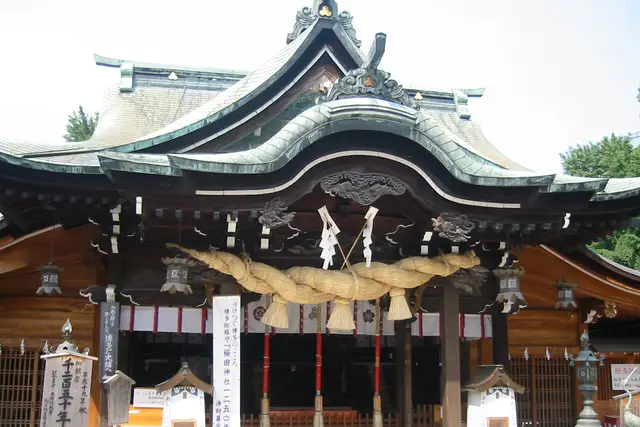
Kushida Shrine
The guardian shrine of Hakata. A towering decorated float from the summer Hakata Gion Yamakasa festival is on display almost all year.
- Temples, shrines & churches
- History & buildings
about 30 minFree
Walk · About 15 min from Hakata ・ 1.0km
- 4
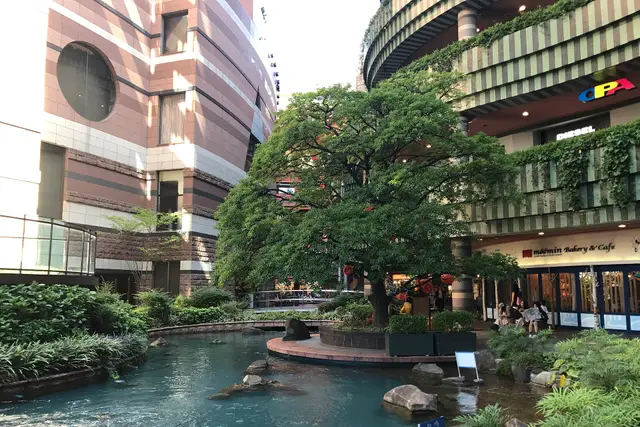
Canal City Hakata
A shopping and entertainment complex built around a canal, with shops, cinemas, a theater and hotels. There are fountain shows.
- Shopping & strolling
- Food & markets
- With kids
about 1.5 hrFreeFine on a rainy dayWheelchair & stroller friendly
Walk · About 12 min from Hakata ・ 900m
- 6
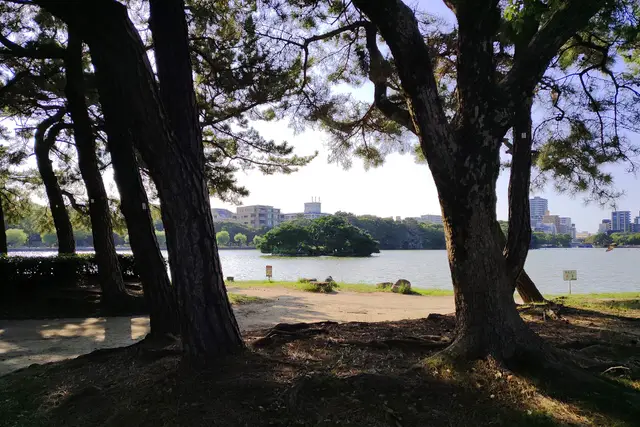
Fukuoka Castle Ruins (Maizuru Park)
Castle ruins with stone walls and turrets. The base of the keep gives a view over the city. Known for cherry blossoms in spring.
- History & buildings
- Views
- Nature
about 60 minFree
Subway · About 20 min from Hakata ・ Subway Airport Line to Akasaka or Ohori-Koen Station, then about 8 minutes on foot ・ 3.5km
Show on map
ClassicsHidden gems
Suggested routes
Times assume a 9:00 start. Travel times are estimated from distance and vary with waiting and crowds.
Hakata's temples and shrines, then food stalls at night
Leave 9:00 → until about 13:45 (about 5 hr)
- 9:00Hakata
about 12 min on foot
9:12Rakusuien Gardenstay about 30 minabout 16 min on foot
9:58Tochoji Templestay about 30 minabout 7 min on foot
10:35Kushida Shrinestay about 30 minabout 4 min on foot
11:09Canal City Hakatastay about 1.5 hrabout 6 min on foot
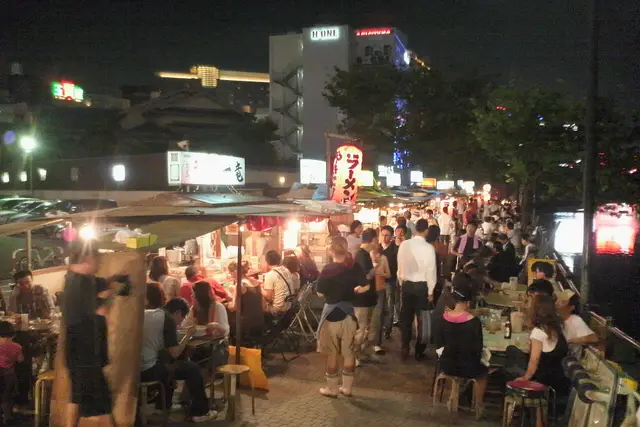
12:45Nakasu food stalls (yatai)stay about 60 min
All walkable from Hakata Station. The food stalls open from early evening.
Plan this routeHalf a day in Dazaifu
Leave 9:00 → until about 14:28 (about 5.5 hr)
- 9:00Hakata
about 50 min by transport
9:50Dazaifu Tenmangu Shrinestay about 1.5 hrabout 8 min on foot
11:28Kyushu National Museumstay about 2 hrabout 15 min by transport
13:43Kamado Shrinestay about 45 min
Includes the round trip from Fukuoka. Take a bus from Dazaifu Station to Kamado Shrine.
Plan this route
When to go
April–May and October–November are the most pleasant. The rainy season brings 250–300 mm a month in June–July, and August is hot and humid (about 28°C).
Point at a month to see its temperature and precipitation.
Temperature (line: average; band: low to high)
Precipitation (mm)
Typical seasons
Cherry blossoms (Maizuru Park)
Plum blossoms (Dazaifu Tenmangu)
Hakata Dontaku
Hakata Gion Yamakasa
Autumn leaves (Dazaifu)
Show as a table
| Jan | Feb | Mar | Apr | May | Jun | Jul | Aug | Sep | Oct | Nov | Dec | |
|---|---|---|---|---|---|---|---|---|---|---|---|---|
| High (℃) | 10.2 | 11.6 | 15 | 19.9 | 24.4 | 27.2 | 31.2 | 32.5 | 28.6 | 23.7 | 18.2 | 12.6 |
| Avg (℃) | 6.9 | 7.8 | 10.8 | 15.4 | 19.9 | 23.3 | 27.4 | 28.4 | 24.7 | 19.6 | 14.2 | 9.1 |
| Low (℃) | 3.9 | 4.4 | 7.2 | 11.5 | 16.1 | 20.3 | 24.6 | 25.4 | 21.6 | 16 | 10.6 | 5.8 |
| Rain (mm) | 74.4 | 69.8 | 103.7 | 118.2 | 133.7 | 249.6 | 299.1 | 210 | 175.1 | 94.5 | 91.4 | 67.5 |
Temperature and precipitation are Japan Meteorological Agency normals (1991–2020, Fukuoka). Seasons are typical timings and can shift by a week or two each year. JMA data
Main ways to get around
Fukuoka City Subway
The Airport Line takes about 5 minutes from Fukuoka Airport to Hakata and 11 to Tenjin, and continues to Ohori-Koen and Nishijin. The Nanakuma Line links Hakata and Tenjin-Minami.
Nishitetsu trains (Tenjin-Omuta and Dazaifu lines)
From Nishitetsu Fukuoka (Tenjin) Station to Dazaifu in about 30 minutes, changing to the Dazaifu Line at Nishitetsu Futsukaichi.
Nishitetsu buses
From Hakata Station and Tenjin to places far from the subway, such as Fukuoka Tower. A direct bus to Dazaifu leaves from Hakata Bus Terminal.
Fukuoka municipal ferries
About 10 minutes from the Meinohama ferry pier to Nokonoshima. Boats to Shikanoshima leave from Hakata Pier.
Getting to Hakata
“Classics” and “Hidden gems” are our editors' picks, not a measured popularity ranking. Travel times are estimates. Please check prices, opening hours and operating days with the official sources before you go.
Photo and data credits
Fukuoka Tower and the Momochi waterfront Hirho (CC BY-SA 4.0) / The main hall of Dazaifu Tenmangu among green trees Jakub Hałun (CC BY-SA 4.0) / The worship hall of Kushida Shrine with its straw rope mdid (CC BY 2.0) / Nakasu food stalls by the river at night, busy with diners mmry0241 (CC BY-SA 3.0) / The canal and greenery inside Canal City Hakata そらみみ (CC BY-SA 4.0) / Ohori Park's pond and islet seen between pine trees Hirho (CC BY 4.0) / Fukuoka Tower rising over Seaside Momochi Hirho (CC BY-SA 4.0). Cropped and resized.
Local food
Regional dishes handed down in Fukuoka. Many are home and community cooking, so not every dish is served at restaurants.
Gameni
がめ煮
"Game-ni" is a typical local dish of Fukuoka Prefecture, and its name comes from the Hakata dialect word "gamekurikomu" (meaning "to gather together").
- Where it is made
- All over Fukuoka Prefecture
Kashiwa-meshi
かしわめし
In the Kyushu region, chicken is called "kashiwa," and "kashiwa-meshi" is a local food that combines chicken and boiled-down ingredients to cooked rice.
- Where it is made
- All areas within the prefecture
Yuzu Gosho (Yuzu Citrus Pepper)
ゆずごしょう
In the Kyushu region, there is a familiar seasoning called "yuzugosho."
- Where it is made
- All of Fukuoka Prefecture
Nukamisodaki
ぬかみそ炊き
In the old days, nukazuke was a preserved food of the Ogasawara clan, and it was handed down to an old family in Kokura, where it spread among the common people.
- Where it is made
- Kitakyushu City
Hakata zoni
博多雑煮
Katsuona, an essential ingredient in Hakata Zoni, is a vegetable that has been used in Hakata since ancient times and is a kind of the takana vegetable.It is said to have gotten its name from the…
- Where it is made
- Hakata area
Wakadori no mizutaki
若鶏の水炊き
The Chinese-style chicken stew in light salt became popular in Nagasaki and was fused with Western soups such as consommé, and then combined with elements of Japanese cuisine to create Fukuoka's own…
- Where it is made
- Fukuoka area
“Find places serving it” opens a map app search for the dish name and the place name. The results are not chosen or recommended by this site. Please check with the shop whether it serves the dish.
Source: “Our Regional Cuisines” (Ministry of Agriculture, Forestry and Fisheries), edited by this site (imported 2026-11-15) https://www.maff.go.jp/e/policies/market/k_ryouri/index.html. Names, areas and ingredients are as written on the source pages; descriptions are excerpts of the original text. No photos are used. This page is not made or endorsed by the ministry.