Nagoya guide
Nagoya Castle and Atsuta Shrine, the lively Osu and Sakae districts, and museums of industry. A big city that is easy to cover by subway, with its own dishes such as miso cutlet and grilled eel on rice.
Things to see 10 classics
"Classics" and "Hidden gems" are this site's editorial picks, not a measured popularity ranking.
- 1
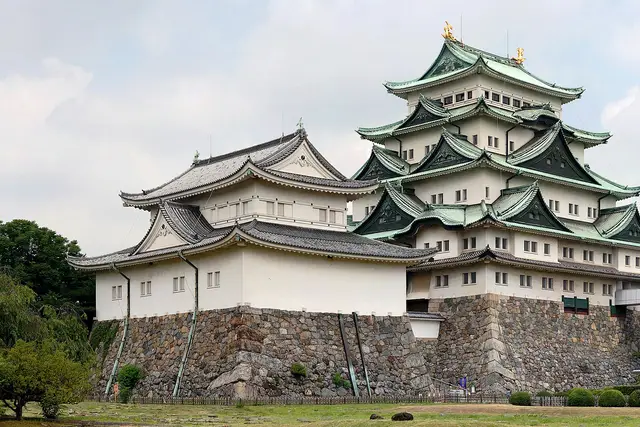
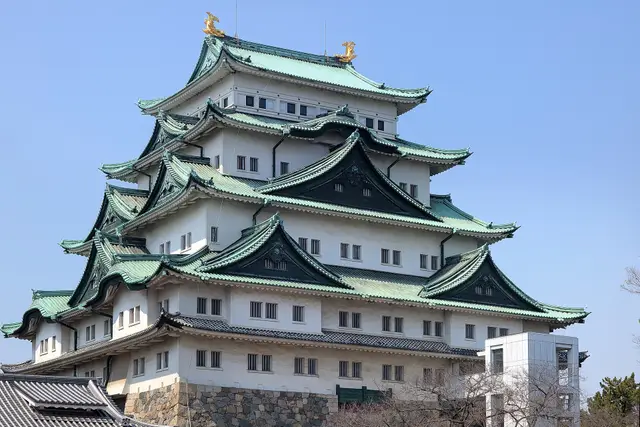
Nagoya Castle
The castle of the Owari Tokugawa lords, known for its golden roof ornaments. The palace, rebuilt in wood, has superb paintings on gold.
- History & buildings
about 2 hrPaid entryFine on a rainy dayWheelchair & stroller friendly
Subway · About 20 min from Nagoya ・ Higashiyama Line to Sakae, then Meijo Line to Nagoyajo ・ 2.3km
- 2
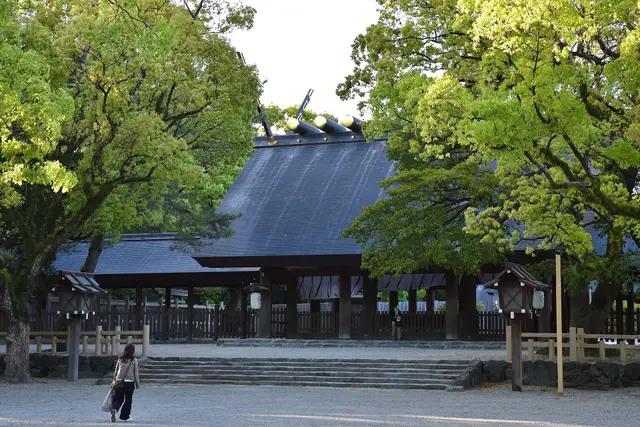
Atsuta Jingu Shrine
An ancient shrine that keeps the sacred sword, one of the three imperial regalia. A forest of great trees in the middle of the city.
- Temples, shrines & churches
- History & buildings
- Nature
about 60 minFreeWheelchair & stroller friendly
Train · About 15 min from Nagoya ・ Meitetsu to Jingu-mae, then about 3 minutes on foot ・ 5.4km
- 3
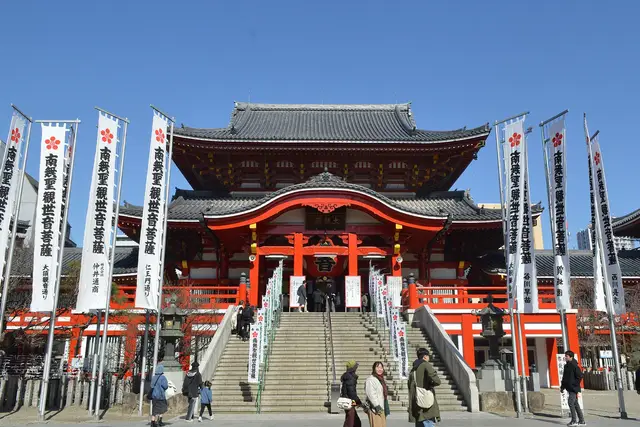
Osu Kannon and Osu Shopping Street
Covered shopping arcades beside a temple, mixing second-hand clothes, electronics, anime shops and street food from many countries.
- Shopping & strolling
- Food & markets
- Anime & film
about 1.5 hrFreeFine on a rainy day
Subway · About 15 min from Nagoya ・ Higashiyama Line to Fushimi, then Tsurumai Line to Osu Kannon ・ 2.0km
- 4
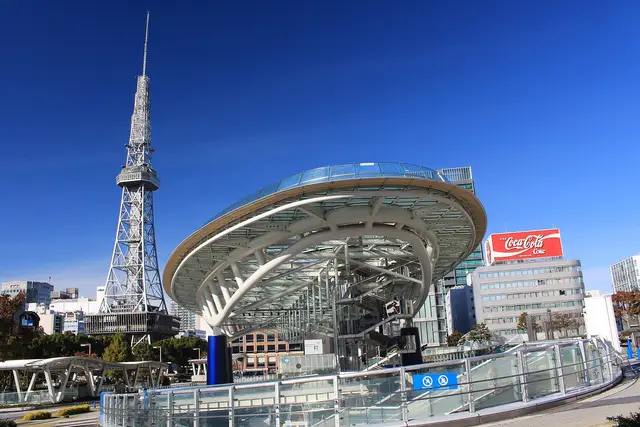
Sakae (Oasis 21 and the TV Tower)
Nagoya's central shopping district. Look for Oasis 21, a glass roof holding a sheet of water, and the TV tower standing in the park.
- Shopping & strolling
- Night views
- Views
about 60 minFreeWheelchair & stroller friendly
Subway · About 10 min from Nagoya ・ Higashiyama Line to Sakae ・ 2.5km
- 5
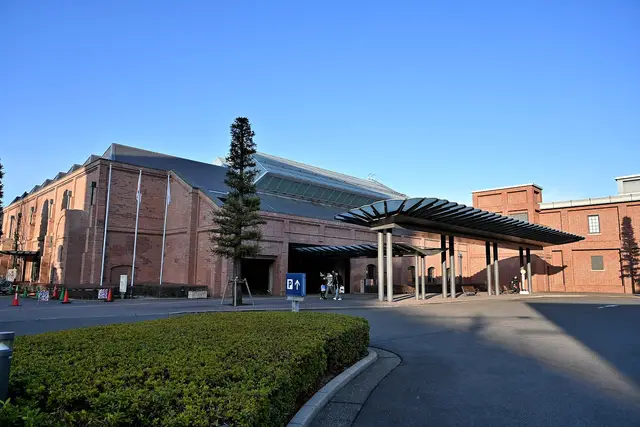
Toyota Commemorative Museum of Industry and Technology
In a red-brick former factory, working machines show how looms and cars are made. Staff give live demonstrations.
- History & buildings
- With kids
about 2 hrPaid entryFine on a rainy dayWheelchair & stroller friendly
Train · About 15 min from Nagoya ・ Meitetsu to Sako, then about 3 minutes on foot; or about 25 minutes on foot from Nagoya Station ・ 1.5km
- 6
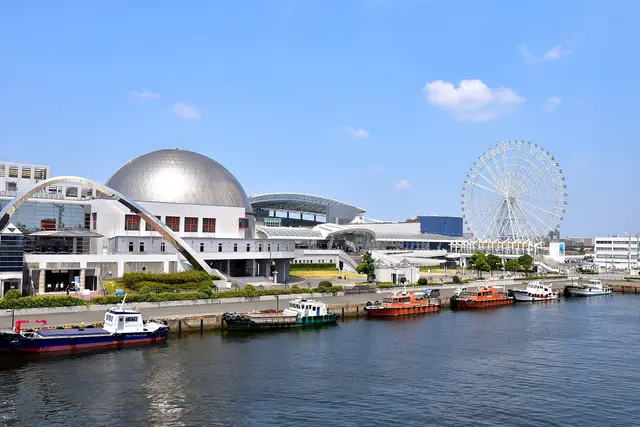
Port of Nagoya Public Aquarium
A large aquarium with orcas, dolphins and beluga whales. The dolphin show in the huge main pool is the favorite.
- With kids
about 2.5 hrPaid entryFine on a rainy dayWheelchair & stroller friendly
Subway · About 35 min from Nagoya ・ Higashiyama Line to Sakae, then Meijo / Meiko Line to Nagoyako ・ 8.9km
Show on map
ClassicsHidden gems
Suggested routes
Times assume a 9:00 start. Travel times are estimated from distance and vary with waiting and crowds.
Nagoya Castle, Sakae, then Osu
Leave 9:00 → until about 15:43 (about 6.5 hr)
- 9:00Nagoya
about 20 min by transport
9:20Nagoya Castlestay about 2 hrabout 15 min by transport
11:35Futaba Museum (Cultural Path)stay about 45 minabout 27 min on foot
12:47Sakae (Oasis 21 and the TV Tower)stay about 60 minabout 26 min on foot
14:13Osu Kannon and Osu Shopping Streetstay about 1.5 hr
All linked by the Meijo subway line. Osu is good for street food, so you could have lunch there.
Plan this routeIndustry museums and an old quarter near the station
Leave 9:00 → until about 13:45 (about 5 hr)
- 9:00Nagoya
about 15 min by transport
9:15Toyota Commemorative Museum of Industry and Technologystay about 2 hrabout 11 min on foot
11:26Noritake Gardenstay about 60 minabout 19 min on foot
12:45Shikemichi and Endoji Shopping Streetstay about 60 min
All three are within walking distance of Nagoya Station. Good for a rainy day or a half day before or after a train.
Plan this route
When to go
April–May and October–November are the most pleasant. August averages over 28°C and is humid. June–September is rainy; winter is dry and sunny.
Point at a month to see its temperature and precipitation.
Temperature (line: average; band: low to high)
Precipitation (mm)
Typical seasons
Cherry blossoms (Nagoya Castle)
Nagoya Festival
Autumn leaves (Tokugawaen)
Show as a table
| Jan | Feb | Mar | Apr | May | Jun | Jul | Aug | Sep | Oct | Nov | Dec | |
|---|---|---|---|---|---|---|---|---|---|---|---|---|
| High (℃) | 9.3 | 10.5 | 14.5 | 20.1 | 24.6 | 27.6 | 31.4 | 33.2 | 29.1 | 23.3 | 17.3 | 11.7 |
| Avg (℃) | 4.8 | 5.5 | 9.2 | 14.6 | 19.4 | 23 | 26.9 | 28.2 | 24.5 | 18.6 | 12.6 | 7.2 |
| Low (℃) | 1.1 | 1.4 | 4.6 | 9.7 | 14.9 | 19.4 | 23.5 | 24.7 | 21 | 14.8 | 8.6 | 3.4 |
| Rain (mm) | 50.8 | 64.7 | 116.2 | 127.5 | 150.3 | 186.5 | 211.4 | 139.5 | 231.6 | 164.7 | 79.1 | 56.6 |
Temperature and precipitation are Japan Meteorological Agency normals (1991–2020, Nagoya). Seasons are typical timings and can shift by a week or two each year. JMA data
Main ways to get around
Nagoya Municipal Subway
Higashiyama Line: Nagoya Station to Sakae and Fujigaoka. Meijo Line: the castle and Atsuta. Meiko Line: the port. Change lines at Sakae or Kanayama. A one-day pass is sold.
Me~guru sightseeing loop bus
From Nagoya Station past the Toyota museum, Noritake Garden, Nagoya Castle, Tokugawaen, the Cultural Path and Sakae. It does not run every day of the week.
Meitetsu and the Aonami Line
Meitetsu trains go to Jingu-mae (Atsuta Shrine), Arimatsu and Inuyama. The Aonami Line goes to Kinjo-futo for the railway museum and LEGOLAND. Both start at Nagoya Station.
Meitetsu μ-SKY (Centrair airport)
About 30 minutes from Chubu Centrair Airport to Meitetsu Nagoya. All seats are reserved, so you need a seat ticket on top of the fare.
Tokaido Shinkansen
By Nozomi, about 1 hour 40 minutes from Tokyo, 35 minutes from Kyoto and 50 minutes from Shin-Osaka. Every train stops at Nagoya.
Getting to Nagoya
“Classics” and “Hidden gems” are our editors' picks, not a measured popularity ranking. Travel times are estimates. Please check prices, opening hours and operating days with the official sources before you go.
Photo and data credits
Nagoya Castle keep topped with golden shachihoko Base64 edit by Noodle snacks (CC BY-SA 3.0) / The green-roofed main keep of Nagoya Castle against a blue sky Syced (CC0) / The main sanctuary of Atsuta Jingu among tall trees Bariston (CC BY-SA 4.0) / The vermilion main hall of Osu Kannon temple Asturio Cantabrio (CC BY-SA 4.0) / The glass roof of Oasis 21 with the Nagoya TV Tower behind Alpsdake (CC BY-SA 4.0) / The red-brick Toyota Commemorative Museum of Industry and Technology Bariston (CC BY-SA 4.0) / Port of Nagoya Public Aquarium on the waterfront, with a Ferris wheel Bariston (CC BY-SA 4.0). Cropped and resized.
Local food
Regional dishes handed down in Aichi. Many are home and community cooking, so not every dish is served at restaurants.
Hakozushi
箱ずし
“Hakozushi” can be found all over Japan. It is a type of sushi made by filling a square wooden box with sushi rice, placing the ingredients on top, and then pressing them down from above.
- Where it is made
- The entire prefecture centering on the Owari area and Nishimikawa area
Kashiwa no Hikizuri (Chiken Hot Pot)
かしわのひきずり
Kashiwa (chicken meat) has been a favorite dish in Aichi Prefecture.
- Where it is made
- Owari,Oku-Mikawa Area
Oni-manju
鬼まんじゅう
“Oni-manju” was made with sweet potatoes and wheat flour, which were relatively easy to obtain during and after the war when food was scarce, and it became popular as a staple food instead of rice.
- Where it is made
- The entire prefecture centering on Nagoya city
Moroko-zushi (Sushi with ‘Moroko’ Willow Gudgeon)
もろこずし
In the waterfront of Owari region, which has many small rivers running everywhere, there are many local dishes used river fish like crucian carp, catfish and striped mullet. ‘Moroko-zushi’…
- Where it is made
- Owari Region
Funa Miso (Crucian carp Miso)
ふな味噌
"Funa Miso(Crucian carp Miso)" is a freshwater fish dish found in the lower reaches of the Kiso Three Rivers, which collectively refer to the three rivers, Kiso River, Nagaragawa River, and Ibigawa…
- Where it is made
- Owari Area, Kisosansen Area
Tako-meshi(octopus rice)
たこ飯
“Tako-meshi” (octopus rice) is said to have been a type of fisherman's meal in which octopus caught by fishermen was chopped into small pieces on the boat and cooked with rice.
- Where it is made
- Owari area / Himakajima
“Find places serving it” opens a map app search for the dish name and the place name. The results are not chosen or recommended by this site. Please check with the shop whether it serves the dish.
Source: “Our Regional Cuisines” (Ministry of Agriculture, Forestry and Fisheries), edited by this site (imported 2026-11-15) https://www.maff.go.jp/e/policies/market/k_ryouri/index.html. Names, areas and ingredients are as written on the source pages; descriptions are excerpts of the original text. No photos are used. This page is not made or endorsed by the ministry.