Otaru guide
A port town of canal-side stone warehouses, glass shops and music boxes. About 35 minutes by train from Sapporo, and the main sights are walkable from the station. Also known for sushi.
Things to see 10 classics
"Classics" and "Hidden gems" are this site's editorial picks, not a measured popularity ranking.
- 1
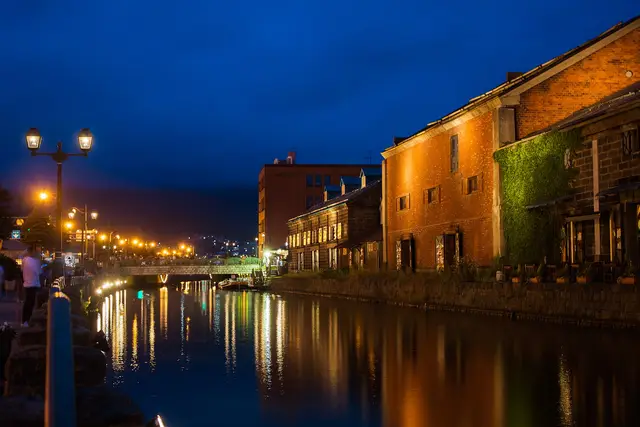
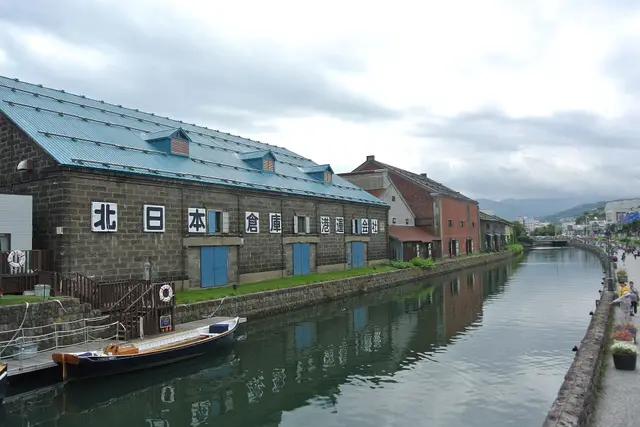
Otaru Canal
A canal lined with old stone warehouses. Gas lamps are lit from dusk, and small cruise boats run along it.
- History & buildings
- Views
- Night views
about 45 minFree
Walk · About 10 min from Otaru ・ 600m
- 2
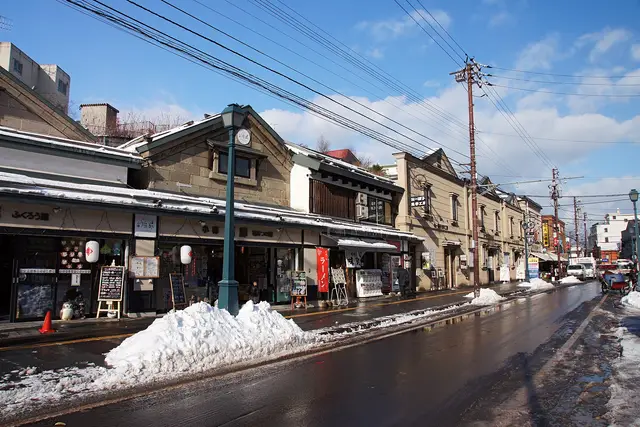
Sakaimachi Street
A street of glass, music-box and sweet shops in old merchant houses and warehouses. Good for snacking as you walk.
- Shopping & strolling
- Food & markets
- History & buildings
about 1.5 hrFree
Walk · About 15 min from Otaru ・ 1.1km
- 3
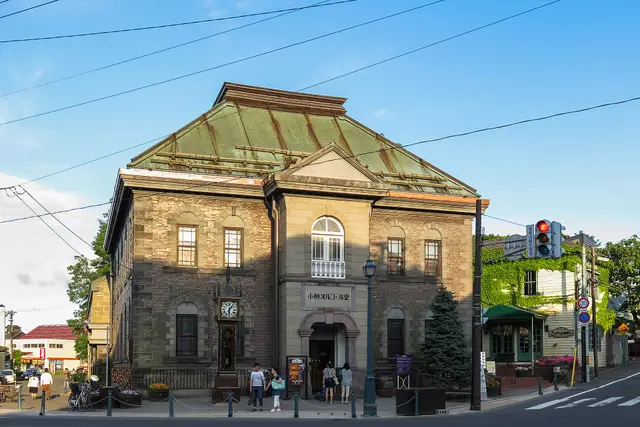
Otaru Music Box Museum (Main Building)
A shop filled with music boxes in a brick building from 1912. The steam clock in front is the landmark.
- Shopping & strolling
- History & buildings
about 45 minFreeFine on a rainy day
Walk · About 25 min from Otaru ・ At the south end of Sakaimachi Street; about 7 minutes on foot from Minami-Otaru Station ・ 1.4km
- 4
Kitaichi Glass Sangokan
A glass shop in a stone warehouse from the 1890s, known for its cafe hall lit only by oil lamps.
- Shopping & strolling
- Museums
about 30 minFreeFine on a rainy day
Walk · About 20 min from Otaru ・ 1.2km
- 5
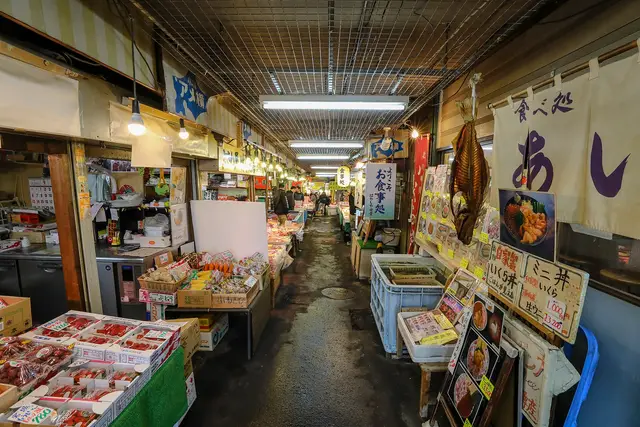
Sankaku Market
A small market right beside Otaru Station, with fish stalls and seafood rice-bowl diners. Busiest from morning until noon.
- Food & markets
- Shopping & strolling
about 45 minFreeFine on a rainy day
Walk · About 2 min from Otaru ・ 100m
- 6
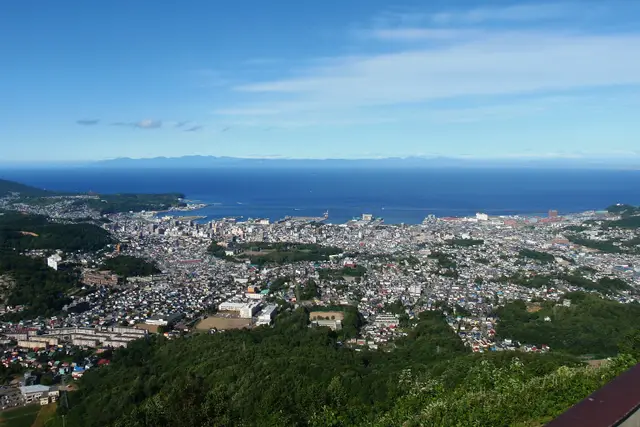
Mt. Tengu (Tenguyama)
A hill overlooking the town and harbor, reached by ropeway. Good for the night view, and a ski area in winter.
- Views
- Night views
- Activities
about 60 minFreeWheelchair & stroller friendly
Ropeway · About 40 min from Otaru ・ Bus to Tenguyama Ropeway, then the ropeway ・ 3.4km
Show on map
ClassicsHidden gems
Suggested routes
Times assume a 9:00 start. Travel times are estimated from distance and vary with waiting and crowds.
From the station to the canal and Sakaimachi Street
Leave 9:00 → until about 14:34 (about 5.5 hr)
- 9:00Otaru
about 2 min on foot
9:02Sankaku Marketstay about 45 minabout 5 min on foot
9:52Old Temiya Line Walkwaystay about 30 minabout 6 min on foot
10:28Bank of Japan Otaru Museumstay about 45 minabout 4 min on foot
11:17Otaru Canalstay about 45 minabout 11 min on foot
12:13Sakaimachi Streetstay about 1.5 hrabout 6 min on foot
13:49Otaru Music Box Museum (Main Building)stay about 45 min
All on foot. For the way back, you can also board at Minami-Otaru Station, close to the Music Box Museum.
Plan this routeShukutsu: the sea and the herring-fishing past
Leave 9:00 → until about 13:35 (about 4.5 hr)
- 9:00Otaru
about 35 min by transport
9:35Old Aoyama Villa (Otaru Kihinkan)stay about 45 minabout 11 min on foot
10:31Otaru Aquariumstay about 2.5 hrabout 4 min on foot
13:05Shukutsu Panorama Observatorystay about 30 min
Take a bus from Otaru Station. There are slopes, so wear comfortable shoes.
Plan this route
When to go
July and August average 20–22°C and are comfortable. November to January is wet and snowy (over 130 mm a month); February has the Snow Light Path.
Point at a month to see its temperature and precipitation.
Temperature (line: average; band: low to high)
Precipitation (mm)
Typical seasons
Cherry blossoms (Temiya Park)
Otaru Snow Light Path
Swimming (Dream Beach)
Autumn leaves (Mt. Tengu)
Snowy scenes (Otaru Canal)
Show as a table
| Jan | Feb | Mar | Apr | May | Jun | Jul | Aug | Sep | Oct | Nov | Dec | |
|---|---|---|---|---|---|---|---|---|---|---|---|---|
| High (℃) | -0.5 | 0.2 | 4.1 | 10.9 | 16.9 | 20.4 | 24.2 | 25.6 | 22.3 | 15.9 | 8.3 | 1.6 |
| Avg (℃) | -3.1 | -2.7 | 0.8 | 6.5 | 12.1 | 16 | 20.2 | 21.7 | 18.1 | 11.8 | 4.9 | -1.1 |
| Low (℃) | -5.8 | -5.7 | -2.4 | 2.6 | 7.9 | 12.5 | 17.1 | 18.4 | 14.3 | 7.9 | 1.6 | -3.8 |
| Rain (mm) | 138.1 | 106.6 | 87.3 | 56.4 | 53.7 | 55.6 | 93.6 | 131.3 | 131.7 | 123 | 152.4 | 151.9 |
Temperature and precipitation are Japan Meteorological Agency normals (1991–2020, Otaru). Seasons are typical timings and can shift by a week or two each year. JMA data
Main ways to get around
JR Hakodate Line (Rapid Airport)
About 35 minutes by rapid train from Sapporo to Otaru. Some trains run through from New Chitose Airport. Heading to Otaru, the sea is on the right-hand side.
Hokkaido Chuo Bus (city routes)
From Otaru Station to Shukutsu (Otaru Aquarium) and to the Tenguyama Ropeway. The canal and Sakaimachi Street are within walking distance of the station.
Otaru Tenguyama Ropeway
About 4 minutes from the base to the top. Take a bus from Otaru Station to the base. It can stop for strong wind or maintenance.
Otaru Express Bus (Sapporo – Otaru)
About 1 hour from Sapporo Station to Otaru Station. Buses are frequent, and are a useful backup when trains stop for snow.
JR Hakodate Line (Otaru – Yoichi)
About 25 minutes from Otaru to Yoichi. Trains are infrequent, so check the return times first. Buses also run.
Getting to Otaru
“Classics” and “Hidden gems” are our editors' picks, not a measured popularity ranking. Travel times are estimates. Please check prices, opening hours and operating days with the official sources before you go.
Photo and data credits
Otaru Canal at dusk with lit stone warehouses Tan Wei Liang Byorn (CC BY-SA 4.0) / Otaru Canal lined with old stone warehouses Suicasmo (CC BY-SA 4.0) / Old merchant buildings along Sakaimachi Street with leftover snow 663highland (CC BY 2.5) / The green-roofed main building of the Otaru Music Box Museum Wpcpey (CC BY 4.0) / The aisle of Sankaku Market lined with seafood stalls bryan... (CC BY-SA 2.0) / Otaru and the sea seen from Mt. Tengu Soica2001 (talk) (Public domain) / The stone building of the former Bank of Japan Otaru Branch 663highland (CC BY 2.5). Cropped and resized.
Local food
Regional dishes handed down in Hokkaido. Many are home and community cooking, so not every dish is served at restaurants.
Jingisukan (Lamb and Vegetable Hot Pot)
ジンギスカン/成吉思汗
During the Taisho era (1912-1926), as the outbreak of World War I made it difficult to import wool, there was a national policy to encourage sheep farming.
- Where it is made
- All of Hokkaido Prefecture
Sanpei-Jiru
三平汁
"Sanpei-jiru" is a local dish consisting of salted fish, such as salmon or herring, stewed together with vegetables, such as carrots, and daikon radishes.
- Where it is made
- All of Hokkaido Prefecture
Izushi
飯寿司
"Izushi" is sushi made by lactic acid fermentation in low temperature with fish, vegetables and Rice koji (=malted rice).
- Where it is made
- All of Hokkaido Prefecture
Imomochi(potato rice cake)/Imodango(potato dumplings)
いももち/いもだんご
“Imomochi” (potato rice cake) is a local dish that is easy to make at home using potatoes, one of Hokkaido's most popular agricultural products.
- Where it is made
- All over Hokkaido
Beko Mochi
べこ餅
"Beko mochi" is a local sweet shaped like leaves with branch-like patterns on it with mainly black and white, and has been very familiar with Hokkaido locals.
- Where it is made
- All of Hokkaido Prefecture
Tachi Miso Soup/Miso Soup with Pacific Cod Soft Roe
たちの味噌汁/スケソウダラの白子の味噌汁
The miso soup using the whole soft roe of those codfish is called "Tachi miso soup" and is a typical winter soup in Hokkaido.
- Where it is made
- All of Hokkaido Prefecture
“Find places serving it” opens a map app search for the dish name and the place name. The results are not chosen or recommended by this site. Please check with the shop whether it serves the dish.
Source: “Our Regional Cuisines” (Ministry of Agriculture, Forestry and Fisheries), edited by this site (imported 2026-11-15) https://www.maff.go.jp/e/policies/market/k_ryouri/index.html. Names, areas and ingredients are as written on the source pages; descriptions are excerpts of the original text. No photos are used. This page is not made or endorsed by the ministry.