Hakone guide
A mountain hot-spring resort close to Tokyo. You can make a full loop by mountain railway, cable car, ropeway and a boat across Lake Ashi. Mt. Fuji appears on clear days.
Things to see 10 classics
"Classics" and "Hidden gems" are this site's editorial picks, not a measured popularity ranking.
- 1
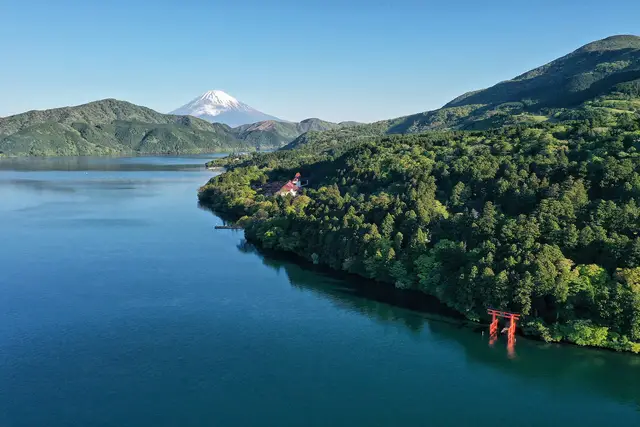
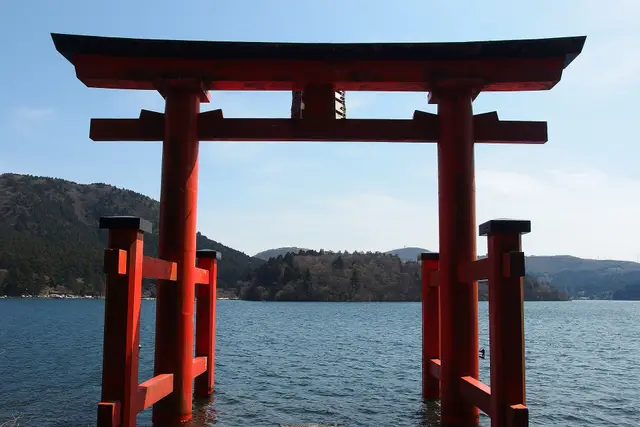
Lake Ashi and Hakone Shrine
A lake ringed by mountains, with a red torii gate standing in the water and Hakone Shrine among the cedars. Mt. Fuji shows on clear days.
- Views
- Temples, shrines & churches
- Nature
about 2 hrPartly paidWheelchair & stroller friendly
Bus · About 50 min from Hakone-Yumoto ・ Bus to Motohakone-ko, then about 10 minutes on foot ・ 7.8km
- 2
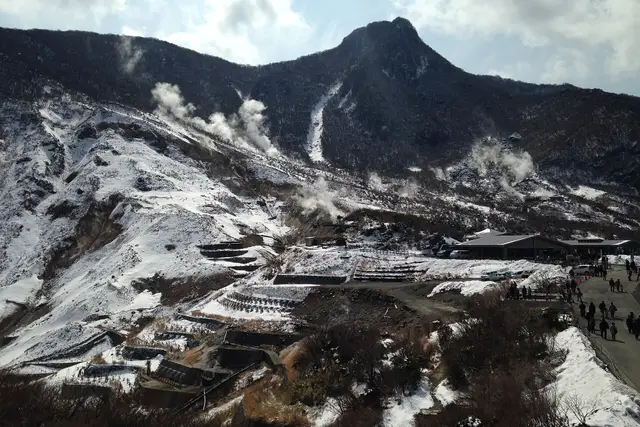
Owakudani
A volcanic valley of rising white steam, known for black eggs boiled in the hot springs. It is closed on days when volcanic gas is strong.
- Nature
- Views
- Food & markets
about 60 minFreeWheelchair & stroller friendly
Ropeway · About 80 min from Hakone-Yumoto ・ Hakone Tozan Railway to Gora, cable car to Sounzan, then the ropeway ・ 7.7km
- 3
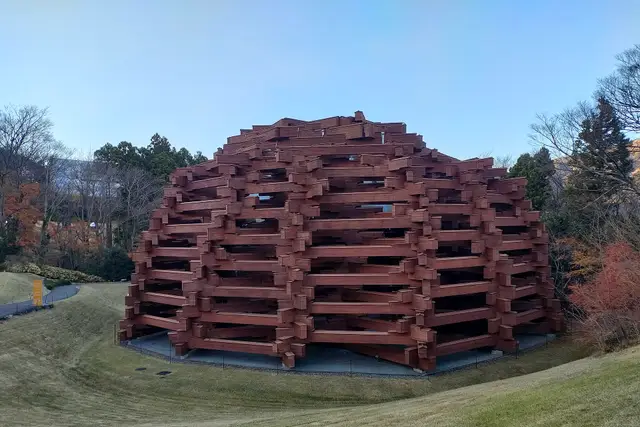
The Hakone Open-Air Museum
An outdoor museum with sculptures spread across wide lawns against the mountains. There is a Picasso pavilion and a foot bath.
- Museums
- With kids
about 2 hrPaid entryWheelchair & stroller friendly
Train · About 40 min from Hakone-Yumoto ・ Hakone Tozan Railway to Chokoku-no-Mori, then about 2 minutes on foot ・ 4.9km
- 4
Hakone-Yumoto hot-spring town
The hot-spring town at the entrance to Hakone. Souvenir and sweet-bun shops line the street by the station, and there are day-use baths.
- Hot springs
- Shopping & strolling
- Food & markets
about 1.5 hrPartly paidFine on a rainy day
Walk · About 3 min from Hakone-Yumoto ・ 100m
- 5
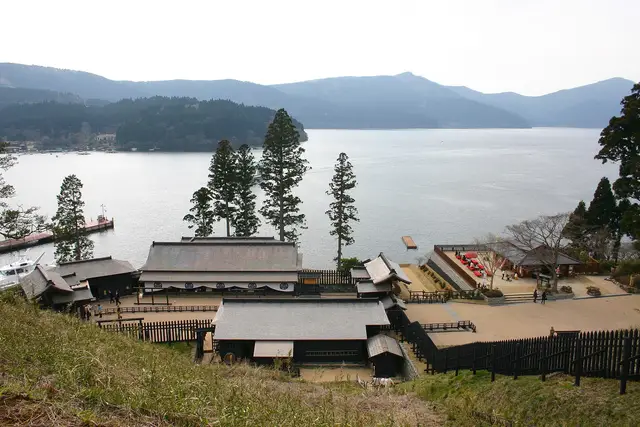
Hakone Checkpoint (Hakone Sekisho)
The checkpoint where travelers on the Tokaido road were inspected in the Edo period, rebuilt as it was. On the shore of Lake Ashi.
- History & buildings
about 60 minPaid entryPartly step-free
Bus · About 45 min from Hakone-Yumoto ・ Bus bound for Hakonemachi to Hakone Sekisho-ato ・ 8.4km
- 6
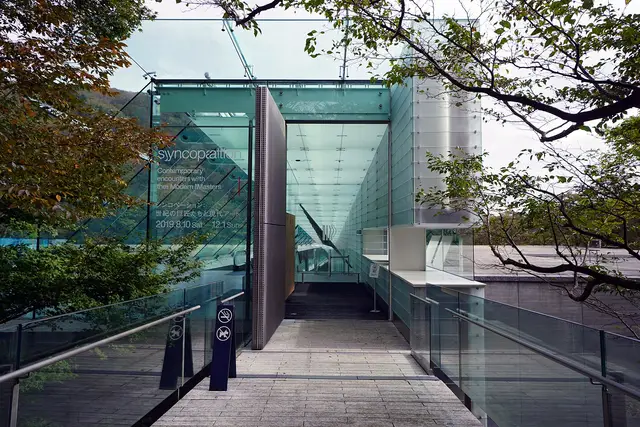
Pola Museum of Art
A museum of glass and light set in the forest. It shows Impressionists such as Monet and Renoir, and has a walking trail through the woods.
- Museums
- Nature
about 2 hrPaid entryFine on a rainy dayWheelchair & stroller friendly
Train · About 65 min from Hakone-Yumoto ・ Hakone Tozan Railway to Gora, then about 15 minutes by bus ・ 7.9km
Show on map
ClassicsHidden gems
Suggested routes
Times assume a 9:00 start. Travel times are estimated from distance and vary with waiting and crowds.
The Hakone loop by train, cable car, ropeway and boat
Leave 9:00 → until about 17:53 (about 9 hr)
- 9:00Hakone-Yumoto
about 40 min by transport
9:40The Hakone Open-Air Museumstay about 2 hrabout 12 min on foot
11:52Hakone Gora Parkstay about 60 minabout 15 min by transport
13:07Owakudanistay about 60 minabout 25 min by transport
14:32Lake Ashi and Hakone Shrinestay about 2 hrabout 21 min on foot
16:53Hakone Checkpoint (Hakone Sekisho)stay about 60 min
Return to Hakone-Yumoto by bus from Motohakone or Hakonemachi. On days the ropeway is stopped, go around by bus.
Plan this routeSengokuhara: museums and the pampas grass field
Leave 9:00 → until about 15:34 (about 6.5 hr)
- 9:00Hakone-Yumoto
about 35 min by transport
9:35Hakone Venetian Glass Museumstay about 1.5 hrabout 19 min on foot
11:24Pola Museum of Artstay about 2 hrabout 15 min by transport
13:39Hakone Botanical Garden of Wetlandsstay about 60 minabout 10 min on foot
14:49Sengokuhara pampas grass fieldstay about 45 min
This route is by bus. Some sections have few buses, so check the times first.
Plan this route
When to go
Values are for Odawara; Lake Ashi and the uplands are several degrees cooler. June–October is rainy; November leaves and clear winter days give the best Mt. Fuji views.
Point at a month to see its temperature and precipitation.
Temperature (line: average; band: low to high)
Precipitation (mm)
Typical seasons
Cherry blossoms (Odawara to Lake Ashi)
Hydrangeas (Tozan Railway)
Hakone Daimyo Procession
Autumn leaves (Gora, Lake Ashi)
Show as a table
| Jan | Feb | Mar | Apr | May | Jun | Jul | Aug | Sep | Oct | Nov | Dec | |
|---|---|---|---|---|---|---|---|---|---|---|---|---|
| High (℃) | 10.6 | 11.3 | 14.1 | 18.9 | 22.8 | 25.2 | 29 | 30.6 | 27.2 | 22.2 | 17.4 | 13 |
| Avg (℃) | 5.3 | 6.1 | 9.2 | 14 | 18.2 | 21.3 | 25.2 | 26.4 | 23 | 17.8 | 12.6 | 7.8 |
| Low (℃) | 0.6 | 1.3 | 4.4 | 9.2 | 13.8 | 18 | 22 | 23 | 19.6 | 14.1 | 8.3 | 3.1 |
| Rain (mm) | 83.7 | 89.5 | 175.6 | 181.7 | 182.2 | 219.3 | 216 | 167.2 | 248.7 | 238.7 | 119.5 | 74.7 |
Temperature and precipitation are Japan Meteorological Agency normals (1991–2020, Odawara). Seasons are typical timings and can shift by a week or two each year. JMA data
Main ways to get around
Hakone Tozan Railway and Cable Car
About 40 minutes from Hakone-Yumoto to Gora, zigzagging up steep slopes on switchbacks. From Gora, the cable car takes about 10 minutes to Sounzan.
Hakone Ropeway
From Sounzan over Owakudani to Togendai on Lake Ashi. It can stop for volcanic gas or strong wind, in which case substitute buses cover the route.
Hakone Sightseeing Cruise (Lake Ashi)
Pirate-ship-style boats linking Togendai with Hakonemachi and Motohakone ports. A one-way trip takes about 25–40 minutes.
Hakone Tozan Bus and Izuhakone Bus
From Hakone-Yumoto, about 40 minutes to Motohakone and Hakonemachi and 30 minutes to Sengokuhara. Roads are busy on holidays. Each company accepts different passes.
Odakyu Romancecar
About 1 hour 30 minutes direct from Shinjuku to Hakone-Yumoto. All seats reserved. If you come by Shinkansen, change at Odawara to the Hakone Tozan Railway.
Getting to Hakone-Yumoto
“Classics” and “Hidden gems” are our editors' picks, not a measured popularity ranking. Travel times are estimates. Please check prices, opening hours and operating days with the official sources before you go.
Photo and data credits
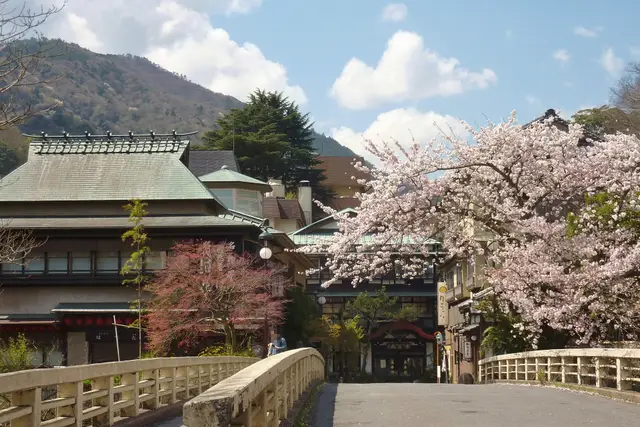
Lake Ashi and the Hakone Shrine torii with Mt. Fuji beyond Charlie fong (CC BY-SA 4.0) / The red torii of Hakone Shrine standing at the edge of Lake Ashi Guilhem Vellut from Annecy, France (CC BY 2.0) / Steaming vents of Owakudani below Mt. Kanmuri そらみみ (CC BY-SA 3.0) / A dome-shaped wooden structure on the lawn of the Open-Air Museum Suicasmo (CC BY-SA 4.0) / A bridge and ryokan in Hakone-Yumoto with cherry blossoms Quercus acuta (CC BY-SA 4.0) / The restored Hakone Checkpoint on the shore of Lake Ashi Steph Gray from London, United Kingdom (CC BY-SA 2.0) / The glass entrance of the Pola Museum of Art in the forest 663highland (CC BY 2.5). Cropped and resized.
Local food
Regional dishes handed down in Kanagawa. Many are home and community cooking, so not every dish is served at restaurants.
Pond smelt kanroni
ワカサギの甘露煮
In this local dish, pond smelt caught in Lake Ashi in Hakone on the western edge of Kanagawa Prefecture are flame-grilled without oil or seasonings and slowly stewed, and starch syrup is used to…
- Where it is made
- Hakone
Ume gohan (rice with Japanese plums)
梅ごはん
One of these is ume gohan, or plum rice.
- Where it is made
- Odawara
Odawara Kamaboko (steamed fish paste)
小田原かまぼこ
A specialty of Odawara City, it is made by steaming seasoned and well-kneaded fish paste on a wooden board. The main ingredient used is “Guchi”, (a white-fleshed fish).
- Where it is made
- Odawara City
Sanma-men
サンマーメン
Before World War II, meat soba (roosu noodles) was a common dish in Yokohama Chinatown, but it was expensive, so "sanma-men," a noodle dish with vegetables, came to be prepared as a meal.
- Where it is made
- Yokohama City, All of Kanagawa Prefecture
Shumai
シューマイ
Yokohama City is the largest consumer of“ Shumai” in Japan.
- Where it is made
- Yokohama City, all of Kanagawa Prefecture
Kenchin jiru
けんちん汁
One theory is that the Japanese word "makijen," a type of Chinese vegetarian cuisine known as fucha, became Japanese, while another says that "Kencho soup" made at Kenchoji Temple in Kamakura came…
- Where it is made
- Kamakura, all over Japan
“Find places serving it” opens a map app search for the dish name and the place name. The results are not chosen or recommended by this site. Please check with the shop whether it serves the dish.
Source: “Our Regional Cuisines” (Ministry of Agriculture, Forestry and Fisheries), edited by this site (imported 2026-11-15) https://www.maff.go.jp/e/policies/market/k_ryouri/index.html. Names, areas and ingredients are as written on the source pages; descriptions are excerpts of the original text. No photos are used. This page is not made or endorsed by the ministry.