Nikko guide
World Heritage shrines and temples, led by Toshogu, stand among tall cedars. A bus ride up the winding Irohazaka road brings you to Kegon Falls, Lake Chuzenji and the Senjogahara marshland.
Things to see 10 classics
"Classics" and "Hidden gems" are this site's editorial picks, not a measured popularity ranking.
- 1
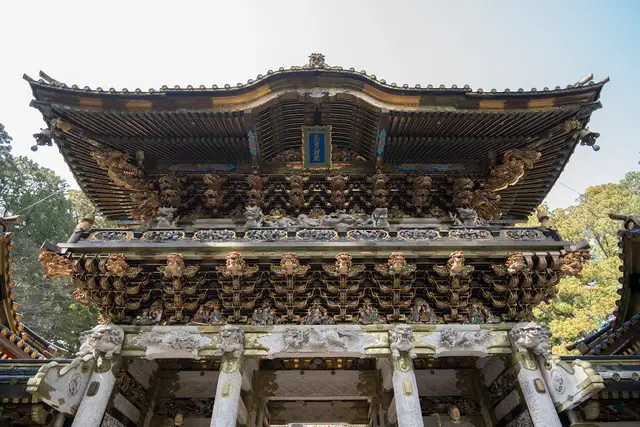
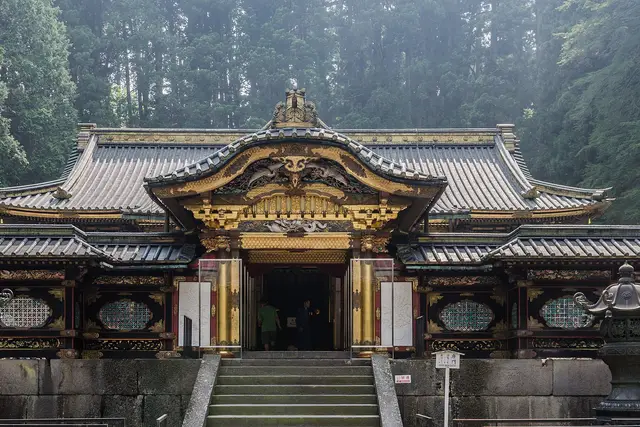
Nikko Toshogu Shrine
The shrine to Tokugawa Ieyasu, famous for richly colored carvings such as the Yomeimon Gate, the Sleeping Cat and the Three Wise Monkeys.
- Temples, shrines & churches
- History & buildings
- Museums
about 1.5 hrPaid entryPartly step-free
Bus · About 20 min from Tobu-Nikko ・ World Heritage Meguri bus to Omotesando, then about 8 minutes on foot ・ 2.2km
- 2
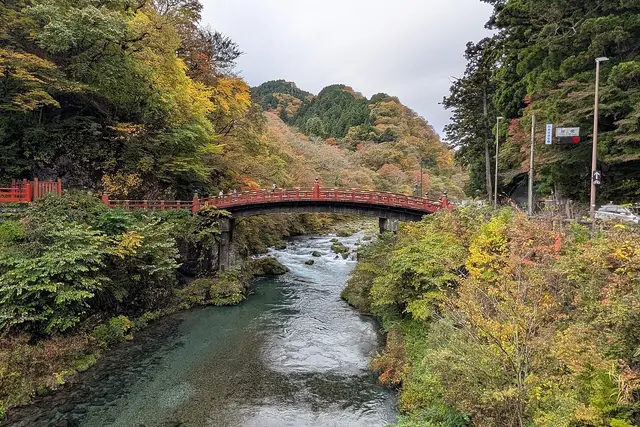
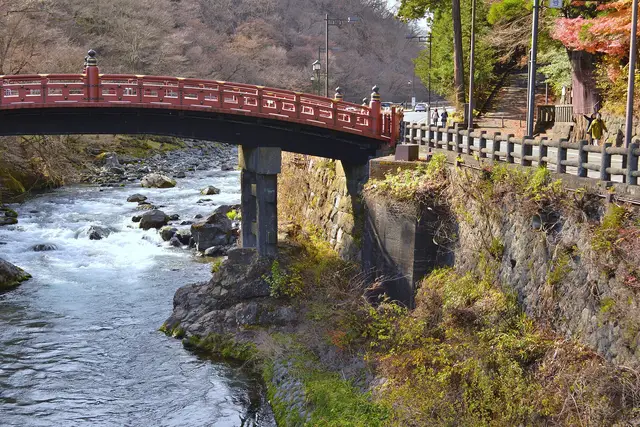
Shinkyo Bridge
A vermilion bridge over the Daiya River gorge, marking the entrance to the shrines and temples. Beautiful with the autumn leaves.
- History & buildings
- Views
about 15 minPartly paid
Bus · About 10 min from Tobu-Nikko ・ Bus to Shinkyo ・ 1.5km
- 3
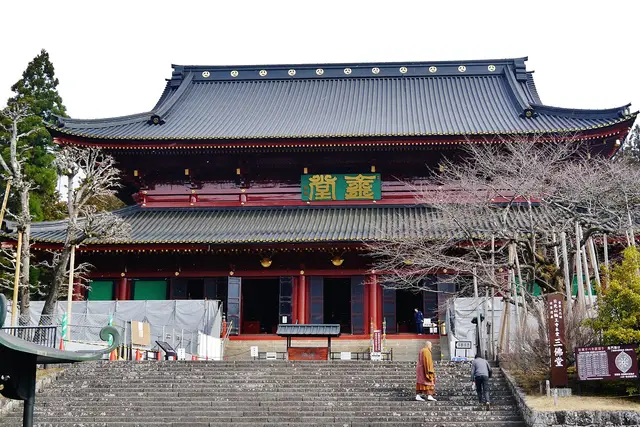
Rinnoji Temple (Sanbutsudo Hall)
The main temple of Nikko. Three large gilded Buddhist statues sit side by side in the Sanbutsudo Hall. Shoyoen Garden is next door.
- Temples, shrines & churches
- History & buildings
about 45 minPaid entryFine on a rainy day
Bus · About 15 min from Tobu-Nikko ・ World Heritage Meguri bus to Shodo-Shonin-zo-mae ・ 1.9km
- 4
Taiyuin Mausoleum
The mausoleum of the third shogun, Tokugawa Iemitsu. Its gold and black design is more restrained, and it is quieter than Toshogu.
- History & buildings
- Temples, shrines & churches
- Museums
about 45 minPaid entryMany stairs or slopes
Bus · About 20 min from Tobu-Nikko ・ World Heritage Meguri bus to Taiyuin Futarasan-jinja-mae ・ 2.5km
- 5
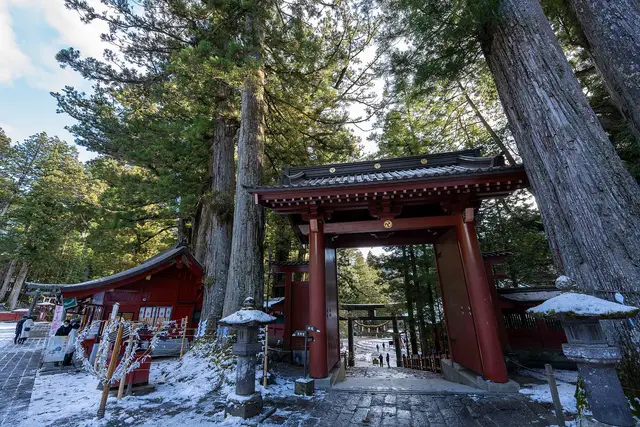
Futarasan Shrine
An old shrine dedicated to Mt. Nantai and the other mountains of Nikko, set among cedars next to Toshogu.
- Temples, shrines & churches
- History & buildings
about 30 minFree
Bus · About 20 min from Tobu-Nikko ・ World Heritage Meguri bus to Taiyuin Futarasan-jinja-mae ・ 2.4km
Show on map
ClassicsHidden gems
Suggested routes
Times assume a 9:00 start. Travel times are estimated from distance and vary with waiting and crowds.
Walk the World Heritage shrines and temples
Leave 9:00 → until about 13:13 (about 4 hr)
- 9:00Tobu-Nikko
about 10 min by transport
9:10Shinkyo Bridgestay about 15 minabout 6 min on foot
9:31Rinnoji Temple (Sanbutsudo Hall)stay about 45 minabout 6 min on foot
10:22Nikko Toshogu Shrinestay about 1.5 hrabout 4 min on foot
11:56Futarasan Shrinestay about 30 minabout 2 min on foot
12:28Taiyuin Mausoleumstay about 45 min
The shrines and temples are within walking distance of each other. There is a lot of gravel and stone steps, so wear comfortable shoes.
Plan this routeOku-Nikko by bus: waterfalls, the lake and the marshland
Leave 9:00 → until about 17:51 (about 9 hr)
- 9:00Tobu-Nikko
about 55 min by transport
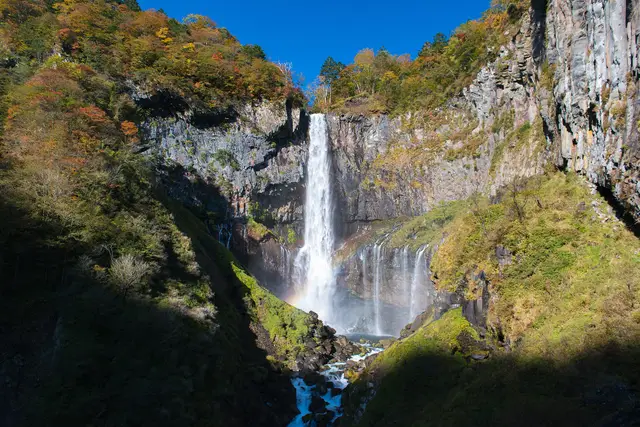
9:55Kegon Fallsstay about 30 minabout 14 min on foot
10:39Lake Chuzenjistay about 1.5 hrabout 20 min by transport
12:29Ryuzu Fallsstay about 30 minabout 15 min by transport
13:14Senjogahara Marshlandstay about 2 hrabout 15 min by transport
15:29Yutaki Fallsstay about 30 minabout 22 min on foot
16:21Nikko Yumoto Onsenstay about 1.5 hr
A bus pass is handy. In autumn-leaf season it is best to set out early in the morning.
Plan this route
When to go
June to September is rainy (over 200 mm a month). In October the autumn colours move down from the mountains. Okunikko (about 1,300 m) is about 5°C colder.
Point at a month to see its temperature and precipitation.
Temperature (line: average; band: low to high)
Precipitation (mm)
Typical seasons
Cherry blossoms (Rinnoji)
Toshogu Procession of 1,000 Samurai
Autumn leaves (Okunikko to Toshogu)
Snow (Okunikko, Yumoto)
Show as a table
| Jan | Feb | Mar | Apr | May | Jun | Jul | Aug | Sep | Oct | Nov | Dec | |
|---|---|---|---|---|---|---|---|---|---|---|---|---|
| High (℃) | 5.9 | 6.8 | 10.5 | 16.1 | 20.7 | 23.2 | 26.7 | 28 | 24.2 | 18.8 | 13.7 | 8.5 |
| Avg (℃) | 0.6 | 1.3 | 4.7 | 10.2 | 15.3 | 18.8 | 22.4 | 23.4 | 19.8 | 14.1 | 8.2 | 3 |
| Low (℃) | -3.8 | -3.4 | -0.5 | 4.6 | 10.4 | 15 | 19 | 19.8 | 16.1 | 10.1 | 3.6 | -1.3 |
| Rain (mm) | 49.1 | 40.8 | 99.3 | 133.5 | 167.7 | 225 | 286.1 | 302.5 | 299.5 | 218.1 | 85.3 | 45.3 |
Temperature and precipitation are Japan Meteorological Agency normals (1991–2020, Imaichi (Nikko City)). Seasons are typical timings and can shift by a week or two each year. JMA data
Main ways to get around
Tobu limited express (Spacia X, Revaty)
About 1 hour 50 minutes from Asakusa to Tobu-Nikko; some trains need a change at Shimo-Imaichi. All seats reserved. From Shinjuku there are through limited expresses via JR.
JR Nikko Line
About 45 minutes from Utsunomiya to Nikko, used when connecting from the Tohoku Shinkansen. JR Nikko Station is a short walk from Tobu-Nikko Station.
World Heritage Meguri loop bus
From JR Nikko and Tobu-Nikko stations it loops past Shinkyo Bridge, Rinnoji, Toshogu, and Taiyuin and Futarasan Shrine. On foot, Toshogu is 30–40 minutes away.
Tobu Bus (to Chuzenji Onsen and Yumoto Onsen)
Up the Irohazaka road: about 50 minutes to Chuzenji Onsen and 1 hour 25 minutes to Yumoto Onsen. Traffic jams cause long delays in autumn-leaf season. Bus passes are sold.
Lake Chuzenji sightseeing boat
From the pier near Chuzenji Onsen it calls at other piers around the lake. It does not run in winter.
Getting to Tobu-Nikko
“Classics” and “Hidden gems” are our editors' picks, not a measured popularity ranking. Travel times are estimates. Please check prices, opening hours and operating days with the official sources before you go.
Photo and data credits
The vermilion Shinkyo Bridge over the Daiya River in autumn Joli Rumi (CC BY-SA 4.0) / Yomeimon gate of Nikko Toshogu shrine Maarten Heerlien from Voorschoten, The Netherlands (CC BY 2.0) / The vermilion Shinkyo Bridge spanning a rocky stream Saigen Jiro (CC0) / Sanbutsudo Hall of Rinnoji at the top of stone steps Zairon (CC BY-SA 4.0) / The Karamon Gate and hall of Taiyuin against cedar trees DXR (CC BY-SA 3.0) / A vermilion gate of Futarasan Shrine among tall cedars Raita Futo (CC BY 2.0) / Kegon Falls plunging down a cliff in autumn colors Jordy Meow (CC BY-SA 3.0). Cropped and resized.
Local food
Regional dishes handed down in Tochigi. Many are home and community cooking, so not every dish is served at restaurants.
Bandai Mochi
板台餅/ばんだい餅
Known for using Rice flour as opposed to glutinous rice, bandai mochi’s name is said to have been derived from how it was made in small mountain huts where the rice was placed on top of a board and…
- Where it is made
- Nikko city, Western Tochigi (Formerly known as Kuriyama)
Simmered Deep-fried Yuba Roll
揚げまき湯波の煮物
"Simmered Deep-fried Yuba Roll" is a traditional Nikko City dish made by rolling up and deep frying yuba, seasoning it, and simmering it.
- Where it is made
- Nikko City
Shimotsukare
しもつかれ/シモツカレ
It is one of the representative local dishes of Tochigi Prefecture.
- Where it is made
- All areas of Tochigi Prefecture
Kanpyo no tamagotoji
干瓢の卵とじ
Simmered dried gourd with egg" is a local dish using kanpyo, a specialty of Tochigi Prefecture.
- Where it is made
- All areas of Tochigi Prefecture
Saganbo no nitsuke
さがんぼの煮つけ
In Tochigi, a prefecture without a sea, people ate sharks, called saganbo (Spiny dogfish) and moro (mouse shark), as raw fish from the sea before refrigerators became widely available.
- Where it is made
- All areas of Tochigi Prefecture
Wheat manju
小麦まんじゅう
Wheat manju is a steamed bun made by wrapping red bean paste in a dough made of wheat flour.
- Where it is made
- The entire Tochigi Prefecture
“Find places serving it” opens a map app search for the dish name and the place name. The results are not chosen or recommended by this site. Please check with the shop whether it serves the dish.
Source: “Our Regional Cuisines” (Ministry of Agriculture, Forestry and Fisheries), edited by this site (imported 2026-11-15) https://www.maff.go.jp/e/policies/market/k_ryouri/index.html. Names, areas and ingredients are as written on the source pages; descriptions are excerpts of the original text. No photos are used. This page is not made or endorsed by the ministry.