Yokohama guide
A port city opened to the world in 1859. Minato Mirai, the Red Brick Warehouse, Yamashita Park and Chinatown line the waterfront and can be linked on foot. About 30 minutes by train from Tokyo.
Things to see 10 classics
"Classics" and "Hidden gems" are this site's editorial picks, not a measured popularity ranking.
- 1
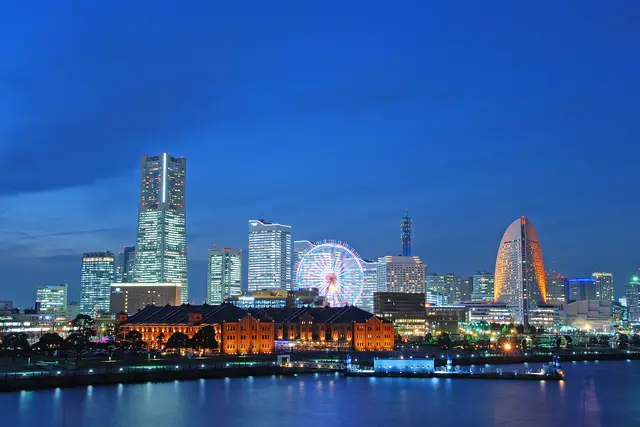
Minato Mirai 21 (Yokohama Landmark Tower)
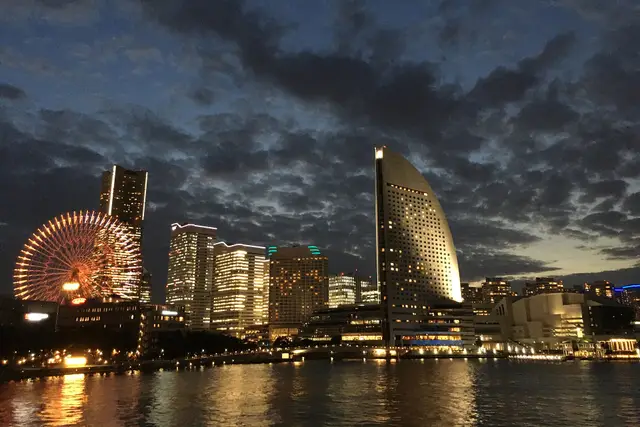
A modern waterfront district. The observation floor of Landmark Tower looks over the harbor, and the big Ferris wheel lights up at night.
- Views
- Shopping & strolling
- Night views
about 2 hrPartly paid
Train · About 10 min from Yokohama ・ Minatomirai Line to Minatomirai ・ 1.5km
- 2
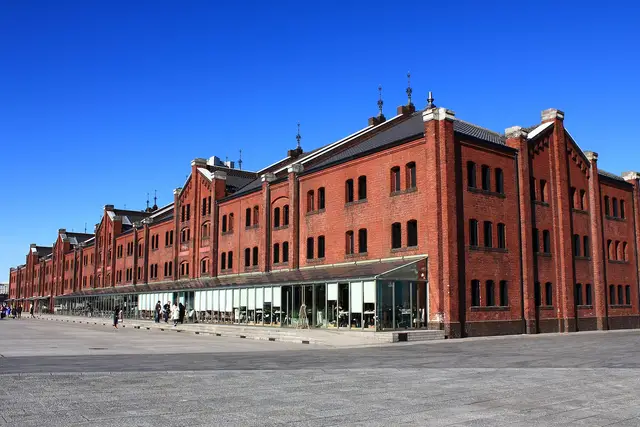
Yokohama Red Brick Warehouse
Shops and restaurants in brick warehouses from the 1910s. Seasonal events are held in the plaza in front.
- Shopping & strolling
- History & buildings
- Food & markets
about 60 minFreeFine on a rainy day
Train · About 20 min from Yokohama ・ Minatomirai Line to Bashamichi, then about 6 minutes on foot ・ 2.4km
- 3
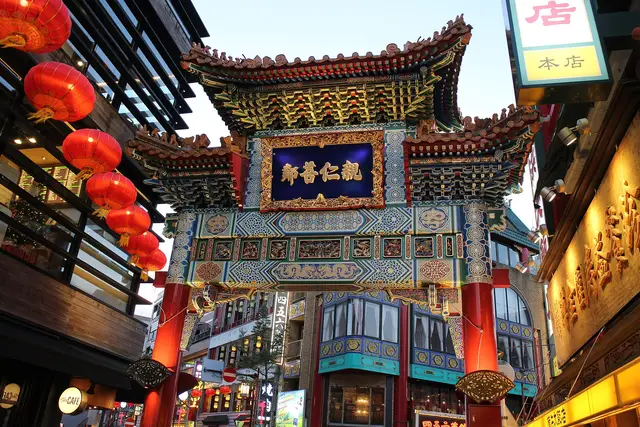
Yokohama Chinatown
Streets packed with Chinese restaurants behind brightly painted gates. The Kanteibyo and Masobyo temples are here too.
- Food & markets
- Shopping & strolling
about 1.5 hrFreeWheelchair & stroller friendly
Train · About 12 min from Yokohama ・ Minatomirai Line to Motomachi-Chukagai ・ 3.4km
- 4
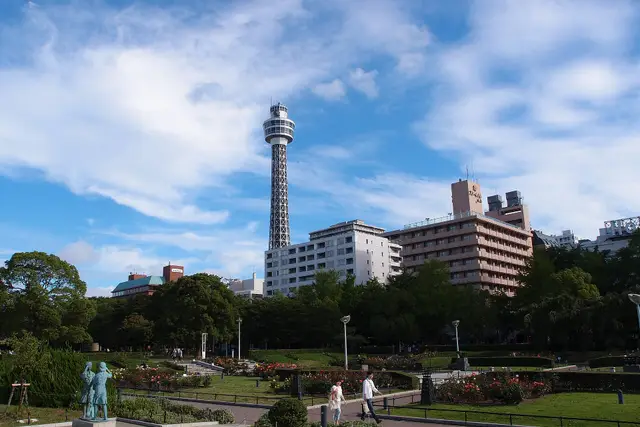
Yamashita Park
A long, narrow park on the waterfront. The old ocean liner Hikawa Maru is moored here, and you can watch ships cross the harbor.
- Views
- Nature
about 45 minFreeWheelchair & stroller friendly
Train · About 15 min from Yokohama ・ Minatomirai Line to Motomachi-Chukagai, then about 3 minutes on foot ・ 3.3km
- 5
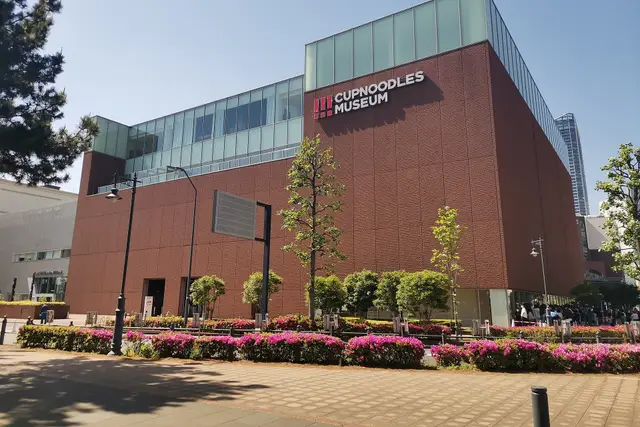
Cupnoodles Museum Yokohama
Learn the history of instant ramen and make your own original cup of noodles. The hands-on workshops get crowded.
- With kids
- Food & markets
about 1.5 hrPaid entryFine on a rainy dayWheelchair & stroller friendly
Train · About 15 min from Yokohama ・ Minatomirai Line to Minatomirai, then about 8 minutes on foot ・ 1.9km
- 6
Osanbashi Pier
The pier where cruise ships dock. Its rooftop of wooden decking and lawn has a fine view of Minato Mirai at night.
- Views
- Night views
about 30 minFreeWheelchair & stroller friendly
Train · About 15 min from Yokohama ・ Minatomirai Line to Nihon-odori, then about 7 minutes on foot ・ 2.8km
Show on map
ClassicsHidden gems
Suggested routes
Times assume a 9:00 start. Travel times are estimated from distance and vary with waiting and crowds.
Along the waterfront from Minato Mirai to Chinatown
Leave 9:00 → until about 17:13 (about 8 hr)
- 9:00Yokohama
about 10 min by transport
9:10Minato Mirai 21 (Yokohama Landmark Tower)stay about 2 hrabout 12 min on foot
11:22Cupnoodles Museum Yokohamastay about 1.5 hrabout 8 min on foot
13:00Yokohama Red Brick Warehousestay about 60 minabout 8 min on foot
14:08Osanbashi Pierstay about 30 minabout 12 min on foot
14:50Yamashita Parkstay about 45 minabout 8 min on foot
15:43Yokohama Chinatownstay about 1.5 hr
Flat all the way and easy to walk. Finish with dinner in Chinatown.
Plan this routeThe Western houses of Yamate and Sankeien Garden
Leave 9:00 → until about 15:24 (about 6.5 hr)
- 9:00Yokohama
about 20 min by transport
9:20Harbor View Park and the Western houses of Yamatestay about 2 hrabout 14 min on foot
11:34Yokohama Chinatownstay about 1.5 hrabout 20 min by transport
13:24Sankeien Gardenstay about 2 hr
Buses to Sankeien also run from the Motomachi-Chukagai and Sakuragicho areas.
Plan this route
When to go
May (roses) and October–November are pleasant. September and October are the wettest months (about 240 mm). Winter averages 6–9°C with plenty of sun.
Point at a month to see its temperature and precipitation.
Temperature (line: average; band: low to high)
Precipitation (mm)
Typical seasons
Cherry blossoms (Sankeien)
Roses (Yamashita Park)
Yokohama Port Opening Festival
Autumn leaves (Sankeien)
Show as a table
| Jan | Feb | Mar | Apr | May | Jun | Jul | Aug | Sep | Oct | Nov | Dec | |
|---|---|---|---|---|---|---|---|---|---|---|---|---|
| High (℃) | 10.2 | 10.8 | 14 | 18.9 | 23.1 | 25.5 | 29.4 | 31 | 27.3 | 22 | 17.1 | 12.5 |
| Avg (℃) | 6.1 | 6.7 | 9.7 | 14.5 | 18.8 | 21.8 | 25.6 | 27 | 23.7 | 18.5 | 13.4 | 8.7 |
| Low (℃) | 2.7 | 3.1 | 6 | 10.7 | 15.5 | 19.1 | 22.9 | 24.3 | 21 | 15.7 | 10.1 | 5.2 |
| Rain (mm) | 64.7 | 64.7 | 139.5 | 143.1 | 152.6 | 188.8 | 182.5 | 139 | 241.5 | 240.4 | 107.6 | 66.4 |
Temperature and precipitation are Japan Meteorological Agency normals (1991–2020, Yokohama). Seasons are typical timings and can shift by a week or two each year. JMA data
Main ways to get around
Minatomirai Line
From Yokohama Station to Minatomirai, Bashamichi, Nihon-odori and Motomachi-Chukagai. Tokyu Toyoko Line trains from Shibuya run straight through onto it.
JR Negishi Line
From Yokohama to Sakuragicho, Kannai and Ishikawacho. Sakuragicho is the stop for Minato Mirai, and Ishikawacho for Chinatown.
Akaikutsu sightseeing bus
A retro-style bus that runs from Sakuragicho Station around to the Red Brick Warehouse, Chinatown, Yamashita Park and Harbor View Park.
Sea Bass (water bus)
From the east exit of Yokohama Station to Yamashita Park, calling at the Red Brick Warehouse pier. A way to see the harbor from the water.
Yokohama Air Cabin
An urban ropeway of about 5 minutes from Sakuragicho Station to Unga Park. Useful on the way toward the Red Brick Warehouse.
Getting to Yokohama
“Classics” and “Hidden gems” are our editors' picks, not a measured popularity ranking. Travel times are estimates. Please check prices, opening hours and operating days with the official sources before you go.
Photo and data credits
Minato Mirai skyline at blue hour, reflected in the harbor akumach from Kawasaki City, Japan (CC BY 2.0) / Minato Mirai at dusk with the Ferris wheel and a sail-shaped hotel Fukumoto (CC BY-SA 4.0) / The long Yokohama Red Brick Warehouse under a blue sky Kakidai (CC BY-SA 3.0) / Zenrinmon Gate of Yokohama Chinatown with red lanterns Suicasmo (CC BY-SA 4.0) / Greenery of Yamashita Park and the Yokohama Marine Tower Guilhem Vellut from Annecy, France (CC BY 2.0) / The brick-colored exterior of the Cupnoodles Museum Keeezawa (CC0) / Yokohama Bay Bridge seen from Harbor View Park Ymblanter (CC BY-SA 4.0). Cropped and resized.
Local food
Regional dishes handed down in Kanagawa. Many are home and community cooking, so not every dish is served at restaurants.
Sanma-men
サンマーメン
Before World War II, meat soba (roosu noodles) was a common dish in Yokohama Chinatown, but it was expensive, so "sanma-men," a noodle dish with vegetables, came to be prepared as a meal.
- Where it is made
- Yokohama City, All of Kanagawa Prefecture
Gyu Nabe (Beef Hot Pot)
牛鍋
A hot pot dish originating in Yokohama, where beef is simmered in a sauce made with miso or soy sauce.
- Where it is made
- Yokohama City
Shumai
シューマイ
Yokohama City is the largest consumer of“ Shumai” in Japan.
- Where it is made
- Yokohama City, all of Kanagawa Prefecture
Kenchin jiru
けんちん汁
One theory is that the Japanese word "makijen," a type of Chinese vegetarian cuisine known as fucha, became Japanese, while another says that "Kencho soup" made at Kenchoji Temple in Kamakura came…
- Where it is made
- Kamakura, all over Japan
Oyama no tofu ryori
大山の豆腐料理
Oyama, located 1,252 meters above sea level and part of the Tanzawa Oyama National Park, is famous for its tofu, which makes use of the good quality water of the Tanzawa mountain range.
- Where it is made
- Oyama area, Isehara City
Nama shirasu don (Fresh shirasu rice bowl)
生しらす丼
Fresh raw shirasu (baby sardines) on vinegared rice (or white rice) is served on top of a bowl of rice. It is a well-known specialty of the Shonan area, including Chigasaki, Kamakura, and Enoshima.
- Where it is made
- Shonan area
“Find places serving it” opens a map app search for the dish name and the place name. The results are not chosen or recommended by this site. Please check with the shop whether it serves the dish.
Source: “Our Regional Cuisines” (Ministry of Agriculture, Forestry and Fisheries), edited by this site (imported 2026-11-15) https://www.maff.go.jp/e/policies/market/k_ryouri/index.html. Names, areas and ingredients are as written on the source pages; descriptions are excerpts of the original text. No photos are used. This page is not made or endorsed by the ministry.