Okayama and Kurashiki guide
Korakuen, one of Japan's three great gardens, the black Okayama Castle, and the white-walled storehouses of Kurashiki's canal quarter. The two towns are about 15 minutes apart by train.
Things to see 9 classics
"Classics" and "Hidden gems" are this site's editorial picks, not a measured popularity ranking.
- 1
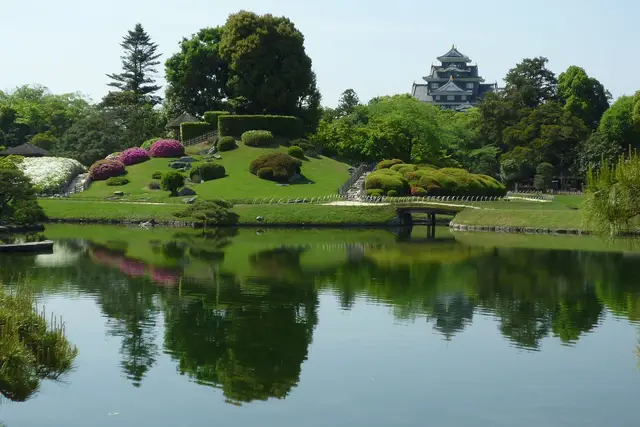
Okayama Korakuen Garden
One of Japan's three great gardens. Wide lawns and ponds, with Okayama Castle in the background.
- Nature
- History & buildings
about 60 minPaid entryWheelchair & stroller friendly
Tram · About 25 min from Okayama ・ Tram to Shiroshita, then about 10 minutes on foot. Direct buses also run from the station ・ 1.5km
- 2
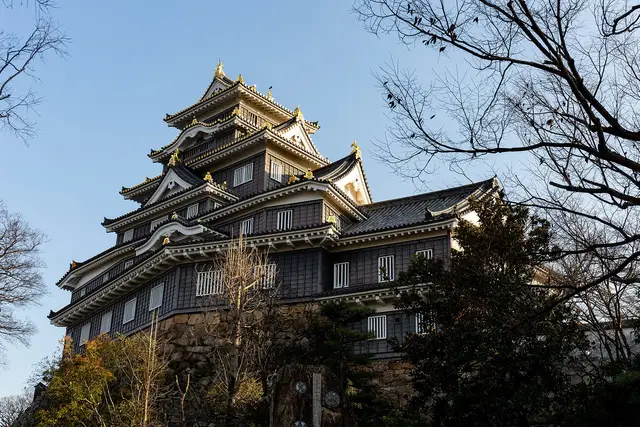
Okayama Castle
Called "Crow Castle" for its black walls. The keep is a postwar reconstruction.
- History & buildings
- Views
about 60 minPaid entryFine on a rainy dayMany stairs or slopes
Tram · About 25 min from Okayama ・ Tram to Shiroshita, then about 10 minutes on foot ・ 1.6km
- 3
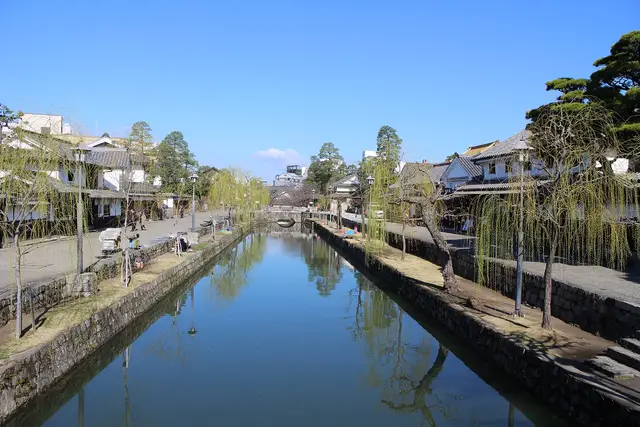
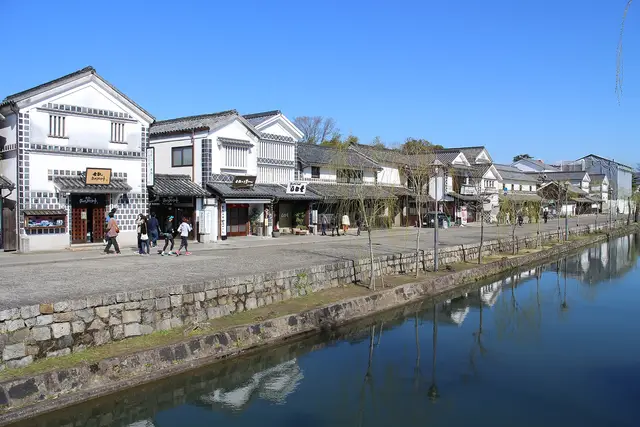
Kurashiki Bikan Historical Quarter
White-walled storehouses and old townhouses along a willow-lined canal. You can also ride a small boat.
- History & buildings
- Shopping & strolling
- Views
about 2 hrFree
Train · About 40 min from Okayama ・ JR to Kurashiki Station, then about 10 minutes on foot ・ 16km
- 4
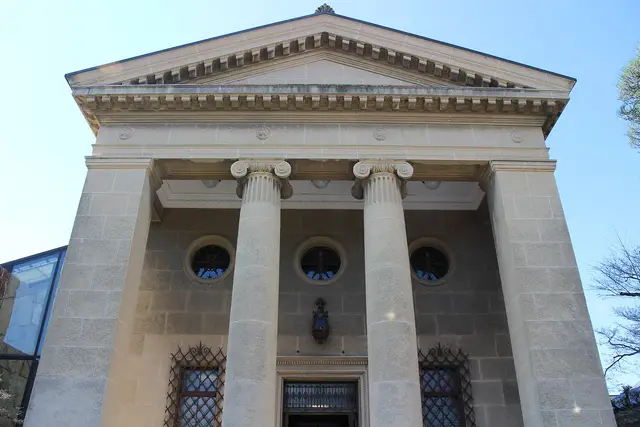
Ohara Museum of Art
Japan's first private museum centered on Western art, with paintings by El Greco, Monet and others.
- Museums
about 1.5 hrPaid entryFine on a rainy dayWheelchair & stroller friendly
Train · About 45 min from Okayama ・ JR to Kurashiki Station, then about 12 minutes on foot ・ 16km
- 5
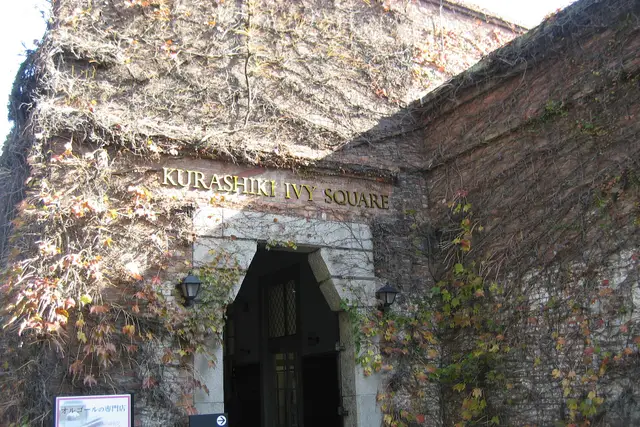
Kurashiki Ivy Square
A red-brick Meiji-era cotton mill, now a hotel and shops, with ivy-covered walls and a courtyard.
- History & buildings
- Shopping & strolling
about 30 minFree
Train · About 50 min from Okayama ・ JR to Kurashiki Station, then about 15 minutes on foot ・ 15km
- 6
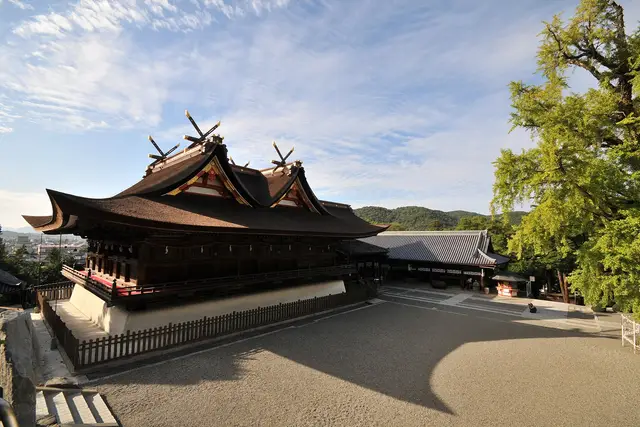
Kibitsu Shrine
A shrine tied to the legend behind the Momotaro folk tale. It has a National Treasure main hall and a long covered corridor.
- Temples, shrines & churches
- History & buildings
about 45 minFreeFine on a rainy day
Train · About 35 min from Okayama ・ JR Momotaro Line to Kibitsu Station, then about 10 minutes on foot ・ 6.2km
Show on map
ClassicsHidden gems
Suggested routes
Times assume a 9:00 start. Travel times are estimated from distance and vary with waiting and crowds.
Okayama Castle and Korakuen
Leave 9:00 → until about 12:21 (about 3.5 hr)
- 9:00Okayama
about 25 min by transport
9:25Okayama Castlestay about 60 minabout 6 min on foot
10:31Okayama Korakuen Gardenstay about 60 minabout 5 min on foot
11:36Yumeji Art Museumstay about 45 min
The castle and the garden are linked by a footbridge over the river.
Plan this routeA walk through Kurashiki's Bikan Quarter
Leave 9:00 → until about 14:22 (about 5.5 hr)
- 9:00Okayama
about 40 min by transport
9:40Kurashiki Bikan Historical Quarterstay about 2 hrabout 1 min on foot
11:41Ohara Museum of Artstay about 1.5 hrabout 5 min on foot
13:16Achi Shrinestay about 30 minabout 6 min on foot
13:52Kurashiki Ivy Squarestay about 30 min
All on foot. The streets are softly lit from dusk.
Plan this route
When to go
Known as the "Land of Sunshine" for its low rainfall. April–May and October–November are best for walking. August averages about 28°C; winter is dry and sunny.
Point at a month to see its temperature and precipitation.
Temperature (line: average; band: low to high)
Precipitation (mm)
Typical seasons
Cherry blossoms (Korakuen)
Plum blossoms (Korakuen)
Saidaiji Eyo (Naked Festival)
Autumn leaves (Korakuen)
Show as a table
| Jan | Feb | Mar | Apr | May | Jun | Jul | Aug | Sep | Oct | Nov | Dec | |
|---|---|---|---|---|---|---|---|---|---|---|---|---|
| High (℃) | 9.6 | 10.5 | 14.6 | 19.8 | 24.8 | 27.6 | 31.8 | 33.3 | 29.1 | 23.4 | 17.1 | 11.7 |
| Avg (℃) | 4.6 | 5.2 | 8.7 | 14.1 | 19.1 | 22.7 | 27 | 28.1 | 23.9 | 18 | 11.6 | 6.6 |
| Low (℃) | 0.1 | 0.5 | 3.5 | 8.5 | 14.8 | 18.7 | 23.4 | 24.6 | 20 | 13.4 | 6.8 | 2.1 |
| Rain (mm) | 36.2 | 45.4 | 82.5 | 90 | 112.6 | 169.3 | 177.4 | 97.2 | 142.2 | 95.4 | 53.3 | 41.5 |
Temperature and precipitation are Japan Meteorological Agency normals (1991–2020, Okayama). Seasons are typical timings and can shift by a week or two each year. JMA data
Main ways to get around
Okayama Electric Tramway
About 5 minutes from Okayama Ekimae to Shiroshita. From there you can walk to Okayama Castle and Korakuen.
JR Sanyo Line (Okayama – Kurashiki)
About 15–20 minutes from Okayama to Kurashiki. The Bikan Historical Quarter is about 10 minutes on foot from the south exit.
JR Momotaro Line (Kibi Line)
For Kibitsu Shrine (Kibitsu Station), Saijo Inari (Bitchu-Takamatsu Station) and Soja. Trains are not frequent, so check the times.
JR Seto-Ohashi Line (Marine Liner rapid)
About 25 minutes from Okayama to Kojima. The train then crosses the Seto Ohashi Bridge and reaches Takamatsu in about 55 minutes.
Airport limousine bus
About 30 minutes from Okayama Airport to Okayama Station. There are also buses to Kurashiki Station.
Getting to Okayama
“Classics” and “Hidden gems” are our editors' picks, not a measured popularity ranking. Travel times are estimates. Please check prices, opening hours and operating days with the official sources before you go.
Photo and data credits
Willow-lined canal and white-walled houses in the Kurashiki Bikan quarter Suicasmo (CC BY-SA 4.0) / Pond and lawns of Korakuen Garden, with Okayama Castle behind Fjkelfeimvvn (CC BY 3.0) / The black keep of Okayama Castle against a blue sky Balon Greyjoy (CC0) / White-walled storehouses along the Kurashiki River Suicasmo (CC BY-SA 4.0) / The columned front of the Ohara Museum of Art main building Suicasmo (CC BY-SA 4.0) / Ivy-covered entrance of Kurashiki Ivy Square Nagono (CC BY-SA 3.0) / The large main hall and worship hall of Kibitsu Shrine Reggaeman (CC BY-SA 3.0). Cropped and resized.
Local food
Regional dishes handed down in Okayama. Many are home and community cooking, so not every dish is served at restaurants.
Matsurizushi
まつりずし/ばらずし
Matsuri-zushi, also called "Okayama-bara-zushi" or "Bizen-bara-zushi," is made for festivals, celebrations, and entertaining guests in the Bizen-Okayama area.
- Where it is made
- All over the prefecture
Sabazushi(mackerel sushi)
さばずし
Saba-zushi is an autumn festival feast mainly made in the northern central part of Okayama Prefecture.
- Where it is made
- Maniwa City, Takahashi City
Mamakari no suzuke
ママカリの酢漬け
Vinegared mamakari is widely known as a local dish of Okayama Prefecture. "Mamakari" is the name of a small fish called in the Okayama region, and "sappa" in the Kanto region.
- Where it is made
- Seto Inland Sea coast
Hiruzen okowa
蒜山おこわ
Hiruzen Okowa is a type of rice with many ingredients, generally called Gomoku Okowa. It is a local delicacy representative of Hiruzen, and always appears at festivals and celebrations.
- Where it is made
- Maniwa City, Hiruzen area
Kenbiki yaki
けんびき焼き
During this period, farmers used to make "Kenbikiyaki," which is wrapped in myoga leaves and grilled.
- Where it is made
- Niimi City
Todomese
とどめせ
“Todomese” is sushi simmered in a mixture of rice and vinegar. Its history stretches back to the Kamakura period of the Middle Ages.
- Where it is made
- Setouchi City
“Find places serving it” opens a map app search for the dish name and the place name. The results are not chosen or recommended by this site. Please check with the shop whether it serves the dish.
Source: “Our Regional Cuisines” (Ministry of Agriculture, Forestry and Fisheries), edited by this site (imported 2026-11-15) https://www.maff.go.jp/e/policies/market/k_ryouri/index.html. Names, areas and ingredients are as written on the source pages; descriptions are excerpts of the original text. No photos are used. This page is not made or endorsed by the ministry.